Kirjojen hintavertailu. Mukana 12 390 323 kirjaa ja 12 kauppaa.

Kirjailija

Raymond J. Struyk

Kirjat ja teokset yhdessä paikassa: 15 kirjaa, julkaisuja vuosilta 1982-1996, suosituimpien joukossa Implementing Housing Allowances in Russia. Vertaile teosten hintoja ja tarkista saatavuus suomalaisista kirjakaupoista.

15 kirjaa

Kirjojen julkaisuhaarukka 1982-1996.

Implementing Housing Allowances in Russia

Implementing Housing Allowances in Russia

Raymond J. Struyk; Nadezhda Kosareva; Jennifer Daniell; Charles Hanson; Maris Mikelsons

Urban Institute Press,U.S.
1993
sidottu
This text argues that privatisation of state and municipal housing in the Russian Federation is only one of the key elements of housing policy and that it is necessary to plan now for the future of the rental sector. It explains housing reforms to date (August 1992) and offers specific recommendations by: describing current rents and their relationship to family income; establishing the feasibility of creating a programme for increasing rents and introducing payment of housing allowances to the population (using simulations conducted for Moscow City); and analysing alternative versions of a housing allowance programme to determine their effectiveness and results. This book also puts Russia's housing allowance programme into a broader context by contrasting the circumstances in which housing allowance programmes are being introduced in Eastern Europe with conditions existing in North America and Western Europe in the 1970s, when allowances were introduced in many of those countries.

Implementing Housing Allowances in Russia

Implementing Housing Allowances in Russia

Raymond J. Struyk; Nadezhda Kosareva; Jennifer Daniell; Charles Hanson; Maris Mikelsons

Urban Institute Press,U.S.
1993
nidottu
This text argues that privatisation of state and municipal housing in the Russian Federation is only one of the key elements of housing policy and that it is necessary to plan now for the future of the rental sector. It explains housing reforms to date (August 1992) and offers specific recommendations by: describing current rents and their relationship to family income; establishing the feasibility of creating a programme for increasing rents and introducing payment of housing allowances to the population (using simulations conducted for Moscow City); and analysing alternative versions of a housing allowance programme to determine their effectiveness and results. This book also puts Russia's housing allowance programme into a broader context by contrasting the circumstances in which housing allowance programmes are being introduced in Eastern Europe with conditions existing in North America and Western Europe in the 1970s, when allowances were introduced in many of those countries.

Making Aid Work

Making Aid Work

Raymond J. Struyk

Urban Institute Press,U.S.
1996
sidottu
Researched and written from the perspective of a distinguished director of technical cooperation projects in Hungary and the Russian federation, this book offers lessons for structuring a successful programme for both the donor community, and the firms and individuals in charge of implementation.
Making Aid Work

Making Aid Work

Raymond J. Struyk

Urban Institute Press,U.S.
1996
nidottu
Researched and written from the perspective of a distinguished director of technical cooperation projects in Hungary and the Russian federation, this book offers lessons for structuring a successful programme for both the donor community, and the firms and individuals in charge of implementation.
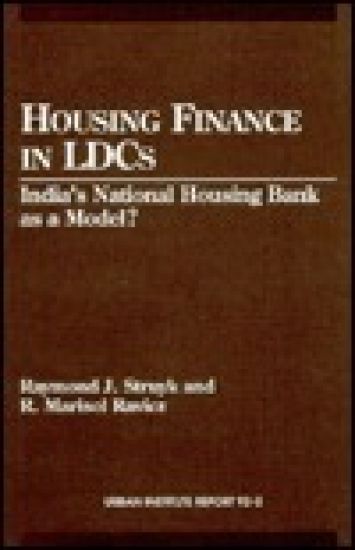
Housing Finance in LDCs

Housing Finance in LDCs

Raymond J. Struyk; Marisol Ravicz

Urban Institute Press,U.S.
1992
sidottu
This text evaluates India's National Housing Bank's first two years in the context of housing finance in other developing countries and broader financial markets. In many developing countries, national housing banks lend directly to the public at subsidized rates, discouraging a competitive housing finance system. Begun in 1988, India's National Housing Bank represents a potentially important innovation for housing finance in developing countries. Providing finance and support to struggling housing finance intermediaries, the National Housing Bank was implemented to foster the creation of a stable, market-oriented, competitive system.
Housing Finance in LDCs

Housing Finance in LDCs

Raymond J. Struyk; Marisol Ravicz

Urban Institute Press,U.S.
1992
nidottu
This text evaluates India's National Housing Bank's first two years in the context of housing finance in other developing countries and broader financial markets. In many developing countries, national housing banks lend directly to the public at subsidized rates, discouraging a competitive housing finance system. Begun in 1988, India's National Housing Bank represents a potentially important innovation for housing finance in developing countries. Providing finance and support to struggling housing finance intermediaries, the National Housing Bank was implemented to foster the creation of a stable, market-oriented, competitive system.
Toward a Market-oriented Housing Sector in Eastern Europe

Toward a Market-oriented Housing Sector in Eastern Europe

Jeffrey Telgarsky; Raymond J. Struyk

Urban Institute Press,U.S.
1990
sidottu
An analysis of the housing sector in six Eastern European countries as these countries shift from a centrally planned economic system to a competitive market paradigm. The authors present information on the limited progress made so far and explore factors essential for further advances: making the house purchase and rental markets competitive and ending the favoured status of state operated enterprises.
Toward a Market-oriented Housing Sector in Eastern Europe

Toward a Market-oriented Housing Sector in Eastern Europe

Jeffrey Telgarsky; Raymond J. Struyk

Urban Institute Press,U.S.
1990
nidottu
An analysis of the housing sector in six Eastern European countries as these countries shift from a centrally planned economic system to a competitive market paradigm. The authors present information on the limited progress made so far and explore factors essential for further advances: making the house purchase and rental markets competitive and ending the favoured status of state operated enterprises.