Kirjojen hintavertailu. Mukana 12 126 721 kirjaa ja 12 kauppaa.
Kirjailija
Raymond Paternoster
Kirjat ja teokset yhdessä paikassa: 4 kirjaa, julkaisuja vuosilta 2000-2021, suosituimpien joukossa Explaining Criminals and Crime. Vertaile teosten hintoja ja tarkista saatavuus suomalaisista kirjakaupoista.
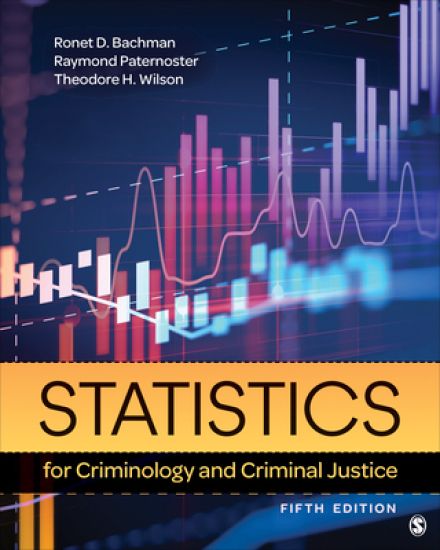
Communicating the excitement and importance of criminal justice research, this practical and comprehensive book shows students how to perform and understand statistical analyses, while helping them recognize the connection between statistical analyses used in everyday life and their importance to criminology and criminal justice. This updated Fifth Edition is packed with real-world case studies and contemporary examples utilizing the most current crime data and empirical research available. Each chapter presents a particular statistical method in the context of a substantive research story.
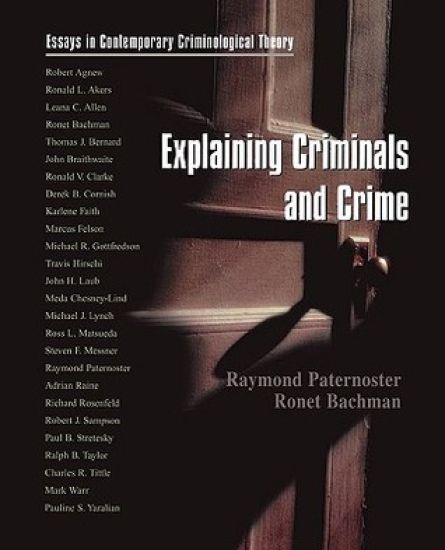
Explaining Criminals and Crime is the first collection of original essays addressing theories of criminal behavior that is written at a level appropriate for undergraduate students. These clear, concise, accessible essays were written expressly for this book, either by the original author(s) of each theory or by a scholar who has written extensively about it. All major contemporary criminological theories are covered in this book, including: * Biological (Pauline Yaralian and Adrian Raine) * Strain (Robert Agnew, Steve Messner, and Richard Rosenfeld) * Social and Self Control (Travis Hirschi and Michael Gottfredson; John Laub, Robert Sampson, and Leanna Allen) * Social Reaction (Ross Matsueda and John Braithwaite) * Social Learning and Differential Association (Ronald Akers and Mark Warr) * Social Disorganization (Ralph Taylor) * Radical and Feminist (Michael Lynch and Paul Stretesky; Meda Chensey-Lind and Karlene Faith) * Rational Choice and Routine Activities (Ronald Clarke and Derek Cornish; Marcus Felson) * Integrated and Control Balance (Thomas Bernard and Charles Tittle) Explaining Criminals and Crime also offers section introductions that provide a historical background for each theory, key issues that the theory addresses, and a discussion of any controversies generated by the theory. Each theoretical essay contains: * A discussion of the key theoretical concepts. * The specific hypotheses derived from the theory. * Existing empirical research on these hypotheses. * Criticisms of the theory and efforts to deal with those criticisms. * Policy implications of the theory. Most criminological theories are published in journals or specialized texts and are written in language intended for other scholars. As a result, undergraduate and even graduate students in criminology and criminal justice find these readings quite difficult, which limits their understanding of the material. The essays and chapter introductions in Explaining Criminals and Crime are written with the undergraduate audience in mind.
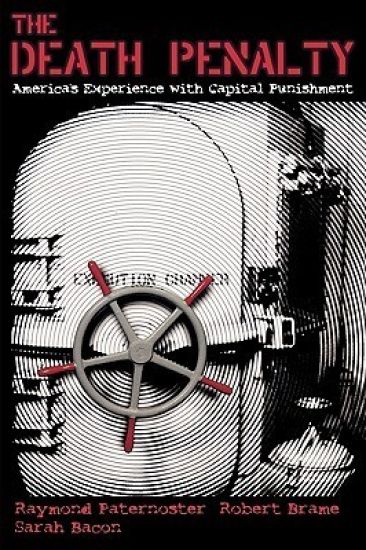
This book addresses one of the most controversial issues in the criminal justice system today--the death penalty. Paternoster et al. present a balanced perspective that focuses on both the arguments for and against capital punishment. Coverage draws on legal, historical, philosophical, economic, sociological, and religious points of view. Topics include: * The history of the death penalty in the United States, from the 1600s to today * The changing nature of the death penalty--changes in the types of crimes that warranted the penalty, the procedures employed to put capital offenders on trial, and the methods used to impose death * Constitutional/legal issues surrounding the death penalty * The influence of race on the administration of the death penalty, both in the past and in the present * Justifications for and against the death penalty (retribution, cost, public safety, and religious arguments) * Questions about the execution of innocents, exonerated capital offenders, and flaws in the operation of the death penalty * Public opinion and the death penalty * The death penalty and international law and practice * The future of the death penalty in America
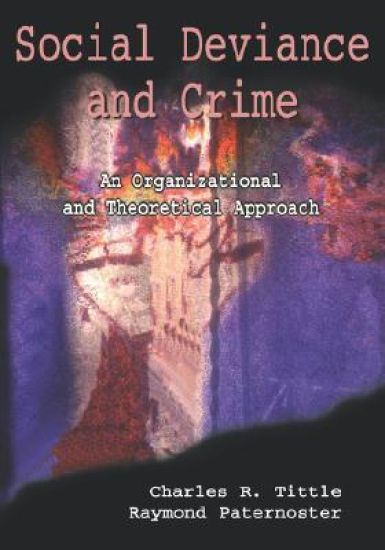
Social Deviance and Crime unites two topics that are usually separated: the study of social deviance and the study of criminal behavior. Traditionally, the study of deviance introduces students to various types of deviance, giving the impression that these are distinct acts requiring equally distinct and unique explanations. The study of crime has followed virtually the same path. Criminology textbooks usually describe a series of criminal acts, one at a time, fostering the impression that these acts have only one thing in common--they are all violations of the criminal law. As a result, treatment of deviance and crime in most texts has proceeded along two different and parallel tracts, with little or no convergence. In Social Deviance and Crime, Tittle and Paternoster contend that acts of social deviance and criminality share important conceptual ground: both are types of behaviors that are socially disapproved, and specific acts differ mainly in the degree to which they are disapproved. The authors argue that social disapproval is an important characteristic that links apparently diverse behaviors (religious and sexual deviance, organized crime, youth gangs, drug use, serial murder, etc.). This book differs significantly from other texts in the way it bridges deviance and crime within a single conceptual and explanatory framework. Social Deviance and Crime's approach is also unique. Texts in criminology and deviance often adopt either an "interactionist/constructionist" or a "substantive" perspective. This book treats deviance as an integrated concept, differentiated chiefly by how well deviant/criminal enterprises are organized. The authors describe and analyze different types of deviant/criminal acts according to an ascending scale created by combining nine different features of organization. The text then explores theories and explanations about how deviance takes place, how it develops, and why it is maintained. Also included is a discussion of variations in the distribution/rate of deviant acts within society, and how theory can and cannot account for these known variations. Tittle and Paternoster interweave conceptual and empirical material together, giving students an opportunity to understand the impact of theory on research. Every chapter features Deviance in Everyday Life boxes. Here, the authors provide vivid, real-world examples of deviance, deviance organization, and attempts by society to "do something about" deviance.