Kirjailija
Raymond Queneau
Kirjat ja teokset yhdessä paikassa: 41 kirjaa, julkaisuja vuosilta 1973-2026, suosituimpien joukossa Zazie in the Metro. Vertaile teosten hintoja ja tarkista saatavuus suomalaisista kirjakaupoista.
Mukana myös kirjoitusasut: Raymond Queneau
41 kirjaa
Kirjojen julkaisuhaarukka 1973-2026.
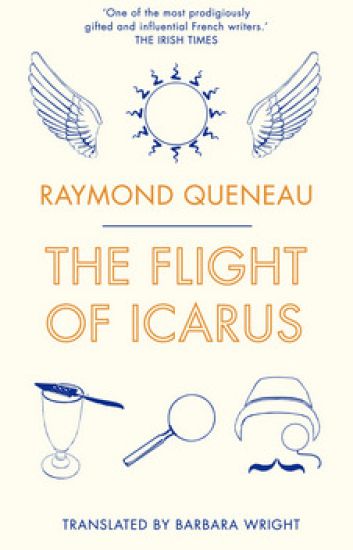
In late-nineteenth-century Paris, the writer Hubert is shocked to discover that Icarus, the protagonist of the new novel he’s working on, has vanished. Looking for him among the manuscripts of his rivals does not solve the mystery, so a detective is hired to find the runaway character, who is now in Montparnasse, where he learns to drink absinthe and is picked up by a friendly prostitute.These hilarious adventures make Queneau’s novel, presented in the form of a script and parodying various genres, one of the best literary jeux d’esprit in modern literature.
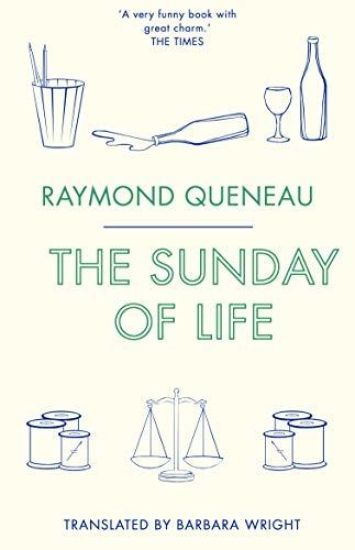
When shop-owner Julia Segovia decides that she’s going to marry the handsome if exceedingly young and naive soldier Valentin Brû, he willingly goes along with her scheme. Little does he know that he will have to contend with disgruntled in-laws, eccentric locals, a cunning wife, a shifty career in fortune-telling, the approaching threat of war with Germany and the mysteries of Parisian public transport.With a cast of eccentric characters, amusing incidents and an uplifting tone, The Sunday of Life – its title playfully alluding to Hegel’s theory of history – is a scintillating novel which showcases Queneau’s trademark punning, sly wit and delight in the absurdity of people and situations.
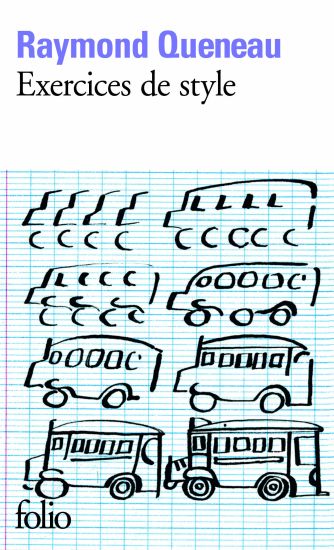
On a crowded bus at midday, the narrator observes one man accusing another of jostling him deliberately. When a seat is vacated, the first man takes it. Later, in another part of town, the man is spotted again, while being advised by a friend to have another button sewn onto his overcoat. Exercises in Style retells this apparently unremarkable tale ninety-nine times, employing a variety of styles, ranging from sonnet to cockney to mathematical formula. Too funny to be merely a pedantic thesis, this virtuoso set of themes and variations is a linguistic rustremover, a guide to literary forms and a demonstration of imagery and inventiveness.
Unreeling like a series of film clips recorded during a stroll through Paris, Raymond Queneau’s Hitting the Streets is wickedly funny. It is also a bittersweet meditation on the effects of time and memory. Hitting the Streets is Queneau’s love letters to Paris – a Paris that is always in the process of becoming obsolete. This lively, idiomatic version is the first complete translation available in English.
Exercises in Style
Raymond Queneau; Barbara (TRN) Wright; Chris (TRN) Clarke
New Directions Publishing Corporation
2013
pokkari
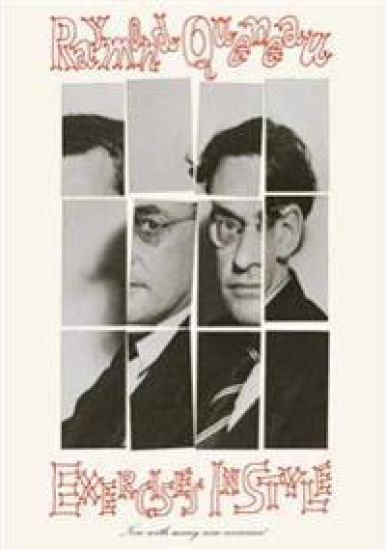
On a crowded bus at midday, Raymond Queneau observes one man accusing another of jostling him deliberately. When a seat is vacated, the first man appropriates it. Later, in another part of town, Queneau sees the man being advised by a friend to sew a new button on his overcoat. Exercises in Style Queneau 's experimental masterpiece and a hallmark book of the Oulipo literary group retells this unexceptional tale ninety-nine times, employing the sonnet and the alexandrine, onomatopoeia and Cockney. An Abusive chapter heartily deplores the events; Opera English lends them grandeur. Queneau once said that of all his books, this was the one he most wished to see translated. He offered Barbara Wright his heartiest congratulations, adding: I have always thought that nothing is untranslatable.Here is new proof. To celebrate the 65th anniversary of the 1947 French publication of Exercises de Style, New Directions has asked several writers to contribute new exercises as a tribute. Tantalizing examples include Jonathan Lethem 's Cyberpunk, Harry Mathew 's Phonetic Eros, and Frederic Tuten 's Beatnik exercises. This edition also retains Barbara Wright 's original introduction and reminiscence of working on this book a translation that in 2008 was ranked first on the Author 's Society 's list of The 50 Outstanding Translations of the Last 50 Years.
In the United States, Raymond Queneau (1903-1976) is known mainly for his novel Zazie dans le metro, which was made into a film by Louis Malle, for Excercises in Style, and for being the founder and one of the most important members of the literary movement known as Oulipo. In France and much of Europe Queneau is known for his prolific and wide ranging writings. During his lifetime some eighteen novels, ten volumes of poetry, seven volumes of essays, and countless other published essays and commentaries kept him in public view and continue to do so today as new biographies, symposiums, and critical writings on him appear with regularity. Les Ziaux (Eyeseas) present a bilingual survey of his poems as written from his early Surrealist days of the 1920's through to 1943 and is representative of Queneau's range of poetic voices. As so little of Queneau's poetry has been published in English, we hope this translation will not only fill a serious void but may also help to inspire interest in the poetry of one of the most important French writers of the twentieth-century.
Raymond Queneau (1903-76) was born at Le Havre in 1903, where he was educated before studying at the Sorbonne in Paris. Between 1924 and 1929 Queneau was active in the surrealist movement and composed its manifesto, "Permettez!". Queneau collaborated with a number of Nouvelle Vague film directors, most successfully with Louis Malle's 1960 adaptation of his novel "Zazie dans le metro". Also, Juliette Greco made popular his song "Si tu t'imagines." In 1951, Queneau was elected to the Goncourt Academy. He died on October 26, 1976.
En nyutgåva av Raymond Queneaus moderna klassiker Stilövningar. En fullsatt buss, en man med lite lustigt utseende, han har ovanligt lång hals och hans hatt hålls fast på huvudet med en rem. Han anklagar en annan man för att tränga sig, sedan hittar han en ledig plats och sätter sig. Senare, i en annan del av stan ser berättaren honom igen, då är han i samspråk med en vän och får rådet att sy i en knapp i överrocken. Det är "handlingen" i berättelsen som berättas 99 gånger, på 99 olika sätt, i 99 olika stilar.
We Always Treat Women Too Well was first published as a purported work of pulp fiction by one Sally Mara, but this novel by Raymond Queneau is a further manifestation of his sly, provocative, wonderfully wayward genius. Set in Dublin during the 1916 Easter rebellion, it tells of a nubile beauty who finds herself trapped in the central post office when it is seized by a group of rebels. But Gertie Girdle is no common pushover, and she quickly devises a coolly lascivious strategy by which, in very short order, she saves the day for king and country. Queneau's wickedly funny send-up of cheap smut--his response to a popular bodice-ripper of the 1940s--exposes the link between sexual fantasy and actual domination while celebrating the imagination's power to transmute crude sensationalism into pleasure pure and simple.
Seated in a Paris caf , a man glimpses another man, a shadowy figure hurrying for the train: Who is he? he wonders, How does he live? And instantly the shadow comes to life, precipitating a series of comic run-ins among a range of disreputable and heartwarming characters living on the sleazy outskirts of the city of lights. Witch Grass (previously titled The Bark Tree) is a philosophical farce, an epic comedy, a mesmerizing book about the daily grind that is an enchantment itself.
Impish, foul-mouthed Zazie arrives in Paris from the country to stay with Gabriel, her female-impersonator uncle. All she really wants to do is ride the metro, but finding it shut because of a strike, Zazie looks for other means of amusement and is soon caught up in a comic adventure that becomes wilder and more manic by the minute. In 1960 Queneau's cult classic was made into a hugely successful film by Louis Malle. Packed full of word play and phonetic games, Zazie in the Metro remains as stylish and witty as ever.
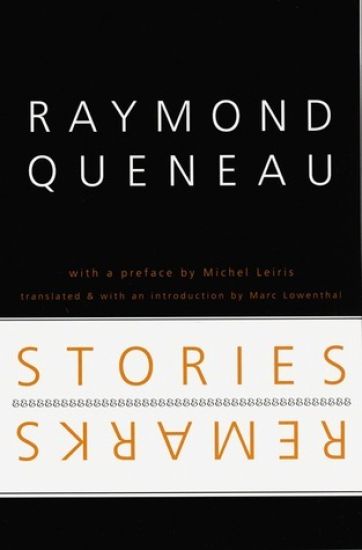
Stories and Remarks collects the best of Raymond Queneau's shorter prose. The works span his career and include short stories, an uncompleted novel, melancholic and absurd essays, occasionally baffling "Texticles," a pastiche of Alice in Wonderland, and his only play. Talking dogs, boozing horses, and suicides come head to head with ruminations on the effects of aerodynamics on addition, rhetorical dreams, and a pioneering example of permutational fiction influenced by computer language. Also included is Michel Leiris's preface from the French edition, an introduction by the translator, and endnotes addressing each piece individually. Raymond Queneau—polyglot, novelist, philosopher, poet, mathematician, screenwriter, and translator—was one of the most significant figures in twentieth-century French letters. His work touches on many of the major literary movements of his lifetime, from surrealism to the experimental school of the nouveau roman. He also founded the Oulipo, a collection of writers and mathematicians dedicated to the search for artificial inspiration via the application of constraint.
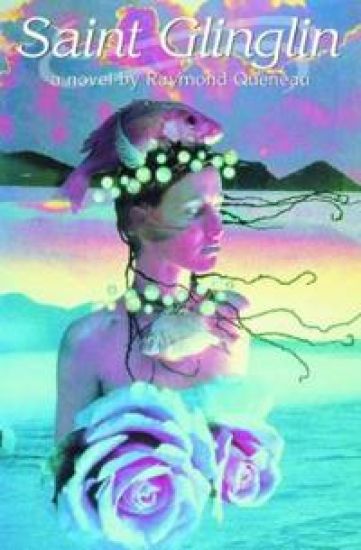
Queneau's tragicomic masterpiece which retells in an array of styles the primal Freudian myth of sons killing the father.Queneau satirizes anthropology, folklore, philosophy, and epistemology while spinning a story as appealing as a fairy tale about a land where it never rains and a bizarre festival is held every Saint Glinglin's Day.
First published in France in 1937, this brilliant, moving novel is about the devastating psychological effects of war, about falling in love, about politics subverting human relationships, and about life in Paris during the early 1930s amid intellecturals and artists whose activities range from writing for radical magazines to conjuring the ghost of Lenin in seances. Raymond Queneau (1903-1976) has been one of the most powerful forces in shaping the direction of French fiction in the past fifty years. His other novels includes The Last Days, Pierrot Mon Ami, and Saint Glinglin.
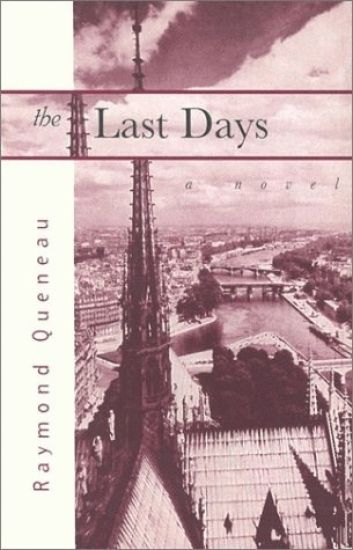
The Last Days is Raymond Queneau's autobiographical novel of Parisian student life in the 1920s: Vincent Tuquedenne tries to reconcile his love for reading with the sterility of studying as he hopes to study his way out of the petite bourgeoisie to which he belongs. Vincent and his generation are contrasted with an older generation of retired teachers and petty crooks, and both generations come under the bemused gaze of the waiter Alfred, whose infallible method of predicting the future mocks prevailing scientific models. Similarly, Queneau's literary universe operates under its own laws, joining rigorous artistry with a warm evocation of the last days of a bygone world.
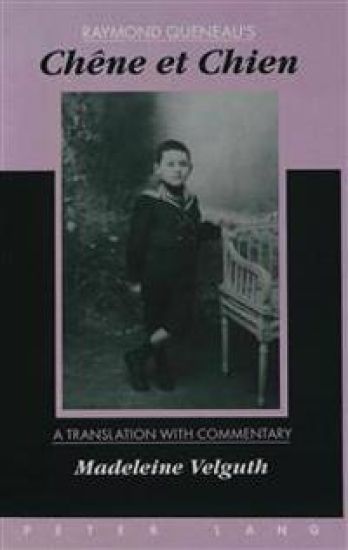
The French writer Raymond Queneau (1903-1976) is coming to be recognized as one of the major voices in 20th-century literature. Although twelve of his novels have been translated, "Chene et Chien," considered by specialists to be the keystone of his oeuvre, has not until now been available in English. Labeled a -novel in verse- by Queneau, this autobiographical poem recounts the poet's childhood, portions of that childhood revisited through psychoanalysis, and finally his joy at finding himself whole. The translator's introduction situates the work in Queneau's life and oeuvre, addresses the problem of poetry as autobiography, examines the structure of the poem itself and discusses the difficulties of translating Queneu's many moods and rich wordplay into English verse. Explanatory notes complete the volume."
The plot of Exercises in Style is simple: a man gets into an argument with another passenger on a bus. However, this anecdote is told 99 more times, each in a radically different style, as a sonnet, an opera, in slang, and with many more permutations. This virtuoso set of variations is a linguistic rust-remover, and a guide to literary forms.
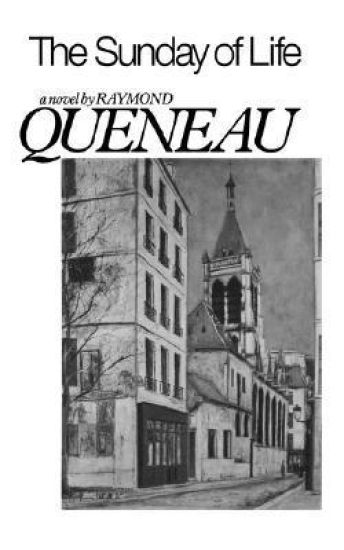
The Sunday of Life (Le Dimanche de la vie), the late Raymond Queneau's tenth novel, was first published in French by Gallimard in 1951 and is now appearing for the first time in this country, in a translation by Barbara Wright. Critics are universally agreed that it and the later Zazie dans le m tro (1959) show Queneau at his zaniest and most cheerful, and it is not surprising that both these novels have been made into popular and successful films. But as always with Queneau, beneath the apparent absurdities of plot and the bumbling of his rather ordinary characters, there is a precision of structure and purpose that, ironically enough, places the work of this earliest of new-wave novelists squarely in the tradition of the eighteenth-century roman philosophique. In the ingenuous ex-Private Valentin Br , the central figure in The Sunday of Life, Queneau has created that oddity in modern fiction, the Hegelian na f. Highly self-conscious yet reasonably satisfied with his lot, imbued with the good humor inherent in the naturally wise, Valentin meets the painful nonsense of life's adventures with a slightly bewildered detachment. As Barbara Wright so aptly writes: "Though The Sunday of Life is set in one of the most traumatic of recent periods--1936-40, the dark years leading up to the Second World War and including the fall of France... it nevertheless does indeed manage to be one of Queneau's happiest, sunniest, and most undated novels: it far transcends anything like a mere chronicle of times."