Kirjojen hintavertailu. Mukana 12 595 353 kirjaa ja 12 kauppaa.

Kirjailija

Raymond S. T. Lee

Kirjat ja teokset yhdessä paikassa: 9 kirjaa, julkaisuja vuosilta 2005-2024, suosituimpien joukossa Knowledge Seeker - Ontology Modelling for Information Search and Management. Vertaile teosten hintoja ja tarkista saatavuus suomalaisista kirjakaupoista.

Mukana myös kirjoitusasut: Raymond S.T. Lee

9 kirjaa

Kirjojen julkaisuhaarukka 2005-2024.

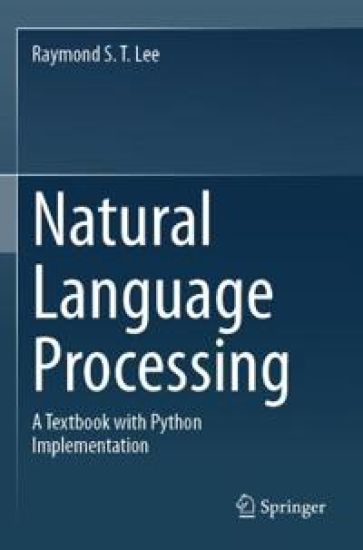
Natural Language Processing

Natural Language Processing

Raymond S. T. Lee

SPRINGER VERLAG, SINGAPORE
2024
nidottu
This textbook presents an up-to-date and comprehensive overview of Natural Language Processing (NLP), from basic concepts to core algorithms and key applications. Further, it contains seven step-by-step NLP workshops (total length: 14 hours) offering hands-on practice with essential Python tools like NLTK, spaCy, TensorFlow Kera, Transformer and BERT.The objective of this book is to provide readers with a fundamental grasp of NLP and its core technologies, and to enable them to build their own NLP applications (e.g. Chatbot systems) using Python-based NLP tools. It is both a textbook and NLP tool-book intended for the following readers: undergraduate students from various disciplines who want to learn NLP; lecturers and tutors who want to teach courses or tutorials for undergraduate/graduate students on NLP and related AI topics; and readers with various backgrounds who want to learn NLP, and more importantly, to build workable NLP applications after completing its 14 hours of Python-based workshops.
Artificial Intelligence in Daily Life

Artificial Intelligence in Daily Life

Raymond S. T. Lee

SPRINGER VERLAG, SINGAPORE
2021
nidottu
Given the exponential growth of Artificial Intelligence (AI) over the past few decades, AI and its related applications have become part of daily life in ways that we could never have dreamt of only a century ago. Our routines have been changed beyond measure by robotics and AI, which are now used in a vast array of services. Though AI is still in its infancy, we have already benefited immensely. This book introduces readers to basic Artificial Intelligence concepts, and helps them understand the relationship between AI and daily life. In the interest of clarity, the content is divided into four major parts. Part I (AI Concepts) presents fundamental concepts of and information on AI; while Part II (AI Technology) introduces readers to the five core AI Technologies that provide the building blocks for various AI applications, namely: Machine Learning (ML), Data Mining (DM), Computer Vision (CV), Natural Languages Processing (NLP), and Ontology-based Search Engine (OSE). In turn, Part III (AI Applications) reviews major contemporary applications that are impacting our ways of life, working styles and environment, ranging from intelligent agents and robotics to smart campus and smart city projects. Lastly, Part IV (Beyond AI) addresses related topics that are vital to the future development of AI. It also discusses a number of critical issues, such as AI ethics and privacy, the development of a conscious mind, and autonomous robotics in our daily lives.
Quantum Finance

Quantum Finance

Raymond S. T. Lee

Springer Verlag, Singapore
2020
nidottu
With the exponential growth of program trading in the global financial industry, quantum finance and its underlying technologies have become one of the hottest topics in the fintech community. Numerous financial institutions and fund houses around the world require computer professionals with a basic understanding of quantum finance to develop intelligent financial systems. This book presents a selection of the author’s past 15 years’ R&D work and practical implementation of the Quantum Finance Forecast System – which integrates quantum field theory and related AI technologies to design and develop intelligent global financial forecast and quantum trading systems. The book consists of two parts: Part I discusses the basic concepts and theories of quantum finance and related AI technologies, including quantum field theory, quantum price fields, quantum price level modelling and quantum entanglement to predict major financial events. Part II then examines the current, ongoingR&D projects on the application of quantum finance technologies in intelligent real-time financial prediction and quantum trading systems. This book is both a textbook for undergraduate & masters level quantum finance, AI and fintech courses and a valuable resource for researchers and data scientists working in the field of quantum finance and intelligent financial systems. It is also of interest to professional traders/ quants & independent investors who would like to grasp the basic concepts and theory of quantum finance, and more importantly how to adopt this fascinating technology to implement intelligent financial forecast and quantum trading systems. For system implementation, the interactive quantum finance programming labs listed on the Quantum Finance Forecast Centre official site (QFFC.org) enable readers to learn how to use quantum finance technologies presented in the book.
Artificial Intelligence in Daily Life

Artificial Intelligence in Daily Life

Raymond S. T. Lee

Springer Verlag, Singapore
2020
sidottu
Given the exponential growth of Artificial Intelligence (AI) over the past few decades, AI and its related applications have become part of daily life in ways that we could never have dreamt of only a century ago. Our routines have been changed beyond measure by robotics and AI, which are now used in a vast array of services. Though AI is still in its infancy, we have already benefited immensely. This book introduces readers to basic Artificial Intelligence concepts, and helps them understand the relationship between AI and daily life. In the interest of clarity, the content is divided into four major parts. Part I (AI Concepts) presents fundamental concepts of and information on AI; while Part II (AI Technology) introduces readers to the five core AI Technologies that provide the building blocks for various AI applications, namely: Machine Learning (ML), Data Mining (DM), Computer Vision (CV), Natural Languages Processing (NLP), and Ontology-based Search Engine (OSE). In turn, Part III (AI Applications) reviews major contemporary applications that are impacting our ways of life, working styles and environment, ranging from intelligent agents and robotics to smart campus and smart city projects. Lastly, Part IV (Beyond AI) addresses related topics that are vital to the future development of AI. It also discusses a number of critical issues, such as AI ethics and privacy, the development of a conscious mind, and autonomous robotics in our daily lives.
Quantum Finance

Quantum Finance

Raymond S. T. Lee

Springer Verlag, Singapore
2019
sidottu
With the exponential growth of program trading in the global financial industry, quantum finance and its underlying technologies have become one of the hottest topics in the fintech community. Numerous financial institutions and fund houses around the world require computer professionals with a basic understanding of quantum finance to develop intelligent financial systems. This book presents a selection of the author’s past 15 years’ R&D work and practical implementation of the Quantum Finance Forecast System – which integrates quantum field theory and related AI technologies to design and develop intelligent global financial forecast and quantum trading systems. The book consists of two parts: Part I discusses the basic concepts and theories of quantum finance and related AI technologies, including quantum field theory, quantum price fields, quantum price level modelling and quantum entanglement to predict major financial events. Part II then examines the current, ongoingR&D projects on the application of quantum finance technologies in intelligent real-time financial prediction and quantum trading systems. This book is both a textbook for undergraduate & masters level quantum finance, AI and fintech courses and a valuable resource for researchers and data scientists working in the field of quantum finance and intelligent financial systems. It is also of interest to professional traders/ quants & independent investors who would like to grasp the basic concepts and theory of quantum finance, and more importantly how to adopt this fascinating technology to implement intelligent financial forecast and quantum trading systems. For system implementation, the interactive quantum finance programming labs listed on the Quantum Finance Forecast Centre official site (QFFC.org) enable readers to learn how to use quantum finance technologies presented in the book.
Knowledge Seeker - Ontology Modelling for Information Search and Management

Knowledge Seeker - Ontology Modelling for Information Search and Management

Edward H. Y. Lim; James N. K. Liu; Raymond S.T. Lee

Springer-Verlag Berlin and Heidelberg GmbH Co. K
2013
nidottu
The Knowledge Seeker is a useful system to develop various intelligent applications such as ontology-based search engine, ontology-based text classification system, ontological agent system, and semantic web system etc. The Knowledge Seeker contains four different ontological components. First, it defines the knowledge representation model ¡V Ontology Graph. Second, an ontology learning process that based on chi-square statistics is proposed for automatic learning an Ontology Graph from texts for different domains. Third, it defines an ontology generation method that transforms the learning outcome to the Ontology Graph format for machine processing and also can be visualized for human validation. Fourth, it defines different ontological operations (such as similarity measurement and text classification) that can be carried out with the use of generated Ontology Graphs. The final goal of the KnowledgeSeeker system framework is that it can improve the traditional information system with higher efficiency. In particular, it can increase the accuracy of a text classification system, and also enhance the search intelligence in a search engine. This can be done by enhancing the system with machine processable ontology.
Knowledge Seeker - Ontology Modelling for Information Search and Management

Knowledge Seeker - Ontology Modelling for Information Search and Management

Edward H. Y. Lim; James N. K. Liu; Raymond S.T. Lee

Springer-Verlag Berlin and Heidelberg GmbH Co. K
2011
sidottu
The Knowledge Seeker is a useful system to develop various intelligent applications such as ontology-based search engine, ontology-based text classification system, ontological agent system, and semantic web system etc. The Knowledge Seeker contains four different ontological components. First, it defines the knowledge representation model ¡V Ontology Graph. Second, an ontology learning process that based on chi-square statistics is proposed for automatic learning an Ontology Graph from texts for different domains. Third, it defines an ontology generation method that transforms the learning outcome to the Ontology Graph format for machine processing and also can be visualized for human validation. Fourth, it defines different ontological operations (such as similarity measurement and text classification) that can be carried out with the use of generated Ontology Graphs. The final goal of the KnowledgeSeeker system framework is that it can improve the traditional information system with higher efficiency. In particular, it can increase the accuracy of a text classification system, and also enhance the search intelligence in a search engine. This can be done by enhancing the system with machine processable ontology.
Fuzzy-Neuro Approach to Agent Applications

Fuzzy-Neuro Approach to Agent Applications

Raymond S.T. Lee

Springer-Verlag Berlin and Heidelberg GmbH Co. K
2010
nidottu
“Anything happens must have its own reason ”. Although I cannot really recall exactly when I heard of this statement for the first time, it is always in my mind and in fact it has been one of the motivations for me to carry out research and study. When I asked myself again about the purpose of writing this book at the time of writing this preface, several “add on” rea sons that had never occurred to me at the start of writing this book in the spring of 2003 surprisingly came up. Back then, when I was preparing the progress report for the iJADE (2. 0) project, a “fuzzy” idea of whether it was feasible to write a book on intelli gent agents came to my mind. This book not only would discuss and deal with the theory but also the “spin off” applications from the iJADE pro ject, including: the iJADE WeatherMan, the iJADE Stock Advisor, the iJADE Surveillant and the latest works on iJADE Negotiator. The fact that I had to launch the iJADE development kit officially over the Web in the summer of 2003 (http://www. ijadk. org) and to arrange courses and semi nars to teach and train our undergraduate students to make use of this tool kit further supported the idea and the future use of this book. Hence, the “archetype” of this book emerged.
Fuzzy-Neuro Approach to Agent Applications

Fuzzy-Neuro Approach to Agent Applications

Raymond S.T. Lee

Springer-Verlag Berlin and Heidelberg GmbH Co. K
2005
sidottu
“Anything happens must have its own reason ”. Although I cannot really recall exactly when I heard of this statement for the first time, it is always in my mind and in fact it has been one of the motivations for me to carry out research and study. When I asked myself again about the purpose of writing this book at the time of writing this preface, several “add on” rea sons that had never occurred to me at the start of writing this book in the spring of 2003 surprisingly came up. Back then, when I was preparing the progress report for the iJADE (2. 0) project, a “fuzzy” idea of whether it was feasible to write a book on intelli gent agents came to my mind. This book not only would discuss and deal with the theory but also the “spin off” applications from the iJADE pro ject, including: the iJADE WeatherMan, the iJADE Stock Advisor, the iJADE Surveillant and the latest works on iJADE Negotiator. The fact that I had to launch the iJADE development kit officially over the Web in the summer of 2003 (http://www. ijadk. org) and to arrange courses and semi nars to teach and train our undergraduate students to make use of this tool kit further supported the idea and the future use of this book. Hence, the “archetype” of this book emerged.