Kirjojen hintavertailu. Mukana 12 335 226 kirjaa ja 12 kauppaa.

Kirjailija

Raymond W. Gibbs

Kirjat ja teokset yhdessä paikassa: 4 kirjaa, julkaisuja vuodelta 1999, suosituimpien joukossa Intentions in the Experience of Meaning. Vertaile teosten hintoja ja tarkista saatavuus suomalaisista kirjakaupoista.

4 kirjaa

Intentions in the Experience of Meaning

Intentions in the Experience of Meaning

Raymond W. Gibbs

Cambridge University Press
1999
sidottu
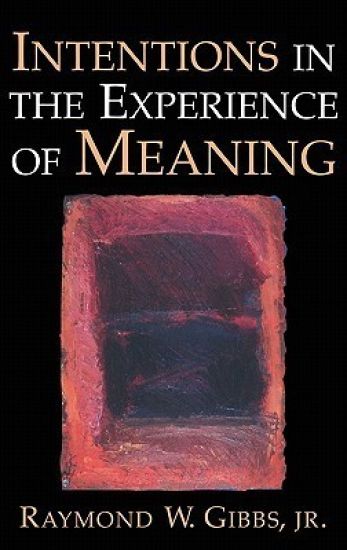
What do our assumptions about authorship matter for our experience of meaning? This book examines the debates in the humanities and social sciences over whether authorial intentions can, or should, constrain our interpretation of language and art. Scholars assume that understanding of linguistic and artistic meaning should not be constrained by beliefs about authors and their possible intentions in creating a human artifact. It is argued here that people are strongly disposed to infer intentionality when understanding oral speech, written texts, artworks, and many other human actions. Although ordinary people, and scholars, may infer meanings that diverge from, or extend beyond, what authors intend, our experience of human artifacts as meaningful is fundamentally tied to our assumptions of intentionality. This challenges the traditional ideas of intentions as existing solely in the minds of individuals, and formulates a new conceptual framework for examining if and when intentions influence the interpretation of meaning.
Intentions in the Experience of Meaning

Intentions in the Experience of Meaning

Raymond W. Gibbs

Cambridge University Press
1999
pokkari
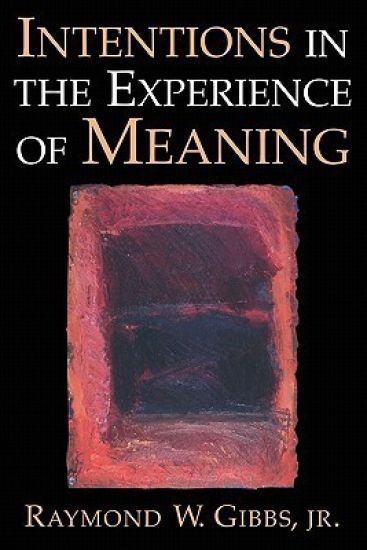
What do our assumptions about authorship matter for our experience of meaning? This book examines the debates in the humanities and social sciences over whether authorial intentions can, or should, constrain our interpretation of language and art. Scholars assume that understanding of linguistic and artistic meaning should not be constrained by beliefs about authors and their possible intentions in creating a human artifact. It is argued here that people are strongly disposed to infer intentionality when understanding oral speech, written texts, artworks, and many other human actions. Although ordinary people, and scholars, may infer meanings that diverge from, or extend beyond, what authors intend, our experience of human artifacts as meaningful is fundamentally tied to our assumptions of intentionality. This challenges the traditional ideas of intentions as existing solely in the minds of individuals, and formulates a new conceptual framework for examining if and when intentions influence the interpretation of meaning.

Figurative Language and Thought

Figurative Language and Thought

Albert N. Katz; Cristina Cacciari; Raymond W. Gibbs; Mark Turner

Oxford University Press Inc
1999
sidottu
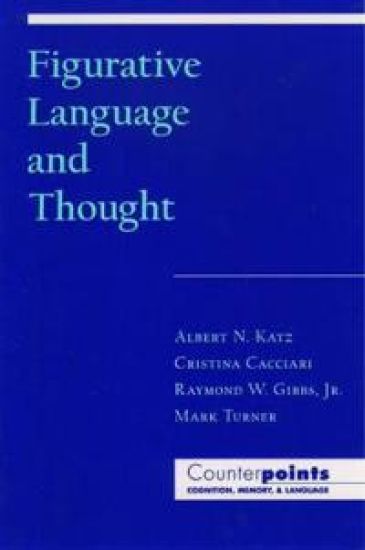
Our understanding of the nature and processing of figurative language is central to several important issues in cognitive science, including the relationship of language and thought, how we process language, and how we comprehend abstract meaning. Over the past fifteen years, many traditional theories on these issues have been challenged on the basis of figurative language research. This research has prompted such fundamental questions as: is metaphor primarily a function of thought, or is it merely a matter of language? Why do we prefer to speak metaphorically in everyday conversation, rather than literally? Is metaphor the only vehicle through which we can understand abstract concepts? What role do cultural and social factors play in our comprehension of figurative language? Points on these and related questions will be raised and argued by the book's authors in an integrative look at the role of non-literal language in cognition form investigators who vary widely in their theoretical and philosophical views.
Figurative Language and Thought

Figurative Language and Thought

Albert N. Katz; Cristina Cacciari; Raymond W. Gibbs; Mark Turner

Oxford University Press Inc
1999
nidottu
Our understanding of the nature and processing of figurative language is central to several important issues in cognitive science, including the relationship of language and thought, how we process language, and how we comprehend abstract meaning. Over the past fifteen years, many traditional theories on these issues have been challenged on the basis of figurative language research. This research has prompted such fundamental questions as: is metaphor primarily a function of thought, or is it merely a matter of language? Why do we prefer to speak metaphorically in everyday conversation, rather than literally? Is metaphor the only vehicle through which we can understand abstract concepts? What role do cultural and social factors play in our comprehension of figurative language? Points on these and related questions will be raised and argued by the book's authors in an integrative look at the role of non-literal language in cognition form investigators who vary widely in their theoretical and philosophical views.