Kirjojen hintavertailu. Mukana 12 390 323 kirjaa ja 12 kauppaa.
Kirjailija
Rayne Hall
Kirjat ja teokset yhdessä paikassa: 35 kirjaa, julkaisuja vuosilta 2013-2019, suosituimpien joukossa More Horror Writing Prompts: 77 Further Powerful Ideas To Inspire Your Fiction. Vertaile teosten hintoja ja tarkista saatavuus suomalaisista kirjakaupoista.
This book is crammed with fertile seeds for fiction that will thrill, disturb or scare your readers. Each prompt comes with a wealth of suggestions for how you can develop it to suit the kind of story you want to write. Plant those seeds into the rich ground of your own imagination, and watch them grow.
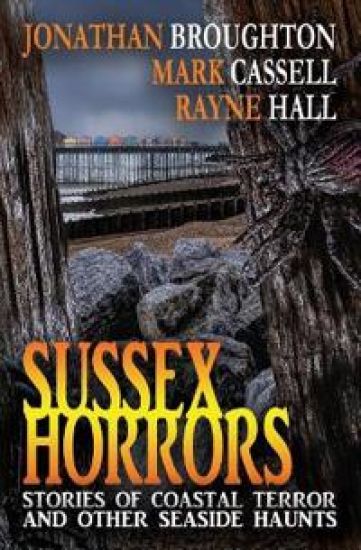
Three Sussex authors ... Twelve horror stories. Take a terrifying journey to a coastline associated with candyfloss and amusement arcades, and see it stripped to the bone. Whether it's seagulls that prove to be more than a nuisance, the mysterious inhabitants of a forgotten village, or a fisherman whose Easter eggs are not for consumption, the horrors are always there ... and much closer than we care to admit. Stories include: Mark Cassell's - The Rebirth - The Commission - Demon Alcohol - Away in a Mangler Jonathan Broughton's - The Stealth of Spiders - You Have One Message - Furzby Holt - The Pensioner Pirates of Marine Parade Rayne Hall's - Seagulls - Normal, Considering the Weather - Scruples - Double Rainbows
This book teaches professional techniques for slowing down the pace for emotion and suspense, and for speeding it up for action and excitement Please note: this is an advanced-level book, not suitable for beginner writers.
Would you stop for a hitchhiking clown? Go to a diner where the coffee is literally endless? Sled with Mother Nature? Sixteen Terrifying Tales of Travel by these authors: Oliver Baer, AJ Bartholomew, Edward P. Cardillo, Mark Cassell, V Peter Collins, Tom Connair, Teel James Glenn, Amy Grech, Carol Gyzander, Rayne Hall, Joe R. Kennedy, Phillip T. Stephens, Pamela Turner, Steven Van Patten, and Jake T.S. Wryte.
As a ghostwriter, you write, but someone else - perhaps a celebrity, a bestselling author or a subject authority - gets the credit. For this service, you get paid, often handsomely.Here are the reasons for taking up ghostwriting: * Typically, you get paid much more than if you publish under your own name.* You receive a flat fee for the job, regardless of whether the book flops or succeeds. You won't have other writers' anxiety about how much royalty you'll get and if it will be enough to pay the bills.* The demand for skilled ghostwriters is great and increasing.* Unlike in an employed job, you can choose who you want to work for, and the kind of work you want to do.* You can create your own schedule, fitting the work around your other commitments, whether you're raising children, holding down a day job or studying at university.* You can work anywhere in the world, as long as you have internet. If you relocate, your ghostwriting career comes with you. If you like, you can even become a digital nomad.* Unlike writers who publish under their own names, you don't need to get involved in the marketing and promotion.* Ghostwriting is a career you can build gradually, starting part-time while you still work in your day job, so there's no 'all or nothing' risk.* This business has few overheads. You'll need a computer, internet, perhaps some apps and devices - but those are items you may already have anyway. * You get writing experience and acquire new skills, and earn while you learn.* You can combine ghostwriting with authoring books under your own name, choosing how much time to devote to each.* You can experiment with new genres, without alienating your existing fans.What's the catch? Getting established is difficult, and finding your first clients is is a challenge. The secretive nature of the assignments means they're rarely advertised in the open market, and most Clients want an already-established ghostwriter. This can make it almost impossible for newcomers to break into the field. Expert writers Rayne Hall and Mariana Sabiano have pooled their experience you how to get a foot in the door. They guide you to* choose the best assignments* negotiate your fee* work through agencies* understand ghostwriting contracts (including the crucial non-disclosure agreement)* the types of clients you'll encounter* the ethics of writing under someone else's name.You'll learn specific skills: * how to match the nominal Author's voice* how to write for an existing series* how to ghostwrite non-fiction books, novels, blog posts, speeches and more* how to complete someone else's book
Do you want people to recognise your author name, and to associate it with their favourite genre? Would you like a connection with your readers so strong that they mark your next release on their calendars? In this book, Rayne Hall takes you through the process step by step. She helps you create and refine your authentic brand, and shows you how to build a strong reputation and loyal following. An authentic brand is the basis for enjoyable, authentic book promotion.This guide gets straight to the point, without fluff and without doctrine. It's all about you and your brand. You'l design your author brand from inside out, starting with who and what you really are and what you're comfortable with. You'll choose which parts of your true self you want to put on display, and how to present them. You'll learn: - How to develop different aspects of your brand- Which facets of your personality to present to the public- How to use your brand for effective marketing and book promotion- How to deal with conflicts and dilemmas- What choices to make for book cover and website design- What to post in social media- What to wear for public appearances- How to answer interview questions- How to respond to fan mail- What to say when asked "What do you write?"Designing a personal brand is a fun journey. Are you ready for your voyage of discovery?
Learn how professional authors craft scenes, and apply the techniques to your fiction. This book shows you how to choose the cast of characters and the point-of-view, how to work with plot events and create conflict, how to build tension and conflict, and how to rework a dull scene to make it sparkle. It teaches you professional techniques for specific types of scenes, with a full chapter for each of the following: - novel-beginning scenes - novel-ending scenes - black moment scenes - climax scenes - outdoor scenes - indoor scenes - scary scenes - creepy scenes - love scenes - erotic scenes - chase scenes - confession scenes - fight scenes - duel scenes - battle scenes - night scenes - relationship break-up scenes - argument scenes - travel scenes Whatever kind scene you're writing or revising, this guide can help. Please note: some of the content overlaps with Rayne Hall's other books and articles.
Learn to write love scenes like a a pro.cTwo professional authors show step-by-step how to create conflict, depth and intensity, and craft a heart-warming or harrowing scene that readers will never forget.This book shows you step-by-step how to to write about - the first meeting - the first kiss- characters in disguise- confessing a secret- relationship conflicts- breaking up- marriage proposals and much more. Do you want to write 'clean' or 'steamy' love scenes? The choice is yours. This guide shows techniques for - keeping your characters and your writing chaste- implying intimacy without showing it- creating erotic tension without sexual action- seducing the reader with explicit sex.Whatever genre you write, you'll find useful advice for your story: - gay love scenes- lovers belonging to different cultures- love between members of different species- love scenes involving several characters. 'Writing Love Scenes' is intended for intermediate and advanced-level writers and want to learn specialist skills. It is not recommended for absolute beginners.About the authors: Susanne McCarthy is an experienced romance novelist.Rayne Hall is a professional fantasy and horror author, editor of the Ten Tales speculative fiction anthologies, and creator of the Writer's Craft series
Do you want a daily dose of inspiration to carry your novel plot forward? Conventional lists of writing prompts are great for starting new projects, but don't work if you're already well into a story with developed characters and an ongoing plot. This book can help.Whether you seek to boost your own imagination, to rekindle your passion for a book project or to release a creative block, these prompts will get the juices flowing.
Use your writing talent and your skill with words heal yourself. Author Rayne Hall and psychologist Alexander Draghici show fourteen practical strategies for self-therapy. Do you feel like you're trapped in a dark hole of morass, sinking deeper and deeper, the mud rising to your hips, your chest, your throat? Is despair smothering you like a heavy blanket? Is your own life moving past you like a train, and you are forced to watch and cannot board? Has crippling lethargy wrapped its tentacles around you so tightly that you cannot move, sucking from you all energy and the will to live?If you want to get better, to feel alive again, if you want to step out of this darkness and take control of your recovery, this book can help.
Do you want to write a novel in a month? Has your writer's group set its members a fast-writing challenge? Has your publisher given you a tight deadline for delivering your next book? Are you planning to take part in the next National Novel Writing Month? If so, this book will help you gather ideas, develop a plot, do your research, and plan your project in the days or weeks before you begin writing, so when the marathon begins, you'll be in a great starting position, ready to sprint. This guide will help you write a killer first draft, and write it fast. You'll gather ideas, recruit characters, plan your plot, and plan for the eventualities that could prevent your success. This is not a 'How To Write A Novel' book. You'll find plenty of those in your local bookshop or online. Instead, this is a workbook. You can view it as a do-it-yourself workshop: you're in charge, you do the work, and you own what you create. You can flip forward and backward between sections, working on the assignments you feel inspired to tackle, and return to others later if you wish. You can also go back to some sections and add to them as new ideas come up. What you jot down in this book is not written in stone, so feel free to make changes later. During the month, new ideas will emerge, the novel will take detours, and characters will present you with their own agenda. Your advance planning should boost your creative freedom, not restrict it.
Do you want a synopsis that persuades agents to request the whole manuscript? Does your book need a description that entices Amazon customers click the 'Buy Now' button? This guide shows you step-by-step how to create six effective short forms for selling your manuscript to publishers and your indie-published book to readers: * The SYNOPSIS synopsis shows the novel's plot structure. You use it to communicate with industry professionals - publishers, editors, literary agents. * The CHAPTER-BY-CHAPTER OUTLINE tells industry professionals about your non-fiction book or short story collection. * The PITCH serves to convince publishers, editors, literary agents, booksellers and marketing people of the book's commercial potential. Use it during pitching appointments when you have only few minutes to talk about your book, and as a hook in query letters. * The BLURB is a product description for the book's back cover and Amazon page, designed to entice readers. * The ENDORSEMENT BLURB recommends another writer's book. * The TAGLINE is a short slogan to hook readers. Click 'Look Inside' or 'Download Free Sample' to see how this guide can help give your book the success it deserves. Rayne Hall is the author of over seventy books, both indie and traditionally published.
You've written a novel, and the draft brims with promise. Now you're revising it to shape it into a gripping work of fiction readers can't put down. Revising a novel is fun. With each change, you see your book grow closer to your vision and gain more power. This book offers you ideas on how to bring out your novel's full potential. Play with them, experiment, explore where they'll lead. To help you find the kind of prompts you need right now, they are sorted into three groups: Plot Revision Use this section if you have a first draft - perhaps after completing a NaNoWriMo sprint - and want to shape it into a powerful, emotion-rousing book. Scene Revision Here you'll find ideas to transform dull, dragging scenes into riveting reads with tension and sizzle. Line Editing Before you indie-publish your book or submit it to agents, enhance your style with sharp writing and a strong voice, where every word pulls the reader in. The polishing prompts help make your book sparkle with diamond quality. With most prompts come tips on how you can put the idea into practice. Interpret them creatively and adapt them to suit your unique story. If you've already applied an idea, or if it isn't a good fit for your novel, skip to a different one. Pick the prompts that make you tingle with excitement.