Kirjojen hintavertailu. Mukana 12 563 829 kirjaa ja 12 kauppaa.

Kirjailija

Rebecca K. C. Hersman

Kirjat ja teokset yhdessä paikassa: 6 kirjaa, julkaisuja vuosilta 2000-2022, suosituimpien joukossa Under the Nuclear Shadow. Vertaile teosten hintoja ja tarkista saatavuus suomalaisista kirjakaupoista.

Mukana myös kirjoitusasut: Rebecca K.C. Hersman

6 kirjaa

Kirjojen julkaisuhaarukka 2000-2022.

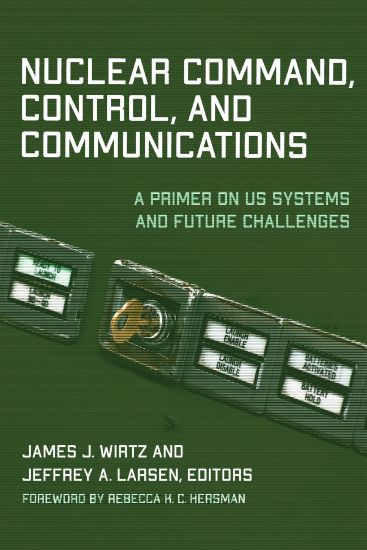
Nuclear Command, Control, and Communications

Nuclear Command, Control, and Communications

Rebecca K. C. Hersman

GEORGETOWN UNIVERSITY PRESS
2022
pokkari
A unique overview of the United States’ current nuclear command, control, and communications system and its modernization for the digital ageConcerns about the security of nuclear command, control, and communications (NC3) systems are not new, but they are becoming more urgent. While modernization is crucial to the future success of NC3 systems, the transition from analog to digital technologies has the potential to introduce vulnerabilities and unintended consequences. Nuclear infrastructure and command could be penetrated, corrupted, destroyed, or spoofed, leading to a loss of positive control (the ability to fire weapons) or negative control (the ability to prevent unauthorized or accidental use).Nuclear Command, Control, and Communications explores the current NC3 system and its vital role in ensuring effective deterrence, contemporary challenges posed by cyber threats, new weapons technologies, and the consensus across the nuclear enterprise of the need to modernize the United States’ Cold War–era system of systems. This volume, edited by James J. Wirtz and Jeffrey A. Larsen, offers the first overview of US NC3 since the 1980s. Part 1 provides an overview of the history, strategy, and technology associated with NC3 and how it enables deterrence strategy as the basis of national defense. Parts 2 and 3 identify how the US military’s NC3 works, the challenges of introducing digital technologies and the potential security threats, and how the system could fail if these considerations are not taken into account. Part 4 explains the progress NC3 has made thus far, and how we might move forward.During this critical juncture, policymakers, practitioners, and scholars will find this an invaluable resource to understanding our current NC3 system, its relationship to effective deterrence, what must be done to modernize NC3, and how to ensure this transition is undertaken safely and successfully.
Nuclear Command, Control, and Communications

Nuclear Command, Control, and Communications

Rebecca K. C. Hersman

GEORGETOWN UNIVERSITY PRESS
2022
sidottu
A unique overview of the United States’ current nuclear command, control, and communications system and its modernization for the digital ageConcerns about the security of nuclear command, control, and communications (NC3) systems are not new, but they are becoming more urgent. While modernization is crucial to the future success of NC3 systems, the transition from analog to digital technologies has the potential to introduce vulnerabilities and unintended consequences. Nuclear infrastructure and command could be penetrated, corrupted, destroyed, or spoofed, leading to a loss of positive control (the ability to fire weapons) or negative control (the ability to prevent unauthorized or accidental use).Nuclear Command, Control, and Communications explores the current NC3 system and its vital role in ensuring effective deterrence, contemporary challenges posed by cyber threats, new weapons technologies, and the consensus across the nuclear enterprise of the need to modernize the United States’ Cold War–era system of systems. This volume, edited by James J. Wirtz and Jeffrey A. Larsen, offers the first overview of US NC3 since the 1980s. Part 1 provides an overview of the history, strategy, and technology associated with NC3 and how it enables deterrence strategy as the basis of national defense. Parts 2 and 3 identify how the US military’s NC3 works, the challenges of introducing digital technologies and the potential security threats, and how the system could fail if these considerations are not taken into account. Part 4 explains the progress NC3 has made thus far, and how we might move forward.During this critical juncture, policymakers, practitioners, and scholars will find this an invaluable resource to understanding our current NC3 system, its relationship to effective deterrence, what must be done to modernize NC3, and how to ensure this transition is undertaken safely and successfully.
Integrated Arms Control in an Era of Strategic Competition

Integrated Arms Control in an Era of Strategic Competition

Rebecca K.C. Hersman; Heather Williams; Suzanne Claeys

BLOOMSBURY PUBLISHING PLC
2022
nidottu
Can contemporary arms control keep pace with the rapid rate of change in both geopolitics and technology? While the challenges to future arms control point to a rocky road ahead, measures that build confidence, reduce miscalculation, enhance transparency, restrain costly and dangerous military competition, and offer useful mechanisms and venues for addressing sources of conflict will be of increasing value. For arms control tools to succeed, however, they must be adapted to the current security environment, account for rapidly evolving technological and informational factors, and consider alternative structures, modalities, and participation models. Indeed, now is the time for a recoupling of arms control with deterrence in a way that recognizes these new realities. Now is the time for integrated arms control that enhances stability, embraces plurality, and reinforces resiliency. This CSIS study examines the implication and prospects for the future of arms control in a highly competitive security environment in which challenges from advanced technologies and diminished state control over processes of verification become increasingly prominent features, even as the scope and modalities of arms control grow more complex and multifaceted. The report offers a reexamination of the broad contours of arms control and its role in managing competitive security risks and challenges and the implications for U.S. policymakers, academics, and strategic thinkers engaged in U.S. nuclear policy.
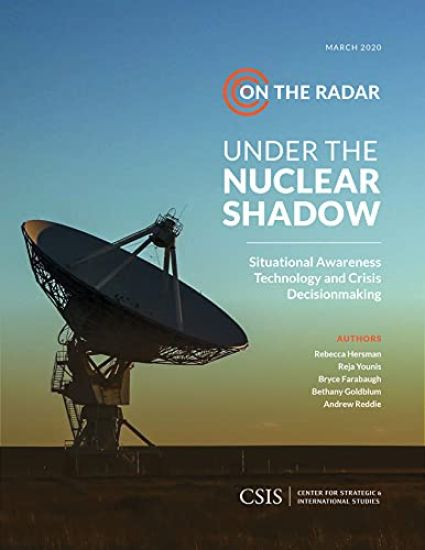
Under the Nuclear Shadow

Under the Nuclear Shadow

Rebecca K.C. Hersman; Reja Younis; Bryce Farabaugh; Bethany Goldblum; Andrew Reddie

Centre for Strategic International Studies,U.S.
2021
nidottu
Improvements to strategic situational awareness (SA)—the ability to characterize the operating environment, detect and respond to threats, and discern actual attacks from false alarms across the spectrum of conflict—have long been assumed to reduce the risk of conflict and help manage crises more successfully when they occur. However, with the development of increasingly capable strategic SA-related technology, growing comingling of conventional and nuclear SA requirements and capabilities, and the increasing risk of conventional conflict between nuclear-armed adversaries, this may no longer be the case. The Project on Nuclear Issues (PONI) at the Center for Strategic and International Studies (CSIS) and the University of California, Berkeley’s Nuclear Policy Working Group undertook a two-year study to examine the implications of emerging situational awareness technologies for managing crises between nuclear-armed adversaries.
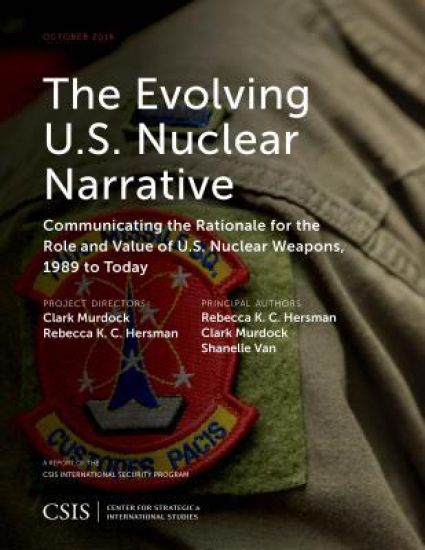
The Evolving U.S. Nuclear Narrative

The Evolving U.S. Nuclear Narrative

Rebecca K.C. Hersman; Clark Murdock; Shanelle Van

Centre for Strategic International Studies,U.S.
2016
nidottu
In recent years, it has become increasingly clear to many observers that the Department of Defense must better communicate to the officers at the tactical end of the nuclear mission a rationale for nuclear weapons and deterrence, the critical role that they play in the post–Cold War strategy of the United States, and the value of nuclear weapons to the security of the American people. This report tracks the changing conceptual and political landscape of U.S. nuclear deterrence to illuminate the gap in prioritizing the nuclear arsenal and to build a compelling rationale for tactical personnel explaining the role and value of U.S. nuclear weapons.
Friends and Foes

Friends and Foes

Rebecca K. C. Hersman

Brookings Institution
2000
nidottu
"Foreign policy in the post–cold war era is profoundly complex, and so too are the institutions that share the responsibility to guide and manage America's relations with other countries. Policymakers struggle within porous and fragmented institutions, in which policy is driven more powerfully by clusters of like-minded individuals than by disciplined organizations. The nation's political parties face deep divisions over foreign policy and are unable to forge a coherent vision for the future. Congress is increasingly polarized along ideological lines, while traditional internationalist foreign policy spans a truncated political center. Few aspects of U.S. politics are more contentious or controversial than the respective roles of Congress and the executive branch in formulating foreign policy. In this complex environment, scholars, pundits, and policymakers look to the public and high-profile battles between Congress and the president as a bellwether of the future of U.S. foreign policy.In reality, foreign policy is often shaped, debated, and made out of public view. In Friends and Foes, Rebecca K. C. Hersman shifts the focus away from headline-grabbing events and disagreements to the day-to-day interactions that form the backbone of policymaking.Hersman illustrates the ebb and flow of foreign policy development through many examples and anecdotes. She also includes three in-depth case studies from the mid-1990s: the controversial transfer of three U.S. warships to Turkey; the dispute over relaxing sanctions against Pakistan because of concerns about that nation's nuclear proliferation record, and the 1995–97 battle over the Chemical Weapons Convention. The book also illuminates the role of the media in influencing the outcome of foreign policy decisionmaking. Countering the conventional wisdom that a president and a Congress of the same political party are best able to ""get things done,"" Friends and Foes sheds new light on the institutional dynamics, conflicts, and issue loyalties that affect the development of U.S. foreign policy."