Kirjojen hintavertailu. Mukana 12 452 250 kirjaa ja 12 kauppaa.

Kirjailija

Rebecca Kingston

Kirjat ja teokset yhdessä paikassa: 4 kirjaa, julkaisuja vuosilta 2011-2024, suosituimpien joukossa Public Passion. Vertaile teosten hintoja ja tarkista saatavuus suomalaisista kirjakaupoista.

4 kirjaa

Kirjojen julkaisuhaarukka 2011-2024.

Plutarch's Prism

Plutarch's Prism

Rebecca Kingston

Cambridge University Press
2024
pokkari
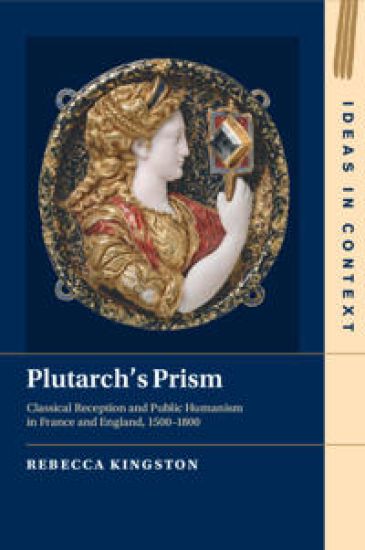
Throughout the early modern period, political theorists in France and England drew on the works of Plutarch to offer advice to kings and princes. Elizabeth I herself translated Plutarch in her later years, while Jacques Amyot's famous translations of Plutarch's The Parallel Lives led to the wide distribution of his work and served as a key resource for Shakespeare in the writing of his Roman plays, through Sir Thomas North's English translations. Rebecca Kingston's new study explores how Plutarch was translated into French and English during the Renaissance and how his works were invoked in political argument from the early modern period into the 18th century, contributing to a tradition she calls 'public humanism'. This book then traces the shifting uses of Plutarch in the Enlightenment, leading to the decline of this tradition of 'public humanism'. Throughout, the importance of Plutarch's work is highlighted as a key cultural reference and for its insight into important aspects of public service.
Plutarch's Prism

Plutarch's Prism

Rebecca Kingston

Cambridge University Press
2022
sidottu
Throughout the early modern period, political theorists in France and England drew on the works of Plutarch to offer advice to kings and princes. Elizabeth I herself translated Plutarch in her later years, while Jacques Amyot's famous translations of Plutarch's The Parallel Lives led to the wide distribution of his work and served as a key resource for Shakespeare in the writing of his Roman plays, through Sir Thomas North's English translations. Rebecca Kingston's new study explores how Plutarch was translated into French and English during the Renaissance and how his works were invoked in political argument from the early modern period into the 18th century, contributing to a tradition she calls 'public humanism'. This book then traces the shifting uses of Plutarch in the Enlightenment, leading to the decline of this tradition of 'public humanism'. Throughout, the importance of Plutarch's work is highlighted as a key cultural reference and for its insight into important aspects of public service.
Public Passion

Public Passion

Rebecca Kingston

McGill-Queen's University Press
2011
sidottu
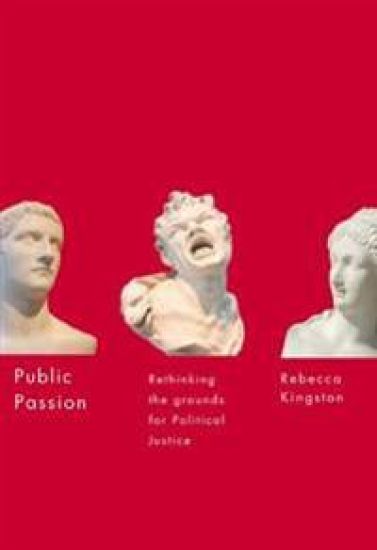
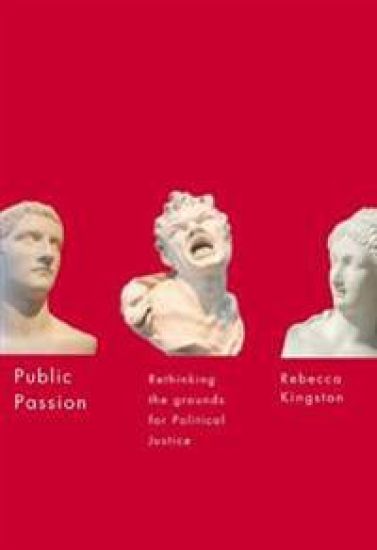
Taking a broad historical perspective, Public Passion traces the role of emotion in political thought from its prominence in classical sources, through its resuscitation by Montesquieu, to the present moment. Combining intellectual history, philosophy, and political theory, Rebecca Kingston develops a sophisticated account of collective emotion that demonstrates how popular sentiment is compatible with debate, pluralism, and individual agency and shows how emotion shapes the tone of interactions among citizens. She also analyzes the ways in which emotions are shared and transmitted among citizens of a particular regime, paying particular attention to the connection between political institutions and the psychological dispositions that they foster. Public Passion presents illuminating new ways to appreciate the forms of popular will and reveals that emotional understanding by citizens may in fact be the very basis through which a commitment to principles of justice can be sustained.
Public Passion

Public Passion

Rebecca Kingston

McGill-Queen's University Press
2011
nidottu
Taking a broad historical perspective, Public Passion traces the role of emotion in political thought from its prominence in classical sources, through its resuscitation by Montesquieu, to the present moment. Combining intellectual history, philosophy, and political theory, Rebecca Kingston develops a sophisticated account of collective emotion that demonstrates how popular sentiment is compatible with debate, pluralism, and individual agency and shows how emotion shapes the tone of interactions among citizens. She also analyzes the ways in which emotions are shared and transmitted among citizens of a particular regime, paying particular attention to the connection between political institutions and the psychological dispositions that they foster. Public Passion presents illuminating new ways to appreciate the forms of popular will and reveals that emotional understanding by citizens may in fact be the very basis through which a commitment to principles of justice can be sustained.