
Kirjojen hintavertailu. Mukana 12 595 353 kirjaa ja 12 kauppaa.

Kirjailija

Rebecca M. Blank

Kirjat ja teokset yhdessä paikassa: 3 kirjaa, julkaisuja vuosilta 1998-2011, suosituimpien joukossa The Hidden War. Vertaile teosten hintoja ja tarkista saatavuus suomalaisista kirjakaupoista.

3 kirjaa

Kirjojen julkaisuhaarukka 1998-2011.

The Hidden War

The Hidden War

Susan J. Popkin; Victoria E. Gwiasda; Lynn M. Olson; Dennis P. Rosenbaum; Larry Buron; Rebecca M. Blank

Rutgers University Press
2000
nidottu
Since the late 1970s, the high-rise developments of the Chicago Housing Authority (CHA) have been dominated by gang violence and drugs, creating a sense of hopelessness among residents. Despite a lengthy war on crime, costing hundreds of millions of dollars, the CHA has been unable to reduce the violence that makes life intolerable. Focusing on three developments—Rockwell Gardens, Henry Horner Homes, and Harold Ickes Homes—Sue Popkin and her co-authors interview residents, community leaders, and CHA staff. The Hidden War chronicles the many failed efforts of the CHA to combat crime and improve its developments, offering a vivid portrait of what life is like when lived among bullets, graffiti, and broken plumbing. Most families living in these developments are headed by African American single mothers. The authors reveal the dilemmas facing women and children who are often victims or witnesses of violent crime, and yet are dependent on the perpetrators and their drug-dominant economy. The CHA—plagued by financial scandals, managerial incompetence, and inconsistent funding—is no match for thegang-dominated social order. Even well-intentioned initiatives such as the recent effort to demolish and “revitalize” the worst developments seem to be ineffective at combating crime, while the drastic changes leave many vulnerable families facing an uncertain future. The Hidden War sends a humbling message to policy makers and prognosticators who claim to know the right way to “solve poverty.”
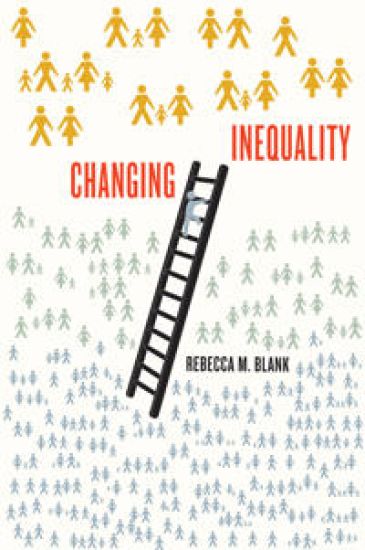
Changing Inequality

Changing Inequality

Rebecca M. Blank

University of California Press
2011
pokkari
Rebecca M. Blank offers the first comprehensive analysis of an economic trend that has been reshaping the United States over the past three decades: rapidly rising income inequality. In clear language, she provides an overview of how and why the level and distribution of income and wealth has changed since 1979, sets this situation within its historical context, and investigates the forces that are driving it. Among other factors, Blank looks closely at changes within families, including women's increasing participation in the work force. The book includes some surprising findings - for example, that per-person income has risen sharply among almost all social groups, even as income has become more unequally distributed. Looking toward the future, Blank suggests that while rising inequality will likely be with us for many decades to come, it is not an inevitable outcome. Her book considers what can be done to address this trend, and also explores the question: why should we be concerned about this phenomenon?
It Takes a Nation

It Takes a Nation

Rebecca M. Blank

Princeton University Press
1998
pokkari
As Americans experiment with dismantling the nation's welfare system, cliches and slogans proliferate, ranging from charges that the poor are simply lazy to claims that existing antipoverty programs have failed completely. In this impeccably researched book, Rebecca Blank provides the definitive antidote to the scapegoating, guesswork, and outright misinformation of today's welfare debates. Demonstrating that government aid has been far more effective than most people think, she also explains that even private support for the poor depends extensively on public funds. It takes a nation to fight a problem as pervasive and subtle as modern poverty, and this book argues that we should continue to implement a mix of private and public programs. Federal, state, and local assistance should go hand in hand with private efforts at community development and personal empowerment and change. The first part of the book investigates the changing nature of poverty in America. Poverty is harder to combat now than in the past, both because of the changing demographics of who is poor as well as the major deterioration in earnings among less-skilled workers. The second part of the book delves into policies designed to reduce poverty, presenting evidence that many though not all programs have done exactly what they set out to do. The final chapters provide an excellent review of recent policy changes and make workable suggestions for how to improve public assistance programs to assure a safety net, while still encouraging poor adults to find employment and support their families.