Kirjojen hintavertailu. Mukana 12 595 353 kirjaa ja 12 kauppaa.

Kirjailija

Rebecca Maloy

Kirjat ja teokset yhdessä paikassa: 4 kirjaa, julkaisuja vuosilta 2013-2025, suosituimpien joukossa Understanding the Old Hispanic Office. Vertaile teosten hintoja ja tarkista saatavuus suomalaisista kirjakaupoista.

4 kirjaa

Kirjojen julkaisuhaarukka 2013-2025.

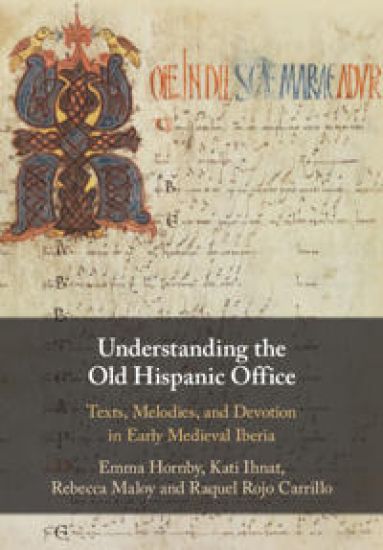
Understanding the Old Hispanic Office

Understanding the Old Hispanic Office

Emma Hornby; Kati Ihnat; Rebecca Maloy; Raquel Rojo Carrillo

Cambridge University Press
2025
pokkari
Based on highly original archival and palaeographical research, this is the first methodological and factual primer in English on the distinctive liturgical tradition of early medieval Spain. It provides clear and approachable blueprints for future work on the description and analysis (musical, theological and cultural) of this and other liturgies. For non-specialists, the authors introduce the main features of Old Hispanic liturgy, its manuscripts, its services and its liturgical genres. For specialists, they model a variety of ways to work with the Old Hispanic materials in depth, incorporating notational, musical, theological and historical perspectives. For those interested in musical notation, the book lays out a method for working with unpitched neumes, with illustrative results, that will inspire and challenge others working on monophonic chant. For historians and liturgists, the texts and melodies are analysed in combination with the theological context that informed their creation.
Understanding the Old Hispanic Office

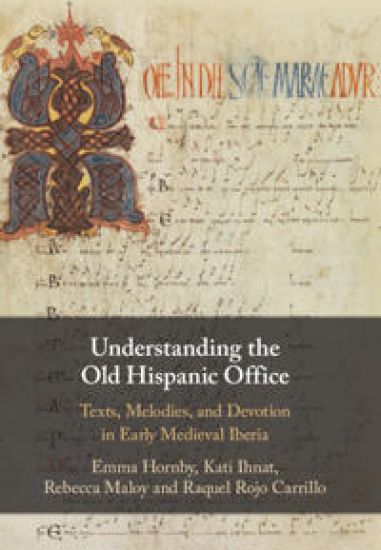
Understanding the Old Hispanic Office

Emma Hornby; Kati Ihnat; Rebecca Maloy; Raquel Rojo Carrillo

Cambridge University Press
2022
sidottu
Based on highly original archival and palaeographical research, this is the first methodological and factual primer in English on the distinctive liturgical tradition of early medieval Spain. It provides clear and approachable blueprints for future work on the description and analysis (musical, theological and cultural) of this and other liturgies. For non-specialists, the authors introduce the main features of Old Hispanic liturgy, its manuscripts, its services and its liturgical genres. For specialists, they model a variety of ways to work with the Old Hispanic materials in depth, incorporating notational, musical, theological and historical perspectives. For those interested in musical notation, the book lays out a method for working with unpitched neumes, with illustrative results, that will inspire and challenge others working on monophonic chant. For historians and liturgists, the texts and melodies are analysed in combination with the theological context that informed their creation.
Songs of Sacrifice

Songs of Sacrifice

Rebecca Maloy

Oxford University Press Inc
2020
sidottu
Between the seventh and eleventh centuries, Christian worship on the Iberian Peninsula was structured by rituals of great theological and musical richness, known as the Old Hispanic (or Mozarabic) rite. Much of this liturgy was produced during a seventh-century cultural and educational program aimed at creating a society unified in the Nicene faith, built on twin pillars of church and kingdom. Led by Isidore of Seville and subsequent generations of bishops, this cultural renewal effort began with a project of clerical education, facilitated through a distinctive culture of textual production. Rebecca Maloy's Songs of Sacrifice argues that liturgical music--both texts and melodies--played a central role in the cultural renewal of early Medieval Iberia, with a chant repertory that was carefully designed to promote the goals of this cultural renewal. Through extensive reworking of the Old Testament, the creators of the chant texts fashioned scripture in ways designed to teach biblical exegesis, linking both to patristic traditions--distilled through the works of Isidore of Seville and other Iberian bishops--and to Visigothic anti-Jewish discourse. Through musical rhetoric, the melodies shaped the delivery of the texts to underline these messages. In these ways, the chants worked toward the formation of individual Christian souls and a communal Nicene identity. Examining the crucial influence of these chants, Songs of Sacrifice addresses a plethora of long-debated issues in musicology, history, and liturgical studies, and reveals the potential for Old Hispanic chant to shed light on fundamental questions about how early chant repertories were formed, why their creators selected particular passages of scripture, and why they set them to certain kinds of music.
Music and Meaning in Old Hispanic Lenten Chants

Music and Meaning in Old Hispanic Lenten Chants

Emma Hornby; Rebecca Maloy

The Boydell Press
2013
sidottu
The tradition of Old Hispanic liturgical chant is here examined through a new methodology, enabling striking new insights into its use. Medieval Iberian liturgical practice was independent of the Roman liturgy. As such, its sources preserve an unfamiliar and fascinating devotional journey through the liturgical year. However, although Old Hispanic liturgical chanthas long been considered one of the most important medieval chant traditions, what musical notation to survive shows only where the melodies rise and fall, not precise intervals or pitches. This lack of pitch-readable notation has prevented scholars from fully engaging with the surviving sources - a gap which this book aims to fill, via a new methodology for analysing the melodies and the relationship between melody and text. Focussing on three genres of chant sung during the Old Hispanic Lent (the threni, psalmi, and Easter Vigil canticles), the book takes a holistic view of the texts and melodies, setting them in the context of their liturgical and intellectual surroundings, and, for the Easter Vigil, exploring the relationship between different Old Hispanic traditions and other western liturgies. It concludes that the theologically purposeful text selections combine with carefully shaped melodies to guide the devotional practice of their hearers. Emma Hornby is a Reader in Music , University of Bristol; Rebecca Maloy is Associate Professor of Music, University of Colorado at Boulder.