Kirjojen hintavertailu. Mukana 12 290 406 kirjaa ja 12 kauppaa.

Kirjailija

Rebecca Romney

Kirjat ja teokset yhdessä paikassa: 9 kirjaa, julkaisuja vuosilta 2019-2026, suosituimpien joukossa Printer's Error. Vertaile teosten hintoja ja tarkista saatavuus suomalaisista kirjakaupoista.

9 kirjaa

Kirjojen julkaisuhaarukka 2019-2026.

Printer's Error

Printer's Error

Rebecca Romney; J. P. Romney

HarperPerennial
2019
nidottu
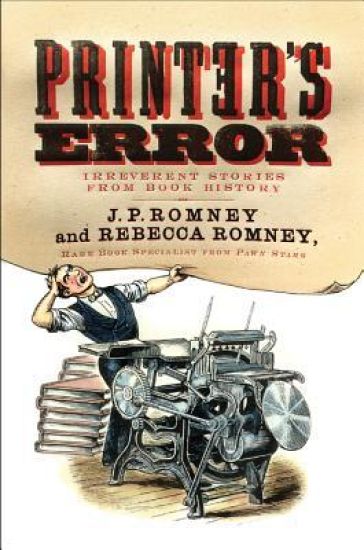
A funny and entertaining history of printed books as told through absurd moments in the lives of authors and printers, collected by television’s favorite rare-book expert from HISTORY’s hit series Pawn Stars.Since the Gutenberg Bible first went on sale in 1455, printing has been viewed as one of the highest achievements of human innovation. But the march of progress hasn’t been smooth; downright bizarre is more like it. Printer’s Error chronicles some of the strangest and most humorous episodes in the history of Western printing, and makes clear that we’ve succeeded despite ourselves. Rare-book expert Rebecca Romney and author J. P. Romney take us from monasteries and museums to auction houses and libraries to introduce curious episodes in the history of print that have had a profound impact on our world.Take, for example, the Gutenberg Bible. While the book is regarded as the first printed work in the Western world, Gutenberg’s name doesn’t appear anywhere on it. Today, Johannes Gutenberg is recognized as the father of Western printing. But for the first few hundred years after the invention of the printing press, no one knew who printed the first book. This long-standing mystery took researchers down a labyrinth of ancient archives and libraries, and unearthed surprising details, such as the fact that Gutenberg’s financier sued him, repossessed his printing equipment, and started his own printing business afterward. Eventually the first printed book was tracked to the library of Cardinal Mazarin in France, and Gutenberg’s forty-two-line Bible was finally credited to him, thus ensuring Gutenberg’s name would be remembered by middle-school students worldwide.Like the works of Sarah Vowell, John Hodgman, and Ken Jennings, Printer’s Error is a rollicking ride through the annals of time and the printed word.

Jane Austen's Bookshelf: A Rare Book Collector's Quest to Find the Women Writers Who Shaped a Legend
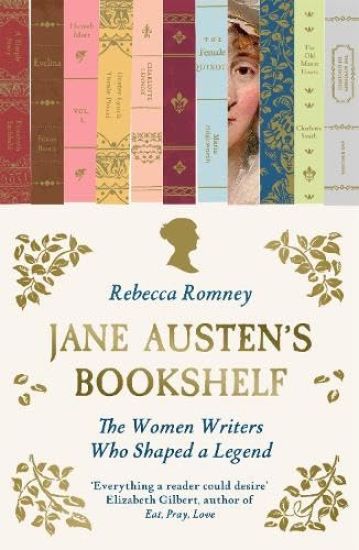
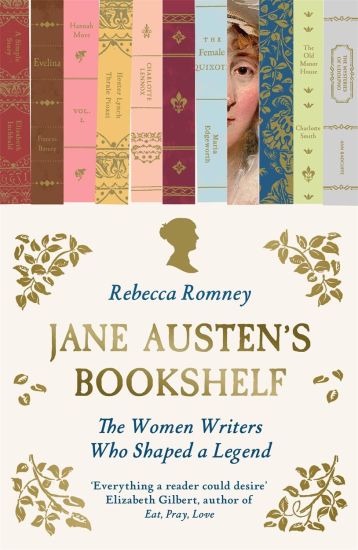
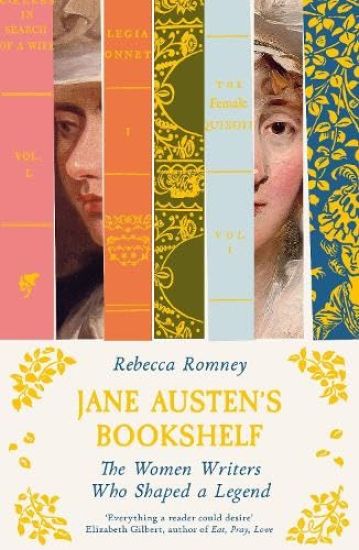
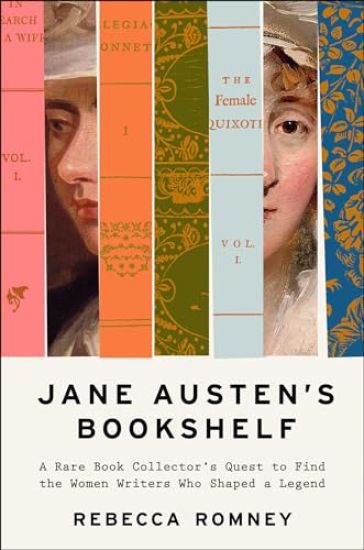
From rare book dealer and guest star of the hit show Pawn Stars, a page-turning literary adventure featuring "your favorite author's favorite authors" (Today)--the women who inspired Jane Austen--that's "a meditation on reading and writing, on honesty and self-discovery--and on what books can teach us, if we let them" (The Washington Post). Long before she was a rare book dealer, Rebecca Romney was a devoted reader of Jane Austen. She loved that Austen's books took the lives of women seriously, explored relationships with wit and confidence, and always, allowed for the possibility of a happy ending. She read and reread them, often wishing Austen wrote just one more. But Austen wasn't a lone genius. She wrote at a time of great experimentation for women writers--and clues about those women, and the exceptional books they wrote, are sprinkled like breadcrumbs throughout Austen's work. Every character in Northanger Abbey who isn't a boor sings the praises of Ann Radcliffe. The play that causes such a stir in Mansfield Park is a real one by the playwright Elizabeth Inchbald. In fact, the phrase "pride and prejudice" came from Frances Burney's second novel Cecilia. The women that populated Jane Austen's bookshelf profoundly influenced her work; Austen looked up to them, passionately discussed their books with her friends, and used an appreciation of their books as a litmus test for whether someone had good taste. So where had these women gone? Why hadn't Romney--despite her training--ever read them? Or, in some cases, even heard of them? And why were they no longer embraced as part of the wider literary canon? Jane Austen's Bookshelf investigates the disappearance of Austen's heroes--women writers who were erased from the Western canon--to reveal who they were, what they meant to Austen, and how they were forgotten. Each chapter profiles a different writer including Frances Burney, Ann Radcliffe, Charlotte Lennox, Charlotte Smith, Hannah More, Elizabeth Inchbald, Hester Lynch Thrale Piozzi, and Maria Edgeworth--and recounts Romney's experience reading them, finding rare copies of their works, and drawing on connections between their words and Austen's. Romney collects the once-famed works of these forgotten writers, physically recreating Austen's bookshelf and making a convincing case for why these books should be placed back on the to-be-read pile of all book lovers today. Jane Austen's Bookshelf will encourage you to look beyond assigned reading lists, question who decides what belongs there, and build your very own collection of favorite novels.
Jane Austen's Bookshelf

Jane Austen's Bookshelf

Rebecca Romney

BONNIER BOOKS LTD
2025
nidottu
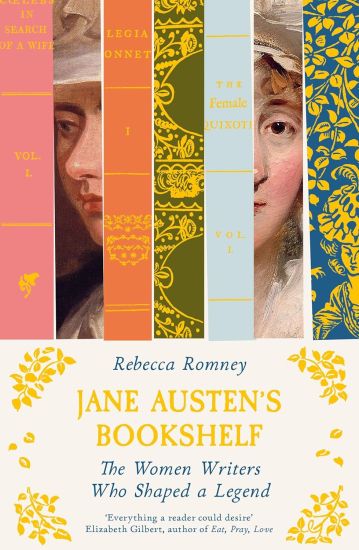
'Everything a reader could desire: wit, passion, mystery, brilliant detective work, a love of rare books, a deep dive into literary history and, best of all, the restoration of reputation for a group of great women authors whose names should never have been forgotten' Elizabeth Gilbert, author of Eat, Pray, LovePublishing to coincide with the 250th anniversary of Jane Austen's birth.It all started with a book that made me curious.When rare books dealer Rebecca Romney found an emerald clothbound edition of Evelina by Frances Burney, she was happy to discover that she'd stumbled across a novel by one of Jane Austen's favourite authors. Inspired by the connection between the two writers, she returned to Austen's books with a new lens, picking out clues sprinkled throughout her works that pointed to the writers she had admired.Austen read William Shakespeare, John Milton, Daniel Defoe, and Samuel Richardson, all authors Rebecca had read. But Austen also read Frances Burney, Ann Radcliffe, Charlotte Lennox, Hannah More, Charlotte Smith, Elizabeth Inchbald, Hester Piozzi, and Maria Edgeworth, all authors Romney hadn't. These female writers all sat proudly on Austen's bookshelf, but have disappeared from ours.Romney became fascinated with these writers and wanted to answer three important questions: What were the stories behind the lives of these women? Why have they disappeared from our bookshelves? Who wrote them out of history? She had a mission, an obligation: she needed to collect Jane Austen's bookshelf.
Jane Austen's Bookshelf

Jane Austen's Bookshelf

Rebecca Romney

BONNIER BOOKS LTD
2025
sidottu
'Everything a reader could desire: wit, passion, mystery, brilliant detective work, a love of rare books, a deep dive into literary history and, best of all, the restoration of reputation for a group of great women authors whose names should never have been forgotten' Elizabeth Gilbert, author of Eat, Pray, LovePublishing to coincide with the 250th anniversary of Jane Austen's birth.It all started with a book that made me curious.When rare books dealer Rebecca Romney found an emerald clothbound edition of Evelina by Frances Burney, she was happy to discover that she'd stumbled across a novel by one of Jane Austen's favourite authors. Inspired by the connection between the two writers, she returned to Austen's books with a new lens, picking out clues sprinkled throughout her works that pointed to the writers she had admired.Austen read William Shakespeare, John Milton, Daniel Defoe, and Samuel Richardson, all authors Rebecca had read. But Austen also read Frances Burney, Ann Radcliffe, Charlotte Lennox, Hannah More, Charlotte Smith, Elizabeth Inchbald, Hester Piozzi, and Maria Edgeworth, all authors Romney hadn't. These female writers all sat proudly on Austen's bookshelf, but have disappeared from ours.Romney became fascinated with these writers and wanted to answer three important questions: What were the stories behind the lives of these women? Why have they disappeared from our bookshelves? Who wrote them out of history? She had a mission, an obligation: she needed to collect Jane Austen's bookshelf.
Jane Austen's Bookshelf

Jane Austen's Bookshelf

Rebecca Romney

BONNIER BOOKS LTD
2025
sidottu
'Everything a reader could desire: wit, passion, mystery, brilliant detective work, a love of rare books, a deep dive into literary history and, best of all, the restoration of reputation for a group of great women authors whose names should never have been forgotten' Elizabeth Gilbert, author of Eat, Pray, LovePublishing to coincide with the 250th anniversary of Jane Austen's birth.It all started with a book that made me curious.When rare books dealer Rebecca Romney found an emerald clothbound edition of Evelina by Frances Burney, she was happy to discover that she'd stumbled across a novel by one of Jane Austen's favourite authors. Inspired by the connection between the two writers, she returned to Austen's books with a new lens, picking out clues sprinkled throughout her works that pointed to the writers she had admired.Austen read William Shakespeare, John Milton, Daniel Defoe, and Samuel Richardson, all authors Rebecca had read. But Austen also read Frances Burney, Ann Radcliffe, Charlotte Lennox, Hannah More, Charlotte Smith, Elizabeth Inchbald, Hester Piozzi, and Maria Edgeworth, all authors Romney hadn't. These female writers all sat proudly on Austen's bookshelf, but have disappeared from ours.Romney became fascinated with these writers and wanted to answer three important questions: What were the stories behind the lives of these women? Why have they disappeared from our bookshelves? Who wrote them out of history? She had a mission, an obligation: she needed to collect Jane Austen's bookshelf.
Jane Austen's Bookshelf: A Rare Book Collector's Quest to Find the Women Writers Who Shaped a Legend
From rare book dealer and guest star of the hit show Pawn Stars, a page-turning literary adventure featuring "your favorite author's favorite authors" (Today)--the women who inspired Jane Austen--that's "a meditation on reading and writing, on honesty and self-discovery--and on what books can teach us, if we let them" (The Washington Post). Long before she was a rare book dealer, Rebecca Romney was a devoted reader of Jane Austen. She loved that Austen's books took the lives of women seriously, explored relationships with wit and confidence, and always, allowed for the possibility of a happy ending. She read and reread them, often wishing Austen wrote just one more. But Austen wasn't a lone genius. She wrote at a time of great experimentation for women writers--and clues about those women, and the exceptional books they wrote, are sprinkled like breadcrumbs throughout Austen's work. Every character in Northanger Abbey who isn't a boor sings the praises of Ann Radcliffe. The play that causes such a stir in Mansfield Park is a real one by the playwright Elizabeth Inchbald. In fact, the phrase "pride and prejudice" came from Frances Burney's second novel Cecilia. The women that populated Jane Austen's bookshelf profoundly influenced her work; Austen looked up to them, passionately discussed their books with her friends, and used an appreciation of their books as a litmus test for whether someone had good taste. So where had these women gone? Why hadn't Romney--despite her training--ever read them? Or, in some cases, even heard of them? And why were they no longer embraced as part of the wider literary canon? Jane Austen's Bookshelf investigates the disappearance of Austen's heroes--women writers who were erased from the Western canon--to reveal who they were, what they meant to Austen, and how they were forgotten. Each chapter profiles a different writer including Frances Burney, Ann Radcliffe, Charlotte Lennox, Charlotte Smith, Hannah More, Elizabeth Inchbald, Hester Lynch Thrale Piozzi, and Maria Edgeworth--and recounts Romney's experience reading them, finding rare copies of their works, and drawing on connections between their words and Austen's. Romney collects the once-famed works of these forgotten writers, physically recreating Austen's bookshelf and making a convincing case for why these books should be placed back on the to-be-read pile of all book lovers today. Jane Austen's Bookshelf will encourage you to look beyond assigned reading lists, question who decides what belongs there, and build your very own collection of favorite novels.
The Judas Rose

The Judas Rose

Suzette Haden Elgin; Rebecca Romney

FEMINIST PRESS AT THE CITY UNIVERSITY OF NEW YORK
2019
pokkari
Originally published in the 1980s, the Native Tongue trilogy is a classic dystopian tale: a testament to the power of language and women's collective action. In the second book of the series, a covert female agent is sent to break up the resistance. In the second volume of the Native Tongue trilogy, the time has come for L adan--the secret language created to resist an oppressive patriarchy--to empower womankind worldwide. To expand the language's reach, female linguists translate the Bible into L adan, and a group of Roman Catholic nuns are tasked to spread the language. But when outraged priests detect their sabotage, they send a double agent to infiltrate and destroy the movement from the inside. "This angry feminist text is also an exemplary experiment in speculative fiction, deftly and implacably pursuing both a scientific hypothesis and an ideological hypothesis through all their social, moral, and emotional implications." --Ursula K. Le Guin "A pioneering feminist experiment." --Literary Hub A welcome reminder of the feminist legacies of science fiction. . . . Explores the power of speech, agency, and subversion in a work that is as gripping, troubling, and meaningful today as it has ever been. --Publishers Weekly (starred review)