Kirjojen hintavertailu. Mukana 12 576 383 kirjaa ja 12 kauppaa.

Kirjailija

Rebecca Solnit

Kirjat ja teokset yhdessä paikassa: 93 kirjaa, julkaisuja vuosilta 2001-2026, suosituimpien joukossa River of Shadows: Eadweard Muybridge and the Technological Wild West. Vertaile teosten hintoja ja tarkista saatavuus suomalaisista kirjakaupoista.

93 kirjaa

Kirjojen julkaisuhaarukka 2001-2026.

A Paradise Built In Hell

A Paradise Built In Hell

Rebecca Solnit

Penguin USA
2010
nidottu
"A landmark book that gives impassioned challenge to the social meaning of disasters" (The New York Times Book Review) from the author of the memoir Recollections of My Nonexistence"Solnit argues that disasters are opportunities as well as oppressions, each one a summons to rediscover the powerful engagement and joy of genuine altruism, civic life, grassroots community, and meaningful work." --San Francisco Chronicle Chosen as a Best Book of the Year by the New York Times, Los Angeles Times, New Yorker, San Francisco Chronicle, Washington Post, and Chicago Tribune The most startling thing about disasters, according to award-winning author Rebecca Solnit, is not merely that so many people rise to the occasion, but that they do so with joy. That joy reveals an ordinarily unmet yearning for community, purposefulness, and meaningful work that disaster often provides. A Paradise Built in Hell is an investigation of the moments of altruism, resourcefulness, and generosity that arise amid disaster's grief and disruption and considers their implications for everyday life. It points to a new vision of what society could become-one that is less authoritarian and fearful, more collaborative and local.
Yosemite in Time: Ice Ages, Tree Clocks, Ghost Rivers

Yosemite in Time: Ice Ages, Tree Clocks, Ghost Rivers

Mark Klett; Rebecca Solnit; Byron Wolfe

Trinity University Press,U.S.
2008
pokkari
This book blends personal observations on Yosemite with reflections on photography and aesthetics, tourism and public life, and the histories of environmental and social politics. Rebecca Solnit's linked essays are interwoven with stunning images old and new: the book combines classic pictures by Eadweard Muybridge, Ansel Adams, and Edward Weston with painstakingly re-photographed versions to show the startling changes wrought over time -- by nature and humankind. Yosemite in Time paints a multifaceted portrait of a natural treasure that reflects the most compelling issues of our time.
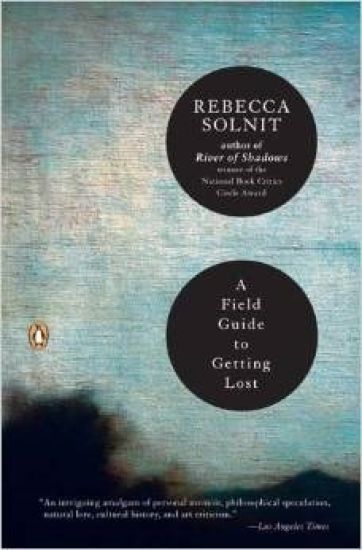
A Field Guide to Getting Lost

A Field Guide to Getting Lost

Rebecca Solnit

PENGUIN BOOKS
2006
nidottu
A series of autobiographical essays draws on key moments and relationships in the author's life to explore such issues as trust, loss, and desire, in a volume that focuses on a central theme of losing oneself in the pleasures of experience. By the author of River of Shadows and Wanderlust. Reprint. 25,000 first printing.
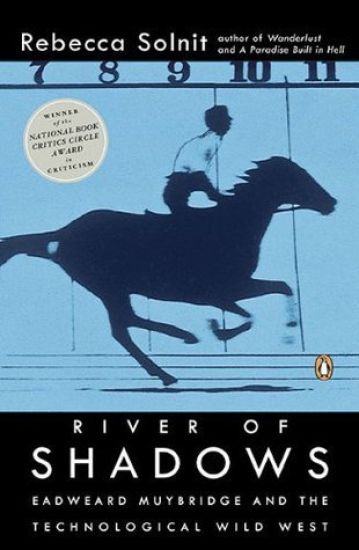
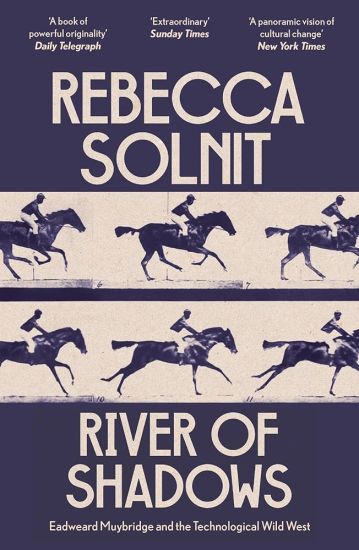
River of Shadows: Eadweard Muybridge and the Technological Wild West
A New York Times Notable Book Winner of the National Book Critics Circle Award for Criticism, The Mark Lynton History Prize, and the Sally Hacker Prize for the History of Technology "A panoramic vision of cultural change" --The New York Times Through the story of the pioneering photographer Eadweard Muybridge, the author of Orwell's Roses explores what it was about California in the late 19th-century that enabled it to become such a center of technological and cultural innovation The world as we know it today began in California in the late 1800s, and Eadweard Muybridge had a lot to do with it. This striking assertion is at the heart of Rebecca Solnit's new book, which weaves together biography, history, and fascinating insights into art and technology to create a boldly original portrait of America on the threshold of modernity. The story of Muybridge--who in 1872 succeeded in capturing high-speed motion photographically--becomes a lens for a larger story about the acceleration and industrialization of everyday life. Solnit shows how the peculiar freedoms and opportunities of post-Civil War California led directly to the two industries--Hollywood and Silicon Valley--that have most powerfully defined contemporary society.
The Beginning Comes After the End

The Beginning Comes After the End

Rebecca Solnit

Haymarket Books
2026
sidottu
NEW YORK TIMES BESTSELLER LOS ANGELES TIMES BESTSELLER INDEPENDENT PRESS TOP 40 BESTSELLER Rebecca Solnit offers a thrilling account of the sheer breadth and scale of social, political, scientific, and cultural change over the past three quarters of a century. In this sequel to her enduring bestseller Hope in the Dark, Solnit surveys a world that has changed dramatically since the year 1960. Despite the forces seeking to turn back the clock on history, change is not a possibility; it is an inevitability. The changes amount to nothing less than dismantling an old civilization and building a new one, whose newness is often the return of the old ways and wisdoms. In this rising worldview, interconnection is a core idea and value. But because the transformation is obscured within a longer arc of history, its scale is seldom recognized. While the white nationalist and authoritarian backlash drives individualism and isolation, this new world embraces antiracism, feminism, a more expansive understanding of gender, environmental thinking, scientific breakthroughs, and Indigenous and non-Western ideas, pointing toward a more interconnected, relational world.
The Beginning Comes After the End

The Beginning Comes After the End

Rebecca Solnit

GRANTA BOOKS
2026
sidottu
'An old world is dying; a new world is being born; now is the time of monsters' Antonio Gramschi Solnit maps the extraordinary revolution of ideas and rights that we've experienced over the last fifty years, which has profoundly changed our world. In recognising the interdependent and symbiotic relationships in nature and among humans, this revolution is beginning to overturn capitalism, white supremacy, patriarchy and the human domination of nature - despite the best efforts of the old world to fight back. From one of the most significant thinkers of our day, The Beginning Comes After the End is a culmination of years of activism and offers a unique perspective on our politics and our humanity, to give hope in difficult times and to urgently remind us that the power to change the world is within our reach.
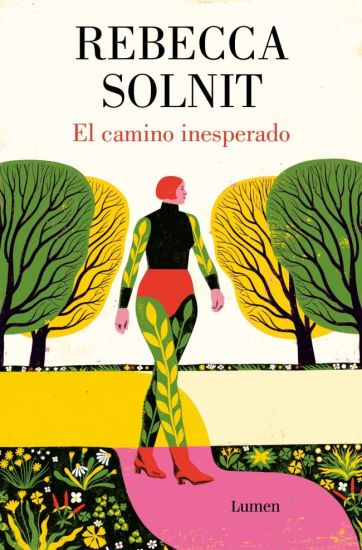
El Camino Inesperado / No Straight Road Takes You There
La autora de Los hombres me explican cosas y Wanderlust vuelve con un libro lleno de sabidur a y lucidez: una llamada a la reflexi n y a una vida alternativa. «Para Solnit, la esperanza no es una garant a para el ma ana, sino el detonador para la acci n de hoy . --John Berger Qu puede ense arnos un viol n de trescientos a os sobre nuestros bosques? Cu les son los matices del hielo? C mo influye en las historias el modo de narrarlas? Las preguntas son el hilo conductor del nuevo libro de Rebecca Solnit: para llegar a nuevos horizontes, nos susurra entre sus p ginas, hace falta idear caminos alternativos, tomar la carretera secundaria y mirar el paisaje, perderse en el desv o para as alcanzar, en alg n momento, una inesperada forma de ser, pensar y actuar. Como una hoja de ruta hacia un mundo imaginado, este volumen recoge ensayos tan variados como el pensamiento de su autora, que con su caracter stica agilidad salta de sus observaciones sobre la naturaleza y nuestra relaci n con ella, al an lisis de la actual lucha feminista o las implicaciones modernas de su c lebre concepto de mansplaining. Y es que para Solnit el ejercicio de pensar es ante todo una reflexi n sobre c mo se construye el propio pensamiento. ENGLISH DESCRIPTION In the spirit of her bestselling book Hope in the Dark, Rebecca Solnit explores how our actions can shape the future and the liberatory possibilities of embracing uncertainty. Beginning with an essay about a three-hundred-year-old violin and what it can tell us about forests, abundance, and climate, and ending with on about a prisoner dreaming of seeing the ocean, No Straight Road Takes You There deftly bridges the political and the literary, offering unique insights, nuanced understanding, and inspiration for the challenging work ahead. In her latest essay collection, the award-winning author explores climate change, feminism, democracy, hope, and power and its abuse. Throughout she asks us to heed the stories we tell or have been told, and the ways those stories can be, or should be changed. Solnit offers a reappraisal of the value of indirect consequences, an embrace of unpredictability, slowness, and imperfection in the politics of how to change the world. "I've tried to find other ways of seeing and to prize the migratory routes ideas take," Solnit writes in the introduction, "the way that hope is most often grounded in memory, because you can't see the future, but you can understand the patterns and possibilities if you know the past."
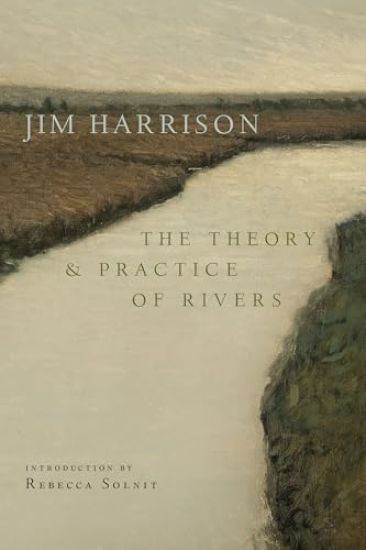
The Theory and Practice of Rivers

The Theory and Practice of Rivers

Jim Harrison; Rebecca Solnit

Copper Canyon Press,U.S.
2025
sidottu
Filled with "moving water" and intuitive leaps, The Theory and Practice of Rivers is an elegy for Harrison's sixteen-year-old niece.This new edition of The Theory and Practice of Rivers, by Jim Harrison, returns to print--as a stand-alone volume--a classic poetry title. In a heartfelt and powerful introduction, Rebecca Solnit calls this collection both elegy (inspired by the death of his sixteen-year-old niece) and "loose memoir" (filled with language that leaps intuitively across subjects, recalling various experiences, place, and memories). Beautifully adrift in the long poem sequence seated at the heart of this book, The Theory and Practice of Rivers is filled with "moving water, the search for consolation and meaning in the sublime rightness of wild landscape" (Outside). Harrison speaks to the rivers and leaps in all of us, leaving us profoundly changed.
The Theory and Practice of Rivers

The Theory and Practice of Rivers

Jim Harrison; Rebecca Solnit

Copper Canyon Press,U.S.
2025
pokkari
Filled with "moving water" and intuitive leaps, The Theory and Practice of Rivers is an elegy for Harrison's sixteen-year-old niece.This new edition of The Theory and Practice of Rivers, by Jim Harrison, returns to print--as a stand-alone volume--a classic poetry title. In a heartfelt and powerful introduction, Rebecca Solnit calls this collection both elegy (inspired by the death of his sixteen-year-old niece) and "loose memoir" (filled with language that leaps intuitively across subjects, recalling various experiences, place, and memories). Beautifully adrift in the long poem sequence seated at the heart of this book, The Theory and Practice of Rivers is filled with "moving water, the search for consolation and meaning in the sublime rightness of wild landscape" (Outside). Harrison speaks to the rivers and leaps in all of us, leaving us profoundly changed.
A Field Guide To Getting Lost

A Field Guide To Getting Lost

Rebecca Solnit

Canongate Books
2025
pokkari
With a new afterword by the authorIn her map to loss, losing and being lost, Rebecca Solnit explores the challenges of living with uncertainty. Meandering eclectically through memory and mortality, Hitchcock movies and heartbreak, Solnit's beloved account of staying off the beaten path sheds glittering new light on the way we live now.
River of Shadows

River of Shadows

Rebecca Solnit

GRANTA BOOKS
2025
nidottu
In 1872, Eadward Muybridge - a British photographer, who had landed in California during the Gold Rush - captured images of high-speed movement. These photographs would go on to lay the foundations for motion pictures, changing the west coast of America, and the world, forever. River of Shadows is both a bold and original biography of a true pioneer - his trailblazing work, and his complicated life - and a portrait of America on the threshold of modernity. Drawing lines from Muybridge's invention to Hollywood and Silicon Valley, Rebecca Solnit explores how this remarkable breakthrough has shaped the world today.
A Paradise Built in Hell

A Paradise Built in Hell

Rebecca Solnit

GRANTA BOOKS
2025
nidottu
How do we respond to disaster? What expressions of care and solidarity might we find among the debris? A Paradise Built in Hell is a study of five major disasters - the 1906 San Francisco earthquake, the Halifax explosion of 1917, the Mexico City earthquake of 1985, the 9/11 attacks and Hurricane Katrina - and the expressions of altruism, generosity and resourcefulness that emerged in the wake of these tragedies. The result is a sweeping history of some of the foundational events in the modern history of North America, and a meditation on community: challenging us to look afresh at society, and what these models of local, collaborative politics might look like carried through into everyday life.
No Straight Road Takes You There

No Straight Road Takes You There

Rebecca Solnit

Haymarket Books
2025
pokkari
New York Times Bestseller , Rebecca Solnit explores how our actions can shape the future and the liberatory possibilities of embracing uncertainty. deftly bridges the political and the literary, offering unique insights, nuanced understanding, and inspiration for the challenging work ahead. In her latest essay collection, the award-winning author explores climate change, feminism, democracy, hope, and power and its abuse. Throughout she asks us to heed the stories we tell or have been told, and the ways those stories can be, or should be changed. Solnit offers a reappraisal of the value of indirect consequences, an embrace of unpredictability, slowness, and imperfection in the politics of how to change the world. "I've tried to find other ways of seeing and to prize the migratory routes ideas take," Solnit writes in the introduction, "the way that hope is most often grounded in memory, because you can't see the future but you can understand the patterns and possibilities if you know the past."
No Straight Road Takes You There

No Straight Road Takes You There

Rebecca Solnit

GRANTA BOOKS
2025
sidottu
This book's title, No Straight Road Takes You There, is an evocation and a declaration. Highways tend to be built across the easy routes and flat places, or the landscape is cleared away - logged, graded, levelled, tunnelled through - but to stick to these roads is to miss what else is out there. In her writing and activism, Rebecca Solnit has sought the pathless places in order to celebrate indirect and unpredictable consequences, and to embrace slowness and imperfection, which, she argues, are key to understanding the possibilities of change. In her latest essay collection, the award-winning writer explores responses to the climate crisis, as well as reflections on women's rights, the fight for democracy, the trends in masculinity, and the rise of the far right in the West. Incantatory and poetic, positive and engaging, these essays argue for the long-term view and the power of collective action, making a case for seeding change wherever possible, and offering us all a path out of the wilderness.
Men Explain Things to Me

Men Explain Things to Me

Rebecca Solnit

GRANTA BOOKS
2025
nidottu
Published as a standalone on International Woman's Day, the essay that became a touchstone of the feminist movement and inspired the term 'mansplaining', with an afterword on its origins This famous and influential essay, which describes the time when, at a party, a man explained to Rebecca Solnit the argument of her own book, inspired the term 'mansplaining' and established Solnit as a vital figure of the feminist movement, and one of the leading thinkers of our time. Fierce, incisive and funny, it exposes the inherent sexism of our patriarchal culture.
Dead Cities

Dead Cities

Mike Davis; Rebecca Solnit

Haymarket Books
2024
sidottu
For the late great Mike Davis, the ravaging of the climate by capital—and his prescient analysis of its consequences for those of us left to deal with the resulting crises—was always a central part of his urban geography. In these wide ranging, incisive, and hauntingly relevant essays, Davis asks us to consider what we would find if we put a microscope to the ruins of Metropolis, and provides a riveting account of the disasters—natural, man-made, and those (as in the case of climate calamity) where the distinction is impossible to make—that he finds on the other end. He begins his examination by sifting through the rubble of the twin towers in the wake of 9/11, presciently identifying the seeds of war already germinating in the scorched soil of ground zero, and closes by considering how little prepared our hollowed out urban infrastructure is to deal with shocks of any kind, be they from car bombs or ice storms. In between we are treated to tours of blasted wastelands where American generals built and destroyed replicas of Berlin, glimpses of Las Vegas’s penchant for annihilating its own best-known landmarks, and other riveting tales of the dialectic between nature and the city. Dead Cities, written over twenty years ago, abounds with prophecies fulfilled, contains echoes of our current moment where conspiracies abound and anxieties drown out official celebrations of prosperity, and offers dreams of alternative paths not taken.
Dead Cities

Dead Cities

Mike Davis; Rebecca Solnit

Haymarket Books
2024
pokkari
For the late great Mike Davis, the ravaging of the climate by capital—and his prescient analysis of its consequences for those of us left to deal with the resulting crises—was always a central part of his urban geography. In these wide ranging, incisive, and hauntingly relevant essays, Davis asks us to consider what we would find if we put a microscope to the ruins of Metropolis, and provides a riveting account of the disasters—natural, man-made, and those (as in the case of climate calamity) where the distinction is impossible to make—that he finds on the other end. He begins his examination by sifting through the rubble of the twin towers in the wake of 9/11, presciently identifying the seeds of war already germinating in the scorched soil of ground zero, and closes by considering how little prepared our hollowed out urban infrastructure is to deal with shocks of any kind, be they from car bombs or ice storms. In between we are treated to tours of blasted wastelands where American generals built and destroyed replicas of Berlin, glimpses of Las Vegas’s penchant for annihilating its own best-known landmarks, and other riveting tales of the dialectic between nature and the city. Dead Cities, written over twenty years ago, abounds with prophecies fulfilled, contains echoes of our current moment where conspiracies abound and anxieties drown out official celebrations of prosperity, and offers dreams of alternative paths not taken.
Orwells roser

Orwells roser

Rebecca Solnit

-
2024
nidottu
Betagende og tankevækkende bog om George Orwell og om at plante roser. Rebecca Solnit, en af USA’s bedste og mest markante essayister, går bag om mennesket George Orwell. På en gang en personlig biografi om forfatteren George Orwell, et kulturhistorisk essay om roser og en smuk og tankevækkende meditation over forholdet mellem natur og politik. Bogen bringer os vidt omkring, fra Orwells reportager fra kulminerne i England og Den Spanske Borgerkrig over Stalins besættelse af at gro citroner til nutidens sydamerikanske rosenfarme og cellofanindpakkede roser. Bogen slutter med en genlæsning af 1984, der fuldender portrættet af en mere håbefuld Orwell - og med en refleksion over hvordan nydelse, skønhed og glæde også kan være en modstandshandling. »En vidunderlig meditation over naturens glæde og skønhed.« The Times »Ny bog argumenterer overbevisende for det politiske potentiale i at plante roser … bør læses af alle, der interesserer sig for forholdet mellem natur og politik.« Information