Kirjojen hintavertailu. Mukana 12 595 353 kirjaa ja 12 kauppaa.

Kirjailija

Reid Hastie

Kirjat ja teokset yhdessä paikassa: 6 kirjaa, julkaisuja vuosilta 1983-2015, suosituimpien joukossa Klokere. Vertaile teosten hintoja ja tarkista saatavuus suomalaisista kirjakaupoista.

6 kirjaa

Kirjojen julkaisuhaarukka 1983-2015.

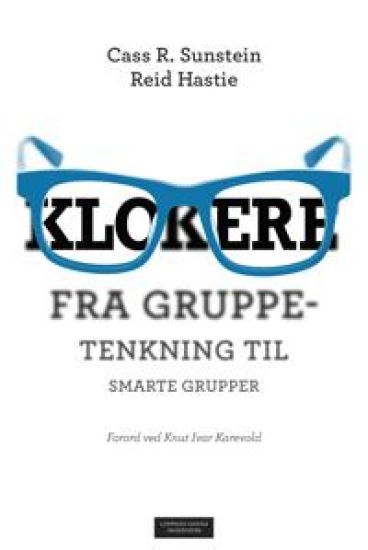
Klokere

Klokere

Cass R. Sunstein; Reid Hastie

Cappelen Damm akademisk
2015
sidottu
Fra tidenes morgen har vi tatt beslutninger i grupper. Ved at man drar nytte av flokkens samlede kunnskaper og erfaringer bør dette gi gode resultater. Tja. Vi har alle deltatt i gruppebeslutninger – og vet at resultatet kan bli dårlig. Hvorfor? Mange legger skylden på «gruppetenkning», uten helt å vite hva begrepet egentlig betyr. De to professorene Sunstein og Hastie hjelper oss med å forstå hvorfor og hvordan gruppebeslutninger mislykkes – og til å unngå fallgruvene og oppnå bedre resultater. Første del av boken inneholder lettfattelige og fascinerende forklaringer på de særegne problemene grupper står overfor:De forsterker ofte, fremfor å korrigere, individuelle vurderingsfeil. De fører ofte til kaskadeeffekter, fordi medlemmene følger det andre sier. Medlemmene blir polarisert, og inntar mer ekstreme standpunkter De vektlegger det alle vet i stedet for å fokusere på viktig informasjon som bare noen få kjenner til. I andre del tilbyr forfatterne enkle metoder og råd om hvordan vi kan gjøre grupper smartere: blant annet demping av lederen, nye måter å tenke på insentiver og belønning på og gjennomtenkt tildeling av roller. Klokere har eksempler fra et bredt utvalg organisasjoner – fra Google til CIA. Boken gjør deg ikke bare klokere, men den kan også hjelpe ditt team og din organisasjon til å treffe bedre beslutninger – beslutninger som fører til suksess. Forord av Knut Ivar Karevold ph.d, Institutt for psykologi ved Universitetet i Oslo.
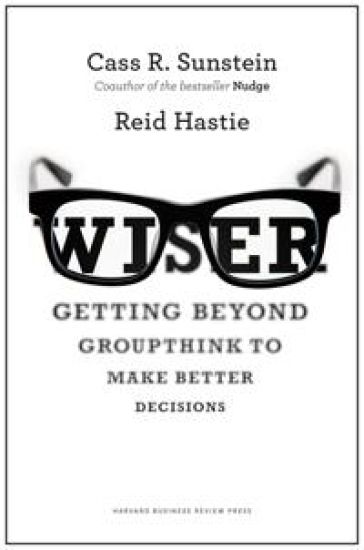
Wiser

Wiser

Cass R. Sunstein; Reid Hastie

Harvard Business Review Press
2014
sidottu
Why are group decisions so hard? Since the beginning of human history, people have made decisions in groups--first in families and villages, and now as part of companies, governments, school boards, religious organizations, or any one of countless other groups. And having more than one person to help decide is good because the group benefits from the collective knowledge of all of its members, and this results in better decisions. Right? Back to reality. We've all been involved in group decisions--and they're hard. And they often turn out badly. Why? Many blame bad decisions on "groupthink" without a clear idea of what that term really means. Now, Nudge coauthor Cass Sunstein and leading decision-making scholar Reid Hastie shed light on the specifics of why and how group decisions go wrong--and offer tactics and lessons to help leaders avoid the pitfalls and reach better outcomes. In the first part of the book, they explain in clear and fascinating detail the distinct problems groups run into: * They often amplify, rather than correct, individual errors in judgment * They fall victim to cascade effects, as members follow what others say or do * They become polarized, adopting more extreme positions than the ones they began with * They emphasize what everybody knows instead of focusing on critical information that only a few people know In the second part of the book, the authors turn to straightforward methods and advice for making groups smarter. These approaches include silencing the leader so that the views of other group members can surface, rethinking rewards and incentives to encourage people to reveal their own knowledge, thoughtfully assigning roles that are aligned with people's unique strengths, and more. With examples from a broad range of organizations--from Google to the CIA--and written in an engaging and witty style, Wiser will not only enlighten you; it will help your team and your organization make better decisions--decisions that lead to greater success.
Punitive Damages

Punitive Damages

Cass R. Sunstein; Reid Hastie; John W. Payne; David A. Schkade; W. Kip Viscusi

University of Chicago Press
2003
nidottu
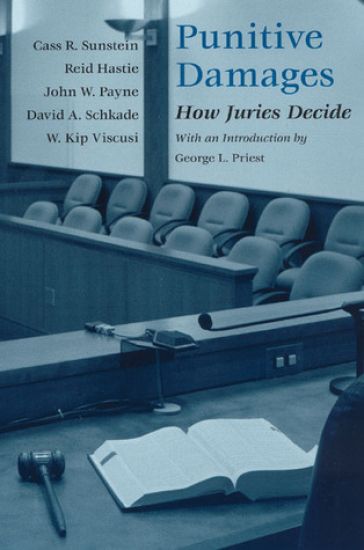
Over the past two decades, the United States has seen a dramatic increase in the number and magnitude of punitive damages verdicts rendered by juries in civil trials. Probably the most extraordinary example is the July 2000 award of $144.8 billion in the Florida class action lawsuit brought against the cigarette manufacturers. More puzzling were two recent verdicts against the auto manufacturer BMW in Alabama. In identical cases, argued in the same court before the same judge, one jury awarded $4 million in punitive damages, while the other awarded no punitive damages at all. In cases involving accidents, civil rights and the environment, multimillion dollar punitive awards have been a subject of intense controversy. But how do juries actually make decisions about punitive damages? To find out, the authors - specialists in psychology, economics and the law - present the results of controlled experiments with over 600 mock juries involving the responses of more than 8,000 jury-eligible citizens. They find that although juries tended to agree in their moral judgements about the defendant's conduct, they rendered erratic and unpredictable dollar awards. Jurors also tended to ignore instructions from the judges; showed "hindsight bias", believing that what happened should have been foreseen; and penalized corporations that had based their decisions on careful cost-benefit analyses. While judges made many of the same errors, they performed better in some areas, suggesting that judges (or other specialists) may be better equipped than juries to decide punitive damages. With a wealth of new data and a host of provocative findings, this book documents a wide range of systematic bias in jury behaviour and should be valuable for anyone interested in punitive damages, jury behaviour, human psychology and the theory of punishment.
Punitive Damages

Punitive Damages

Cass R. Sunstein; Reid Hastie; John W. Payne; David A. Schkade; W. Kip Viscusi

University of Chicago Press
2002
sidottu
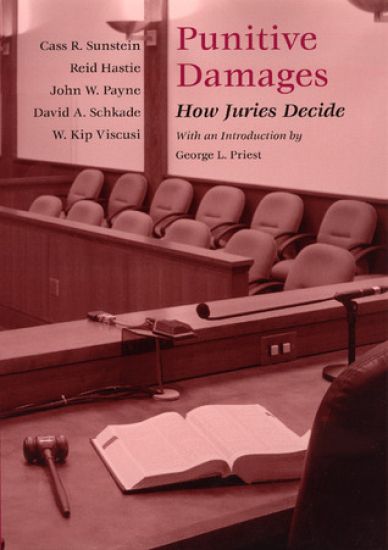
Over the past two decades, the United States has seen a dramatic increase in the number and magnitude of punitive damages verdicts rendered by juries in civil trials. Probably the most extraordinary example is the July 2000 award of $144.8 billion in the Florida class action lawsuit brought against the cigarette manufacturers. More puzzling were two recent verdicts against the auto manufacturer BMW in Alabama. In identical cases, argued in the same court before the same judge, one jury awarded $4 million in punitive damages, while the other awarded no punitive damages at all. In cases involving accidents, civil rights and the environment, multimillion dollar punitive awards have been a subject of intense controversy. But how do juries actually make decisions about punitive damages? To find out, the authors - specialists in psychology, economics and the law - present the results of controlled experiments with over 600 mock juries involving the responses of more than 8,000 jury-eligible citizens. They find that although juries tended to agree in their moral judgements about the defendant's conduct, they rendered erratic and unpredictable dollar awards. Jurors also tended to ignore instructions from the judges; showed "hindsight bias", believing that what happened should have been foreseen; and penalized corporations that had based their decisions on careful cost-benefit analyses. While judges made many of the same errors, they performed better in some areas, suggesting that judges (or other specialists) may be better equipped than juries to decide punitive damages. With a wealth of new data and a host of provocative findings, this book documents a wide range of systematic bias in jury behaviour and should be valuable for anyone interested in punitive damages, jury behaviour, human psychology and the theory of punishment.