Kirjojen hintavertailu. Mukana 12 595 353 kirjaa ja 12 kauppaa.

Kirjailija

Reid Mitchell

Kirjat ja teokset yhdessä paikassa: 5 kirjaa, julkaisuja vuosilta 1992-2015, suosituimpien joukossa Hard Marching Every Day. Vertaile teosten hintoja ja tarkista saatavuus suomalaisista kirjakaupoista.

5 kirjaa

Kirjojen julkaisuhaarukka 1992-2015.

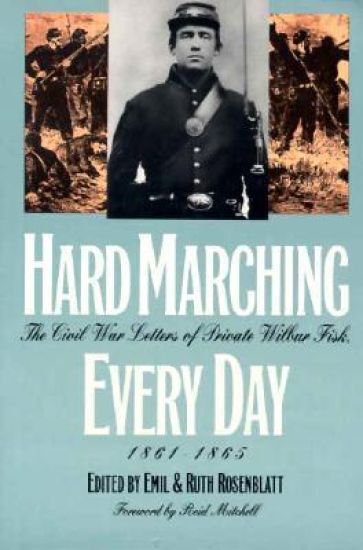
Hard Marching Every Day

Hard Marching Every Day

Wilbur Fisk; Reid Mitchell

University Press of Kansas
1992
nidottu
As a war correspondent, Wilbur Fisk was an amateur, yet his letters to the Montpelier ""Green Mountain Freeman"" comprise one of the finest collections of Civil War letters in existence. But Fisk was no novelist. He was a rural school teacher from Vermont, primarily self-educated, who enlisted in the Union Army simply because he believed he would regret it later if he didn't. Between December 11, 1861, and July 26, 1865, Fisk wrote nearly 100 letters from the battlefield. At the beginning of the war he was exuberant and eager for contact with the enemy. Two years later, Fisk was disillusioned and war weary: ""The rebel dead and ours lay thickly together, their thirst for blood forever quenched. Their bodies were swollen, black and hideously unnatural. Their eyes glared from their sockets, their tongues protruded from their mouths, and in almost every case, clots of blood and mangled flesh showed how they had died, and rendered a sight ghastly beyond description. I though I had become hardened to almost anything, but I cannot say I ever wish to see another sight like that I saw on the battle-field of Gettysburg"". Unlike professional war correspondents, Private Fisk had no access to rank or headquarters. Instead, he wrote of life as a private - as one of the foot soldiers who slept in the mud and obeyed orders no matter how incomprehensible.

The American Civil War, 1861-1865

The American Civil War, 1861-1865

Reid Mitchell

Routledge
2015
sidottu
The American Civil War caused upheaval and massive private bereavement, but the years 1861-1865 also defined a great nation.This book provides a concise introduction to events from the secession to the end of the war. It focuses on the military progress of the war Union and Confederate politics social change - particularly the emancipation of North American slavesThe social history associated with the war is dealt with alongside the familiar military and political events. This inclusive approach allows the reader to consider equally the history of men and women, blacks and whites in the conflict. It deals with both the Union and the Confederacy, integrating the latest literature on the war and society into a clear account. The book concludes with an assessment of emancipation, the rebuilding of the economy, and the war's consequences.An array of primary documents supports the text, together with a chronology, glossary and Who's Who guide to key figures.
The American Civil War, 1861-1865
The American Civil War caused upheaval and massive private bereavement, but the years 1861-1865 also defined a great nation.This book provides a concise introduction to events from the secession to the end of the war. It focuses on the military progress of the war Union and Confederate politics social change - particularly the emancipation of North American slavesThe social history associated with the war is dealt with alongside the familiar military and political events. This inclusive approach allows the reader to consider equally the history of men and women, blacks and whites in the conflict. It deals with both the Union and the Confederacy, integrating the latest literature on the war and society into a clear account. The book concludes with an assessment of emancipation, the rebuilding of the economy, and the war's consequences.An array of primary documents supports the text, together with a chronology, glossary and Who's Who guide to key figures.
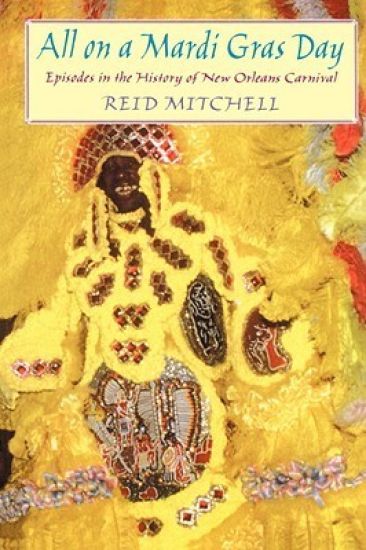
All on a Mardi Gras Day

All on a Mardi Gras Day

Reid Mitchell

Harvard University Press
1999
nidottu
With this colorful study, Reid Mitchell takes us to Mardi Gras--to a yearly ritual that sweeps the richly multicultural city of New Orleans into a frenzy of parades, pageantry, dance, drunkenness, music, sexual display, and social and political bombast. In All on a Mardi Gras Day Mitchell tells us some of the most intriguing stories of Carnival since 1804. Woven into his narrative are observations of the meaning and messages of Mardi Gras--themes of unity, exclusion, and elitism course through these tales as they do through the Crescent City.Moving through the decades, Mitchell describes the city's diverse cultures coming together to compete in Carnival performances. We observe powerful social clubs, or krewes, designing their elaborate parade displays and extravagant parties; Creoles and Americans in conflict over whose dances belong in the ballroom; enslaved Africans and African Americans preserving a sense of their heritage in processions and dances; white supremacists battling Reconstruction; working-class blacks creating the flamboyant Krewe of Zulu; the birth and reign of jazz; the gay community holding lavish balls; and of course tourists purchasing an authentic experience according to the dictates of our commercial culture. Interracial friction, nativism, Jim Crow separatism, the hippie movement--Mitchell illuminates the expression of these and other American themes in events ranging from the 1901 formation of the anti-prohibitionist Carrie Nation Club to the controversial 1991 ordinance desegregating Carnival parade krewes.Through the conflicts, Mitchell asserts, "I see in Mardi Gras much what I hear in a really good jazz band: a model for the just society, the joyous community, the heavenly city...A model for community where individual expression is the basis for social harmony and where continuity is the basis for creativity." All on a Mardi Gras Day journeys into a world where hope persists for a rare balance between diversity and unity.