Kirjojen hintavertailu. Mukana 12 459 402 kirjaa ja 12 kauppaa.

Kirjailija

Reiland Rabaka

Kirjat ja teokset yhdessä paikassa: 32 kirjaa, julkaisuja vuosilta 2007-2026, suosituimpien joukossa Black Feminist Funk. Vertaile teosten hintoja ja tarkista saatavuus suomalaisista kirjakaupoista.

32 kirjaa

Kirjojen julkaisuhaarukka 2007-2026.

Forms of Fanonism

Forms of Fanonism

Reiland Rabaka

Lexington Books
2011
nidottu
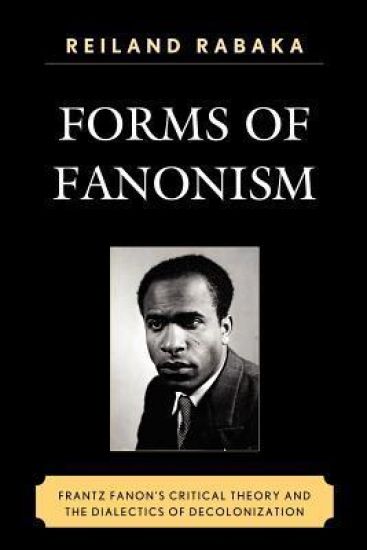
When Frantz Fanon's critiques of racism, sexism, colonialism, capitalism, and humanism are brought into the ever-widening orbit of Africana critical theory something unprecedented in the annals of Africana intellectual history happens: five distinct forms of Fanonism emerge. Forms of Fanonism: Frantz Fanon's Critical Theory and the Dialectics of Decolonization is discursively distinguished from other engagements of Fanon's thought and texts insofar as it is the first study to consciously examine his contributions to Africana Studies and critical theory or, rather, the Africana tradition of critical theory. Forms of Fanonism identifies and intensely analyzes Fanon's contributions to the deconstruction and reconstruction of Africana Studies, radical politics, and critical social theory. In highlighting his unique 'solutions' to the 'problems' of racism, sexism, colonialism, capitalism, and humanism, five distinct forms of Fanonism materialize. These five forms of Fanonism allow contemporary critical theorists to innovatively explore the ways in which his thought and texts can be dialectically put to use in relieving the wretched experience of this generation's wretched of the earth. Critics can also apply these forms to deconstruct and reconstruct Africana Studies, radical politics, and critical social theory using their anti-imperialist interests. Throughout Forms of Fanonism, Reiland Rabaka critically dialogues with Fanon, incessantly asking his corpus critical questions and seeking from it crucial answers. This book, in short, solemnly keeps with Fanon's own predilection for connecting critical theory to revolutionary praxis by utilizing his thought and texts as paradigms and points of departure to deepen and develop the Africana tradition of critical theory.
Hip Hop's Inheritance

Hip Hop's Inheritance

Reiland Rabaka

Lexington Books
2011
sidottu
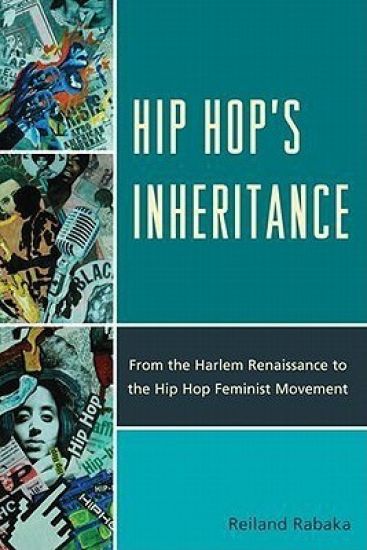
Hip Hop's Inheritance arguably offers the first book-length treatment of what hip hop culture has, literally, "inherited" from the Harlem Renaissance, the Black Arts movement, the Feminist Art movement, and 1980s and 1990s postmodern aesthetics. By comparing and contrasting the major motifs of the aforementioned cultural aesthetic traditions with those of hip hop culture, all the while critically exploring the origins and evolution of black popular culture from antebellum America through to "Obama's America," Hip Hop's Inheritance demonstrates that the hip hop generation is not the first generation of young black (and white) folk preoccupied with spirituality and sexuality, race and religion, entertainment and athletics, or ghetto culture and bourgeois culture. Taking interdisciplinarity and intersectionality seriously, Hip Hop's Inheritance employs the epistemologies and methodologies from a wide range of academic and organic intellectual/activist communities in its efforts to advance an intellectual history and critical theory of hip hop culture. Drawing from academic and organic intellectual/activist communities as diverse as African American studies and women's studies, postcolonial studies and sexuality studies, history and philosophy, politics and economics, and sociology and ethnomusicology, Hip Hop's Inheritance calls into question one-dimensional and monodisciplinary interpretations or, rather, misinterpretations, of a multidimensional and multivalent form of popular culture that has increasingly come to include cultural criticism, social commentary, and political analysis.
Hip Hop's Inheritance

Hip Hop's Inheritance

Reiland Rabaka

Lexington Books
2011
nidottu
Hip Hop's Inheritance arguably offers the first book-length treatment of what hip hop culture has, literally, 'inherited' from the Harlem Renaissance, the Black Arts movement, the Feminist Art movement, and 1980s and 1990s postmodern aesthetics. By comparing and contrasting the major motifs of the aforementioned cultural aesthetic traditions with those of hip hop culture, all the while critically exploring the origins and evolution of black popular culture from antebellum America through to "Obama's America," Hip Hop's Inheritance demonstrates that the hip hop generation is not the first generation of young black (and white) folk preoccupied with spirituality and sexuality, race and religion, entertainment and athletics, or ghetto culture and bourgeois culture. Taking interdisciplinarity and intersectionality seriously, Hip Hop's Inheritance employs the epistemologies and methodologies from a wide range of academic and organic intellectual/activist communities in its efforts to advance an intellectual history and critical theory of hip hop culture. Drawing from academic and organic intellectual/activist communities as diverse as African American studies and women's studies, postcolonial studies and sexuality studies, history and philosophy, politics and economics, and sociology and ethnomusicology, Hip Hop's Inheritance calls into question one-dimensional and monodisciplinary interpretations or, rather, misinterpretations, of a multidimensional and multivalent form of popular culture that has increasingly come to include cultural criticism, social commentary, and political analysis.
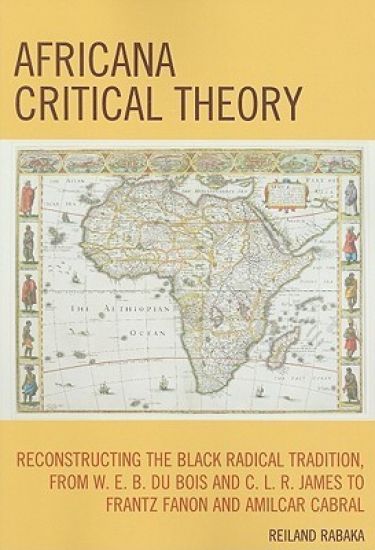
Africana Critical Theory

Africana Critical Theory

Reiland Rabaka

Lexington Books
2010
nidottu
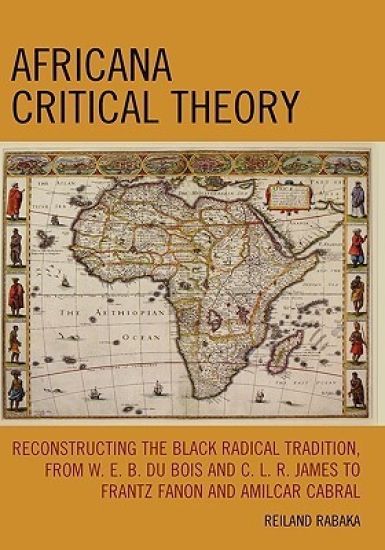
Building on and going far beyond W.E.B. Du Bois and the Problems of the Twenty-First Century and Du Bois's Dialectics, Reiland Rabaka's Africana Critical Theory innovatively identifies and analyzes continental and diasporan African contributions to classical and contemporary critical theory. This book represents a climatic critical theoretical clincher that cogently demonstrates how Du Bois's rarely discussed dialectical thought, interdisciplinarity, intellectual history-making radical political activism, and world-historical multiple liberation movement leadership helped to inaugurate a distinct Africana tradition of critical theory. With chapters on W.E.B. Du Bois, C.L.R. James, Negritude (Aime Cesaire and Leopold Senghor), Frantz Fanon and Amilcar Cabral, Africana Critical Theory endeavors to accessibly offer contemporary critical theorists an intellectual archaeology of the Africana tradition of critical theory and a much-needed dialectical deconstruction and reconstruction of black radical politics. These six seminal figures' collective thought and texts clearly cuts across several disciplines and, therefore, closes the chasm between Africana Studies and critical theory, constantly demanding that intellectuals not simply think deep thoughts, develop new theories, and theoretically support radical politics, but be and constantly become political activists, social organizers and cultural workers - that is, folk the Italian critical theorist Antonio Gramsci referred to as 'organic intellectuals.' In this sense, then, the series of studies gathered in Africana Critical Theory contribute not only to African Studies, African American Studies, Caribbean Studies, Cultural Studies, Gender Studies, and Postcolonial Studies, but also to contemporary critical theoretical discourse across an amazingly wide-range of 'traditional' disciplines, and radical political activism outside of (and, in many instances, absolutely against) Europe's ivory towers and the absurdities of the American academy.
Against Epistemic Apartheid

Against Epistemic Apartheid

Reiland Rabaka

Lexington Books
2010
nidottu
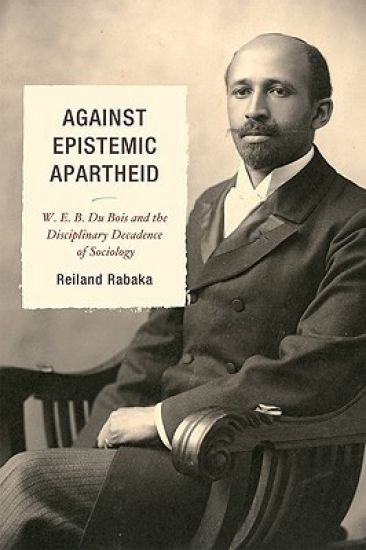
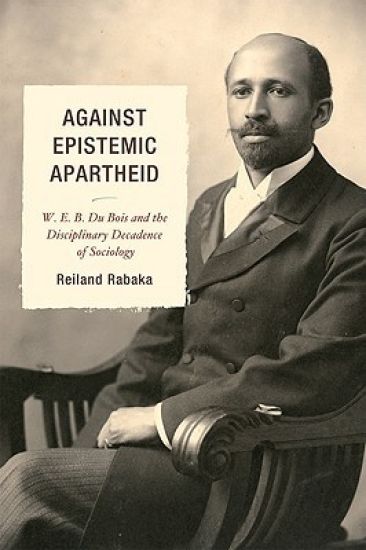
In this intellectual history-making volume, multiple award-winning W. E. B. Du Bois scholar Reiland Rabaka offers the first book-length treatment of Du Bois's seminal sociological discourse: from Du Bois as inventor of the sociology of race to Du Bois as the first sociologist of American religion; from Du Bois as a pioneer of urban and rural sociology to Du Bois as innovator of the sociology of gender and inaugurator of intersectional sociology; and, finally, from Du Bois as groundbreaking sociologist of education and critical criminologist to Du Bois as dialectical critic of the disciplinary decadence of sociology and the American academy. Against Epistemic Apartheid brings new and intensive archival research into critical dialogue with the watershed work of classical and contemporary, male and female, black and white, national and international sociologists and critical social theorists' Du Bois studies. Against Epistemic Apartheid offers an accessible introduction to Du Bois's major contributions to sociology and, therefore, will be of interest to scholars and students not only in sociology, but also African American studies, American studies, cultural studies, critical race studies, gender studies, and postcolonial studies, as well as scholars and students in 'traditional' disciplines such as history, philosophy, political science, economics, education, and religion.
Against Epistemic Apartheid

Against Epistemic Apartheid

Reiland Rabaka

Lexington Books
2010
sidottu
In this intellectual history-making volume, multiple award-winning W. E. B. Du Bois scholar Reiland Rabaka offers the first book-length treatment of Du Bois's seminal sociological discourse: from Du Bois as inventor of the sociology of race to Du Bois as the first sociologist of American religion; from Du Bois as a pioneer of urban and rural sociology to Du Bois as innovator of the sociology of gender and inaugurator of intersectional sociology; and, finally, from Du Bois as groundbreaking sociologist of education and critical criminologist to Du Bois as dialectical critic of the disciplinary decadence of sociology and the American academy. Against Epistemic Apartheid brings new and intensive archival research into critical dialogue with the watershed work of classical and contemporary, male and female, black and white, national and international sociologists and critical social theorists' Du Bois studies. Against Epistemic Apartheid offers an accessible introduction to Du Bois's major contributions to sociology and, therefore, will be of interest to scholars and students not only in sociology, but also African American studies, American studies, cultural studies, critical race studies, gender studies, and postcolonial studies, as well as scholars and students in "traditional" disciplines such as history, philosophy, political science, economics, education, and religion.
Forms of Fanonism

Forms of Fanonism

Reiland Rabaka

Lexington Books
2010
sidottu
When Frantz Fanon's critiques of racism, sexism, colonialism, capitalism, and humanism are brought into the ever-widening orbit of Africana critical theory something unprecedented in the annals of Africana intellectual history happens: five distinct forms of Fanonism emerge. Forms of Fanonism: Frantz Fanon's Critical Theory and the Dialectics of Decolonization is discursively distinguished from other engagements of Fanon's thought and texts insofar as it is the first study to consciously examine his contributions to Africana Studies and critical theory or, rather, the Africana tradition of critical theory. Forms of Fanonism identifies and intensely analyzes Fanon's contributions to the deconstruction and reconstruction of Africana Studies, radical politics, and critical social theory. In highlighting his unique "solutions" to the "problems" of racism, sexism, colonialism, capitalism, and humanism, five distinct forms of Fanonism materialize. These five forms of Fanonism allow contemporary critical theorists to innovatively explore the ways in which his thought and texts can be dialectically put to use in relieving the wretched experience of this generation's wretched of the earth. Critics can also apply these forms to deconstruct and reconstruct Africana Studies, radical politics, and critical social theory using their anti-imperialist interests. Throughout Forms of Fanonism, Reiland Rabaka critically dialogues with Fanon, incessantly asking his corpus critical questions and seeking from it crucial answers. This book, in short, solemnly keeps with Fanon's own predilection for connecting critical theory to revolutionary praxis by utilizing his thought and texts as paradigms and points of departure to deepen and develop the Africana tradition of critical theory.
Du Bois's Dialectics

Du Bois's Dialectics

Reiland Rabaka

Lexington Books
2009
nidottu
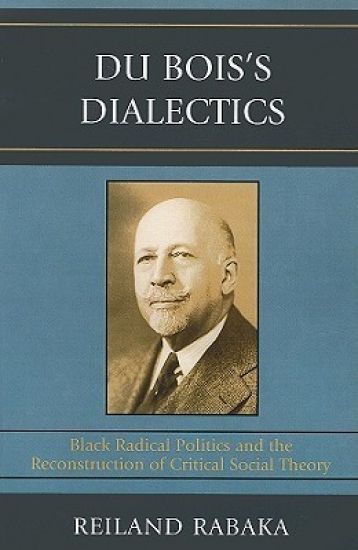
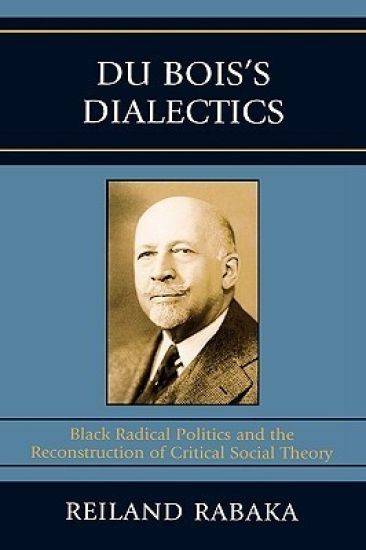
Du Bois's Dialectics is doubly distinguished from other books on Du Bois because it is the first extended exploration of Du Bois's contributions to new critical theory and the first book-length treatment of his contributions to contemporary black radical politics and the developing discipline of Africana Studies. With chapters that undertake ideological critiques of education, religion, the politics of reparations, and the problematics of black radical politics in contemporary culture and society, Du Bois's Dialectics employs Du Bois as its critical theoretical point of departure and demonstrates his (and Africana Studies') contributions to, as well as contemporary critical theory's connections to, critical pedagogy, sociology of religion, and reparations theory. Rabaka offers the first critical theoretical treatment of the W. E. B. Du Bois_Booker T. Washington debate, which lucidly highlights Du Bois's transition from a bourgeois black liberal to a black radical and revolutionary democratic socialist. This book is primarily directed at scholars, advanced undergraduate and graduate students working in and associated with Africana Studies, American Studies, Ethnic Studies, and Cultural Studies.
Africana Critical Theory

Africana Critical Theory

Reiland Rabaka

Lexington Books
2009
sidottu
Building on and going far beyond W.E.B. Du Bois and the Problems of the Twenty-First Century and Du Bois's Dialectics, Reiland Rabaka's Africana Critical Theory innovatively identifies and analyzes continental and diasporan African contributions to classical and contemporary critical theory. This book represents a climatic critical theoretical clincher that cogently demonstrates how Du Bois's rarely discussed dialectical thought, interdisciplinarity, intellectual history-making radical political activism, and world-historical multiple liberation movement leadership helped to inaugurate a distinct Africana tradition of critical theory. With chapters on W.E.B. Du Bois, C.L.R. James, Negritude (Aime Cesaire and Leopold Senghor), Frantz Fanon and Amilcar Cabral, Africana Critical Theory endeavors to accessibly offer contemporary critical theorists an intellectual archaeology of the Africana tradition of critical theory and a much-needed dialectical deconstruction and reconstruction of black radical politics. These six seminal figures' collective thought and texts clearly cuts across several disciplines and, therefore, closes the chasm between Africana Studies and critical theory, constantly demanding that intellectuals not simply think deep thoughts, develop new theories, and theoretically support radical politics, but be and constantly become political activists, social organizers and cultural workers - that is, folk the Italian critical theorist Antonio Gramsci referred to as "organic intellectuals." In this sense, then, the series of studies gathered in Africana Critical Theory contribute not only to African Studies, African American Studies, Caribbean Studies, Cultural Studies, Gender Studies, and Postcolonial Studies, but also to contemporary critical theoretical discourse across an amazingly wide-range of "traditional" disciplines, and radical political activism outside of (and, in many instances, absolutely against) Europe's ivory towers and the absurdities of the American acade
Du Bois's Dialectics

Du Bois's Dialectics

Reiland Rabaka

Lexington Books
2008
sidottu
Du Bois's Dialectics is doubly distinguished from other books on Du Bois because it is the first extended exploration of Du Bois's contributions to new critical theory and the first book-length treatment of his contributions to contemporary black radical politics and the developing discipline of Africana Studies. With chapters that undertake ideological critiques of education, religion, the politics of reparations, and the problematics of black radical politics in contemporary culture and society, Du Bois's Dialectics employs Du Bois as its critical theoretical point of departure and demonstrates his (and Africana Studies') contributions to, as well as contemporary critical theory's connections to, critical pedagogy, sociology of religion, and reparations theory. Rabaka offers the first critical theoretical treatment of the W. E. B. Du Bois—Booker T. Washington debate, which lucidly highlights Du Bois's transition from a bourgeois black liberal to a black radical and revolutionary democratic socialist. This book is primarily directed at scholars, advanced undergraduate and graduate students working in and associated with Africana Studies, American Studies, Ethnic Studies, and Cultural Studies.
W.E.B. Du Bois and the Problems of the Twenty-First Century
W. E. B. Du Bois and the Problems of the Twenty-First Century utilizes Du Bois's thought and texts to develop an informed critical theory of contemporary society. This book broadens the base of critical theory, making it more multicultural, transethnic, transgender, and non-Western European philosophy focused by placing it in dialogue with theory and phenomena that had been heretofore woefully neglected. Taking the preeminent black intellectual of the twentieth century as his primary point of departure, Reiland Rabaka identifies and analyzes several key contributions that Du Bois and the black racial tradition offer to those interested in redeveloping and racially revising contemporary critical social theory. With chapters on critical race theory, postcolonial theory, feminism, and Marxism, this volume builds bridges from Africana Studies to disparate discursive communities, accessibly demonstrating Du Bois's, and the black radical tradition's, contributions to, and the potential impact on, a wide-range of new social scientific research and radical political struggles.
W.E.B. Du Bois and the Problems of the Twenty-First Century
W. E. B. Du Bois and the Problems of the Twenty-First Century utilizes Du Bois's thought and texts to develop an informed critical theory of contemporary society. This book broadens the base of critical theory, making it more multicultural, transethnic, transgender, and non-Western European philosophy focused by placing it in dialogue with theory and phenomena that had been heretofore woefully neglected. Taking the preeminent black intellectual of the twentieth century as his primary point of departure, Reiland Rabaka identifies and analyzes several key contributions that Du Bois and the black racial tradition offer to those interested in redeveloping and racially revising contemporary critical social theory. With chapters on critical race theory, postcolonial theory, feminism, and Marxism, this volume builds bridges from Africana Studies to disparate discursive communities, accessibly demonstrating Du Bois's, and the black radical tradition's, contributions to, and the potential impact on, a wide-range of new social scientific research and radical political struggles.