Kirjojen hintavertailu. Mukana 12 595 353 kirjaa ja 12 kauppaa.

Kirjailija

Reiner Kümmel

Kirjat ja teokset yhdessä paikassa: 6 kirjaa, julkaisuja vuosilta 2011-2025, suosituimpien joukossa Die Vierte Dimension der Schöpfung. Vertaile teosten hintoja ja tarkista saatavuus suomalaisista kirjakaupoista.

6 kirjaa

Kirjojen julkaisuhaarukka 2011-2025.

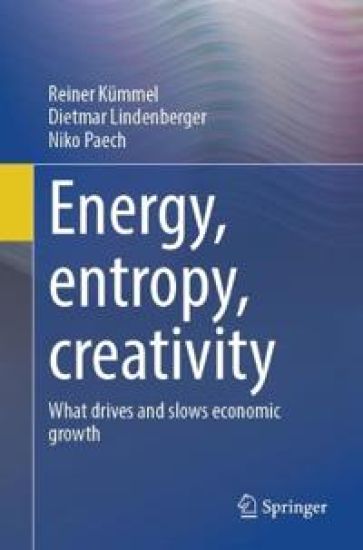
Energy, entropy, creativity

Energy, entropy, creativity

Reiner Kümmel; Dietmar Lindenberger; Niko Paech

Springer-Verlag Berlin and Heidelberg GmbH Co. KG
2025
nidottu
This book helps to understand the importance of thermodynamics for economics, the environment and society. It argues for the integration of the first two laws of thermodynamics into textbook economics. In doing so, systemic similarities in thermodynamics and the theory of economic growth lead to the use of similar mathematical methods that allow industrial economies to be described realistically. From this, the authors propose tools for solving social and environmental problems. The book is aimed at all those interested in interdisciplinary research on the development problems of the economy and society and who want to understand what drives their upheavals. The authors of the book have been dealing with these development problems for a long time: the theoretical physicist Reiner Kümmel from the University of Würzburg, the physicist and economist Dietmar Lindenberger from the University of Cologne and the Energy Economics Institute at this university, and the economist Niko Paech from the University of Siegen. "It is my pleasure to recommend this book to readers. It is driven by the idea of exploring the physical limits of human economic activity using thermodynamics, one of the most universal physical theories we have." Comment on the original German edition by Dieter Meschede, Professor of Physics, University of Bonn
Energie,  Entropie, Kreativität

Energie, Entropie, Kreativität

Reiner Kümmel; Dietmar Lindenberger; Niko Paech

Springer-Verlag Berlin and Heidelberg GmbH Co. K
2018
nidottu
Dieses Buch hilft dabei, die Bedeutung der Thermodynamik für Wirtschaft, Umwelt und Gesellschaft zu verstehen. Es plädiert für die Integration der ersten beiden Hauptsätze der Thermodynamik in die Lehrbuchökonomie. Dabei führen systemische Gemeinsamkeiten in der Thermodynamik und in der Theorie des Wirtschaftswachstums zur Verwendung ähnlicher mathematischer Methoden, die es erlauben, industrielle Volkswirtschaften realitätsnah zu beschreiben. Davon ausgehend schlagen die Autoren Instrumente zur Lösung der Sozial- und Umweltprobleme vor.Das Buch richtet sich an alle, die sich für interdisziplinäre Forschung zu den Entwicklungsproblemen von Wirtschaft und Gesellschaft interessieren und verstehen wollen, was deren Umbrüche treibt. Mit diesen Entwicklungsproblemen beschäftigen sich seit langem die Autoren des Buches: der theoretische Physiker Reiner Kümmel von der Universität Würzburg, der Physiker und Ökonom Dietmar Lindenberger von der Universität Köln und dem Energiewirtschaftlichen Institut an dieser Universität und der Ökonom Niko Paech von der Universität Siegen.“Es ist mir ein Vergnügen, den Lesern dieses Buch zu empfehlen. Es wird von der Idee getrieben, die physikalischen Grenzen menschlichen Wirtschaftens mithilfe der Thermodynamik auszuloten, einer der universellsten physikalischen Theorien, die wir haben.“Dieter Meschede, Professor für Physik, Universität Bonn
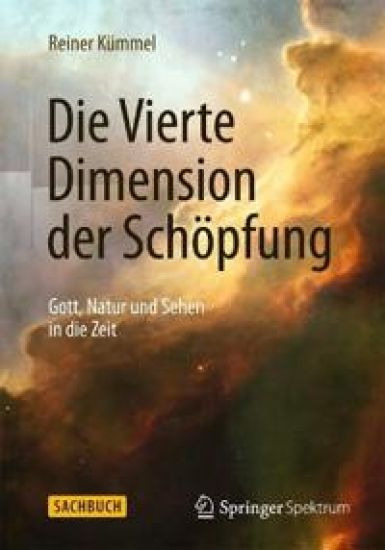
Die Vierte Dimension der Schöpfung

Die Vierte Dimension der Schöpfung

Reiner Kümmel

Springer Fachmedien Wiesbaden
2014
sidottu
Sie führt zur "Creatio Continua", in der Gott, überzeitlich und jederzeit, die gesamte Schöpfung von ihrem Anfang bis zum Ende schafft und sieht. Es wendet sich an alle, die sich fragen, woher wir kommen und wohin wir gehen und eröffnet eine Sicht auf Gott und die Welt, in der Glaube und Naturwissenschaft gut zusammen passen.
The Second Law of Economics

The Second Law of Economics

Reiner Kümmel

Springer-Verlag New York Inc.
2013
nidottu
Nothing happens in the world without energy conversion and entropy production. These fundamental natural laws are familiar to most of us when applied to the evolution of stars, biological processes, or the working of an internal combustion engine, but what about industrial economies and wealth production, or their constant companion, pollution? Does economics conform to the First and the Second Law of Thermodynamics? In this important book, Reiner Kümmel takes us on a fascinating tour of these laws and their influence on natural, technological, and social evolution. Analyzing economic growth in Germany, Japan, and the United States in light of technological constraints on capital, labor, and energy, Professor Kümmel upends conventional economic wisdom by showing that the productive power of energy far outweighs its small share of costs, while for labor just the opposite is true. Wealth creation by energy conversion is accompanied and limited by polluting emissions that are coupled to entropy production. These facts constitute the Second Law of Economics. They take on unprecedented importance in a world that is facing peak oil, debt-driven economic turmoil, and threats from pollution and climate change. They complement the First Law of Economics: Wealth is allocated on markets, and the legal framework determines the outcome. By applying the First and Second Law we understand the true origins of wealth production, the issues that imperil the goal of sustainable development, and the technological options that are compatible both with this goal and with natural laws. The critical role of energy and entropy in the productive sectors of the economy must be realized if we are to create a road map that avoids a Dark Age of shrinking natural resources, environmental degradation, and increasing social tensions.
Energie und Kreativität

Energie und Kreativität

Reiner Kümmel

Springer Vieweg
2012
nidottu
Auf welche Weise pragt Energienutzung unser Leben und wie beeinflusst sie die Entwicklung unserer Gesellschaft? Ausgehend von den naturgegebenen Energiequellen und der Geschichte des Technischen Fortschritts stellt dieses Buch die Macht der Energie in der heutigen Produktion dar und analysiert energiewirtschaftliche Rahmenbedingungen.
The Second Law of Economics

The Second Law of Economics

Reiner Kümmel

Springer-Verlag New York Inc.
2011
sidottu
Nothing happens in the world without energy conversion and entropy production. These fundamental natural laws are familiar to most of us when applied to the evolution of stars, biological processes, or the working of an internal combustion engine, but what about industrial economies and wealth production, or their constant companion, pollution? Does economics conform to the First and the Second Law of Thermodynamics? In this important book, Reiner Kümmel takes us on a fascinating tour of these laws and their influence on natural, technological, and social evolution. Analyzing economic growth in Germany, Japan, and the United States in light of technological constraints on capital, labor, and energy, Professor Kümmel upends conventional economic wisdom by showing that the productive power of energy far outweighs its small share of costs, while for labor just the opposite is true. Wealth creation by energy conversion is accompanied and limited by polluting emissions that are coupled to entropy production. These facts constitute the Second Law of Economics. They take on unprecedented importance in a world that is facing peak oil, debt-driven economic turmoil, and threats from pollution and climate change. They complement the First Law of Economics: Wealth is allocated on markets, and the legal framework determines the outcome. By applying the First and Second Law we understand the true origins of wealth production, the issues that imperil the goal of sustainable development, and the technological options that are compatible both with this goal and with natural laws. The critical role of energy and entropy in the productive sectors of the economy must be realized if we are to create a road map that avoids a Dark Age of shrinking natural resources, environmental degradation, and increasing social tensions.