Kirjojen hintavertailu. Mukana 12 562 541 kirjaa ja 12 kauppaa.

Kirjailija

Rémi Brague

Kirjat ja teokset yhdessä paikassa: 24 kirjaa, julkaisuja vuosilta 1978-2025, suosituimpien joukossa Le Restant: Supplement Aux Commentaires Du Menon de Platon. Vertaile teosten hintoja ja tarkista saatavuus suomalaisista kirjakaupoista.

Mukana myös kirjoitusasut: Remi Brague

24 kirjaa

Kirjojen julkaisuhaarukka 1978-2025.

The Law of God

The Law of God

Remi Brague

University of Chicago Press
2008
nidottu
The law of God: these words conjure an image of Moses breaking the tablets at Mount Sinai, but the history of the alliance between law and divinity is so much longer, and its scope so much broader, than a single Judeo-Christian scene can possibly suggest. In his stunningly ambitious history, Remi Brague goes back three thousand years to trace this idea of divine law in the West from prehistoric religions to modern times - giving new depth to today's discussions about the role of God in worldly affairs.Brague masterfully describes the differing conceptions of divine law in Judaic, Islamic, and Christian traditions and illuminates these ideas with a wide range of philosophical, political, and religious sources. In conclusion, he addresses the recent break in the alliance between law and divinity - when modern societies, far from connecting the tow, started to think of law simply as the rule human community gives itself. Exploring what this disconnection means for the contemporary world, Brague reengages readers in a millennia-long intellectual tradition, ultimately arriving at a better comprehension of our own modernity.
The Law of God

The Law of God

Remi Brague

University of Chicago Press
2007
sidottu
The law of God: these words conjure an image of Moses breaking the tablets at Mount Sinai, but the history of the alliance between law and divinity is so much longer, and its scope so much broader, than a single Judeo-Christian scene can possibly suggest. In his stunningly ambitious history, Remi Brague goes back three thousand years to trace this idea of divine law in the West from prehistoric religions to modern times - giving new depth to today's discussions about the role of God in worldly affairs.Brague masterfully describes the differing conceptions of divine law in Judaic, Islamic, and Christian traditions and illuminates these ideas with a wide range of philosophical, political, and religious sources. In conclusion, he addresses the recent break in the alliance between law and divinity - when modern societies, far from connecting the tow, started to think of law simply as the rule human community gives itself. Exploring what this disconnection means for the contemporary world, Brague reengages readers in a millennia-long intellectual tradition, ultimately arriving at a better comprehension of our own modernity.
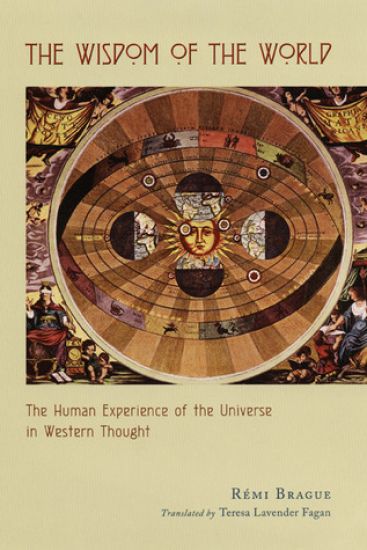
The Wisdom of the World

The Wisdom of the World

Remi Brague

University of Chicago Press
2004
nidottu
When the ancient Greeks looked up into the heavens, they saw not just sun and moon, stars and planets, but a complete, coherent universe, a model of the Good that could serve as a guide to a better life. How this view of the world came to be, and how we lost it (or turned away from it) on the way to becoming modern, make for a fascinating story, told in a highly accessible manner by Rémi Brague in this wide-ranging cultural history.Before the Greeks, people thought human action was required to maintain the order of the universe and so conducted rituals and sacrifices to renew and restore it. But beginning with the Hellenic Age, the universe came to be seen as existing quite apart from human action and possessing, therefore, a kind of wisdom that humanity did not. Wearing his remarkable erudition lightly, Brague traces the many ways this universal wisdom has been interpreted over the centuries, from the time of ancient Egypt to the modern era. Socratic and Muslim philosophers, Christian theologians and Jewish Kabbalists all believed that questions about the workings of the world and the meaning of life were closely intertwined and that an understanding of cosmology was crucial to making sense of human ethics. Exploring the fate of this concept in the modern day, Brague shows how modernity stripped the universe of its sacred and philosophical wisdom, transforming it into an ethically indifferent entity that no longer serves as a model for human morality.Encyclopedic and yet intimate, The Wisdom of the World offers the best sort of history: broad, learned, and completely compelling. Brague opens a window onto systems of thought radically different from our own.
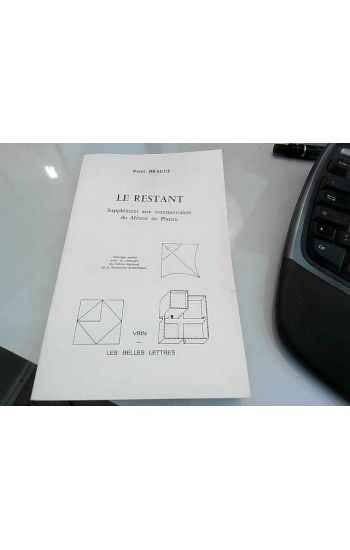
Le Restant: Supplement Aux Commentaires Du Menon de Platon

Le Restant: Supplement Aux Commentaires Du Menon de Platon

Remi Brague

Librarie Philosophique J. Vrin
1978
nidottu
Que reste-il a dire sur le Menon? Quel dialogue de Platon semble mieux connu? Une methode renouvelee permet seule de montrer que les passages les plus celebres ne nous ont pas livre tous leurs secrets, et que ceux sur lesquels le regard glisse doivent au contraire retenir l'attention. L'interpretation ici proposee refuse de separer forme et contenu: si Platon a ecrit des dialogues, et non des traites, il devait avoir ses raisons. Le sens d'un dialogue ne se limite pas a celui des repliques d'un seul personnage. Socrate n'est pas le porte-parole de Platon. Platon ne parle jamais en son propre nom. C'est le dialogue tout entier qui est l'enseignement, dans son plan, dans ses personnages, dans sa mise en scene. Elle refuse de supposer le sujet du dialogue: personne ne sait ce qu'est la vertu . C'est le dialogue qui doit appprendre ce qu'elle est. Elle refuse de se laisser imposer des passages classiques - la torpille, la reminiscence - entre lesquels il n'y aurait que du remplissage. Elle refuse d'expliquer les choix de Platon pour tel personnage, telle date, telle situation, par le renvoi positiviste a des faits exterieurs a la pensee reflechie du philosophe. Elle refuse d'ignorer les recentes decouvertes sur l'enseignement oral de Platon et en retrouve les principales doctrines dans le contenu, mais aussi la forme du texte. Elle demontre ainsi sur l'exemple d'un dialogue la fecondite d'une methode applicable a l'ensemble de l'oeuvre ecrite de Platon.