Kirjojen hintavertailu. Mukana 12 390 323 kirjaa ja 12 kauppaa.

Kirjailija

Renato G. Bautista

Kirjat ja teokset yhdessä paikassa: 2 kirjaa, julkaisuja vuosilta 1985-2013, suosituimpien joukossa Hydrometallurgical Process Fundamentals. Vertaile teosten hintoja ja tarkista saatavuus suomalaisista kirjakaupoista.

2 kirjaa

Kirjojen julkaisuhaarukka 1985-2013.

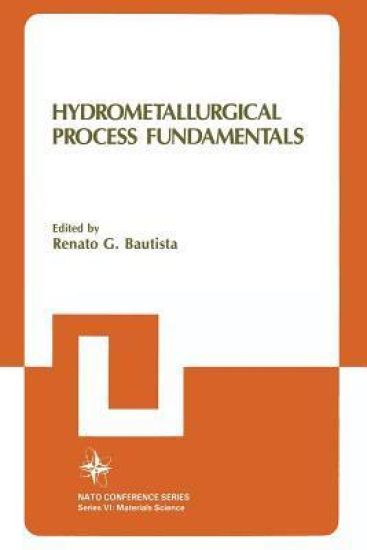
Hydrometallurgical Process Fundamentals

Hydrometallurgical Process Fundamentals

Renato G. Bautista

Springer-Verlag New York Inc.
2013
nidottu
The mineral resources of the industrialized countries, especially the member nations of the North Atlantic Treaty Organiza­ tion, are being depleted at such a rate that more and more of these count ries are beginning to depend on ore imported from other coun­ tries. To sustain the economic and strategie well-being of these member countries, it becomes imperative that a program of developing and exploiting other non-conventional mineral resources and a con­ servation program where metal values from waste dumps and scrap metals and alloys are recycled must be initiated and implemented. In order to meet this challenge, new processes and technology must be available for consideration in the design and operation of the new plants. One of the possible routes of extracting the metals from their ores, especially for multimetal complex ores and very low grade ores, is by hydrometallurgical processing. The hydrometallurgical route of metal recovery where dissolution (leaching), separation and concentration (ion exchange, solvent extraction, and membrane separation) and reduction to metal (cementation, precipitation by gaseous reduction, and electrolysis) is carried out at near ambient temperature is becoming more competi­ tive with the conventional high temperature processes used in the smelting of metals from high grade and beneficiated ores.
Hydrometallurgical Process Fundamentals

Hydrometallurgical Process Fundamentals

Renato G. Bautista

Kluwer Academic/Plenum Publishers
1985
sidottu
The mineral resources of the industrialized countries, especially the member nations of the North Atlantic Treaty Organiza­ tion, are being depleted at such a rate that more and more of these count ries are beginning to depend on ore imported from other coun­ tries. To sustain the economic and strategie well-being of these member countries, it becomes imperative that a program of developing and exploiting other non-conventional mineral resources and a con­ servation program where metal values from waste dumps and scrap metals and alloys are recycled must be initiated and implemented. In order to meet this challenge, new processes and technology must be available for consideration in the design and operation of the new plants. One of the possible routes of extracting the metals from their ores, especially for multimetal complex ores and very low grade ores, is by hydrometallurgical processing. The hydrometallurgical route of metal recovery where dissolution (leaching), separation and concentration (ion exchange, solvent extraction, and membrane separation) and reduction to metal (cementation, precipitation by gaseous reduction, and electrolysis) is carried out at near ambient temperature is becoming more competi­ tive with the conventional high temperature processes used in the smelting of metals from high grade and beneficiated ores.