Kirjojen hintavertailu. Mukana 12 499 663 kirjaa ja 12 kauppaa.

Kirjailija

René van der Veer

Kirjat ja teokset yhdessä paikassa: 7 kirjaa, julkaisuja vuosilta 1993-2020, suosituimpien joukossa Vygotsky's Pedology of the School Age. Vertaile teosten hintoja ja tarkista saatavuus suomalaisista kirjakaupoista.

Mukana myös kirjoitusasut: Rene Van der Veer

7 kirjaa

Kirjojen julkaisuhaarukka 1993-2020.

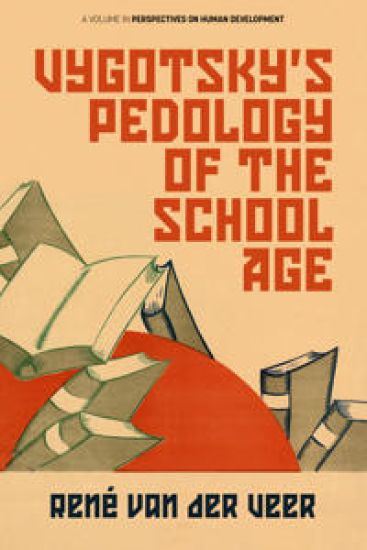
Vygotsky's Pedology of the School Age

Vygotsky's Pedology of the School Age

René van der Veer

Information Age Publishing
2020
sidottu
This is an edited (introduced and annotated) book by the Russian psychologist Lev Vygotsky who belongs to the most well-known social scientists of the previous century and whose body of writings still serves as a source of inspiration for present-day researchers in psychology, education, linguistics, and so on. The book had not been translated into any language and was virtually unknown to the scientific community, because it is extremely hard to find a copy of the original. The book will cause excitement among those familiar with Vygotsky’s writings, because it deals with an aspect of his life and work that is little known, notably his involvement with child studies or, as it is also known, pedology (paidology, paedology). Child studies was a new discipline launched by the American G. Stanley Hall which aimed to offer a comprehensive study of the child including psychological, educational, medical, and social aspects. The discipline enjoyed a brief popularity in the US and Europe until WW 1 and continued its existence in the USSR until 1936 when it was forbidden. The book gives a unique insight into Russian and Soviet pedology and will be interesting to anyone interested in developmental and general psychology, education, and the social history of these disciplines. As the book requires virtually no previous knowledge it can be read with profit by both undergraduate and graduate students and professors. An additional asset for those specifically interested in Vygotsky’s theorizing is that it shows a whole new light on the social-historical and political background of his ideas. The book is introduced by an essay that explains the historical embeddedness of Vygotsky’s ideas and the footnotes and list of brief biographies of key figures make it particularly easy to understand the book’s content and context.
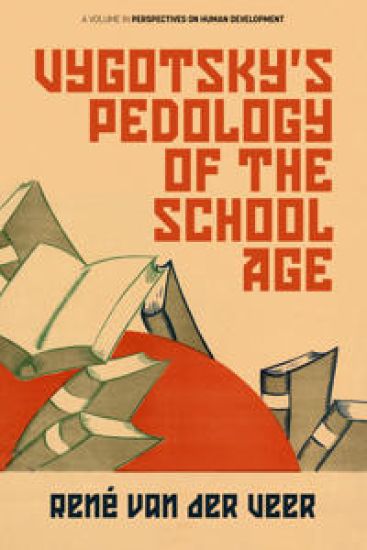
Vygotsky's Pedology of the School Age

Vygotsky's Pedology of the School Age

René van der Veer

Information Age Publishing
2020
nidottu
This is an edited (introduced and annotated) book by the Russian psychologist Lev Vygotsky who belongs to the most well-known social scientists of the previous century and whose body of writings still serves as a source of inspiration for present-day researchers in psychology, education, linguistics, and so on. The book had not been translated into any language and was virtually unknown to the scientific community, because it is extremely hard to find a copy of the original. The book will cause excitement among those familiar with Vygotsky’s writings, because it deals with an aspect of his life and work that is little known, notably his involvement with child studies or, as it is also known, pedology (paidology, paedology). Child studies was a new discipline launched by the American G. Stanley Hall which aimed to offer a comprehensive study of the child including psychological, educational, medical, and social aspects. The discipline enjoyed a brief popularity in the US and Europe until WW 1 and continued its existence in the USSR until 1936 when it was forbidden. The book gives a unique insight into Russian and Soviet pedology and will be interesting to anyone interested in developmental and general psychology, education, and the social history of these disciplines. As the book requires virtually no previous knowledge it can be read with profit by both undergraduate and graduate students and professors. An additional asset for those specifically interested in Vygotsky’s theorizing is that it shows a whole new light on the social-historical and political background of his ideas. The book is introduced by an essay that explains the historical embeddedness of Vygotsky’s ideas and the footnotes and list of brief biographies of key figures make it particularly easy to understand the book’s content and context.
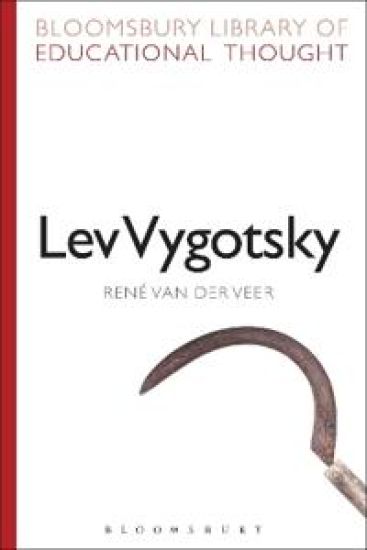
Lev Vygotsky

Lev Vygotsky

René van der Veer

Bloomsbury Academic
2014
nidottu
Lev Vygotsky, the great Russian psychologist, had a profound influence on educational thought. His work on the perception of art, cultural-historical theory of the mind and the zone of proximal development all had an impact on modern education. This text provides a succinct critical account of Vygotsky’s life and work against the background of the political events and social turmoil of that time and analyses his cross-cultural research and the application of his ideas to contemporary education. René van der Veer offers his own interpretation of Vygotsky as both the man and anti-man of educational philosophy, concluding that the strength of Vygotsky’s legacy lies in its unfinished, open nature.
Lev Vygotsky

Lev Vygotsky

René van der Veer

BLOOMSBURY PUBLISHING PLC
2007
sidottu
A major international reference series providing comprehensive accounts of the work of seminal educational thinkers from a variety of periods, disciplines and traditions. It is the most ambitious and prestigious such project ever published - a definitive resource for at least a generation. The thinkers include: Aquinas, Aristotle, Bourdieu, Bruner, Dewey, Foucault, Freire, Holt, Kant, Locke, Montessori, Neill, Newman, Owen, Peters, Piaget, Plato, Rousseau, Steiner, Vygotsky, West and Wollstonecraft. Lev Vygotsky is indisputably a major thinker in education. Ren van der Veer's volume offers the most coherent account of Vygotsky's educational thought. This work is divided into:Intellectual biography Critical exposition of Vygotsky's work The Reception, Influence and Relevance of Vygotskys Work Today.
The Social Mind

The Social Mind

Valsiner Jaan; Rene van der Veer

Cambridge University Press
2000
pokkari
The Social Mind charts the intellectual history of the idea of socially constructed mind through the examination of four key theorists - Lev Vygotsky, George Herbert Mead, James Mark Baldwin, and Pierre Janet. An analysis of the theories of these scholars and the social climate in which they worked will be invaluable to contemporary social scientists. In their analysis of the social construction of mind, the authors elaborate on their notion of intellectual interdependency in the development of scientific ideas and they take a new look at how progress in science is a socially constructed entity. Their well constructed, ambitious volume makes an important and timely contribution to the theory and history of psychology.
The Social Mind

The Social Mind

Jaan Valsiner; Rene van der Veer

Cambridge University Press
2000
sidottu
The Social Mind, first published in 2000, charts the intellectual history of the idea of socially constructed mind through the examination of four key theorists - Lev Vygotsky, George Herbert Mead, James Mark Baldwin, and Pierre Janet. An analysis of the theories of these scholars and the social climate in which they worked will be invaluable to contemporary social scientists. In their analysis of the social construction of mind, the authors elaborate on their notion of intellectual interdependency in the development of scientific ideas and they take a new look at how progress in science is a socially constructed entity. Their well constructed, ambitious volume makes an important and timely contribution to the theory and history of psychology.
Understanding Vygotsky

Understanding Vygotsky

Rene Van der Veer; Jaan Valsiner

Blackwell Publishers
1993
nidottu
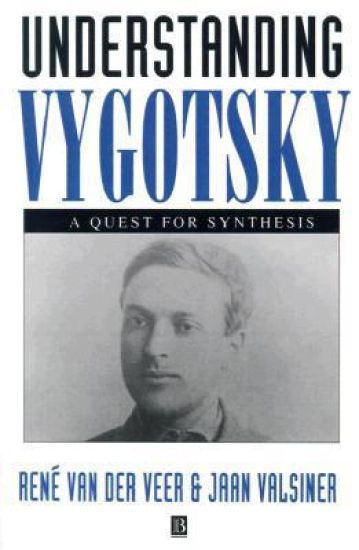
This book presents the most comprehensive introduction to the life and ideas of Lev Vygotsky (1896-1934) yet written. As a key to understanding one of the most potent influences on developmental theories this century, Van der Veer and Valsiner explore Vygotsky's ideas in the contexts of Russian psychology and the politics of the inter-war years. The authors chart Vygotsky's intellectual development through the course of his life, establishing links with his predecessors and contemporaries and illustrating his intellectual interdependence with the contemporary scientific community and the creative endeavors of the fine arts. Careful analysis of his social context allows detailed discussion of Vygotsky's indebtedness to literary scholarship, with psychoanalysis, Gestalt psychology and paedology. Understanding Vygotsky not only shows the extent to which Vygotsky's work can be further developed to be relevant to the end of the twentieth century but also opens up scope for a more detailed analysis of his contemporaries. It will be essential reading for all students of Vygotsky and his ideas.