Kirjojen hintavertailu. Mukana 12 595 353 kirjaa ja 12 kauppaa.
Kirjailija
Reynolds M. Salerno
Kirjat ja teokset yhdessä paikassa: 3 kirjaa, julkaisuja vuosilta 2002-2026, suosituimpien joukossa Laboratory Biosecurity Handbook, Second Edition. Vertaile teosten hintoja ja tarkista saatavuus suomalaisista kirjakaupoista.
This book describes the risks of working with dangerous pathogens and toxins in the current era of international terrorism. The authors characterize the global spread of legitimate biotechnology and relate it to the rise of transnational terrorism, emphasizing the need for biosecurity measures even in legitimate bioscience. This second edition is considerably longer than the first and includes several new chapters and sections, with the final two-thirds of the book entirely reorganized.
By achieving a delicate balance between systems and practices, proper laboratory biosecurity reduces the risk of legitimate bioscience facilities becoming sources of pathogens and toxins for malicious use. Effective design and implementation of laboratory biosecurity depends on cooperation among individuals from diverse communities, including scientists, technicians, policy makers, security engineers, and law enforcement officials. Providing guidance to the broad international community, Laboratory Biosecurity Handbook addresses the objectives of biosecurity and the ways in which they overlap or conflict with those of biosafety. The book describes the risks of working with dangerous pathogens and toxins in the current era of international terrorism. The authors characterize the global spread of legitimate biotechnology and relate it to the rise of transnational terrorism, emphasizing the need for biosecurity measures even in legitimate bioscience. The book discusses biosecurity risk assessment-a practical methodology that allows laboratory management and biosafety/biosecurity officers to analyze and determine the level of risk, and serves as a basis for managing those risks. The book includes questionnaires that can assist the process of collecting data for a biosecurity vulnerability assessment, example standard operating procedures and memoranda of understanding, and other useful reference material. Addressing a variety of operating environments and the particular challenges they face when designing and implementing laboratory biosecurity, this book can assist bioscience facilities ranging from the large to the small, from those that focus on diagnosis or vaccine development, to those only minimally involved with infectious diseases. The detailed recommendations help avoid a "one-size-fits-all" approach to security and save limited resources. The book shows institutions how to develop and implement a biosecurity plan, and helps ensure that all components are included in the overall system, whether existing or new.
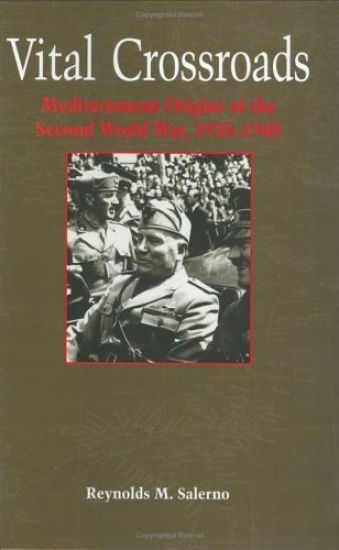
Most international historians present the outbreak of World War II as the result of an irreconcilable conflict between Great Britain and Germany. This ubiquitous Anglo-German perspective fails to recognize complex causes and repercussions of international events, misappropriates historical responsibilities, and overlooks many global and imperial factors of the war's origins. Reynolds M. Salerno shows that the situation in the Mediterranean played a decisive role in the European drama of the late 1930s and profoundly influenced the manner in which the Second World War unfolded. Vital Crossroads is the result of the author's remarkable access to and extensive research in twenty-eight archives in five different countries. Concentrating on the period from the Mediterranean crisis of 1935 to Italy's declaration of war in June 1940, Salerno demonstrates that the international politics of pre-World War II Europe—particularly in the Mediterranean—can only be understood as the multilateral interaction of British, French, German, and Italian foreign and defense policies. Control of the Mediterranean, he asserts, was a central concern for the European powers in 1935–40, and a fundamental reason why Europe went to war and why the conflict unfolded as it did. As a result, France and Italy influenced and often determined the nature and direction of Allied and Axis policy to an extent disproportionate to their nations' military and economic strength. Salerno contends that the Allies' reluctance to take decisive action against Fascist Italy in 1939–40 contributed to the fall of France in 1940, Britain's desperate situation in 1940–41, and the post-war collapse of Britain as a world power. At a time when the Allied powers dreaded the ability of the German military to march across the European continent, they also feared that the Italian armed forces would strive to fulfill Mussolini's grand imperial ambitions in the Mediterranean.