Kirjojen hintavertailu. Mukana 12 595 353 kirjaa ja 12 kauppaa.

Kirjailija

Rhett Johnson

Kirjat ja teokset yhdessä paikassa: 3 kirjaa, julkaisuja vuosilta 2006-2026, suosituimpien joukossa Longleaf, Far As the Eye Can See. Vertaile teosten hintoja ja tarkista saatavuus suomalaisista kirjakaupoista.

3 kirjaa

Kirjojen julkaisuhaarukka 2006-2026.

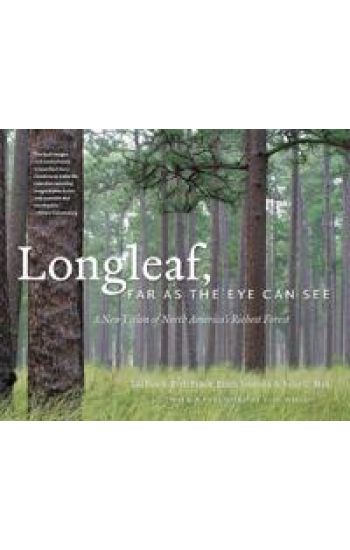
Longleaf, Far As the Eye Can See

Longleaf, Far As the Eye Can See

Bill Finch; Beth Finch; Rhett Johnson; John C. Hall; E. O. Wilson

THE UNIVERSITY OF NORTH CAROLINA PRESS
2026
pokkari
Longleaf forests once covered 92 million acres from Texas to Maryland to Florida. These grand old-growth pines were the “alpha tree” of the largest forest ecosystem in North America and have come to define the southern forest. But logging, suppression of fire, destruction by landowners, and a complex web of other factors reduced those forests so that longleaf is now found only on 3 million acres. Fortunately, the stately tree is enjoying a resurgence of interest, and longleaf forests are once again spreading across the South. Blending a compelling narrative by writers Bill Finch, Rhett Johnson, and John C. Hall with Beth Finch’s breathtaking photography, Longleaf, Far as the Eye Can See invites readers to experience the astounding beauty and significance of the majestic longleaf ecosystem. The authors explore the interactions of longleaf with other species, the development of longleaf forests prior to human contact, and the influence of the longleaf on southern culture, as well as ongoing efforts to restore these forests. Part natural history, part conservation advocacy, and part cultural exploration, this book highlights the special nature of longleaf forests and proposes ways to conserve and expand them.
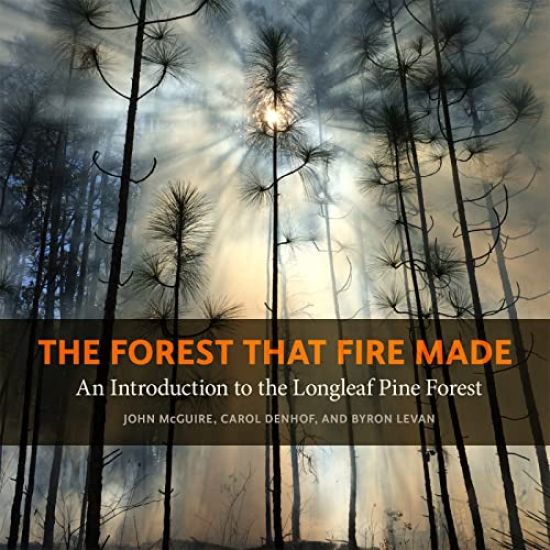
The Forest That Fire Made

The Forest That Fire Made

John McGuire; Carol Denhof; Byron Levan; Rhett Johnson

UNIVERSITY OF GEORGIA PRESS
2023
nidottu
Longleaf pine forests are an iconic forest of the southeastern United States. Although these forests were often called “pine barrens” by early explorers and colonists, they were far from barren. Frequent and low-intensity surface fires are fueled by the unique plant diversity of the forest itself and serve as the catalyst that perpetuates the ecosystem on which many rare species depend. With this guide, authors John McGuire, Carol Denhof, and Byron Levan reveal the forest’s unique characteristics by shining a light on its inhabitants, the ecological processes that are necessary for their survival, and how we as humans play a role in shaping this ecosystem.Covering a wide range of topics, such as the anatomy of the longleaf tree, its history (and revival), and the surrounding fauna and flora, the authors provide the general reader with a thorough understanding of a forest that used to stretch as far as the eye could see. They claim that although the remnants of this once-great longleaf pine forest exist, they are often just a reminder of its former majesty, only recognizable to the informed observer. The Forest That Fire Made is dedicated to introducing the next generation of outdoor enthusiasts to many of the unique animals and plants that their ancestors would have known. This guide includes three hundred color images of the flora and fauna that make longleaf pine forests their habitat and more than forty detailed drawings that document the most common species of animals, plants, and insects found there. It also describes more than forty longleaf pine forests to visit in nine southern states: Alabama, Florida, Georgia, Louisiana, Mississippi, North Carolina, South Carolina, Texas, and Virginia. In these preserved areas (many of which are publicly accessible), one can still experience the majesty of these once-dominant ecological communities.
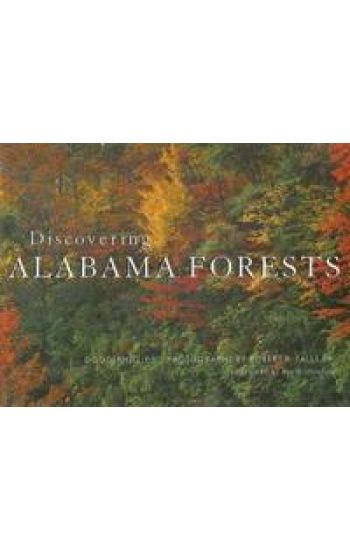
Discovering Alabama Forests

Discovering Alabama Forests

Doug Phillips; Rhett Johnson

The University of Alabama Press
2006
sidottu
Green woodlands dress more than 22 million acres of the Alabama landscape, roughly two-thirds of the state. (Only Oregon and Georgia have a comparable abundance of forested acreage). Moreover, forest diversity in Alabama is greater than in any other region in the United States, with more than 200 kinds of native trees. These mixed forests consist of a great many hardwoods often thought of as emblematic of other regions: oaks, maples, hollies, elms and five species of buckeyes (Ohio has just two). Also abundant are softwoods and conifers - juniper, hemlock, cypress, and eight distinctive species of pine. As the official state tree, the longleaf pine was once among the most widespread species but decades of over-harvesting have reduced this graceful, fire-resistant tree to a mere remnant of its historical range. In ""Discovering Alabama Forests"", ecologist-educator Doug Phillips and photographer Robert Falls celebrate the current health and diversity of Alabama woodlands while sounding a call for their wise management and protection in the future. As population growth and urban development place new demands on forest communities, Phillips warns, advocates will succeed only if joined by a public spirit of appreciation for the state's rich forest heritage. With 100 beautiful color photographs illustrating the meticulous text, ""Discovering Alabama Forests"" provides an informed and accessible introduction to the ecological, geological, and biological richness of Alabama's forests, their evolution through history, their contribution to the state's economy, and the modern perils they face.