Kirjojen hintavertailu. Mukana 12 290 406 kirjaa ja 12 kauppaa.

Kirjailija

Rhiannon Graybill

Kirjat ja teokset yhdessä paikassa: 5 kirjaa, julkaisuja vuosilta 2017-2023, suosituimpien joukossa Texts after Terror. Vertaile teosten hintoja ja tarkista saatavuus suomalaisista kirjakaupoista.

5 kirjaa

Kirjojen julkaisuhaarukka 2017-2023.

Texts after Terror

Texts after Terror

Rhiannon Graybill

OXFORD UNIVERSITY PRESS INC
2023
nidottu
Texts after Terror offers an important new theory of rape and sexual violence in the Hebrew Bible. While the Bible is filled with stories of rape, scholarly approaches to sexual violence in the scriptures remain exhausted, dated, and in some cases even un-feminist, lagging far behind contemporary discourse about sexual violence and rape culture. Graybill responds to this disconnect by engaging contemporary conversations about rape culture, sexual violence, and #MeToo, arguing that rape and sexual violence - both in the Bible and in contemporary culture - are frequently fuzzy, messy, and icky, and that we need to take these features seriously. Texts after Terror offers a new framework informed by contemporary conversations about sexual violence, writings by victims and survivors, and feminist, queer, and affect theory. In addition, Graybill offers significant new readings of biblical rape stories, including Dinah (Gen. 34), Tamar (2 Sam. 13), Bathsheba (2 Sam. 11), Hagar (Gen. 16), Daughter Zion (Lam. 1-2), and the unnamed woman known as the Levite's concubine (Judges 19). Texts after Terror urges feminist biblical scholars and readers of all sorts to take seriously sexual violence and rape, while also holding space for new ways of reading these texts that go beyond terror, considering what might come after.
Jonah

Jonah

Rhiannon Graybill; John Kaltner; Steven L. McKenzie

YALE UNIVERSITY PRESS
2023
sidottu
An innovative translation and commentary on the book of Jonah by a trio of award-winning scholars The book of Jonah, which tells the outlandish story of a disobedient prophet swallowed by a great fish, is one of the Bible’s best-known narratives. This tale has fascinated readers for millennia and has inspired countless interpretations. This commentary features a new translation of Jonah as well as an introduction outlining the major interpretive issues in the text. The introduction traces the composition history of the book, paying special attention to the psalm in the second chapter; and the authors explore new theories surrounding the time and place where Jonah delivers his message to Nineveh, as well as the city’s act of repentance. In addition to these features, this volume draws on a variety of critical approaches to biblical literature—including affect theory, animal studies, performance criticism, postcolonial criticism, psychological criticism, spatial theory, and trauma theory—to reveal the book’s many interpretive possibilities. An updated treatment of Jonah’s reception history includes analyses of the story in religious traditions, art and literature, and popular culture.
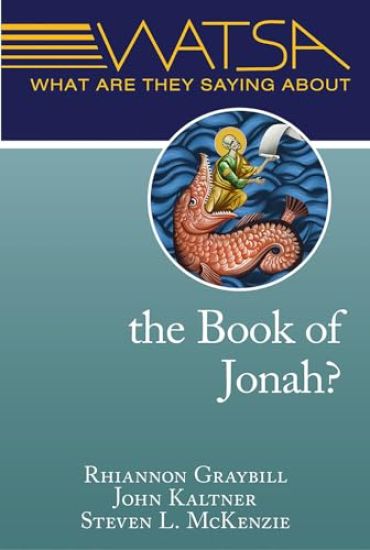
What Are They Saying About the Book of Jonah?

What Are They Saying About the Book of Jonah?

Rhiannon Graybill; John Kaltner; Steven L. McKenzie

PAULIST PRESS INTERNATIONAL,U.S.
2023
nidottu
Aimed at a general audience, this book provides an overview of how biblical scholars have addressed important issues related to the biblical book of Jonah. Moving far beyond 'the story about that guy and the whale,' this work leads readers to appreciate how complex a work Jonah is and the unique contribution it makes to biblical literature.Endorsements"Both erudite and readable, this book masterfully synthesizes recent scholarship on Jonah via a close reading, a survey of the book's mysteries, and a review of its reception across time."—James D. Nogalski, professor of Hebrew Bible, W. Marshall and Lulie Craig Professor of Bible, Baylor University"These scholars combine their expertise with clear and engaging prose, perfect for the undergraduate classroom or Bible study groups. I especially appreciate their discussions of the Jonah traditions in Christianity, Judaism, and Islam."—Corrine L. Carvalho, professor of theology, University of St. Thomas"This well-researched and easily accessible book manages not only to condense the major redaction-critical, literary, and reception-historical theories pertaining to the book of Jonah but also to offer new and exciting insights."—Lena-Sofia Tiemeyer, professor in Old Testament exegesis, ALT School of Theology, SwedenRhiannon Graybill is Marcus M. and Carole M. Weinstein and Gilbert M. and Fannie S. Rosenthal Chair of Jewish Studies at the University of Richmond.John Kaltner is Virginia Ballou McGehee Professor of Muslim-Christian Relations at Rhodes College.Steven L. McKenzie is professor of religious studies and the Spence L. Wilson Senior Research Fellow at Rhodes College.†
Texts after Terror

Texts after Terror

Rhiannon Graybill

Oxford University Press Inc
2021
sidottu
Texts after Terror offers an important new theory of rape and sexual violence in the Hebrew Bible. While the Bible is filled with stories of rape, scholarly approaches to sexual violence in the scriptures remain exhausted, dated, and in some cases even un-feminist, lagging far behind contemporary discourse about sexual violence and rape culture. Graybill responds to this disconnect by engaging contemporary conversations about rape culture, sexual violence, and #MeToo, arguing that rape and sexual violence - both in the Bible and in contemporary culture - are frequently fuzzy, messy, and icky, and that we need to take these features seriously. Texts after Terror offers a new framework informed by contemporary conversations about sexual violence, writings by victims and survivors, and feminist, queer, and affect theory. In addition, Graybill offers significant new readings of biblical rape stories, including Dinah (Gen. 34), Tamar (2 Sam. 13), Bathsheba (2 Sam. 11), Hagar (Gen. 16), Daughter Zion (Lam. 1-2), and the unnamed woman known as the Levite's concubine (Judges 19). Texts after Terror urges feminist biblical scholars and readers of all sorts to take seriously sexual violence and rape, while also holding space for new ways of reading these texts that go beyond terror, considering what might come after.
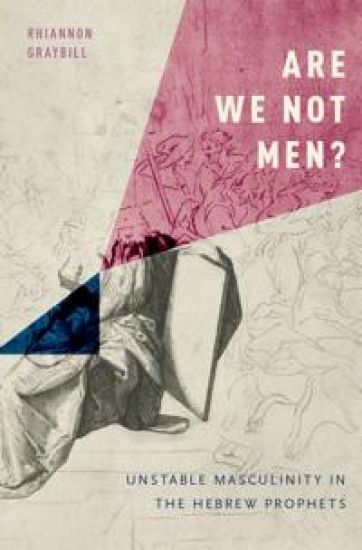
Are We Not Men?

Are We Not Men?

Rhiannon Graybill

Oxford University Press Inc
2017
sidottu
Are We Not Men? offers an innovative approach to gender and embodiment in the Hebrew Bible, revealing the male body as a source of persistent difficulty for the Hebrew prophets. Drawing together key moments in prophetic embodiment, Graybill demonstrates that the prophetic body is a queer body, and its very instability makes possible new understandings of biblical masculinity. Prophecy disrupts the performance of masculinity and demands new ways of inhabiting the body and negotiating gender. Graybill explores prophetic masculinity through critical readings of a number of prophetic bodies, including Isaiah, Moses, Hosea, Jeremiah, and Ezekiel. In addition to close readings of the biblical texts, this account engages with modern intertexts drawn from philosophy, psychoanalysis, and horror films: Isaiah meets the poetry of Anne Carson; Hosea is seen through the lens of possession films and feminist film theory; Jeremiah intersects with psychoanalytic discourses of hysteria; and Ezekiel encounters Daniel Paul Schreber's Memoirs of My Nervous Illness. Graybill also offers a careful analysis of the body of Moses. Her methods highlight unexpected features of the biblical texts, and illuminate the peculiar intersections of masculinity, prophecy, and the body in and beyond the Hebrew Bible. This assembly of prophets, bodies, and readings makes clear that attending to prophecy and to prophetic masculinity is an important task for queer reading. Biblical prophecy engenders new forms of masculinity and embodiment; Are We Not Men?offers a valuable map of this still-uncharted terrain.