Kirjojen hintavertailu. Mukana 12 595 353 kirjaa ja 12 kauppaa.

Kirjailija

Rhodri Jeffreys-Jones

Kirjat ja teokset yhdessä paikassa: 14 kirjaa, julkaisuja vuosilta 1997-2025, suosituimpien joukossa The FBI. Vertaile teosten hintoja ja tarkista saatavuus suomalaisista kirjakaupoista.

14 kirjaa

Kirjojen julkaisuhaarukka 1997-2025.

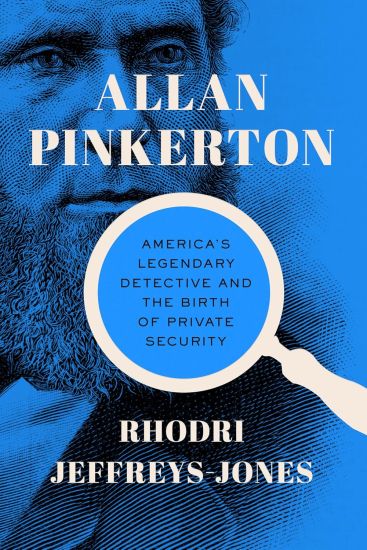
Allan Pinkerton

Allan Pinkerton

Rhodri Jeffreys-Jones

GEORGETOWN UNIVERSITY PRESS
2025
sidottu
A deeply researched account of the life and legacy of the man who defined the profession of private eyeAllan Pinkerton, the world's most famous private detective, has been an enduring source of fascination since the nineteenth century. But the details of his impact, business empire, and private life have been incomplete.Drawing on overlooked primary sources, Rhodri Jeffreys-Jones provides an authoritative account of the man and the Pinkerton National Detective Agency (PNDA). It is the story of how PNDA's founder and its successive generations of heirs put it at the center of American history for decades. A small sampling of Pinkerton's activities includes providing intelligence in the Civil War, pursuing high-profile outlaws like Butch Cassidy and the Sundance Kid, and protecting scabs in the Homestead lockout, for which they became notorious. The book continues telling PNDA's history into the twentieth century and analyzes the legacies of Pinkertonism up to the present.General readers as well as scholars of American history will be fascinated by this rich new portrait of Pinkerton's accomplishments, controversies, and contradictions.
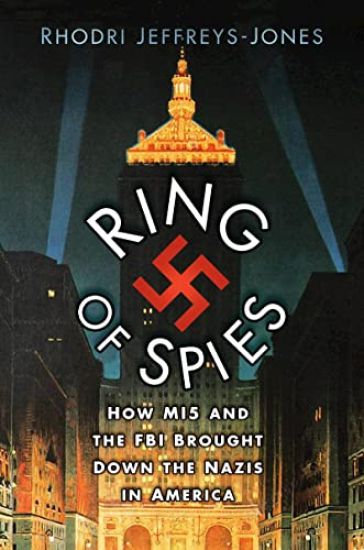
Ring of Spies

Ring of Spies

Rhodri Jeffreys-Jones

THE HISTORY PRESS LTD
2022
pokkari
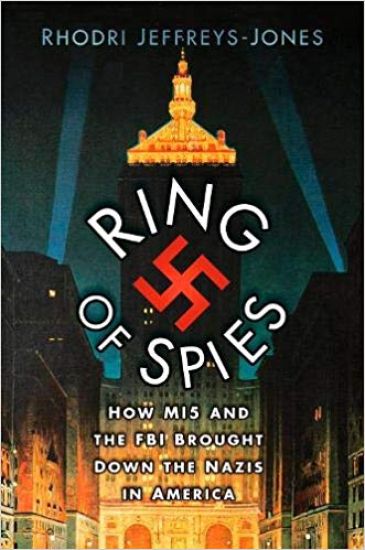
In 1935–37 America passed several Neutrality Acts, vowing never again to take sides in a European conflict. In 1938 public attitudes changed, with the American people beginning to favour Britain and turn against Germany – but what caused this shift of opinion?One reason was a tip-off received by the FBI on the eve of the Second World War, which led to the exposure of a Nazi spy ring operating right there in America. The FBI was able to bring the group to justice and launch a campaign to warn the American people about the Nazi threat to their shores and society.In Ring of Spies, Rhodri Jeffreys-Jones reveals how this case helped to awaken America to the Nazi menace, and how it skewed American opinion, thus spelling the end of US neutrality. Using evidence from FBI files he uncovers a story straight out of a detective novel featuring honey traps, fast cars and double agents.
A Question of Standing

A Question of Standing

Rhodri Jeffreys-Jones

Oxford University Press
2022
sidottu
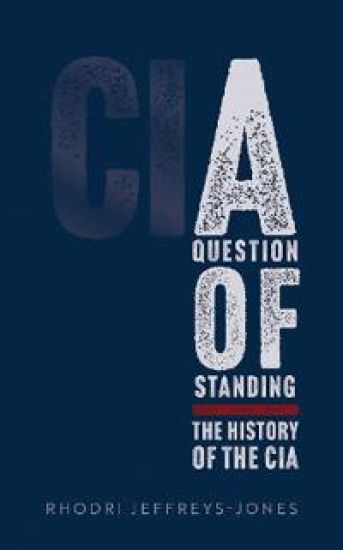
A Question of Standing deals with recognizable events that have shaped the history of the first 75 years of the CIA. Unsparing in its accounts of dirty tricks and their consequences, it values the agency's intelligence and analysis work to offer balanced judgements that avoid both celebration and condemnation of the CIA. The mission of the CIA, derived from U-1 in World War I more than from World War II's OSS, has always been intelligence. Seventy-five years ago, in the year of its creation, the National Security Act gave the agency, uniquely in world history up to that point, a democratic mandate to pursue that mission of intelligence. It gave the CIA a special standing in the conduct of US foreign relations. That standing diminished when successive American presidents ordered the CIA to exceed its original mission. When they tasked the agency secretly to overthrow democratic governments, the United States lost its international standing, and its command of a majority in the United Nations General Assembly. Such dubious operations, even the government's embrace of assassination and torture, did not diminish the standing of the CIA in US public opinion. However, domestic interventions did. CIA spying on domestic protesters led to tighter congressional oversight from the 1970s on. The chapters in A Question of Standing offer a balanced narrative and perspective on recognizable episodes in the CIA's history. They include the Bay of Pigs invasion, the War on Terror, 9/11, the weapons of mass destruction deception, the Iran estimate of 2007, the assassination of Osama bin Laden, and Fake News. The Intelligence Reform and Terrorism Prevention Act of 2004 diminished the CIA and is construed as having been the right solution undertaken for the wrong reasons, reasons that grew out of political opportunism. The book also defends the CIA's exposure of foreign meddling in US elections.
Ring of Spies

Ring of Spies

Rhodri Jeffreys-Jones

The History Press Ltd
2020
sidottu
In 1935–37 America passed several Neutrality Acts, vowing never again to take sides in a European conflict. In 1938 public attitudes changed, with the American people beginning to favour Britain and turn against Germany – but what caused this shift of opinion?One reason was a tip-off received by the FBI on the eve of the Second World War, which led to the exposure of a Nazi spy ring operating right there in America. The FBI was able to bring the group to justice and launch a campaign to warn the American people about the Nazi threat to their shores and society.In Ring of Spies, Rhodri Jeffreys-Jones reveals how this case helped to awaken America to the Nazi menace, and how it skewed American opinion, thus spelling the end of US neutrality. Using evidence from FBI files he uncovers a story straight out of a detective novel featuring honey traps, fast cars and double agents.
We Know All About You

We Know All About You

Rhodri Jeffreys-Jones

Oxford University Press
2017
sidottu
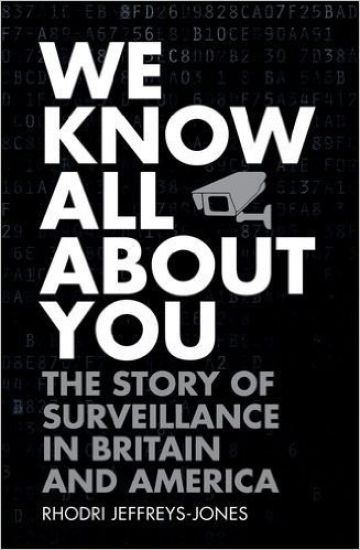
We Know All About You shows how bulk spying came of age in the nineteenth century, and supplies the first overarching narrative and interpretation of what has happened since, covering the agencies, programs, personalities, technology, leaks, criticisms and reform. Concentrating on America and Britain, it delves into the roles of credit agencies, private detectives, and phone-hacking journalists as well as government agencies like the NSA and GCHQ, and highlights malpractices such as the blacklist and illegal electronic interceptions. It demonstrates that several presidents - Franklin D. Roosevelt, Lyndon B. Johnson, Richard M. Nixon - conducted political surveillance, and how British agencies have been under a constant cloud of suspicion for similar reasons. We Know All About You continues with an account of the 1970s leaks that revealed how the FBI and CIA kept tabs on anti-Vietnam War protestors, and assesses the reform impulse that began in America and spread to Britain. The end of the Cold War further undermined confidence in the need for surveillance, but it returned with a vengeance after 9/11. The book shows how reformers challenged that new expansionism, assesses the political effectiveness of the Snowden revelations, and offers an appraisal of legislative initiatives on both sides of the Atlantic. Micro-stories and character sketches of individuals ranging from Pinkerton detective James McParlan to recent whisteblowers illuminate the book. We Know All About You confirms that governments have a record of abusing surveillance powers once granted, but emphasizes that problems arising from private sector surveillance have been particularly neglected.
In Spies We Trust

In Spies We Trust

Rhodri Jeffreys-Jones

Oxford University Press
2015
nidottu
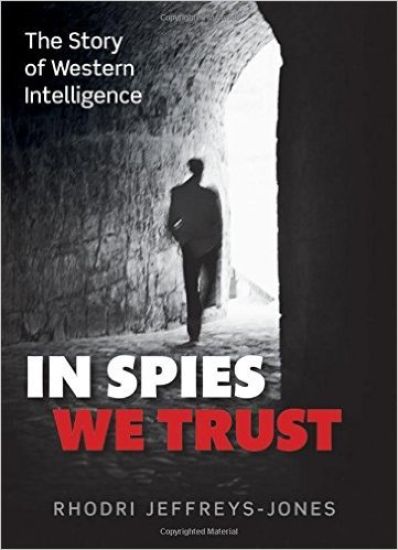
In Spies We Trust reveals the full story of the Anglo-American intelligence relationship - ranging from the deceits of World War I to the mendacities of 9/11 - for the first time. Why did we ever start trusting spies? It all started a hundred years ago. First we put our faith in them to help win wars, then we turned against the bloodshed and expense, and asked our spies instead to deliver peace and security. By the end of World War II, Britain and America were cooperating effectively to that end. At its peak in the 1940s and 1950s, the 'special intelligence relationship' contributed to national and international security in what was an Anglo-American century. But from the 1960s this 'special relationship' went into decline. Britain weakened, American attitudes changed, and the fall of the Soviet Union dissolved the fear that bound London and Washington together. A series of intelligence scandals along the way further eroded public confidence. Yet even in these years, the US offered its old intelligence partner a vital gift: congressional attempts to oversee the CIA in the 1970s encouraged subsequent moves towards more open government in Britain and beyond. So which way do we look now? And what are the alternatives to the British-American intelligence relationship that held sway in the West for so much of the twentieth century? Rhodri Jeffreys-Jones shows that there are a number - the most promising of which, astonishingly, remain largely unknown to the Anglophone world.
The American Left

The American Left

Jeffreys-Jones Rhodri; Rhodri Jeffreys-Jones

Edinburgh University Press
2014
sidottu
This book shows how left-wing politics has shaped life in the USA, from the 1900s to the present day. Only the American right has ever really recognised the potency of the American left. Now, Rhodri Jeffreys-Jones fully details the left's numerous achievements, including the welfare state, opposing militarism, reshaping of American culture, black rights and civil liberties, awakening the USA to the dangers of fascism and great public enterprises such as the late Twin Towers. Jones tells the full story of the USA's left wing: how the socialists of the Old Left gave way by the 1960s to the anti-war militants of the New Left, and how they in turn gave way to a 'Newer Left' that advocated causes such as LGBT rights and multiculturalism. Bringing the discussion into the 21st century, he shows how the post-2000 Bush administration succumbed to the 'socialist' nationalisation it despised, and hails Barack Obama as a president for the left. It looks at why the USA's left is always underestimated: the relative absence of a free press, its tendency to deny its own existence, and the fallacious claim that if the right is always wrong, it must be wrong about the left's impact too. It explores the changes that have taken place in the years between the orthodox socialist challenge of a century ago and the actions of those President Obama describes as 'my friends on the left'. It draws on interviews with participants on the left including: Todd Gitlin, president of Students for a Democratic Society in the 1960s; Frances Piven, anti-poverty campaigner and bete noir of the American right; Bernie Sanders, socialist US Senator from Vermont; and, Marilyn Young, leading New Left historian of US foreign policy.
In Spies We Trust

In Spies We Trust

Rhodri Jeffreys-Jones

Oxford University Press
2013
sidottu
In Spies We Trust reveals the full story of the Anglo-American intelligence relationship - ranging from the deceits of World War I to the mendacities of 9/11 - for the first time. Why did we ever start trusting spies? It all started a hundred years ago. First we put our faith in them to help win wars, then we turned against the bloodshed and expense, and asked our spies instead to deliver peace and security. By the end of World War II, Britain and America were cooperating effectively to that end. At its peak in the 1940s and 1950s, the 'special intelligence relationship' contributed to national and international security in what was an Anglo-American century. But from the 1960s this 'special relationship' went into decline. Britain weakened, American attitudes changed, and the fall of the Soviet Union dissolved the fear that bound London and Washington together. A series of intelligence scandals along the way further eroded public confidence. Yet even in these years, the US offered its old intelligence partner a vital gift: congressional attempts to oversee the CIA in the 1970s encouraged subsequent moves towards more open government in Britain and beyond. So which way do we look now? And what are the alternatives to the British-American intelligence relationship that held sway in the West for so much of the twentieth century? Rhodri Jeffreys-Jones shows that there are a number - the most promising of which, astonishingly, remain largely unknown to the Anglophone world.
The FBI

The FBI

Rhodri Jeffreys-Jones

Yale University Press
2008
pokkari
A groundbreaking history of the FBI, from its anti-terrorist roots in the Reconstruction era to the 9/11 attacks This fast-paced history of the FBI presents the first balanced and complete portrait of the vast, powerful, and sometimes bitterly criticized American institution. Rhodri Jeffreys-Jones, a well-known expert on U.S. intelligence agencies, tells the bureau’s story in the context of American history. Along the way he challenges conventional understandings of that story and assesses the FBI’s strengths and weaknesses as an institution. Common wisdom traces the origin of the bureau to 1908, but Jeffreys-Jones locates its true beginnings in the 1870s, when Congress acted in response to the Ku Klux Klan campaign of terror against black American voters. The character and significance of the FBI derive from this original mission, the author contends, and he traces the evolution of the mission into the twenty-first century. The book makes a number of surprising observations: that the role of J. Edgar Hoover has been exaggerated and the importance of attorneys general underestimated, that splitting counterintelligence between the FBI and the CIA in 1947 was a mistake, and that xenophobia impaired the bureau’s preemptive anti-terrorist powers before and after 9/11. The author concludes with a fresh consideration of today’s FBI and the increasingly controversial nature of its responsibilities.
The FBI

The FBI

Rhodri Jeffreys-Jones

Yale University Press
2007
pokkari
This fast-paced history of the FBI presents the first balanced and complete portrait of the vast, powerful, and sometimes bitterly criticized American institution. Rhodri Jeffreys-Jones, a well-known expert on U.S. intelligence agencies, tells the bureau's story in the context of American history. Along the way he challenges conventional understandings of that story and assesses the FBI's strengths and weaknesses as an institution. Common wisdom traces the origin of the bureau to 1908, but Jeffreys-Jones locates its true beginnings in the 1870s, when Congress acted in response to the Ku Klux Klan campaign of terror against black American voters. The character and significance of the FBI derive from this original mission, the author contends, and he traces the evolution of the mission into the twenty-first century. The book makes a number of surprising observations: that the role of J. Edgar Hoover has been exaggerated and the importance of attorneys general underestimated, that splitting counterintelligence between the FBI and the CIA in 1947 was a mistake, and that xenophobia impaired the bureau's preemptive anti-terrorist powers before and after 9/11. The author concludes with a fresh consideration of today's FBI and the increasingly controversial nature of its responsibilities.
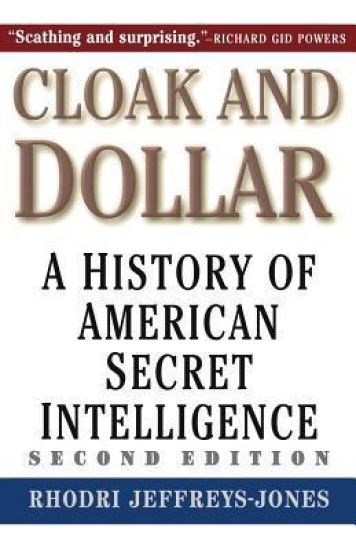
Cloak and Dollar

Cloak and Dollar

Rhodri Jeffreys-Jones

Yale University Press
2003
pokkari
Rhodri Jeffreys-Jones, a leading expert on the history of American espionage, here offers a lively and sweeping history of American secret intelligence from the founding of the nation through the present day. Jeffreys-Jones chronicles the extraordinary expansion of American secret intelligence from the 1790s, when George Washington set aside a discretionary fund for covert operations, to the beginning of the twenty-first century, when United States intelligence expenditure exceeds Russia’s total defense budget.How did the American intelligence system evolve into such an enormous and costly bureaucracy? Jeffreys-Jones argues that hyperbolic claims and the impulse toward self-promotion have beset American intelligence organizations almost from the outset. Allan Pinkerton, whose nineteenth-century detective agency was the forerunner of modern intelligence bureaus, invented assassination plots and fomented anti-radical fears in order to demonstrate his own usefulness. Subsequent spymasters likewise invented or exaggerated a succession of menaces ranging from white slavery to Soviet espionage to digital encryption in order to build their intelligence agencies and, later, to defend their ever-expanding budgets. While American intelligence agencies have achieved some notable successes, Jeffreys-Jones argues, the intelligence community as a whole has suffered from a dangerous distortion of mission. By exaggerating threats such as Communist infiltration and Chinese espionage at the expense of other, more intractable problems—such as the narcotics trade and the danger of terrorist attack—intelligence agencies have misdirected resources and undermined their own objectivity.Since the end of the Cold War, the aims of American secret intelligence have been unclear. Recent events have raised serious questions about effectiveness of foreign intelligence, and yet the CIA and other intelligence agencies are poised for even greater expansion under the current administration. Offering a lucid assessment of the origins and evolution of American secret intelligence, Jeffreys-Jones asks us to think also about the future direction of our intelligence agencies.
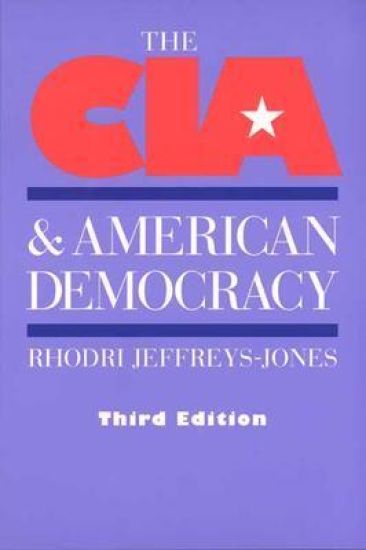
The CIA and American Democracy

The CIA and American Democracy

Rhodri Jeffreys-Jones

Yale University Press
2003
pokkari
This third edition of Rhodri Jeffreys-Jones’s engrossing history of the Central Intelligence Agency includes a new prologue that discusses the history of the CIA since the end of the Cold War, focusing in particular on the intelligence dimensions of the terrorist attacks on 9/11.Praise for the earlier editions:“I have read many books on the CIA, but none more searching and still dispassionate. Nor would I have believed that a book of such towering scholarship could still be so lucid and exciting to read.”—Daniel Schorr“This is one of the best short histories of the CIA in print, up-to-date and based on a wide range of sources.”—Walter Laqueur“Judicious and reasonable. . . . A sophisticated study that should challenge us to take a more serious view about how our democracy formulates its foreign policy.”—David P. Calleo, New York Times Book ReviewA brief, yet subtle and penetrating, account of the Central Intelligence Agency."—Leonard Bushkoff, Christian Science Monitor"Subtle and crisply written. . . . A book remarkable for its clarity and lack of bias."—William W. Powers, Jr., International Herald Tribune, Paris
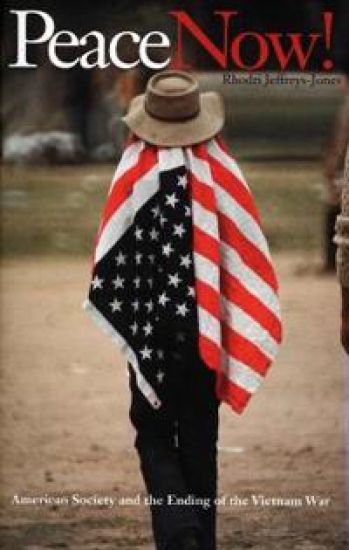
Peace Now!

Peace Now!

Rhodri Jeffreys-Jones

Yale University Press
2001
pokkari
How did the protests and support of ordinary American citizens affect their country’s participation in the Vietnam War? This engrossing book focuses on four social groups that achieved political prominence in the 1960s and early 1970s—students, African Americans, women, and labor—and investigates the impact of each on American foreign policy during the war.Drawing on oral histories, personal interviews, and a broad range of archival sources, Rhodri Jeffreys-Jones narrates and compares the activities of these groups. He shows that all of them gave the war solid support at its outset and offers a new perspective on this, arguing that these “outsider” social groups were tempted to conform with foreign policy goals as a means to social and political acceptance. But in due course students, African Americans, and then women turned away from temptation and mounted spectacular revolts against the war, with a cumulative effect that sapped the resistance of government policymakers. Organized labor, however, supported the war until almost the end. Jeffreys-Jones shows that this gave President Nixon his opportunity to speak of the “great silent majority” of American citizens who were in favor of the war. Because labor continued to be receptive to overtures from the White House, peace did not come quickly.
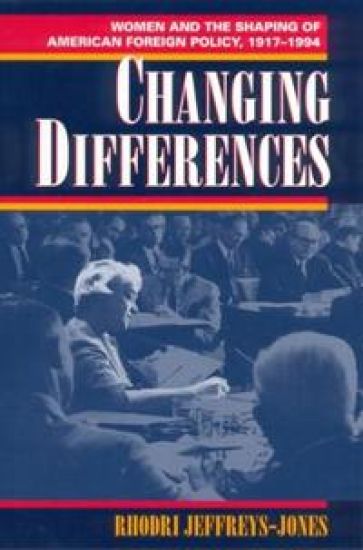
Changing Differences

Changing Differences

Rhodri Jeffreys-Jones

Rutgers University Press
1997
nidottu
There are more than fifty women in the United States Congress and nearly one-fourth of foreign service posts are held by women. Nevertheless, the United States has yet to entrust a senior foreign policy job, outside of the United Nations, to a woman. Beneath these statistics lurk central myths that Jeffreys-Jones cogently identifies and describes: the "Iron Lady"--too masculine; the "lover of peace"--too "pink"; the weak or the promiscuous. These are to name only a few. With an eye to the feminist foreign policy leaders of the future, the author traces the successes and failures of collectivities such as Women Strike for Peace and individuals who were influential in international politics since World War I, including Alice Paul, Jane Addams, Jeannette Rankin, Dorothy Detzer, Eleanor Roosevelt, Margaret Chase Smith, Helen Gahagan Douglas, Bella Abzug, Margaret Thatcher, and many others. These women often found ways to employ the myths to their own and to their country's benefit, and more recently have had the freedom to defy the stereotypes altogether.