Kirjojen hintavertailu. Mukana 12 595 353 kirjaa ja 12 kauppaa.

Kirjailija

Riaz Ahmad

Kirjat ja teokset yhdessä paikassa: 20 kirjaa, julkaisuja vuosilta 2008-2025, suosituimpien joukossa Triagem de genótipos de feijão-mungo (Vigna radiata L.) contra pragas. Vertaile teosten hintoja ja tarkista saatavuus suomalaisista kirjakaupoista.

20 kirjaa

Kirjojen julkaisuhaarukka 2008-2025.

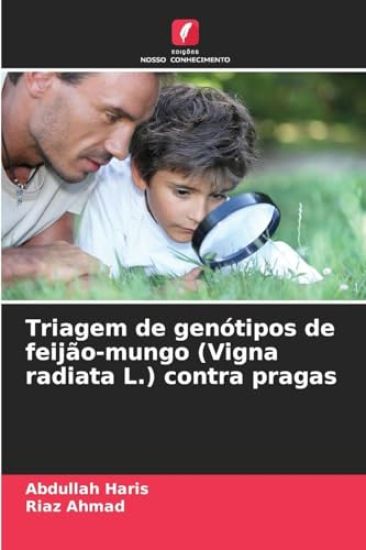
Triagem de genótipos de feijão-mungo (Vigna radiata L.) contra pragas

Triagem de genótipos de feijão-mungo (Vigna radiata L.) contra pragas

Abdullah Haris; Riaz Ahmad

Edicoes Nosso Conhecimento
2025
pokkari
Os legumes s o a fonte mais importante de prote na vegetal no Paquist o. S o cultivados em 5% da rea total cultivada. A sua utiliza o varia desde alimentos para beb s at iguarias para ricos e pobres. O feij o-mungo (Vigna radiata L.) um legume importante na sia e, sendo uma fonte rica e barata de prote na, pode ajudar as pessoas a melhorar a qualidade nutricional das suas dietas. O feij o-mungo foi domesticado na Mong lia, onde o seu progenitor (Vigna radiata subesp cie sublobata) ocorre de forma selvagem h cerca de 3500 anos. O feij o-mungo era amplamente cultivado em toda a ndia. A cultura do feij o-mungo tem v rias pragas diferentes, incluindo mosca branca, pulg o, broca da vagem e cigarrinha, etc. Foi realizada uma experi ncia para selecionar o gen tipo comparativamente menos suscet vel do feij o-mungo (Vigna radiata L.) contra diferentes pragas de insetos a partir dos gen tipos M001, M002 e M003. A experi ncia foi disposta num delineamento em blocos casualizados completos e replicada tr s vezes. Foram adotadas pr ticas agron micas padr o durante toda a poca de cultivo, de acordo com os requisitos da cultura, em condi es livres de pesticidas. Os resultados mostram que a popula o m xima de pragas foi registada em M001 e a popula o m nima de pragas foi registada em M002.
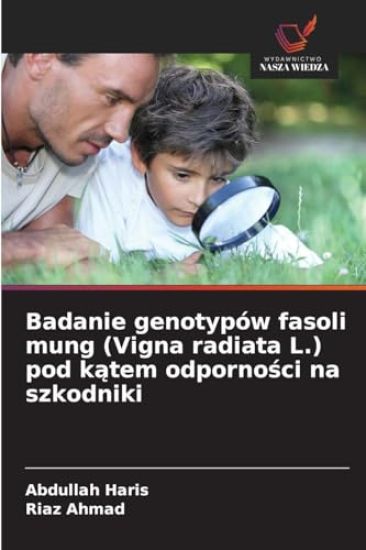
Badanie genotypów fasoli mung (Vigna radiata L.) pod katem odpornosci na szkodniki
Rośliny strączkowe są najważniejszym źr dlem bialka roślinnego w Pakistanie. Uprawiane są na 5% calkowitej powierzchni uprawnej. Ich zastosowanie jest szerokie - od żywności dla niemowląt po przysmaki dla bogatych i biednych. Fasola mung (Vigna radiata L.) jest ważną rośliną strączkową w Azji, a będąc bogatym i tanim źr dlem bialka, może pom c ludziom poprawic jakośc odżywczą ich diety. Fasola mung zostala udomowiona w Mongolii, gdzie jej przodek (Vigna radiata podgatunek sublobata) występuje dziko od okolo 3500 lat. Fasola mung byla szeroko uprawiana w calych Indiach. Uprawy fasoli mung są narażone na wiele r żnych szkodnik w, w tym mączlika, mszycę, świdra strączkowego i skoczka itp. Przeprowadzono eksperyment mający na celu wylonienie genotypu fasoli mung (Vigna radiata L.) stosunkowo mniej podatnego na r żne szkodniki spośr d danych genotyp w M001, M002 i M003. Eksperyment zostal zaplanowany jako randomizowany kompletny blok i powt rzony trzykrotnie. Przez caly sezon uprawowy stosowano standardowe praktyki agronomiczne zgodnie z wymaganiami uprawy w warunkach bez pestycyd w. Wyniki pokazują, że maksymalną populację szkodnik w odnotowano w M001, a minimalną w M002.
Selezione dei genotipi di fagiolo mungo (Vigna radiata L.) resistenti ai parassiti
I legumi sono la fonte pi importante di proteine vegetali in Pakistan. Sono coltivati sul 5% della superficie coltivata totale. Il loro utilizzo spazia dagli alimenti per l'infanzia alle prelibatezze dei ricchi e dei poveri. Il fagiolo mungo (Vigna radiata L.) un legume importante in Asia e, essendo una fonte ricca ed economica di proteine, pu aiutare le persone a migliorare la qualit nutrizionale della loro dieta. Il fagiolo mungo stato domesticato in Mongolia, dove il suo progenitore (Vigna radiata sottospecie sublobata) cresceva spontaneamente circa 3500 anni fa. I fagioli mungo erano ampiamente coltivati in tutta l'India. La coltura del fagiolo mungo soggetta a diversi parassiti, tra cui la mosca bianca, l'afide, il punteruolo del baccello e la cicalina, ecc. stato condotto un esperimento per selezionare il genotipo relativamente meno sensibile del fagiolo mungo (Vigna radiata L.) rispetto a diversi insetti parassiti dai genotipi M001, M002 e M003. L'esperimento stato condotto con un disegno a blocchi casuali completi e replicato tre volte. Durante l'intera stagione agricola sono state adottate pratiche agronomiche standard in base alle esigenze delle colture in condizioni prive di pesticidi. I risultati mostrano che la popolazione massima di parassiti stata registrata in M001 e la popolazione minima in M002.
Sélection de génotypes de haricot mungo (Vigna radiata L.) résistants aux ravageurs
Les l gumineuses sont la principale source de prot ines v g tales au Pakistan. Elles sont cultiv es sur 5 % de la superficie totale des terres agricoles. Elles sont utilis es aussi bien dans l'alimentation des nourrissons que dans les mets raffin s des riches et des pauvres. Le haricot mungo (Vigna radiata L.) est une l gumineuse importante en Asie. Source riche et bon march de prot ines, il peut aider les populations am liorer la qualit nutritionnelle de leur alimentation. Le haricot mungo a t domestiqu en Mongolie, o son anc tre (Vigna radiata sous-esp ce sublobata) poussait l' tat sauvage il y a environ 3 500 ans. Les haricots mungos taient largement cultiv s dans toute l'Inde. La culture du haricot mungo est soumise plusieurs ravageurs diff rents, notamment la mouche blanche, le puceron, le foreur de gousses et la cicadelle. Une exp rience a t men e afin de s lectionner le g notype de haricot mungo (Vigna radiata L.) relativement moins sensible diff rents insectes ravageurs parmi les g notypes M001, M002 et M003. L'exp rience a t con ue selon un plan en blocs al atoires complets et reproduite trois fois. Des pratiques agronomiques standard ont t adopt es pendant toute la saison agricole, conform ment aux besoins de la culture, dans des conditions sans pesticides. Les r sultats montrent que la population maximale de ravageurs a t enregistr e dans le g notype M001 et la population minimale dans le g notype M002.
Screening von Mungbohnen-Genotypen (Vigna radiata L.) auf Schädlingsresistenz
H lsenfr chte sind die wichtigste Quelle f r pflanzliches Eiwei in Pakistan. Sie werden auf 5 % der gesamten Anbaufl che angebaut. Ihre Verwendung reicht von Babynahrung bis hin zu Delikatessen f r Reiche und Arme. Mungbohnen (Vigna radiata L.) sind eine wichtige H lsenfrucht in Asien und k nnen als reichhaltige und kosteng nstige Eiwei quelle dazu beitragen, die Ern hrungsqualit t der Menschen zu verbessern. Die Mungbohne wurde in der Mongolei domestiziert, wo ihr Vorfahre (Vigna radiata subspecies sublobata) vor etwa 3500 Jahren wild vorkam. Mungbohnen wurden in ganz Indien angebaut. Die Mungbohne hat eine Reihe verschiedener Sch dlinge, darunter Wei e Fliege, Blattlaus, H lsenbohrer und Zikade usw. Es wurde ein Experiment durchgef hrt, um aus den gegebenen Genotypen M001, M002 und M003 den vergleichsweise weniger anf lligen Genotyp der Mungbohne (Vigna radiata L.) gegen verschiedene Insektensch dlinge auszusuchen. Das Experiment wurde in einem randomisierten vollst ndigen Blockdesign angelegt und dreimal wiederholt. W hrend der gesamten Vegetationsperiode wurden standardm ige agronomische Praktiken entsprechend den Anforderungen der Kulturpflanze unter pestizidfreien Bedingungen angewendet. Die Ergebnisse zeigen, dass die maximale Sch dlingspopulation bei M001 und die minimale Sch dlingspopulation bei M002 verzeichnet wurde.
Impact of CPEC on Ageing and Social Security System in Pakistan
In Pakistan, the process of population aging has recently become a core topic for the scholars in various domains for instance socioeconomic characteristics, health status, and retirement behaviours of elder people. Nonetheless, research on the welfare of the elderly population and its determinants is still to be explored in Pakistan. Hence, the identification of main determinants that enhance the welfare of the elderly population will be helpful in policy formation for the enhancement of the well-being of senior citizens in specific and overall in general. The main objective of the current study investigated the issue that how CPEC can play a vital role in the enhancement of social security for the elderly population in Pakistan. It is generally believed and no doubt that CPEC is a game changer not only for Pakistan but for the whole region; it will boost the economic growth and prosperity by creating new opportunities for employment and businesses which will eradicate the poverty, enhance the health facilities and improve the standard of living.