Kirjojen hintavertailu. Mukana 12 595 353 kirjaa ja 12 kauppaa.

Kirjailija

Richard A. Brody

Kirjat ja teokset yhdessä paikassa: 4 kirjaa, julkaisuja vuosilta 1991-1993, suosituimpien joukossa Reasoning and Choice. Vertaile teosten hintoja ja tarkista saatavuus suomalaisista kirjakaupoista.

4 kirjaa

Kirjojen julkaisuhaarukka 1991-1993.

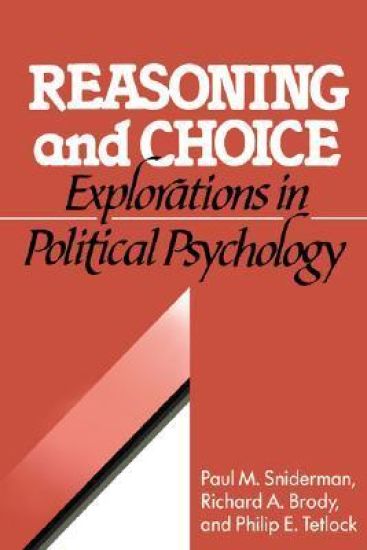
Reasoning and Choice

Reasoning and Choice

Paul M. Sniderman; Richard A. Brody; Phillip E. Tetlock

Cambridge University Press
1993
pokkari
Drawing on a multitude of data sets and building on analyses carried out over more than a decade, this book offers a major new theoretical explanation of how ordinary citizens figure out what they favour and oppose politically. Reacting against the conventional wisdom, which stresses how little attention the general public pays to political issues and the lack of consistency in their opinions, the studies presented in this book redirect attention to the processes of reasoning that can be discerned when people are confronted with choices about political issues. These studies demonstrate that ordinary people are in fact capable of reasoning dependably about political issues by the use of judgmental heuristics, even if they have only a limited knowledge of politics and of specific issues.
Reasoning and Choice

Reasoning and Choice

Paul M. Sniderman; Richard A. Brody; Phillip E. Tetlock

Cambridge University Press
1991
sidottu
Drawing on a multitude of data sets and building on analyses carried out over more than a decade, this book offers a major new theoretical explanation of how ordinary citizens figure out what they favour and oppose politically. Reacting against the conventional wisdom, which stresses how little attention the general public pays to political issues and the lack of consistency in their opinions, the studies presented in this book redirect attention to the processes of reasoning that can be discerned when people are confronted with choices about political issues. These studies demonstrate that ordinary people are in fact capable of reasoning dependably about political issues by the use of judgmental heuristics, even if they have only a limited knowledge of politics and of specific issues.
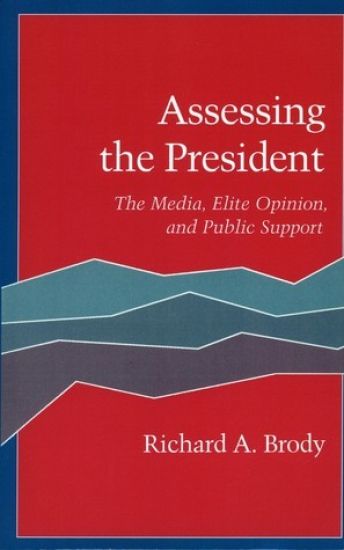
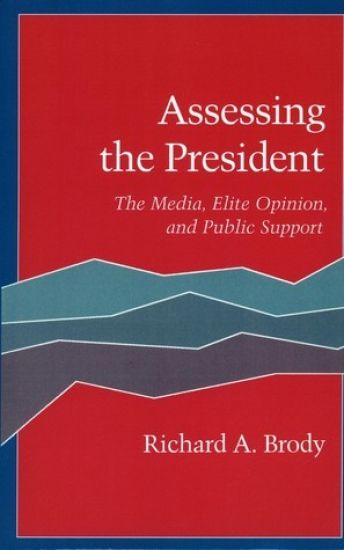
Assessing the President

Assessing the President

Richard A. Brody

Stanford University Press
1992
pokkari
Do presidents inevitably lose support the longer they are in office? Does the public invariably rally behind presidents during international crises? What are the criteria by which the public forms its judgment about whether or not the president is doing a good job? And what is the role of daily news reporting and elite opinion in shaping the public's perception of the president's performance? This book addresses these questions and many others surrounding the dynamics of fluctuating public support for the president of the United States. Drawing its case material from the modern presidency from Kennedy through Reagan, with looks backward as far as Truman, this innovative work shows how the standing of the president with the American people has come to have a political life of its own. The author first examines two seemingly distinctive periods of opinion formation: the 'honeymoon' at the beginning of a presidential term and the 'rally' of presidential support that accompanies international crises. He then analyzes two previous explanations of public support - length of term in office and the state of the economy - and concludes that these explanations are, respectively, incorrect and incomplete. The author presents a model of information processing that ties public support to indications of policy success or failure brought to the attention of the public through daily news reporting by the media. The model is tested initially for the presidencies of Kennedy, Johnson, Nixon, and Ford; it is then refined and tested further for the Carter and Reagan presidencies.
Assessing the President

Assessing the President

Richard A. Brody

Stanford University Press
1991
sidottu
Do presidents inevitably lose support the longer they are in office? Does the public invariably rally behind presidents during international crises? What are the criteria by which the public forms its judgment about whether or not the president is doing a good job? And what is the role of daily news reporting and elite opinion in shaping the public's perception of the president's performance? This book addresses these questions and many others surrounding the dynamics of fluctuating public support for the president of the United States. Drawing its case material from the modern presidency from Kennedy through Reagan, with looks backward as far as Truman, this innovative work shows how the standing of the president with the American people has come to have a political life of its own. The author first examines two seemingly distinctive periods of opinion formation: the 'honeymoon' at the beginning of a presidential term and the 'rally' of presidential support that accompanies international crises. He then analyzes two previous explanations of public support - length of term in office and the state of the economy - and concludes that these explanations are, respectively, incorrect and incomplete. The author presents a model of information processing that ties public support to indications of policy success or failure brought to the attention of the public through daily news reporting by the media. The model is tested initially for the presidencies of Kennedy, Johnson, Nixon, and Ford; it is then refined and tested further for the Carter and Reagan presidencies.