Kirjojen hintavertailu. Mukana 12 111 786 kirjaa ja 12 kauppaa.

Kirjailija

Richard A. Falk

Kirjat ja teokset yhdessä paikassa: 33 kirjaa, julkaisuja vuosilta 1975-2025, suosituimpien joukossa Patriotism to the Earth. Vertaile teosten hintoja ja tarkista saatavuus suomalaisista kirjakaupoista.

Mukana myös kirjoitusasut: Richard a Falk

33 kirjaa

Kirjojen julkaisuhaarukka 1975-2025.

Patriotism to the Earth

Patriotism to the Earth

Richard A. Falk

BLOOMSBURY PUBLISHING PLC
2025
nidottu
This book of essays is preoccupied with the contrast between prevailing loyalty to the sovereign state—patriotism—and an emergent alternative of loyalty to the species and its natural habitat. Such an orientation toward ecological patriotism focuses on conditions of human survival, ecological stability, and cosmological awareness in the Age of the Anthropocene. It is a patriotism guided by empirical and normative assessments regarding the deficiencies of the existing world order and its inability to provide the biological, economic, political, ecological, cultural, ethical, and spiritual foundations for the future viability of life on earth. Falk’s assessment rests on a growing inability of existing policies, practices, and problem-solving arrangements to protect and promote the global, national, and local public goods; on the increasing marginalization of international law, global ethics, internationalism, and spiritual imperatives; on a prevailing anachronistic nationalism and related conceptions of national self-interest; on the unsustainable market-driven and state-centric world order, reinforced by the non-accountability of Great Powers; on a vital, but currently weak, disempowered, and disoriented UN; on a potentially fatal identification of military capabilities, arms sales, and policing with the pursuit of security, as well as for the fulfillment of the extra-territorial ambitions of a few rival states and alliances. These deficiencies imperil humanity as never before in world history—not only the viability of sovereign states, regions, or localities, but the entirety of human experience and overall ecological sustainability. Against such a background, the most immediate challenge is to create sufficient political traction to overcome settled ideas, special interests, and habitual ways of acting. This does not now seem possible despite the urgency of the situation. Empirical indicators suggest strong trends that on balance are reinforcing and accentuating the deficiencies rather than their moving toward their correction. Confronting such a reality is not meant to be taken as a recipe for despair. On the contrary it is meant to ground prospects for a hopeful future in the realities of our time, which presuppose learning to respect the limiting conditions of the carrying capacity of the earth. As such it is calling for ‘a politics of impossibility,’ an engagement at all levels of social order with the struggle for a future that exceeds the bounds of perceived feasibility yet from the vantage point of humane global governance that constitutes necessity and equity, warranting struggle for the various futures needed and desired by the peoples of the world. There are, of course, no assurances of success, but we do know that current modes of sleepwalking into the future do not offer solutions, and rather reflect a collective species death wish as the failure to respond in time and scale amounts to a virtual death warrant for many species and their habitats, including the human. We have always lived amid uncertainty with respect to our own life and death, but now we are also challenged by the precarious mortality of the species and planet earth. It seems the worst of times, but it may yet just possibly become the best of times!The inclusion of law, ethics, and spirituality acknowledge that the values prevailing in civic culture and among the peoples of the world are an essential element of the transformative vision of patriotism being proposed. The challenge is not just functional. It is a matter of how we choose to live together on the earth, what relationships to its resources and limitations are developed, and of whether people can be mobilized in ways that overcome obstacles posed by entrenched special interests and civilizational habits deeply embedded in social consciousness. The chapters that comprise this book seek to be both down to earth, that is grounded in the realities of the present and yet animated by and rooted in a spiritual and cosmopolitan imaginary of what lies ahead. It hopes for a reinvention of nationalism by reference to the sky above and land below, that is, by cosmic cycles of being and by the intimacies of local existence.
Patriotism to the Earth

Patriotism to the Earth

Richard A. Falk

BLOOMSBURY PUBLISHING PLC
2025
sidottu
This book of essays is preoccupied with the contrast between prevailing loyalty to the sovereign state—patriotism—and an emergent alternative of loyalty to the species and its natural habitat. Such an orientation toward ecological patriotism focuses on conditions of human survival, ecological stability, and cosmological awareness in the Age of the Anthropocene. It is a patriotism guided by empirical and normative assessments regarding the deficiencies of the existing world order and its inability to provide the biological, economic, political, ecological, cultural, ethical, and spiritual foundations for the future viability of life on earth. Falk’s assessment rests on a growing inability of existing policies, practices, and problem-solving arrangements to protect and promote the global, national, and local public goods; on the increasing marginalization of international law, global ethics, internationalism, and spiritual imperatives; on a prevailing anachronistic nationalism and related conceptions of national self-interest; on the unsustainable market-driven and state-centric world order, reinforced by the non-accountability of Great Powers; on a vital, but currently weak, disempowered, and disoriented UN; on a potentially fatal identification of military capabilities, arms sales, and policing with the pursuit of security, as well as for the fulfillment of the extra-territorial ambitions of a few rival states and alliances. These deficiencies imperil humanity as never before in world history—not only the viability of sovereign states, regions, or localities, but the entirety of human experience and overall ecological sustainability. Against such a background, the most immediate challenge is to create sufficient political traction to overcome settled ideas, special interests, and habitual ways of acting. This does not now seem possible despite the urgency of the situation. Empirical indicators suggest strong trends that on balance are reinforcing and accentuating the deficiencies rather than their moving toward their correction. Confronting such a reality is not meant to be taken as a recipe for despair. On the contrary it is meant to ground prospects for a hopeful future in the realities of our time, which presuppose learning to respect the limiting conditions of the carrying capacity of the earth. As such it is calling for ‘a politics of impossibility,’ an engagement at all levels of social order with the struggle for a future that exceeds the bounds of perceived feasibility yet from the vantage point of humane global governance that constitutes necessity and equity, warranting struggle for the various futures needed and desired by the peoples of the world. There are, of course, no assurances of success, but we do know that current modes of sleepwalking into the future do not offer solutions, and rather reflect a collective species death wish as the failure to respond in time and scale amounts to a virtual death warrant for many species and their habitats, including the human. We have always lived amid uncertainty with respect to our own life and death, but now we are also challenged by the precarious mortality of the species and planet earth. It seems the worst of times, but it may yet just possibly become the best of times!The inclusion of law, ethics, and spirituality acknowledge that the values prevailing in civic culture and among the peoples of the world are an essential element of the transformative vision of patriotism being proposed. The challenge is not just functional. It is a matter of how we choose to live together on the earth, what relationships to its resources and limitations are developed, and of whether people can be mobilized in ways that overcome obstacles posed by entrenched special interests and civilizational habits deeply embedded in social consciousness. The chapters that comprise this book seek to be both down to earth, that is grounded in the realities of the present and yet animated by and rooted in a spiritual and cosmopolitan imaginary of what lies ahead. It hopes for a reinvention of nationalism by reference to the sky above and land below, that is, by cosmic cycles of being and by the intimacies of local existence.
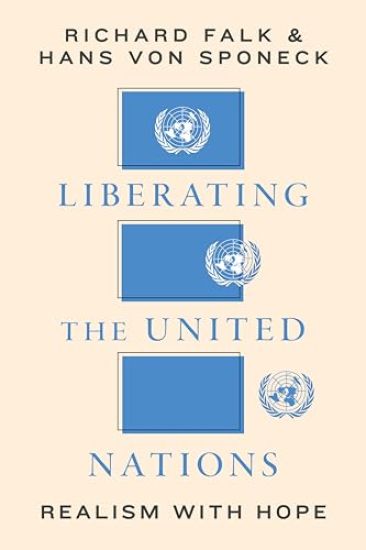
Liberating the United Nations

Liberating the United Nations

Richard A. Falk; Hans von Sponeck

STANFORD UNIVERSITY PRESS
2024
pokkari
The United Nations (UN) has always loomed large in international conflicts, but today accepted wisdom declares that the organization has lost its way. Liberating The United Nations is a thorough review of its founding and history that tracks critical junctures that obscured or diverted the path to a powerful and just UN that abides by international law. Based on the extensive expertise of two former UN-insiders, Richard Falk and Hans von Sponeck, the book goes beyond critique and diagnosis, proposing ways to achieve a more effective and legitimate UN. The historical sweep of the book offers a uniquely broad perspective on how the UN has evolved from the time of its establishment, and how that evolution reflects, and was defined by, world politics. The book explores these themes through the specific cases of intervention in Palestine, Iraq, and Syria. Liberating The United Nations hopes to reinvigorate the original vision of the UN by asserting its place in a world of amplifying chauvinistic nationalism. Falk and von Sponeck argue for how important the UN has become, and could be, in aiding with the transnational and global challenges of the present and future, including pandemics, environmental crises, and mass migration.
Liberating the United Nations

Liberating the United Nations

Richard A. Falk; Hans von Sponeck

STANFORD UNIVERSITY PRESS
2024
sidottu
The United Nations (UN) has always loomed large in international conflicts, but today accepted wisdom declares that the organization has lost its way. Liberating The United Nations is a thorough review of its founding and history that tracks critical junctures that obscured or diverted the path to a powerful and just UN that abides by international law. Based on the extensive expertise of two former UN-insiders, Richard Falk and Hans von Sponeck, the book goes beyond critique and diagnosis, proposing ways to achieve a more effective and legitimate UN. The historical sweep of the book offers a uniquely broad perspective on how the UN has evolved from the time of its establishment, and how that evolution reflects, and was defined by, world politics. The book explores these themes through the specific cases of intervention in Palestine, Iraq, and Syria. Liberating The United Nations hopes to reinvigorate the original vision of the UN by asserting its place in a world of amplifying chauvinistic nationalism. Falk and von Sponeck argue for how important the UN has become, and could be, in aiding with the transnational and global challenges of the present and future, including pandemics, environmental crises, and mass migration.
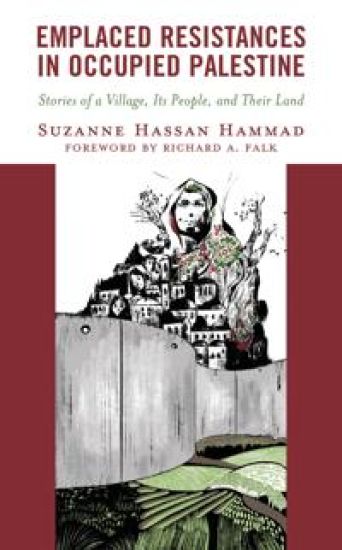
Emplaced Resistances in Occupied Palestine

Emplaced Resistances in Occupied Palestine

Suzanne Hassan Hammad; Richard A. Falk

Rowman Littlefield International
2023
sidottu
In this deeply personal study, Hammad illuminates a deep agenda of place, meaning, and resistance in territorial struggles through the telling of a less-heard story of how women, men, and young people understand their world and their lives in the occupied Palestinian West Bank landscape. Taking a case study of a contested and divided Palestinian village situated in the heart of the Occupied Palestinian Territories and known for its sustained, non-violent protest against the Separation Wall that cuts through its lived spaces, Hammad examines how villagers live, experience, interpret, and attempt to resist infringements on their property and person. The study considers the spectrum of ways that people resist in this context, examining not only the overt weekly protests but also the everyday acts and subjectivities of resistance of its residents, young and old. It offers valuable theoretical insight into the extent and ways that meanings of place hold the potential to mediate, shape, and sustain resistance struggles through the voices and experiences of people. The backdrop of the protracted Palestinian-Israeli conflict and Palestinians’ struggle over space, place, and history—which continues to play out in the present—makes this book politically relevant and empowering as it brings voices from a secluded contested village to the world.
Law, Morality, and War in the Contemporary World

Law, Morality, and War in the Contemporary World

Richard a. Falk

Hassell Street Press
2021
sidottu
This work has been selected by scholars as being culturally important and is part of the knowledge base of civilization as we know it.This work is in the public domain in the United States of America, and possibly other nations. Within the United States, you may freely copy and distribute this work, as no entity (individual or corporate) has a copyright on the body of the work.Scholars believe, and we concur, that this work is important enough to be preserved, reproduced, and made generally available to the public. To ensure a quality reading experience, this work has been proofread and republished using a format that seamlessly blends the original graphical elements with text in an easy-to-read typeface.We appreciate your support of the preservation process, and thank you for being an important part of keeping this knowledge alive and relevant.
Legal Order in a Violent World

Legal Order in a Violent World

Richard A. Falk

Princeton University Press
2019
pokkari
Professor Myres S. McDougal of the Yale Law School calls this examination of the relation of law and violence in contemporary international society "...a profound, perceptive, and eloquent contribution to the most important problem of our time." Professor Falk places great emphasis on two distinctive challenges to world order--nuclear weapons and civil strife. While developing the implication that even the most powerful states are vulnerable to destruction trhough nuclear attack, he also points out that there is no very firm hope that military power cna be managed so as to reduce the predominance of the sovereign state in world politics. Richard A. Falk is Milbank Professor of International Law and Practice, Princeton University. Published for the Center of International Studies, Princeton University.Originally published in 1968.The Princeton Legacy Library uses the latest print-on-demand technology to again make available previously out-of-print books from the distinguished backlist of Princeton University Press. These editions preserve the original texts of these important books while presenting them in durable paperback and hardcover editions. The goal of the Princeton Legacy Library is to vastly increase access to the rich scholarly heritage found in the thousands of books published by Princeton University Press since its founding in 1905.
Legal Order in a Violent World

Legal Order in a Violent World

Richard A. Falk

PRINCETON UNIVERSITY PRESS
2019
sidottu
Professor Myres S. McDougal of the Yale Law School calls this examination of the relation of law and violence in contemporary international society "...a profound, perceptive, and eloquent contribution to the most important problem of our time." Professor Falk places great emphasis on two distinctive challenges to world order--nuclear weapons and civil strife. While developing the implication that even the most powerful states are vulnerable to destruction trhough nuclear attack, he also points out that there is no very firm hope that military power cna be managed so as to reduce the predominance of the sovereign state in world politics. Richard A. Falk is Milbank Professor of International Law and Practice, Princeton University. Published for the Center of International Studies, Princeton University.Originally published in 1968.The Princeton Legacy Library uses the latest print-on-demand technology to again make available previously out-of-print books from the distinguished backlist of Princeton University Press. These editions preserve the original texts of these important books while presenting them in durable paperback and hardcover editions. The goal of the Princeton Legacy Library is to vastly increase access to the rich scholarly heritage found in the thousands of books published by Princeton University Press since its founding in 1905.
The Vietnam War and International Law, Volume 1

The Vietnam War and International Law, Volume 1

Richard A. Falk

Princeton University Press
2017
sidottu
International lawyers and distinguished scholars consider the question: Is it legally justifiable to treat the Vietnam War as a civil war or as a peculiar modern species of international law? Originally published in 1968. The Princeton Legacy Library uses the latest print-on-demand technology to again make available previously out-of-print books from the distinguished backlist of Princeton University Press. These editions preserve the original texts of these important books while presenting them in durable paperback and hardcover editions. The goal of the Princeton Legacy Library is to vastly increase access to the rich scholarly heritage found in the thousands of books published by Princeton University Press since its founding in 1905.
The Vietnam War and International Law, Volume 1

The Vietnam War and International Law, Volume 1

Richard A. Falk

Princeton University Press
2017
pokkari
International lawyers and distinguished scholars consider the question: Is it legally justifiable to treat the Vietnam War as a civil war or as a peculiar modern species of international law? Originally published in 1968. The Princeton Legacy Library uses the latest print-on-demand technology to again make available previously out-of-print books from the distinguished backlist of Princeton University Press. These editions preserve the original texts of these important books while presenting them in durable paperback and hardcover editions. The goal of the Princeton Legacy Library is to vastly increase access to the rich scholarly heritage found in the thousands of books published by Princeton University Press since its founding in 1905.
Status of Law in International Society

Status of Law in International Society

Richard A. Falk

Princeton University Press
2016
sidottu
Professor Falk gives special attention to the political setting that shapes international law and to the creation of those intellectual perspectives which would strengthen world order. Originally published in 1970. The Princeton Legacy Library uses the latest print-on-demand technology to again make available previously out-of-print books from the distinguished backlist of Princeton University Press. These editions preserve the original texts of these important books while presenting them in durable paperback and hardcover editions. The goal of the Princeton Legacy Library is to vastly increase access to the rich scholarly heritage found in the thousands of books published by Princeton University Press since its founding in 1905.
Neutralization and World Politics

Neutralization and World Politics

Cyril E. Black; Richard A. Falk

PRINCETON UNIVERSITY PRESS
2016
sidottu
Neutralization is a technique for the management of power in international relations: for the restraint and, to a degree, regulation of the exercise of power in areas that become focal points of competitive struggle. In this volume four leading scholars assess the potential uses of neutralization in the contemporary world. In interlocking essays the authors discuss the functions of neutralization, relevant historical precedents, preconditions for its establishment, methods of negotiating neutralization, maintenance of neutralization, and the prospects for neutralization in Southeast Asia today. Originally published in 1968. The Princeton Legacy Library uses the latest print-on-demand technology to again make available previously out-of-print books from the distinguished backlist of Princeton University Press. These editions preserve the original texts of these important books while presenting them in durable paperback and hardcover editions. The goal of the Princeton Legacy Library is to vastly increase access to the rich scholarly heritage found in the thousands of books published by Princeton University Press since its founding in 1905.
The Vietnam War and International Law, Volume 3

The Vietnam War and International Law, Volume 3

Richard A. Falk

Princeton University Press
2016
sidottu
Issues of the war that have provoked public controversy and legal debate over the last two years--the Cambodian invasion of May-June 1970, the disclosure in November 1969 of the My Lai massacre, and the question of war crimes--are the focus of Volume 3. As in the previous volumes, the Civil War Panel of the American Society of International Law has endeavored to select the most significant legal writing on the subject and to provide, to the extent possible, a balanced presentation of opposing points of view. Parts I and II deal directly with the Cambodian, My Lai, and war crimes debates. Related questions are treated in the rest of the volume: constitutional debate on the war; the distribution of functions among coordinate branches of the government; the legal status of the insurgent regime in the struggle for control of South Vietnam; prospects for settlement without a clear-cut victory; and Vietnam's role in general world order. The articles reflect the views of some forty contributors: among them, Jean Lacouture, Henry Kissinger, John Norton Moore, Quincy Wright, William H. Rhenquist, and Richard A. Falk. Originally published in 1972. The Princeton Legacy Library uses the latest print-on-demand technology to again make available previously out-of-print books from the distinguished backlist of Princeton University Press. These editions preserve the original texts of these important books while presenting them in durable paperback and hardcover editions. The goal of the Princeton Legacy Library is to vastly increase access to the rich scholarly heritage found in the thousands of books published by Princeton University Press since its founding in 1905.
Security in Disarmament

Security in Disarmament

Richard A. Falk; Richard J. Barnet

Princeton University Press
2016
sidottu
The risks of arms control and disarmament, how they can be reduced or eliminated, and the political implications of drastic disarmament are analyzed by eleven experts. Emphasis is placed on the development of techniques for disarming that are politically feasible and give reasonable assurance to each side that the other is not violating its obligations for any serious reason. Three major aspects of the problem are considered: how to get the disarmament process started, and once started to continue it how to retain the freedom of diplomatic action that might be needed to defend national interests; and how to approach the problems of political security in a fully disarmed world. Originally published in 1965. The Princeton Legacy Library uses the latest print-on-demand technology to again make available previously out-of-print books from the distinguished backlist of Princeton University Press. These editions preserve the original texts of these important books while presenting them in durable paperback and hardcover editions. The goal of the Princeton Legacy Library is to vastly increase access to the rich scholarly heritage found in the thousands of books published by Princeton University Press since its founding in 1905.
The Vietnam War and International Law, Volume 4

The Vietnam War and International Law, Volume 4

Richard A. Falk

Princeton University Press
2016
sidottu
This concluding volume of The Vietnam War and International Law focuses on the last stages of America's combat role in Indochina. The articles in the first section deal with general aspects of the relationship of international law to the Indochina War. Sections II and III are concerned with the adequacy of the laws of war under modern conditions of combat, and with related questions of individual responsibility for the violation of such laws. Section IV deals with some of the procedural issues related to the negotiated settlement of the war. The materials in Section V seek to reappraise the relationship between the constitutional structure of the United States and the way in which the war was conducted, while the final section presents the major documents pertaining to the end of American combat involvement in Indochina. A supplement takes account of the surrender of South Vietnam in spring 1975. Contributors to the volume--lawyers, scholars, and government officials--include Dean Rusk, Eugene V. Rostow, Richard A. Falk, John Norton Moore, and Richard Wasserstrom. Originally published in 1976. The Princeton Legacy Library uses the latest print-on-demand technology to again make available previously out-of-print books from the distinguished backlist of Princeton University Press. These editions preserve the original texts of these important books while presenting them in durable paperback and hardcover editions. The goal of the Princeton Legacy Library is to vastly increase access to the rich scholarly heritage found in the thousands of books published by Princeton University Press since its founding in 1905.
The Future of the International Legal Order, Volume 2

The Future of the International Legal Order, Volume 2

Cyril E. Black; Richard A. Falk

Princeton University Press
2016
sidottu
Wolfgang Friedmann, Burns H. Weston, William T. Burke, and Ivan A. Vlasic explore the new frontiers and wealth and resources that are altering the patterns of the world economy. Since rapid and dramatic technological progress poses problems that can be solved only by international or multinational controls these legal specialists emphasize the urgent need for nonviolent measures capable of reconciling the interests of the wealthy and impoverished nations and of satisfying the rising demands of the underdeveloped world for participation in the scientific revolution. The existing situation and current trends are described, and detailed recommendations to strengthen the role of international law in the decades ahead are made. Originally published in 1970. The Princeton Legacy Library uses the latest print-on-demand technology to again make available previously out-of-print books from the distinguished backlist of Princeton University Press. These editions preserve the original texts of these important books while presenting them in durable paperback and hardcover editions. The goal of the Princeton Legacy Library is to vastly increase access to the rich scholarly heritage found in the thousands of books published by Princeton University Press since its founding in 1905.
Security in Disarmament

Security in Disarmament

Richard A. Falk; Richard J. Barnet

Princeton University Press
2015
pokkari
The risks of arms control and disarmament, how they can be reduced or eliminated, and the political implications of drastic disarmament are analyzed by eleven experts. Emphasis is placed on the development of techniques for disarming that are politically feasible and give reasonable assurance to each side that the other is not violating its obligations for any serious reason. Three major aspects of the problem are considered: how to get the disarmament process started, and once started to continue it how to retain the freedom of diplomatic action that might be needed to defend national interests; and how to approach the problems of political security in a fully disarmed world. Originally published in 1965. The Princeton Legacy Library uses the latest print-on-demand technology to again make available previously out-of-print books from the distinguished backlist of Princeton University Press. These editions preserve the original texts of these important books while presenting them in durable paperback and hardcover editions. The goal of the Princeton Legacy Library is to vastly increase access to the rich scholarly heritage found in the thousands of books published by Princeton University Press since its founding in 1905.
Neutralization and World Politics

Neutralization and World Politics

Cyril E. Black; Richard A. Falk

Princeton University Press
2015
pokkari
Neutralization is a technique for the management of power in international relations: for the restraint and, to a degree, regulation of the exercise of power in areas that become focal points of competitive struggle. In this volume four leading scholars assess the potential uses of neutralization in the contemporary world. In interlocking essays the authors discuss the functions of neutralization, relevant historical precedents, preconditions for its establishment, methods of negotiating neutralization, maintenance of neutralization, and the prospects for neutralization in Southeast Asia today. Originally published in 1968. The Princeton Legacy Library uses the latest print-on-demand technology to again make available previously out-of-print books from the distinguished backlist of Princeton University Press. These editions preserve the original texts of these important books while presenting them in durable paperback and hardcover editions. The goal of the Princeton Legacy Library is to vastly increase access to the rich scholarly heritage found in the thousands of books published by Princeton University Press since its founding in 1905.
The Vietnam War and International Law, Volume 3

The Vietnam War and International Law, Volume 3

Richard A. Falk

Princeton University Press
2015
pokkari
Issues of the war that have provoked public controversy and legal debate over the last two years--the Cambodian invasion of May-June 1970, the disclosure in November 1969 of the My Lai massacre, and the question of war crimes--are the focus of Volume 3. As in the previous volumes, the Civil War Panel of the American Society of International Law has endeavored to select the most significant legal writing on the subject and to provide, to the extent possible, a balanced presentation of opposing points of view. Parts I and II deal directly with the Cambodian, My Lai, and war crimes debates. Related questions are treated in the rest of the volume: constitutional debate on the war; the distribution of functions among coordinate branches of the government; the legal status of the insurgent regime in the struggle for control of South Vietnam; prospects for settlement without a clear-cut victory; and Vietnam's role in general world order. The articles reflect the views of some forty contributors: among them, Jean Lacouture, Henry Kissinger, John Norton Moore, Quincy Wright, William H. Rhenquist, and Richard A. Falk. Originally published in 1972. The Princeton Legacy Library uses the latest print-on-demand technology to again make available previously out-of-print books from the distinguished backlist of Princeton University Press. These editions preserve the original texts of these important books while presenting them in durable paperback and hardcover editions. The goal of the Princeton Legacy Library is to vastly increase access to the rich scholarly heritage found in the thousands of books published by Princeton University Press since its founding in 1905.