Kirjojen hintavertailu. Mukana 12 146 918 kirjaa ja 12 kauppaa.

Kirjailija

Richard A. Layton

Kirjat ja teokset yhdessä paikassa: 7 kirjaa, julkaisuja vuosilta 1998-2014, suosituimpien joukossa Introductory MEMS. Vertaile teosten hintoja ja tarkista saatavuus suomalaisista kirjakaupoista.

7 kirjaa

Kirjojen julkaisuhaarukka 1998-2014.

Introductory MEMS

Introductory MEMS

Thomas M. Adams; Richard A. Layton

Springer-Verlag New York Inc.
2014
nidottu
Introductory MEMS: Fabrication and Applications is a practical introduction to MEMS for advanced undergraduate and graduate students. Part I introduces the student to the most commonly used MEMS fabrication techniques as well as the MEMS devices produced using these techniques. Part II focuses on MEMS transducers: principles of operation, modeling from first principles, and a detailed look at commercialized MEMS devices, in addition to microfluidics. Multiple field-tested laboratory exercises are included, designed to facilitate student learning about the fundamentals of microfabrication processes. References, suggested reading, review questions, and homework problems are provided at the close of each chapter. Introductory MEMS: Fabrication and Applications is an excellent introduction to the subject, with a tested pedagogical structure and an accessible writing style suitable for students at an advanced undergraduate level across academic disciplines.

For the Civic Good

For the Civic Good

Walter Feinberg; Richard A. Layton

The University of Michigan Press
2014
nidottu
Why teach about religion in public schools? What educational value can such courses potentially have for students?In For the Civic Good, Walter Feinberg and Richard A. Layton offer an argument for the contribution of Bible and world religion electives. The authors argue that such courses can, if taught properly, promote an essential aim of public education: the construction of a civic public, where strangers engage with one another in building a common future. The humanities serve to awaken students to the significance of interpretive and analytic skills, and religion and Bible courses have the potential to add a reflective element to these skills. In so doing, students awaken to the fact of their own interpretive framework and how it influences their understanding of texts and practices. The argument of the book is developed by reports on the authors’ field research, a two-year period in which they observed religion courses taught in various public high schools throughout the country, from the “Bible Belt” to the suburban parkway. They document the problems in teaching religion courses in an educationally appropriate way, but also illustrate the argument for a humanities-based approach to religion by providing real classroom models of religion courses that advance the skills critical to the development of a civic public.
For the Civic Good

For the Civic Good

Walter Feinberg; Richard A. Layton

The University of Michigan Press
2014
sidottu
Why teach about religion in public schools? What educational value can such courses potentially have for students?In For the Civic Good, Walter Feinberg and Richard A. Layton offer an argument for the contribution of Bible and world religion electives. The authors argue that such courses can, if taught properly, promote an essential aim of public education: the construction of a civic public, where strangers engage with one another in building a common future. The humanities serve to awaken students to the significance of interpretive and analytic skills, and religion and Bible courses have the potential to add a reflective element to these skills. In so doing, students awaken to the fact of their own interpretive framework and how it influences their understanding of texts and practices. The argument of the book is developed by reports on the authors’ field research, a two-year period in which they observed religion courses taught in various public high schools throughout the country, from the “Bible Belt” to the suburban parkway. They document the problems in teaching religion courses in an educationally appropriate way, but also illustrate the argument for a humanities-based approach to religion by providing real classroom models of religion courses that advance the skills critical to the development of a civic public.
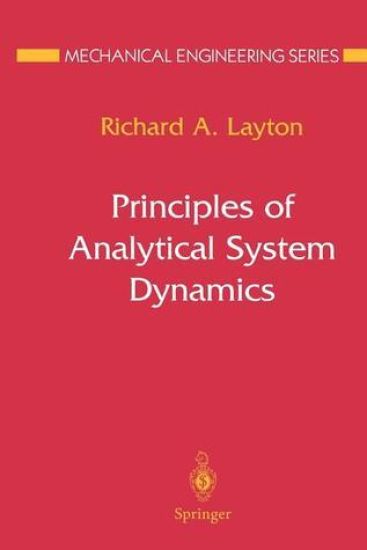
Principles of Analytical System Dynamics

Principles of Analytical System Dynamics

Richard A. Layton

Springer-Verlag New York Inc.
2012
nidottu
Mechanical engineering, an engineering discipline borne of the needs of the industrial revolution, is once again asked to do its substantial share in the call for industrial renewal. The general call is urgent as we face profound is­ sues of productivity and competitiveness that require engineering solutions, among others. The Mechanical Engineering Series features graduate texts and research monographs intended to address the need for information in contemporary areas of mechanical engineering. The series is conceived as a comprehensive one that covers a broad range of concentrations important to mechanical engineering graduate education and research. We are fortunate to have a distinguished roster of consult­ ing editors on the advisory board, each an expert in one of the areas of concentration. The names of the consulting editors are listed on the next page of this volume. The areas of concentration are applied mechanics, biomechanics, computational mechanics, dynamic systems and control, en­ ergetics, mechanics of materials, processing, thermal science, and tribology. Fred Leckie, our consulting editor for applied mechanics and I are pleased to present this volume in the Series: Principles of Analytical System Dy­ namics, by Richard A. Layton. The selection of this volume underscores again the interest of the Mechanical Engineering Series to provide our read­ ers with topical monographs as well as graduate texts in a wide variety of fields.
Introductory MEMS

Introductory MEMS

Thomas M. Adams; Richard A. Layton

Springer-Verlag New York Inc.
2009
sidottu
Introductory MEMS: Fabrication and Applications is a practical introduction to MEMS for advanced undergraduate and graduate students. Part I introduces the student to the most commonly used MEMS fabrication techniques as well as the MEMS devices produced using these techniques. Part II focuses on MEMS transducers: principles of operation, modeling from first principles, and a detailed look at commercialized MEMS devices, in addition to microfluidics. Multiple field-tested laboratory exercises are included, designed to facilitate student learning about the fundamentals of microfabrication processes. References, suggested reading, review questions, and homework problems are provided at the close of each chapter. Introductory MEMS: Fabrication and Applications is an excellent introduction to the subject, with a tested pedagogical structure and an accessible writing style suitable for students at an advanced undergraduate level across academic disciplines.

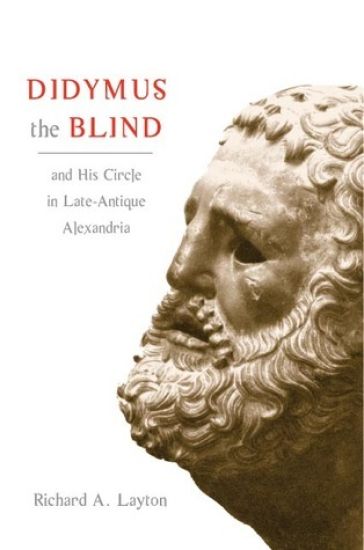
Didymus the Blind and His Circle in Late-Antique Alexandria

Didymus the Blind and His Circle in Late-Antique Alexandria

Richard A. Layton

University of Illinois Press
2004
sidottu
This is the first comprehensive study in the English language of the commentaries of Didymus the Blind, who was revered as the foremost Christian scholar of the fourth century and an influential spiritual director of ascetics. The writings of Didymus were censored and destroyed due to his posthumous condemnation for heresy. This study recovers the uncensored voice of Didymus through the commentaries among the Tura papyri, a massive set of documents discovered in an Egyptian quarry in 1941. This neglected corpus offers an unprecedented glimpse into the internal workings of a Christian philosophical academy in the most vibrant and tumultuous cultural center of late antiquity. By exploring the social context of Christian instruction in the competitive environment of fourth-century Alexandria, Richard A. Layton elucidates the political implications of biblical interpretation. Through detailed analysis of the commentaries on Psalms, Job, and Genesis, the author charts a profound tectonic shift in moral imagination as classical ethical vocabulary becomes indissolubly bound to biblical narrative. Attending to the complex interactions of political competition and intellectual inquiry, this study makes a unique contribution to the cultural history of late antiquity.
Principles of Analytical System Dynamics

Principles of Analytical System Dynamics

Richard A. Layton

Springer-Verlag New York Inc.
1998
sidottu
Mechanical engineering, an engineering discipline borne of the needs of the industrial revolution, is once again asked to do its substantial share in the call for industrial renewal. The general call is urgent as we face profound is­ sues of productivity and competitiveness that require engineering solutions, among others. The Mechanical Engineering Series features graduate texts and research monographs intended to address the need for information in contemporary areas of mechanical engineering. The series is conceived as a comprehensive one that covers a broad range of concentrations important to mechanical engineering graduate education and research. We are fortunate to have a distinguished roster of consult­ ing editors on the advisory board, each an expert in one of the areas of concentration. The names of the consulting editors are listed on the next page of this volume. The areas of concentration are applied mechanics, biomechanics, computational mechanics, dynamic systems and control, en­ ergetics, mechanics of materials, processing, thermal science, and tribology. Fred Leckie, our consulting editor for applied mechanics and I are pleased to present this volume in the Series: Principles of Analytical System Dy­ namics, by Richard A. Layton. The selection of this volume underscores again the interest of the Mechanical Engineering Series to provide our read­ ers with topical monographs as well as graduate texts in a wide variety of fields.