Kirjojen hintavertailu. Mukana 12 595 353 kirjaa ja 12 kauppaa.

Kirjailija

Richard A. Muller

Kirjat ja teokset yhdessä paikassa: 27 kirjaa, julkaisuja vuosilta 2000-2026, suosituimpien joukossa Providence, Freedom, and the Will. Vertaile teosten hintoja ja tarkista saatavuus suomalaisista kirjakaupoista.

Mukana myös kirjoitusasut: Richard A Muller

27 kirjaa

Kirjojen julkaisuhaarukka 2000-2026.

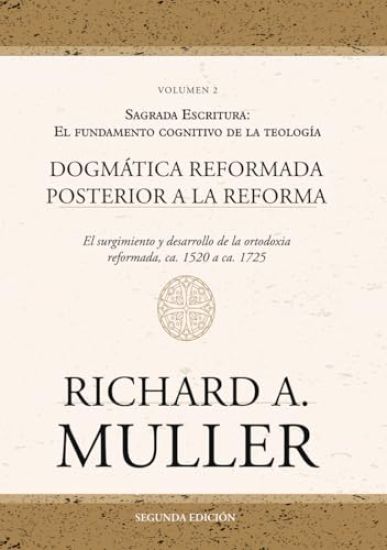
Dogmática reformada posterior a la Reforma Vol. 2: Sagrada Escritura: El fundamento cognitivo de la teología 2ed.
Al sostener que la teolog a de los siglos XVI y XVII a menudo est mal representada en las historias de la iglesia y en los tratamientos acad micos, Richard Muller ha emprendido este estudio exhaustivo de doctrinas espec ficas para demostrar c mo se desarroll la doctrina en el per odo protestante temprano.El volumen uno, Proleg menos a la teolog a, introduce el estudio de la escol stica protestante. Muller define teolog a y religi n y analiza varios aspectos de la teolog a tal como se entend an en la era posterior a la Reforma, incluidas sus divisiones, objeto y g nero, y principios fundamentales.El volumen dos, Sagradas Escrituras, examina la comprensi n de las Escrituras posterior a la Reforma como la palabra de Dios, su divinidad, sus propiedades, la integridad del canon y su interpretaci n.El volumen tres, La esencia y los atributos de Dios, examina la teolog a posterior a la Reforma sobre la unidad de la existencia de Dios, la esencia y los atributos de Dios y su voluntad. Se incluye un an lisis de la doctrina de Dios desde el siglo XII hasta principios del XVIII.El volumen cuatro, La Triunidad de Dios, examina la doctrina de la Trinidad, incluyendo la unidad y distinci n en la Trinidad tal como se entend an en los siglos XVI y XVII, y aborda la deidad y la persona de Dios Padre, Dios Hijo y Dios el Esp ritu Santo. Los eruditos, los estudiantes de la Reforma, las bibliotecas teol gicas y los devotos lectores reformados encontrar n estos vol menes indispensables.
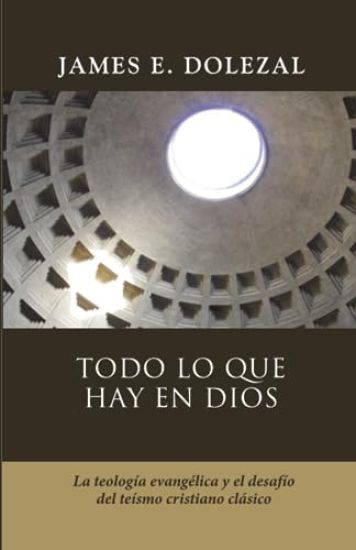
Todo lo que hay en Dios

Todo lo que hay en Dios

Richard A Muller; James E Dolezal

Teologia Para Vivir
2023
pokkari
TODO LO QUE HAY EN DIOS ES DIOS MISMO Sin que muchos lo sepan, un n mero cada vez mayor de evang licos conservadores niega los principios fundamentales de la ense anza cristiana cl sica sobre Dios, con graves desviaciones incluso entre los te logos de la persuasi n calvinista y reformada. El libro de James E. Dolezal Todo lo que hay en Dios ofrece una exposici n de la posici n cristiana hist rica al tiempo que se enfrenta a estas graves desviaciones contempor neas.Su convincente cr tica de la nueva posici n que l denomina mutualismo te sta es filos ficamente s lida, sistem ticamente matizada y con base b blica. Dolezal demuestra la necesidad de mantener el punto de vista tradicional sostenido por la iglesia durante toda su historia, especialmente en lo que respecta a la simplicidad divina, y pone de relieve las desafortunadas implicaciones para otras importantes doctrinas cristianas -como la eternidad divina, la inmutabilidad y la Trinidad- si se abandonara. Argumentando cuidadosa y convincentemente que "todo lo que hay en Dios es Dios mismo", la obra seguramente estimular el debate sobre la cuesti n de la teolog a propia en los a os venideros. "Muy pocos vol menes de teolog a han despertado mi profunda intriga como Todo lo que hay en Dios, de James Dolezal. El libro describe el coraz n de la teolog a cl sica en su brillante defensa de la visi n cat lica universal] de la naturaleza y el car cter de Dios. Tambi n relata la deriva contempor nea entre algunos eruditos evang licos y reformados que se alejan de la comprensi n ortodoxa de la simplicidad e inmutabilidad de Dios. Una lectura imprescindible."R. C. Sproul "Todo lo que hay en Dios: La teolog a evang lica y el desaf o al te smo cristiano cl sico ofrece una presentaci n excepcionalmente clara, concisa y convincente de lo que, hasta hace poco, los cristianos cat licos han cre do y confesado respecto al ser y la perfecci n del Dios trino. Tambi n ofrece un an lisis incisivo de gran parte de las ense anzas evang licas contempor neas sobre Dios, concluyendo que tanto los "mutualistas te stas" conservadores como los progresistas comparten supuestos y falacias comunes sobre el ser y la actividad de Dios. No conozco ning n otro libro contempor neo que haga estas dos contribuciones juntas en un solo lugar, y ciertamente no con el grado de claridad, caridad y persuasi n que exhibe el libro de Dolezal. Un libro digno que merece una amplia lectura."Scott R. Swain Sobre el autor: James E. Dolezal es profesor asociado de teolog a en la Escuela de Divinidad de la Universidad de Cairn en Langhorne, Pensilvania. Es autor de Dios sin partes (Pickwick, 2011) y Todo lo que hay en Dios (Reformation Heritage, 2017).
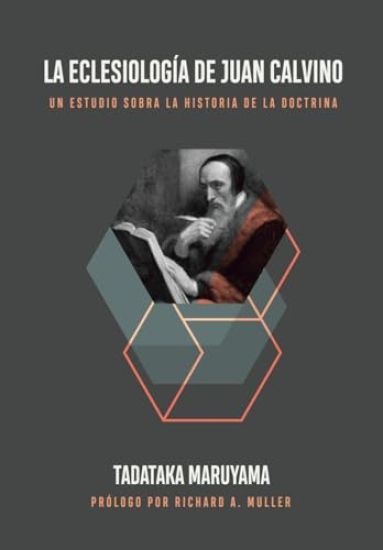
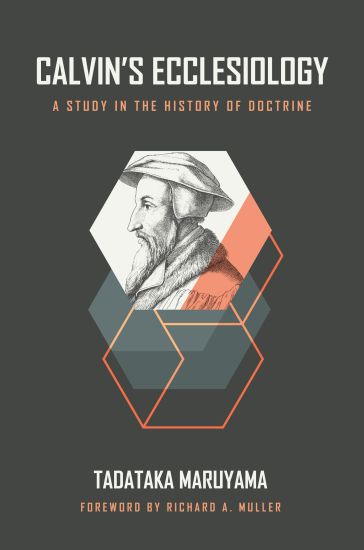
Calvin's Ecclesiology

Calvin's Ecclesiology

Tadataka Maruyama; Richard A Muller

WILLIAM B EERDMANS PUBLISHING CO
2022
sidottu
In this fresh and original monograph on the ecclesiology of John Calvin, Tadataka Maruyama sifts exhaustively through the corpus of Calvin's writings--in both Latin and French--to crystalize the French reformer's conception of the Christian church. After elucidating Calvin's influence from other reformers such as Jacques Lef vre, Guillaume Farel, and Martin Bucer, Maruyama shows how Calvin's ecclesiology evolved throughout his life while remaining firmly rooted in key principles and interests. Maruyama discerns three phases in Calvin's ecclesiology: Catholic ecclesiology--in which Calvin saw the church as a unified and ideal institution situated both above and within historyReformed ecclesiology--in which Calvin described the concrete, historical form of the Christian church over against the Catholic ChurchReformation ecclesiology--in which Calvin came to understand the Christian church as an eschatological reality situated in a broader European context, which Calvin portrayed as the "theater of God's providence"This trajectory mirrors the way the Protestant Reformation was focused on reforming particular churches while also reimagining the Christian world as a whole. Indeed, as Maruyama thoroughly illustrates, Calvin never lost sight of his original vision of reforming the church of his French homeland even as his work grew into a much larger movement.
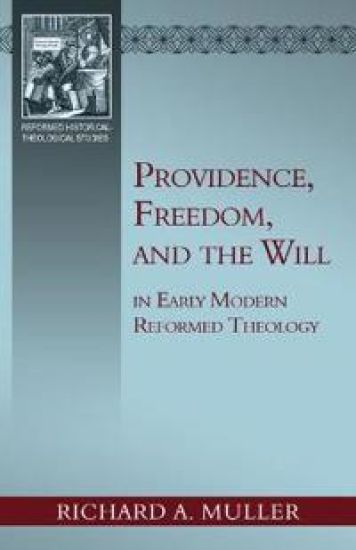
Providence, Freedom, and the Will

Providence, Freedom, and the Will

Richard A. Muller

Reformation Heritage Books
2022
nidottu
Too often scholars impose on the past modern terms and theories. This is particularly evident concerning discussions of divine sovereignty and human responsibility, where libertarian and compatibilist notions of freedom obscure older understandings of concurrence. Providence, Freedom, and the Will is one historian's attempt to help us interpret early modern documents in context with attention to their theological and philosophical terminology. In it, Richard A. Muller investigates the Reformed approach to causality and governance as it relates to divine concurrence with creaturely or temporal causes. He examines treatments of grace and freedom concerning the capabilities of the will as a free cause, operating of its own accord. And he explains free choice in the light of traditional assumptions concerning faculty psychology and the way in which external objects are selected or rejected. Table of Contents: Tum vero voluntas est libera: Vermigli on the Human Will, Free Choice, and Providential Concurrence Causality, Clocks, and Ezekiel's Wheels: Theodore Beza on Providence and Divine Concurrence Grace, Election, and Contingent Choice: Arminius' Gambit and the Reformed Response Robert Rollock on the Freedom of Will and the Limits of Free Choice Lucas Trelcatius, Jr. on Free Choice Goading the Determinists: Thomas Goad (1576-1638) on Necessity, Contingency and God's Eternal Decree Stephen Charnock on Providence, Foreknowledge, and Divine Concurrence Jonathan Edwards and the Absence of Free Choice: A Parting of Ways in the Reformed Tradition Jonathan Edwards and Francis Turretin on Necessity, Contingency, and Freedom of Will. In Response to Paul Helm Contingency, Necessity, and Certainty in Jonathan Edwards' Freedom of Will
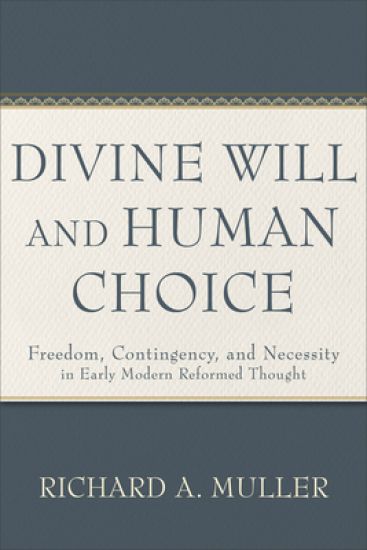
Divine Will and Human Choice – Freedom, Contingency, and Necessity in Early Modern Reformed Thought
This fresh study from an internationally respected scholar of the Reformation and post-Reformation eras shows how the Reformers and their successors analyzed and reconciled the concepts of divine sovereignty and human freedom. Richard Muller argues that traditional Reformed theology supported a robust theory of an omnipotent divine will and human free choice and drew on a tradition of Western theological and philosophical discussion. The book provides historical perspective on a topic of current interest and debate and offers a corrective to recent discussions.
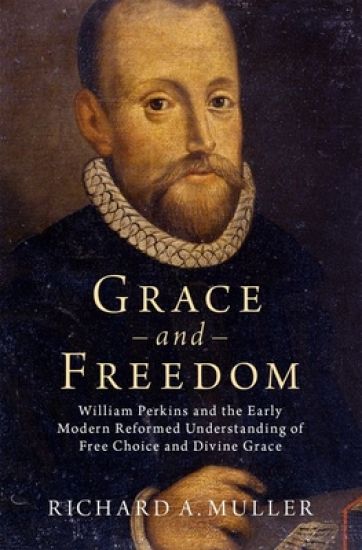
Grace and Freedom

Grace and Freedom

Richard A. Muller

Oxford University Press Inc
2020
sidottu
Grace and Freedom addresses the issue of divine grace in relation to the freedom of the will in Reformed or "Calvinist" theology in the late sixteenth and early seventeenth century. It focuses on the work of the English Reformed theologian William Perkins, especially his role as an apologist of the Church of England, defending its theology against the Roman Catholic polemic, and specifically against the charge that Reformed theology denies human free choice. Perkins and his Reformed contemporaries affirm that salvation occurs by grace alone and that God is the ultimate cause of all things, but they also insist on the freedom of the human will and specifically the freedom of choice in a way that does not conform to modern notions of "libertarian freedom" or "compatibilism." In developing this position, Perkins drew on the thought of Reformers such as Peter Martyr Vermigli and Zacharias Ursinus, on the nuanced positions of medieval scholastics, and several contemporary Roman Catholic representatives of the so-called "second scholasticism." His work was a major contribution to early modern Reformed thought both in England and on the continent. His influence in England extended both to the Reformed heritage of the Church of England and to English Puritanism. On the continent, his work contributed to the main lines of Reformed orthodoxy and to the piety of the Dutch Second Reformation.
Dictionary of Latin and Greek Theological Terms – Drawn Principally from Protestant Scholastic Theology
This indispensable companion to key post-Reformation theological texts provides clear and concise definitions of Latin and Greek terms for students at a variety of levels. Written by a leading scholar of the Reformation and post-Reformation eras, this volume offers definitions that bear the mark of expert judgment and precision. The second edition includes new material and has been updated and revised throughout.
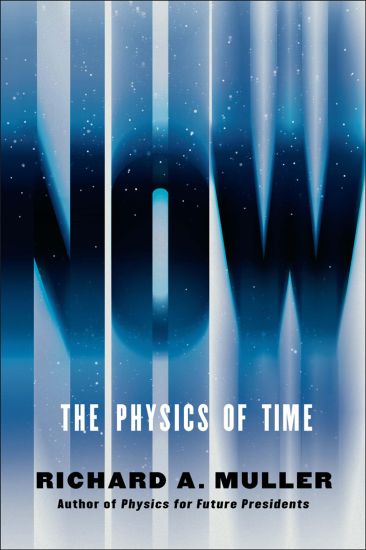
Now: The Physics of Time

Now: The Physics of Time

Richard A. Muller

W. W. Norton Company
2017
nidottu
You are reading the word "now" right now. But what does that mean? "Now" has bedeviled philosophers, priests, and modern-day physicists from Augustine to Einstein and beyond. In Now, eminent physicist Richard A. Muller takes up the challenge. He begins with remarkably clear explanations of relativity, entropy, entanglement, the Big Bang, and more, setting the stage for his own revolutionary theory of time, one that makes testable predictions. Muller's monumental work will spark major debate about the most fundamental assumptions of our universe, and may crack one of physics' longest-standing enigmas.
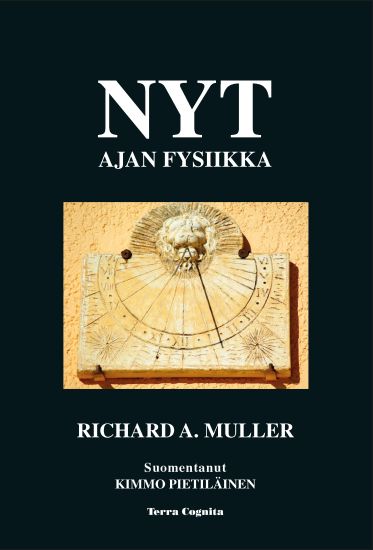
Nyt

Nyt

Richard A. Muller

Terra Cognita
2017
nidottu
Miksi hetki nyt on niin vaikeasti määritettävä? Miksemme ajattelumme ei saa siitä otetta?Tässä teoksessa tunnettu hiukkasfyysikko pohtii vuosien mittaan esitettyjä käsityksiä ajasta ja sen kulusta ja päätyy omaan teoriaansa.Suuri alkuräjähdys olikin 4-ulotteinen ja avaruuden ohella sen loi ajan. Hetki nyt on laajenevan aika-avaruuden aika-ulottuuden eturintama. Aika kulkee, koska koko ajan syntyy uutta aikaa.
Now: The Physics of Time

Now: The Physics of Time

Richard A. Muller

W. W. Norton Company
2016
sidottu
You are reading the word "now" right now. But what does that mean? What makes the ephemeral moment "now" so special? Its enigmatic character has bedeviled philosophers, priests, and modern-day physicists from Augustine to Einstein and beyond. Einstein showed that the flow of time is affected by both velocity and gravity, yet he despaired at his failure to explain the meaning of "now." Equally puzzling: why does time flow? Some physicists have given up trying to understand, and call the flow of time an illusion, but the eminent experimentalist physicist Richard A. Muller protests. He says physics should explain reality, not deny it.In Now, Muller does more than poke holes in past ideas; he crafts his own revolutionary theory, one that makes testable predictions. He begins by laying out--with the refreshing clarity that made Physics for Future Presidents so successful--a firm and remarkably clear explanation of the physics building blocks of his theory: relativity, entropy, entanglement, antimatter, and the Big Bang. With the stage then set, he reveals a startling way forward.Muller points out that the standard Big Bang theory explains the ongoing expansion of the universe as the continuous creation of new space. He argues that time is also expanding and that the leading edge of the new time is what we experience as "now." This thought-provoking vision has remarkable implications for some of our biggest questions, not only in physics but also in philosophy--including the ongoing debate about the reality of free will. Moreover, his theory is testable. Muller's monumental work will spark major debate about the most fundamental assumptions of our universe, and may crack one of physics's longest-standing enigmas.
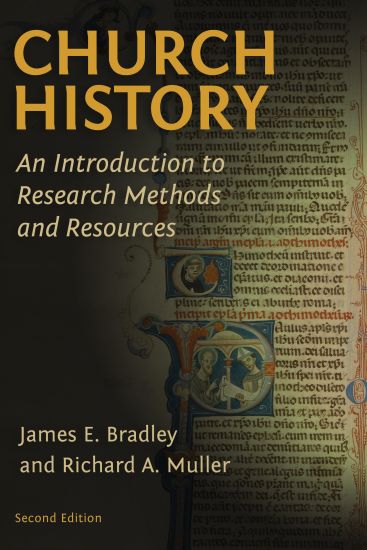
Church History

Church History

James E. Bradley; Richard A. Muller

William B Eerdmans Publishing Co
2016
nidottu
In their widely praised, long popular Church History, James Bradley and Richard Muller lay out the guidelines, methods, and basic reference tools for research and writing in the fields of church history and historical theology. Over the years, this book has helped countless students define their topics, locate relevant source materials, and write quality papers.This revised, expanded, and updated second edition includes discussion of internet-based research, digitized texts, and the electronic forms of research tools and their use. The bibliography of study aids has also been greatly expanded to account for many important new resources made available since the first edition was published (1995). Accessible and clear, this handy introduction will continue to be useful for both students and experienced scholars in the field. Praise for the First Edition:"This is the most comprehensive and most lucidly written introduction to the methods of historical research and writing in the field of church history that I have seen. The authors are to be commended for engaging issues of faith and critical scholarship in ways that detract neither from personal commitment nor from historical rigor. . . . All in all, a magnificent achievement." - Harry S. Stout"While Bradley and Muller show how hard it is to learn the craft, they help the apprentice considerably." - Christian Century"A reliable roadmap for all who would enter the scholarly labyrinth known as `church history.' . . . All new practitioners of the discipline, not to mention old ones, could benefit from this books" -- Religious Studies Review
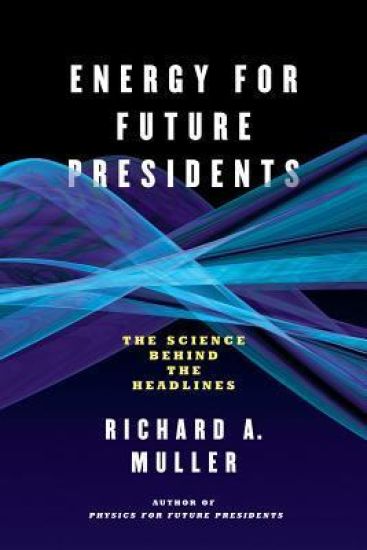
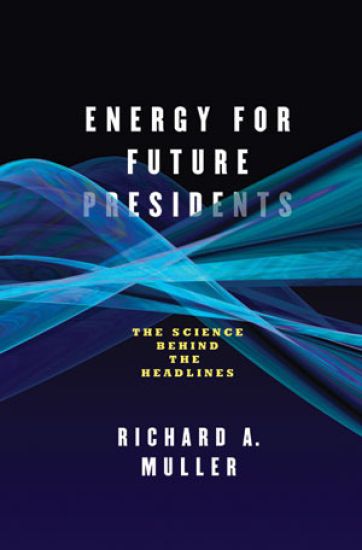
Energy for Future Presidents

Energy for Future Presidents

Richard A. Muller

WW Norton Co
2013
nidottu
The near meltdown of Fukushima, the upheavals in the Middle East, the BP oil spill, and the looming reality of global warming have reminded the president and all U.S. citizens that nothing has more impact on our lives than the supply and demand for energy. Its procurement dominates our economy and foreign policy more than any other factor. But the “energy question” is more confusing, contentious, and complicated than ever before. We need to know if nuclear power will ever really be safe. We need to know if solar and wind power will ever really be viable. And we desperately need to know if the natural gas deposits in Pennsylvania are a windfall of historic proportions or a false alarm that will create more problems than solutions. Richard A. Muller provides the answers in this must-read manual for our energy priorities now and in the coming years.
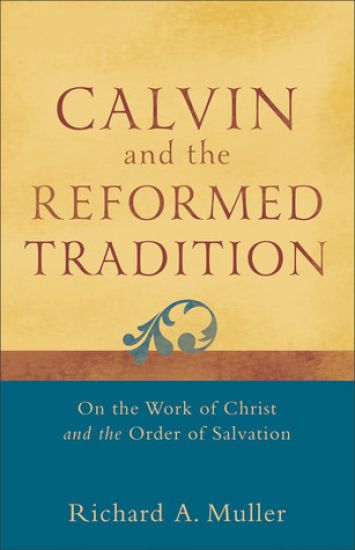
Calvin and the Reformed Tradition – On the Work of Christ and the Order of Salvation

Calvin and the Reformed Tradition – On the Work of Christ and the Order of Salvation

Richard A. Muller

Baker Academic, Div of Baker Publishing Group
2012
nidottu
Richard Muller, a world-class scholar of the Reformation era, examines the relationship of Calvin's theology to the Reformed tradition, indicating Calvin's place in the tradition as one of several significant second-generation formulators. Muller argues that the Reformed tradition is a diverse and variegated movement not suitably described either as founded solely on the thought of John Calvin or as a reaction to or deviation from Calvin, thereby setting aside the old "Calvin and the Calvinists" approach in favor of a more integral and representative perspective. Muller offers historical corrective and nuance on topics of current interest in Reformed theology, such as limited atonement/universalism, union with Christ, and the order of salvation.
Energy for Future Presidents

Energy for Future Presidents

Richard A. Muller

WW Norton Co
2012
sidottu
The near-meltdown of Fukushima, the upheavals in the Middle East, the BP oil rig explosion, and the looming reality of global warming have reminded the president and all U.S. citizens that nothing has more impact on our lives than the supply of and demand for energy. Its procurement dominates our economy and foreign policy more than any other factor. But the “energy question” is more confusing, contentious, and complicated than ever before. We need to know if nuclear power will ever really be safe. We need to know if solar and wind power will ever really be viable. And we desperately need to know if the natural gas deposits in Pennsylvania are a windfall of historic proportions or a false hope that will create more problems than solutions. Richard A. Muller provides all the answers in this must-read guide to our energy priorities now and in the coming years.
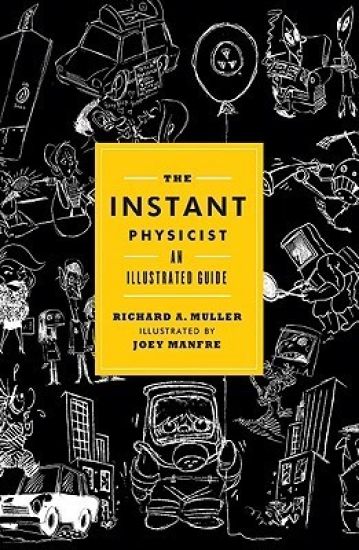
The Instant Physicist

The Instant Physicist

Richard A. Muller

WW Norton Co
2011
sidottu
Richard A. Muller demonstrated in his recent bestseller, Physics for Future Presidents, that he has a unique talent for delivering the “aha” moment—making difficult topics accessible. In The Instant Physicist he shows his ability to entertain, too, by presenting the best of the scientific curiosities he has assembled over his distinguished career. Assisted by award-winning cartoonist Joey Manfre, who has created an original color cartoon for each “physics bite,” Muller will have readers chuckling while they’re absorbing more science than they ever thought possible. From the surprising (chocolate has more energy in it than TNT) to the scary (even kids can make a bomb), this book contains a revelation on every page. Once finished with this page-turner, readers will be the stars of their next cocktail party. The book consists of a color cartoon on each right-hand page and explanatory text on the left.