

Kirjailija
Richard Andrews
Kirjat ja teokset yhdessä paikassa: 32 kirjaa, julkaisuja vuosilta 1993-2025, suosituimpien joukossa Choreography of the Poem. Vertaile teosten hintoja ja tarkista saatavuus suomalaisista kirjakaupoista.
32 kirjaa
Kirjojen julkaisuhaarukka 1993-2025.

This book explores analogies and correspondences between dance and poetry, with an emphasis on how dance and dance choreography can shed light on poetry, poetic form and the teaching of poetry. Chronologically, the book examines the Renaissance/Baroque period in Europe and moves through early modern to contemporary poetry and dance.
A Theory of Contemporary Rhetoric describes, explains, and argues the overarching theory of contemporary rhetoric. This current view of rhetoric brings together themes in the communication arts, including political literary criticism; bi- and multi-lingualism; multimodality; framing as an artistic and sociological device for composition and interpretation; literacy in the digital age; and the division between fiction and ‘non-fiction’ in language/literature studies. Chapters explore the implications of rhetoric for particular aspects of the field. Discussions throughout the book provide illustrations that ground the material in practice.As an overarching theory in the communication arts, rhetoric is elegant as a theoretical solution and simple as a practical one. It asks such questions as who is speaking/writing/composing? to whom? why? what is being conveyed? and how is it being conveyed? Acknowledging the dirth of recent works addressing the theory of rhetoric, this book aims to fill the existing theoretical gap and at the same time move the field of language/literature studies forward into new territory. It provides the keynote theoretical guide for a generation of teachers, teacher educators and researchers in the fields of English as a subject; English as a second, foreign or additional language; and language study in general.
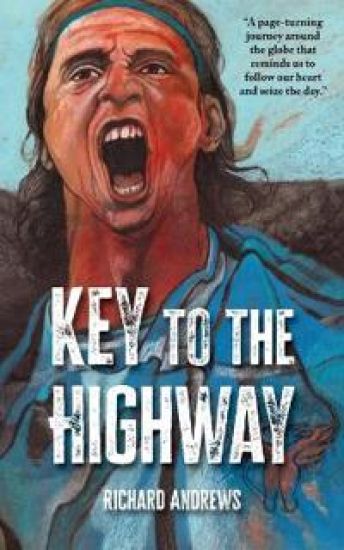
A cosmic motorbike fantasy and a magical blues harp take Chris Hunter on a wild, Orphic odyssey through the Australian Outback to Indonesia, India, Bangkok, Borneo and Rio. His reality morphs into a mythological world of gods and demons, manifested as bikers, prophets, gun runners, drug smugglers, shady businessmen and neo-Nazis. Empowered by an ancient esoteric secret, his journey to self discovery climaxes in a battle with Alt-Right forces.
An erotic motorbike fantasy and a magical blues harp take Chris Hunter on a wild, Orphic odyssey through the Australian Outback to Indonesia, India, Bangkok, Borneo and Rio. His reality morphs into a mythological world of gods and demons, manifested as bikers, prophets, gun runners, drug smugglers, shady businessmen and neo-Nazis. Empowered by an ancient esoteric secret, his journey to self discovery climaxes in a battle with Alt-Right forces.
We may recognize similarities between comedies by Moli re, Marivaux, Goldoni and Beaumarchais; but it is not fully appreciated that these playwrights belong to a single continuous genre of comedy inspired by Plautus and Terence. In fact comedies which we can call Classical were first composed by Humanists such as Ludovico Ariosto; and their format was quickly taken up by improvising actors of what we now call commedia dell'arte. The erudite and artisan strains soon mingled, and created a series of audience expectations in Europe as to what comedies should contain. A dialogue developed over nearly three centuries between stage comedies in Italy and France, with the two traditions regularly consulting, and borrowing from, each other. Comic opera contributed to the mix, and the story reaches its climax and its end with Le nozze di Figaro by Da Ponte and Mozart.Richard Andrews graduated in Italian and French from St John's College, Oxford, where his personal tutor was the Moli re specialist W.G. Moore. He is Emeritus Professor Of Italian at the University of Leeds.

Polyrhythmicity in Language, Music and Society
Richard Andrews
SPRINGER VERLAG, SINGAPORE
2022
nidottu
This book addresses the complex time relations that occur in some types of jazz and classical music, as well as in the novel, plays and poetry. It discusses these multiple levels of rhythm from a social science as well as an arts and humanities perspective. Building on his ground-breaking work in Re-framing Literacy, A Prosody of Free Verse and Multimodality, Poetry and Poetics, the author explores the world of multiple- or poly-rhythms in music, literature and the social sciences. He reveals that multi-layered rhythms are uncommon and little researched. Nevertheless, they are important to the experience of art and social situations, not least because they link physicality to feeling and to decision-making (timing), as well as to aesthetic experience. Whereas most poly-rhythmic relations are felt unconsciously, this book reveals the complex patterning that underpins the structures of feeling and of experience.
Polyrhythmicity in Language, Music and Society
Richard Andrews
Springer Verlag, Singapore
2021
sidottu
This book addresses the complex time relations that occur in some types of jazz and classical music, as well as in the novel, plays and poetry. It discusses these multiple levels of rhythm from a social science as well as an arts and humanities perspective. Building on his ground-breaking work in Re-framing Literacy, A Prosody of Free Verse and Multimodality, Poetry and Poetics, the author explores the world of multiple- or poly-rhythms in music, literature and the social sciences. He reveals that multi-layered rhythms are uncommon and little researched. Nevertheless, they are important to the experience of art and social situations, not least because they link physicality to feeling and to decision-making (timing), as well as to aesthetic experience. Whereas most poly-rhythmic relations are felt unconsciously, this book reveals the complex patterning that underpins the structures of feeling and of experience.
This groundbreaking work takes multimodality studies in a new direction by applying multimodal approaches to the study of poetry and poetics. The book examines poetry’s visual and formal dimensions, applying framing theory to such case studies as Aristotle’s Poetics and Robert Lowell’s "The Heavenly Rain", to demonstrate both the implied, due to the form’s unique relationship with structure, imagery, and rhythm, and explicit forms of multimodality at work, an otherwise little-explored research strand of multimodality studies. The volume explores the theoretical implications of a multimodal approach to poetry and poetics to other art forms and fields of study, making this essential reading for students and scholars working at the intersection of language and communication, including multimodality, discourse analysis, and interdisciplinary literary studies.
Arts Entrepreneurship: Creating a New Venture in the Arts provides the essential tools, techniques, and concepts needed to invent, launch, and sustain a business in the creative sector.Building on the reader’s artistic talents and interests, the book provides a practical, action-oriented introduction to the business of art, focusing on product design, organizational planning and assessment, customer identification and marketing, fundraising, legal issues, money management, cultural policy, and career development. It also offers examples, exercises, and references that guide entrepreneurs through the key stages of concept creation, business development, and growth. Special attention is paid to topics such as cultural ventures seeking social impact, the emergence of creative placemaking, the opportunities afforded by novel corporate forms, and the role of contemporary technologies in marketing, fundraising, and operations.A hands-on guide to entrepreneurial success, this book is a valuable resource for students of Arts Entrepreneurship programs, courses, and workshops, as well as for early-stage business founders in the creative sector looking for guidance on how to create and sustain their own successful venture.
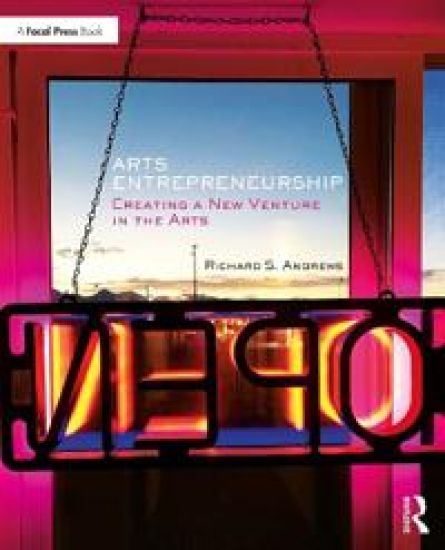
Arts Entrepreneurship: Creating a New Venture in the Arts provides the essential tools, techniques, and concepts needed to invent, launch, and sustain a business in the creative sector.Building on the reader’s artistic talents and interests, the book provides a practical, action-oriented introduction to the business of art, focusing on product design, organizational planning and assessment, customer identification and marketing, fundraising, legal issues, money management, cultural policy, and career development. It also offers examples, exercises, and references that guide entrepreneurs through the key stages of concept creation, business development, and growth. Special attention is paid to topics such as cultural ventures seeking social impact, the emergence of creative placemaking, the opportunities afforded by novel corporate forms, and the role of contemporary technologies in marketing, fundraising, and operations.A hands-on guide to entrepreneurial success, this book is a valuable resource for students of Arts Entrepreneurship programs, courses, and workshops, as well as for early-stage business founders in the creative sector looking for guidance on how to create and sustain their own successful venture.
There is to date no comprehensive account of the rhythms of free verse. The main purpose of A Prosody of Free Verse: explorations in rhythm is to fill that gap and begin to provide a systematic approach to describing and analyzing free verse rhythms. Most studies have declared the attempt to write such a prosody as impossible: they prefer to see free verse as an aberrant version of regular metrical verse. They also believe that behind free verse is the ‘ghost of metre’. Running against that current, A Prosody of Free Verse bases its new system on additive rhythms that do not fit conventional time signatures. Inspiration is taken from jazz, contemporary music and dance, not only in their systems of notation but in performance. The book argues that twentieth and twenty-first century rhythms in poetry as based on the line rather than the metrical foot as the unit of rhythm , and that larger rhythmic structures fall into verse paragraphs rather than stanzas.
The Doctrine of Transubstantiation Fairly Argued, and Fully Refuted; in Answer to two Books, viz. A Modest and True Account of the Chief Points in Controversy Between the Roman-Catholics and the Protestants
Richard Andrews
Gale Ecco, Print Editions
2018
sidottu
The 18th century was a wealth of knowledge, exploration and rapidly growing technology and expanding record-keeping made possible by advances in the printing press. In its determination to preserve the century of revolution, Gale initiated a revolution of its own: digitization of epic proportions to preserve these invaluable works in the largest archive of its kind. Now for the first time these high-quality digital copies of original 18th century manuscripts are available in print, making them highly accessible to libraries, undergraduate students, and independent scholars.The Age of Enlightenment profoundly enriched religious and philosophical understanding and continues to influence present-day thinking. Works collected here include masterpieces by David Hume, Immanuel Kant, and Jean-Jacques Rousseau, as well as religious sermons and moral debates on the issues of the day, such as the slave trade. The Age of Reason saw conflict between Protestantism and Catholicism transformed into one between faith and logic -- a debate that continues in the twenty-first century.++++The below data was compiled from various identification fields in the bibliographic record of this title. This data is provided as an additional tool in helping to insure edition identification: ++++British LibraryT088343London: printed for J. Waugh and W. Fenner, 1755. 8], xvi,96p.; 8
This groundbreaking work takes multimodality studies in a new direction by applying multimodal approaches to the study of poetry and poetics. The book examines poetry’s visual and formal dimensions, applying framing theory to such case studies as Aristotle’s Poetics and Robert Lowell’s "The Heavenly Rain", to demonstrate both the implied, due to the form’s unique relationship with structure, imagery, and rhythm, and explicit forms of multimodality at work, an otherwise little-explored research strand of multimodality studies. The volume explores the theoretical implications of a multimodal approach to poetry and poetics to other art forms and fields of study, making this essential reading for students and scholars working at the intersection of language and communication, including multimodality, discourse analysis, and interdisciplinary literary studies.
River Road
Richard Andrews; Conley Stone McAnally
Createspace Independent Publishing Platform
2017
nidottu
In this, his 12th book, Conley Stone McAnally weaves together several tales of the people of River Road, a residential street in Independence, Missouri. With the blend of fantasy and reality his readers have come to love, Conley weaves a tapestry of colorful characters, culminating in a heartfelt remembrance of his late wife. River Road is full of everyday wit and wisdom, humor, heartbreak and hope.
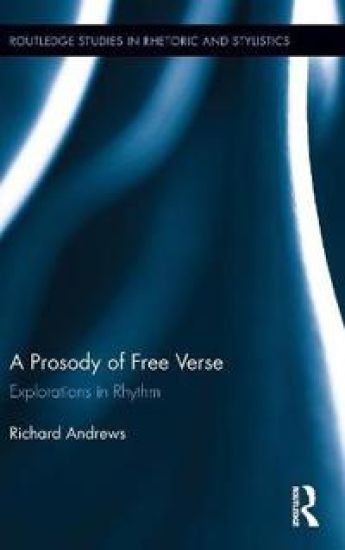
There is to date no comprehensive account of the rhythms of free verse. The main purpose of A Prosody of Free Verse: explorations in rhythm is to fill that gap and begin to provide a systematic approach to describing and analyzing free verse rhythms. Most studies have declared the attempt to write such a prosody as impossible: they prefer to see free verse as an aberrant version of regular metrical verse. They also believe that behind free verse is the ‘ghost of metre’. Running against that current, A Prosody of Free Verse bases its new system on additive rhythms that do not fit conventional time signatures. Inspiration is taken from jazz, contemporary music and dance, not only in their systems of notation but in performance. The book argues that twentieth and twenty-first century rhythms in poetry as based on the line rather than the metrical foot as the unit of rhythm , and that larger rhythmic structures fall into verse paragraphs rather than stanzas.
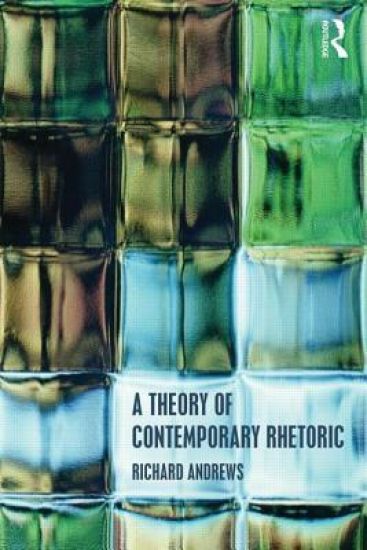
A Theory of Contemporary Rhetoric describes, explains, and argues the overarching theory of contemporary rhetoric. This current view of rhetoric brings together themes in the communication arts, including political literary criticism; bi- and multi-lingualism; multimodality; framing as an artistic and sociological device for composition and interpretation; literacy in the digital age; and the division between fiction and ‘non-fiction’ in language/literature studies. Chapters explore the implications of rhetoric for particular aspects of the field. Discussions throughout the book provide illustrations that ground the material in practice.As an overarching theory in the communication arts, rhetoric is elegant as a theoretical solution and simple as a practical one. It asks such questions as who is speaking/writing/composing? to whom? why? what is being conveyed? and how is it being conveyed? Acknowledging the dirth of recent works addressing the theory of rhetoric, this book aims to fill the existing theoretical gap and at the same time move the field of language/literature studies forward into new territory. It provides the keynote theoretical guide for a generation of teachers, teacher educators and researchers in the fields of English as a subject; English as a second, foreign or additional language; and language study in general.
