Kirjojen hintavertailu. Mukana 12 595 353 kirjaa ja 12 kauppaa.

Kirjailija

Richard B. McCaslin

Kirjat ja teokset yhdessä paikassa: 16 kirjaa, julkaisuja vuosilta 1992-2025, suosituimpien joukossa Sutherland Springs, Texas. Vertaile teosten hintoja ja tarkista saatavuus suomalaisista kirjakaupoista.

16 kirjaa

Kirjojen julkaisuhaarukka 1992-2025.

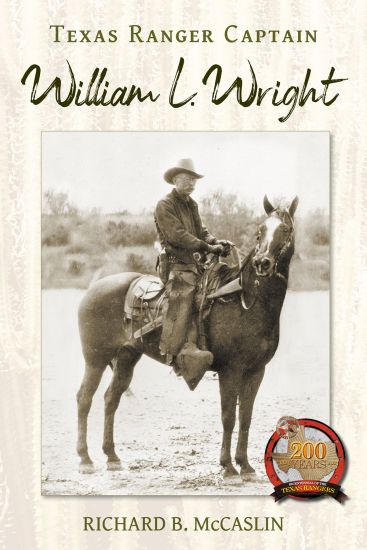
Texas Ranger Captain William L. Wright

Texas Ranger Captain William L. Wright

Richard B. McCaslin

University of North Texas Press,U.S.
2021
sidottu
William L. Wright (1868–1942) was born to be a Texas Ranger, and hard work made him a great one. Wright tried working as a cowboy and farmer, but it did not suit him. Instead, he became a deputy sheriff and then a Ranger in 1899, battling a mob in the Laredo Smallpox Riot, policing both sides in the Reese-Townsend Feud, and winning a gunfight at Cotulla.His need for a better salary led him to leave the Rangers and become a sheriff. He stayed in that office longer than any of his predecessors in Wilson County, keeping the peace during the so-called Bandit Wars, investigating numerous violent crimes, and surviving being stabbed on the gallows by the man he was hanging. When demands for Ranger reform peaked, he was appointed as a captain and served for most of the next twenty years, retiring in 1939 after commanding dozens of Rangers.Wright emerged unscathed from the Canales investigation, enforced Prohibition in South Texas, and policed oil towns in West Texas, as well as tackling many other legal problems. When he retired, he was the only Ranger in service who had worked under seven governors. Wright has also been honored as an inductee into the Texas Ranger Hall of Fame at Waco.
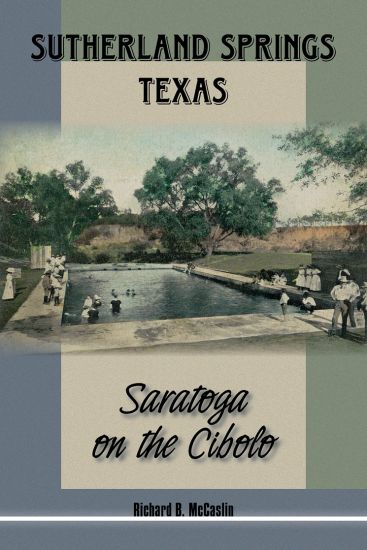
Sutherland Springs, Texas

Sutherland Springs, Texas

Richard B. McCaslin

University of North Texas Press,U.S.
2017
sidottu
In Sutherland Springs, Texas, Richard B. McCaslin explores the rise and fall of this rural community near San Antonio primarily through the lens of its aspirations to become a resort spa town, because of its mineral water springs, around the turn of the twentieth century. Texas real estate developers, initially more interested in oil, brought Sutherland Springs to its peak as a resort in the early twentieth century, but failed to transform the farming settlement into a resort town. The decline in water tables during the late twentieth century reduced the mineral water flows, and the town faded. Sutherland Springs’s history thus provides great insights into the importance of water in shaping settlement. Beyond the story of resort spa aspirations lies a history of the community and its people itself. McCaslin provides a complete history of Sutherland Springs from early settlement through Civil War and into the twentieth century, its agricultural and oil-drilling exploits alongside its mineral water appeal, as well as a complete community history of the various settlers and owners of the springs/hotel.
Fighting Stock

Fighting Stock

Richard B. McCaslin

Texas Christian University Press,U.S.
2011
sidottu
McCaslin’s in-depth historical detail paints a full picture of this famous Texan, a fighter not only on the battlefield, but on the civic and political fields as well.
Lee In the Shadow of Washington

Lee In the Shadow of Washington

Richard B. McCaslin

Louisiana State University Press
2004
nidottu
Winner of the Austin Civil War Round Table's Laney Prize and the Virginia Historical Society's Richard L. Slatten Award for Excellence in Virginia Biography While most historians agree that Robert E. Lee's loyalty to Virginia was the key factor in his decision to join the Confederate cause, Richard B. McCaslin further demonstrates that Lee's true call to action was the legacy of the American Revolution viewed through his reverence for George Washington. In this thematic biography, McCaslin locates the sources of Lee's devotion to Washington and shows how this bond affected his performance as a general. The enduring paradox, McCaslin shows, is that Washington earned his reputation as a statesman, whereas Lee never escaped his self-imposed image as a revolutionary in Washington's shadow.
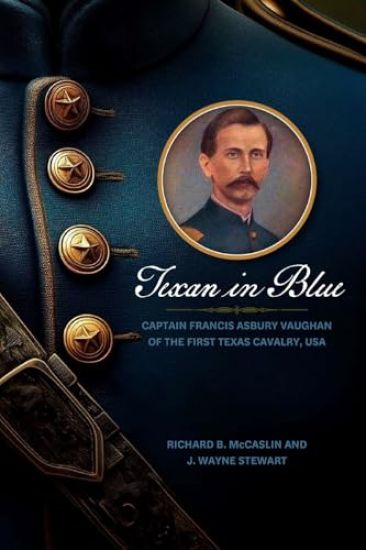
Texan in Blue

Texan in Blue

Richard B. McCaslin; J. Wayne Stewart

Texas State Historical Association,U.S.
2025
pokkari
Francis Asbury Vaughan left his home in Guadalupe County, Texas on July 4, 1862, to fight in the Civil War. But he did not join a Confederate unit. Unlike twenty-one of his brothers and cousins, and most white male Texans who fought in that conflict, he became a captain in the First Texas Cavalry, USA, the best-known Union outfit from the Lone Star State. Fortunately for historians, he recorded some of his wartime experiences in what he called a memorandum, which remains in the possession of his descendants along with other treasured records concerning him and his relatives. These documents are the foundation for this book, which provides a unique insight into the ideals and actions of a Texan who not only served for three years as a Union officer but afterward became a Republican for the remaining three decades of his life in Texas. As a Texan in blue, a delegate to the Constitutional Convention of 1868, a federal appointee and elected local official several times over, and a successful businessman and father, Vaughan established a legacy that offers useful perspectives not only on him, but on the events that surrounded and involved him.
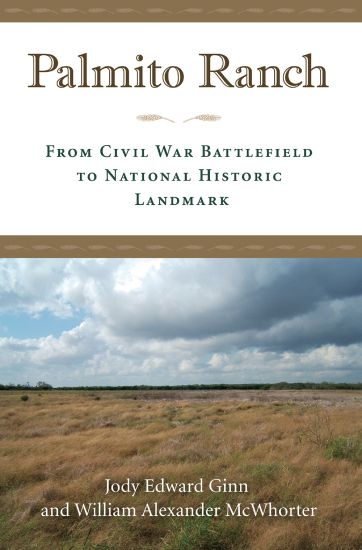
Palmito Ranch

Palmito Ranch

Jody Edward Ginn; William Alexander McWhorter; Richard B. McCaslin

Texas A M University Press
2018
nidottu
Despite the strategic importance of the Lower Rio Grande Valley during the Civil War, the two battles fought there—the first (September 1864) and the second (May 1865) battles of Palmito Ranch—have largely faded from public memory even as the second battle earned the title “Last Land Battle of the Civil War.” In Palmito Ranch: From Civil War Battlefield to National Historic Landmark, Jody Edward Ginn and William Alexander McWhorter document efforts to redress this lacuna in the popular consciousness. They offer new information about these battles while chronicling the efforts to save and preserve the battlefield site, one of the few places in Texas where the war was contested.Opening with a crisp retelling of the principal military events that unfolded at Palmito Ranch, near the Confederate port city of Brownsville, Ginn and McWhorter recount the initiative pursued by a multidisciplinary team organized largely through the efforts of the Texas Historical Commission to study, document, and preserve this important Texas historic site. Now, visitors to the area may benefit from not only improved and expanded historical markers, but also a radio transmitter and a viewing platform, along with other interpretive aids. All this is due to the campaign spearheaded by McWhorter, Ginn, and a cohort of dedicated volunteers and professionals.Providing a case study in constituency building and public awareness raising to preserve and promote historic sites, Palmito Ranch will interest and educate heritage tourists, Civil War enthusiasts, and travelers to South Texas and the Lower Rio Grande Valley.
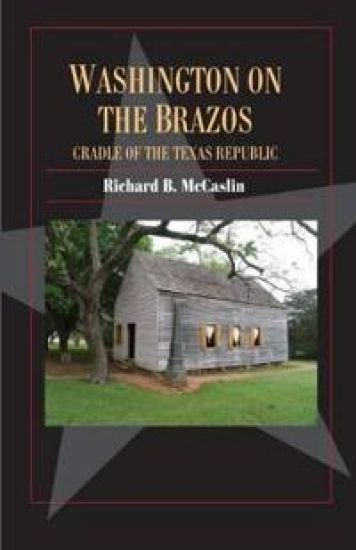
Washington on the Brazos

Washington on the Brazos

Richard B. McCaslin

Texas State Historical Association,U.S.
2016
nidottu
With Washington on the Brazos: Cradle of the Texas Republic, noted historian Richard B. McCaslin recovers the history of an iconicTexas town. The story of the Texas Republic begins and ends at Washington,but the town’s history extends much further. Texas leadersgathered in the new town on the west bank of the Brazos in March1836 to establish a new republic. After approving a declaration ofindependence and constitution, they fled as Santa Anna’s armyapproached. The government of the Republic of Texas returnedthere in 1842, but after the United States annexed Texas in 1846,Austin replaced Washington as the capital of the Lone Star State.The town became a thriving river port in the 1850s, whensteamboat cargoes paid for many new buildings. But thecommunity steeply declined when its leaders decided to rely onsteamers rather than invest in a railroad line, although Germanimmigrants and African American residents kept the town alive.But Progressive Era plans for historic tourism focused the town’scentral role in the Texas Republic brought renewed interest, and astate park was founded. The Texas centennial in 1936 and the hard work of citizens’organizations beginning in the 1950s transformed this park intoWashington-on-the-Brazos, the state historic site that serves todayas the primary focus for preserving the history of the Republic ofTexas.
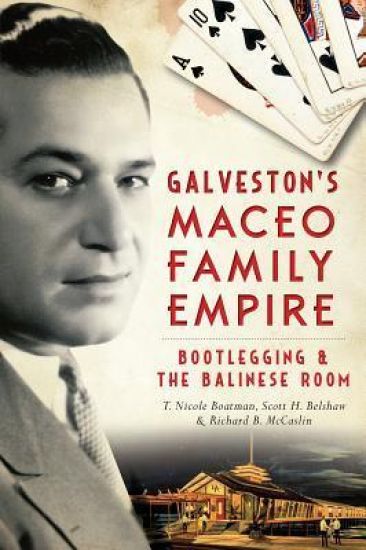
Galveston's Maceo Family Empire: Bootlegging & the Balinese Room

Galveston's Maceo Family Empire: Bootlegging & the Balinese Room

T. Nicole Boatman; Scott H. Belshaw; Richard B. McCaslin

History Press
2014
nidottu
At the dawn of the twentieth century, Galveston was a beacon of opportunity on the Texas Gulf Coast. Dubbed the Wall Street of the Southwest, its laissez-faire reputation called those hungry for success to its shores. Led by brothers Salvatore and Rosario at the height of Prohibition, the Maceo family answered that call and changed the Oleander City forever. They built an island empire of gambling, smuggling and prostitution that lasted three decades. Housed in their nightclubs frequented by stars like Peggy Lee, Frank Sinatra and Duke Ellington, they endeared themselves to their Galveston neighbors by sharing their profits, imitating crime syndicates in their native Sicily. Though certainly no saints, the Maceos helped bring prosperity to a community weary from a century of turmoil. Discover the history of Galveston's famous crime family with authors Nicole Boatman, Dr. Scott Belshaw and Texas historian Richard McCaslin.
At the Heart of Texas

At the Heart of Texas

Richard B. McCaslin; J.P. Bryan

Texas State Historical Association,U.S.
2007
sidottu
History like that of Texas is rare...Is it not discreditable to the people of Texas, that they should leave the collection of material for the history of the State to the great endowed Northern libraries?...Let Texas arouse herself for very shame, and begin at once the discharge of her filial duty. So wrote George Pierce Garrison in the first issue of the ""Quarterly of the Texas State Historical Association"", published in July 1897, just months after the establishment of the organization. Earlier attempts to organize historical societies in Texas, traced in the opening chapter, illuminate the factors that came ultimately to be decisive in the success of the Association: the wisdom in linking the organization with the University of Texas, the inclusion of lay historians, and the continued insistence on high academic standards. And, from the beginning, the Association has established a tradition for publishing in the Quarterly, in addition to the Anglo story, the stories of the Indians, the Spanish, and the French. The text is organized in chronological chapters by the tenures of the seven directors, George Garrison to Ron Tyler. Within the larger framework of the directors, the programs, and the publications, Richard McCaslin gives shape to the unique interaction of forces - university, political, and the academic/lay membership - that has accorded the Association a character and suppleness that continues to ensure its long endurance. For those who have long been members of the Association, there is nostalgic delight in hearing again those long-ago voices of Eugene Barker, Walter Webb, Bailey Carroll, Joe Frantz, and Tuffly Ellis and new appreciation for how much thought, energy, and commitment have gone into the guidance and stability of this organization.
Portraits of Conflict

Portraits of Conflict

Richard B. McCaslin

University of Arkansas Press
2007
sidottu
It's one thing to understand that over twenty-thousand Confederate and Union soldiers died at the Battle of Murfreesboro. It's quite another to study an ambrotype portrait of twenty-year-old private Frank B. Crosthwait, dressed in his Sunday best, looking somberly at the camera. In a tragically short time, he'll be found on the battlefield, mortally wounded, still clutching the knotted pieces of handkerchief he used in a hopeless attempt to stop the bleeding from his injuries. Private Crosthwait's image is one of more than 250 portraits - many never before published - to be found in the highly anticipated ""Portraits of Conflict: A Photographic History of Tennessee in the Civil War"". The eighth in the distinguished ""Portraits of Conflict"" series, this volume joins the personal and the public to provide a uniquely rich portrayal of Tennesseans - in uniforms both blue and gray - who fought and lost their lives in the Civil War. Here is the story of a widow working as a Union spy to support herself and her children. Of a father emerging from his house to find his Confederate soldier son dying at his feet. Of a nine-year-old boy who attached himself to a union regiment after his mother died. Their stories and faces, joined with personal remembrances from recovered letters and diaries and ample historical information on secession, famous battles, surrender and Reconstruction, make this new ""Portraits of Conflict"" a Civil War treasure.
The Last Stronghold

The Last Stronghold

Richard B. McCaslin

McWhiney Foundation Press
2003
nidottu
The huge earthen mounds silhouetted in the darkness of Southern nights near Wilmington, North Carolina, were signs of safety for Rebel ship captains and symbols of defiance to their Federal counterparts. These earthworks, the gun emplacements of Fort Fisher, embodied the hopes of the South and stood as a pillar of sovereignty to the beleaguered nation. During the American Civil War, the independence of the Confederacy would hinge upon its ability to exist as a sovereign nation in the world. Part of this identity came from its continued connection to European goods by eluding the Federal blockade of its coast. The busy port of Wilmington was a key city in maintaining this agenda and Fort Fisher its able defender. By late 1864, this city and the traffic it engendered had become an important target for Federal military planners as it had become the primary haven for blockade-runners in the eastern Confederacy. Wilmington also served as the last major link for the eastern Confederate armies to the weapons merchants of Europe and the world. This distinction, which came because of the city's location and the configuration of its harbor, proved to be a mixed blessing. During the Civil War, the formerly quiet waterfront became the focus of a swelling tide of commerce. Some of that trade had a distinctly seedy aspect as merchants motivated by greed over patriotism smuggled in luxury items for high profits instead of filling their holds with the materiel of war. Whatever their motives, those who remained in Wilmington understood their role, and they were not eager to have it suddenly ended by a Federal invasion. To keep the city from falling, the Confederacy relied on a strong system of fortifications, the most formidable of which was Fort Fisher. The United States Army in late 1864 and early 1865 made the fort the target of the largest amphibious operation prior to World War II. The successful reduction of the post brought to a close not only one of the most interesting eras in Wilmington's history, but sounded the knell for the brief life of the Confederacy itself.
Tainted Breeze

Tainted Breeze

Richard B. McCaslin

Louisiana State University Press
1997
nidottu
Winner of the Coral Horton Tullis Memorial Book Prize and a Certificate of Commendation from the American Association for State and Local History In the early morning hours of October 1, 1862, state militia arrested more than two hundred alleged Unionists from five North Texas counties and brought them to Gainesville, the seat of Cooke County. In the ensuing days, at least forty-four of the prisoners were hanged, and several other men were lynched in neighboring communities. This event proved to be the grisly climax of a heritage of violence and vigilantism in North Texas that began before the Civil War and lasted long afterward.Until relatively recently, a legacy of silence restricted historical writing on the Great Hanging. In the first systematic treatment of this important event, Richard B. McCaslin also sheds much light on the tensions produced in southern society by the Civil War, the nature of disaffection in the Confederacy, and the American vigilante tradition.
A Photographic History of North Carolina in the Civil War

A Photographic History of North Carolina in the Civil War

Richard B. McCaslin

University of Arkansas Press
1997
sidottu
The Civil War presented the first major opportunity for Americans to photograph fighting men and the places they battled and to create an extensive visual record of war. Most collections of such photographs, however, have focused on the leaders of the conflict and have treated the images only as illustrations for traditional narratives. Centering on the common soldier, Portraits of Conflict: A Photographic History of North Carolina in the Civil War, the sixth in the University of Arkansas Press's award-winning series, tells the stories of the actual people, rich and poor, whose lives were changed forever by the nation's great drama. Here is the tale of a wife who disguised herself as a new recruit so she could avoid separation from her husband, and the brothers who suffered identical injuries and leg amputations within two weeks of each other. With over 250 photographs, maps, and related documents, McCaslin has superbly detailed the physical and spiritual suffering of ordinary Carolinians in their fight for their country, its land, and their own freedoms.
Andrew Johnson

Andrew Johnson

Richard B. McCaslin

Greenwood Press
1992
sidottu
Andrew Johnson remains a paradox to those who study the controversial era of the Civil War and Reconstruction. The effort to understand Johnson has produced a tremendous outpouring of works that provide fascinating perspectives on one of our most contradictory chief executives. Many scholars condemn him for his actions; others compare him favorably to other presidents. The resulting body of scholarly writing has been enriched by the debate. This volume provides the first systematic, thorough bibliography on the contradictory mass of material, both primary and secondary, on Johnson.Following a short chronology of Johnson's life, the volume opens with chapters on manuscript and archival resources and the writings of Andrew Johnson. Chapter 3 covers biographical publications, and the next seven chapters cover different periods in his life from childhood to his post-presidential career. The final chapters are devoted to Johnson's associates, his personal life, historiographical materials, and iconography. A separate section covers periodicals, and the work concludes with author and subject indexes.