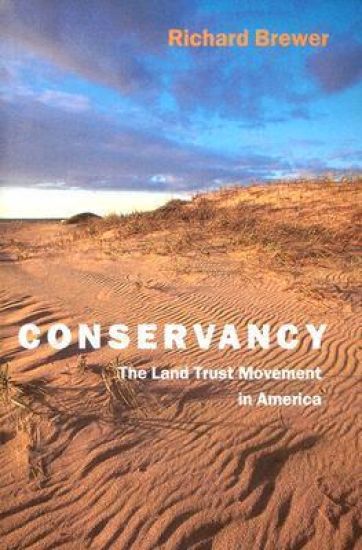
Land trusts, or conservancies, protect land by owning it. Although many people are aware of a few large land trusts-The Nature Conservancy and the Trust for Public Land, for instance-there are now close to 1,300 local trusts, with more coming into being each month. American land trusts are diverse, shaped by their missions and adapted to their local environments. Nonetheless, all land trusts are private, non-profit organizations for which the acquisition and protection of land by direct action is the primary or sole mission. Nonconfrontational and apolitical, land trusts work with willing land owners in voluntary transactions. Although land trusts are the fastest-growing and most vital part of the land conservation movement today, this model of saving land by private action has become dominant only in the past two decades. Brewer tells why the advocacy model-in which private groups try to protect land by promoting government purchase or regulation- in the 1980s was eclipsed by the burgeoning land trust movement. He gives the public a much-needed primer on what land trusts are, what they do, how they are related to one another and to other elements of the conservation and environmental movements, and their importance to conservation in the coming decades. As Brewer points out, unlike other land-saving measures, land trust accomplishments are permanent. At the end of a cooperative process between a landowner and the local land trust, the land is saved in perpetuity. Brewer's book, the first comprehensive treatment of land trusts, combines a historical overview of the movement with more specific information on the different kinds of land trusts that exist and the problems they face. The volume also offers a"how-to" approach for persons and institutions interested in donating, selling, or buying land, discusses four major national land trusts (The Nature Conservancy, Trust for Public Land, American Farmland Trust, and Rails-to-Trails Conservancy); and gives a generous sampling of information about the activities and accomplishments of smaller, local trusts nationwide. Throughout, the book is enriched by historical narrative, analysis of successful land trusts, and information on the how and why of protecting land, as well as Brewer's intimate knowledge of ecological systems, biodiversity, and the interconnectedness of human and non-human life forms. Conservancy is a must-read volume for people interested in land conservation-including land trust members, volunteers and supporters-as well as anyone concerned about land use and the environment.