Kirjojen hintavertailu. Mukana 12 390 323 kirjaa ja 12 kauppaa.
Kirjailija
Richard Brown
Kirjat ja teokset yhdessä paikassa: 116 kirjaa, julkaisuja vuosilta 1981-2026, suosituimpien joukossa A Slice of Rural Essex. Vertaile teosten hintoja ja tarkista saatavuus suomalaisista kirjakaupoista.
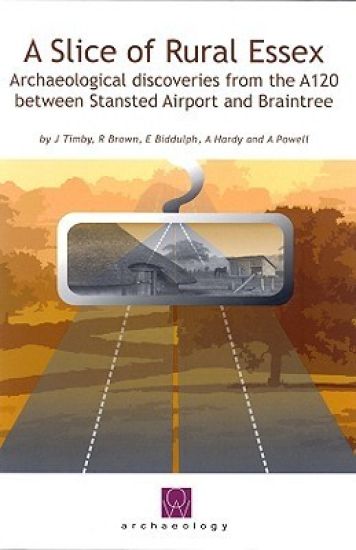
The upgrading of the A120 between Stansted Airport and Braintree allowed the unique opportunity to examine a slice of landscape crossing the clay plateau of Essex; a geology which has received little attention in the past. A diverse pattern of human history was revealed including earlier prehistoric flint knapping, later prehistoric ritual activity, a Roman farmstead with accompanying cemetery, a middle Saxon hall, medieval settlement, pottery production and a windmill. This report is the product of a joint venture between Oxford Archaeology and Wessex Archaeology and has been designed to provide the reader with an accessible interpretation of the findings with supporting factual data.
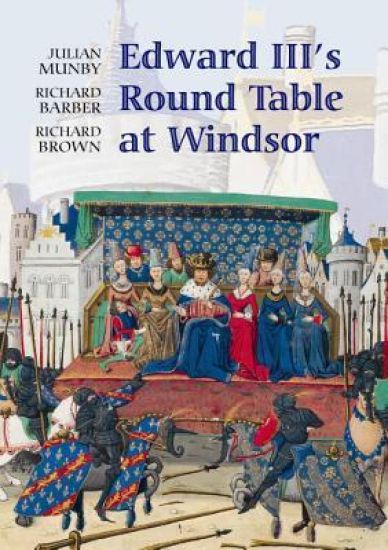
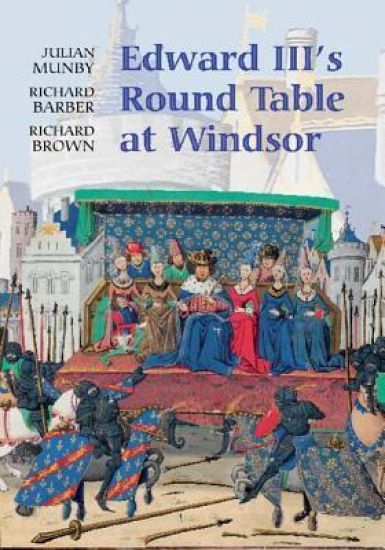
The image of King Arthur's Round Table is well-known, both as Thomas Malory's portrayal of a fellowship of knights dedicated to the highest ideals of chivalry, and as the great wooden table at Winchester castle. Now a dramatic archaeological find at Windsor castle sheds new light on the idea of a round table as a gathering: the 'House of the Round Table' which Edward III ordered to be constructed at the conclusion of his Windsor festival of 1344. The discovery of the foundation trench of a great building two hundred feet in diameter in the Upper Ward of Windsor castle, allows the reconstruction of that building's appearance and raises the question of its purpose. Chronicles, building materials inventories from the royal accounts, medieval romances, and earlier descriptions of round table festivals all confirm the archaeological evidence: at a time when secular orders of knighthood were almost unknown, Edward declared his intention to found an Order of the Round Table with three hundred knights. This grand building, and the Arthurian entertainments he planned for it, would bind his nobles to his cause at a crucial point in his progress to claiming the throne of France. His ambitious scheme, however, was overtaken by events. Victory at Crécy in 1346 confirmed Edward's reputation, and the order which he founded in 1348 was the much more exclusive Order of the Garter, rewarding those commanders who had helped him to win the Crécy campaign. His reputation was assured, the omens for his reign were auspicious; he had the loyalty of his knights and magnates. The Round Table building was abandoned, and eventually pulled down in the 1360s. Thus a major plank in the strategic thinking of one of England's greatest kings almost became a footnote in history. Time Team discovered ... there [are] indeed foundations of a massive round building in Windsor Castle's upper ward. A splendidly produced volume, which gives full credit both to the history and to the archaeology: analysis of the chivalric background, archaeological analysis, discussion of the probable form of the building [and] the early history of Windsor Castle as well as the types of stone used by Edward III's masons. The book is attractively illustrated, and its appendices provide a full text in Latin, with translation, of the building accounts, as well as translations of many of the relevant chronicle extracts. MICHAEL PRESTWICH, THE TIMES LITERARY SUPPLEMENT
A dramatic archaeological find at Windsor Castle reveals Edward III's 'House of the Round Table', designed to show off Edward's power and prestige at a crucial moment in his attempts to lay claim to the throne of France. NEW LOWER PRICE The image of King Arthur's Round Table is well-known, both as Thomas Malory's portrayal of a fellowship of knights dedicated to the highest ideals of chivalry, and as the great wooden table at Winchester castle. Now a dramatic archaeological find at Windsor castle sheds new light on the idea of a round table as a gathering: the 'House of the Round Table' which Edward III ordered to be constructed at the conclusion of his Windsor festival of 1344. The discovery of the foundation trench of a great building two hundred feet in diameter in the Upper Ward of Windsor castle, allows the reconstruction of that building's appearance and raises the question of itspurpose. Chronicles, building materials inventories from the royal accounts, medieval romances, and earlier descriptions of round table festivals all confirm the archaeological evidence: at a time when secular orders of knighthood were almost unknown, Edward declared his intention to found an Order of the Round Table with three hundred knights. This grand building, and the Arthurian entertainments he planned for it, would bind his nobles to his cause ata crucial point in his progress to claiming the throne of France. His ambitious scheme, however, was overtaken by events. Victory at Crécy in 1346 confirmed Edward's reputation, and the order which he founded in 1348 was themuch more exclusive Order of the Garter, rewarding those commanders who had helped him to win the Crécy campaign. His reputation was assured, the omens for his reign were auspicious; he had the loyalty of his knights and magnates.The Round Table building was abandoned, and eventually pulled down in the 1360s. Thus a major plank in the strategic thinking of one of England's greatest kings almost became a footnote in history. Time Team discovered .there [are] indeed foundations of a massive round building in Windsor Castle's upper ward. A splendidly produced volume, which gives full credit both to the history and to the archaeology: analysis of the chivalric background, archaeological analysis, discussion of the probable form of the building [and] the early history of Windsor Castle as well as the types of stone used by Edward III's masons. The book is attractively illustrated, and its appendicesprovide a full text in Latin, with translation, of the building accounts, as well as translations of many of the relevant chronicle extracts. MICHAEL PRESTWICH, THE TIMES LITERARY SUPPLEMENT
The science of consciousness is now at the point where we need to evaluate the theories of consciousness currently on offer. Higher-order theories of consciousness, having originated in philosophy rather than science, are at this point not well understood. Even worse, it is often not clear what would or would not count as an empirical test of these kinds of theories. Richard Brown here carefully presents and defends a novel higher-order theory of consciousness, and compares it to the existing theories with an emphasis on empirical falsification. Brown affectionately calls his novel theory the HOROR-Higher-Order Representation of a Representation-theory. After presenting and defending the HOROR theory, he turns to situating this theory in the contemporary landscape of higher-order theories. Throughout, he emphasizes the extent to which empirical results would constitute a challenge to higher-order theories. Along the way, he develops a new taxonomy for higher-order theories, and uses it to classify the existing varieties of higher-order theories.
Disability is Other People: My Superhero Story is not a story about overcoming disability but living well with it. Drawing on experience and humour, Richard shares everything he has learned through his triumphs and mistakes, deconstructs traditional perspectives on disability and draws out the links to other oppressed communities struggling for Equality. He shows how the attitudes and behaviours of Other People are disabling forces. He considers some of the big issues he has faced along the way: Hope, Death, Ableism, The Media, and Political Correctness. It is not until Richard retires that he realises that volunteering and getting to know Other People is actually the core value in life. He shows us how we can make the world a better place and offers his own advice on how to live with disability. As 14 years of austerity and the trauma of the pandemic sharpen his developing activism, does he have Superpowers after all?