Kirjojen hintavertailu. Mukana 12 595 353 kirjaa ja 12 kauppaa.

Kirjailija

Richard Calvocoressi

Kirjat ja teokset yhdessä paikassa: 6 kirjaa, julkaisuja vuosilta 1998-2025, suosituimpien joukossa Jenny Saville. Vertaile teosten hintoja ja tarkista saatavuus suomalaisista kirjakaupoista.

6 kirjaa

Kirjojen julkaisuhaarukka 1998-2025.

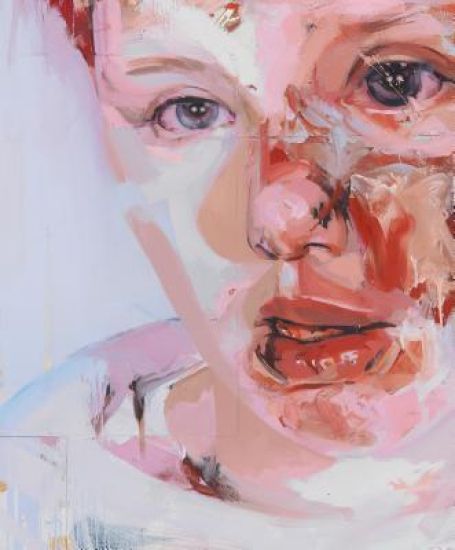
Jenny Saville

Jenny Saville

Richard Calvocoressi

Rizzoli International Publications
2018
sidottu
Thirteen years after her first Rizzoli monograph, British artist Jenny Saville releases this much-anticipated volume--her most comprehensive to date--including many never-before-published paintings. One of the most renowned living figurative painters of our time, Saville has set auction records and her highly sensual canvases invite us to consider the female form in all its glory. Great artists are of their moment, but push boundaries to revitalize our world. The British artist Jenny Saville is best known for painting monumental close-ups of large nude women exposing things that are usually left unshown: flab, fat, bulge. Today, when the body has never mattered more or counted less, Saville is undoubtedly the painter for our times. Saville has specialized in subjects on the margins of society: the obese, the disfigured, and transsexuals; yet under her fluctuating light and painstaking hues and layers, her subjects transcend their strangeness to take on a universal quality. Among artists of her generation, Saville is unusual in her devotion to figurative painting. This much-anticipated volume unites new work with almost all of Saville's paintings and drawings to date, many of them unpublished works. Published in association with Gagosian Gallery, the book also features a complete and illustrated chronology of the artist's career. A conversation with acclaimed American photographer Sally Mann, and essays by art critic Mark Stevens and Gagosian Director, London Richard Calvocoressi complete the volume.
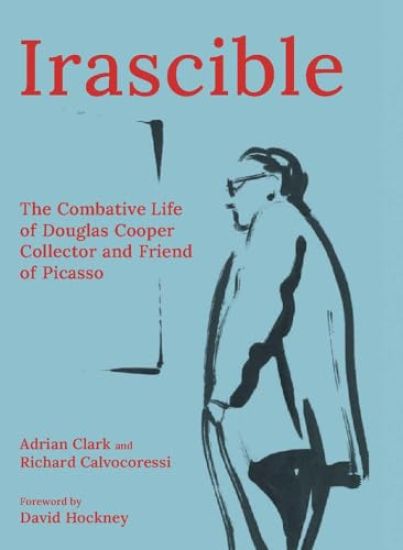
Irascible

Irascible

Adrian Clark; Richard Calvocoressi; David Hockney

YALE UNIVERSITY PRESS
2025
sidottu
A pioneering collector of Cubist art, the English art historian and critic Douglas Cooper was one of the most important—and divisive—figures in the international art world of the 20th century Born into a wealthy family whose money was made in the 19th century in Australia, Douglas Cooper (1911–1984) built up much of his collection of works by Picasso, Braque, Gris, and Léger in the 1930s. He also trained himself to become a respected art historian, his reputation as a scholar resting largely on his catalogue of the Courtauld Collection (1954) and his catalogue raisonné of Juan Gris (1977). He also organised exhibitions of Gauguin, Braque, and two major displays of Cubism. The second of these, The Essential Cubism, co-curated with Gary Tinterow and held at the Tate in 1983, was one of the most remarkable accumulations of Cubist painting, sculpture, and drawings ever brought together. Based on extensive research and packed with new material and fresh interpretations, Irascible focuses on Cooper’s colourful life and significant accomplishments: his financing and directorship of the Mayor Gallery in London as a young man in the 1930s, when he became close to artists such as Francis Bacon, Paul Nash, Henry Moore, Paul Klee, Joan Miró, and Max Ernst; his wartime experiences as an ambulance driver in support of the collapsing French army in 1940; his job as a senior Monuments Man in charge of tracking down Nazi-looted art in Switzerland; his move to the south of France in the early 1950s, taking his collection with him; and his legendary feuds with leading figures and institutions in the British art world. This book is also the definitive account of Cooper’s collecting, art dealing, writing, and curating.
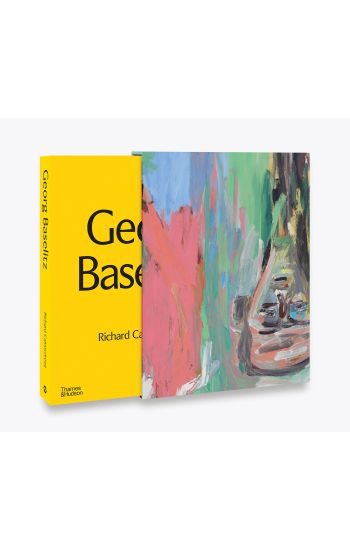
Georg Baselitz

Georg Baselitz

Richard Calvocoressi

Thames Hudson Ltd
2021
sidottu
A prolific artist with a protean output, Georg Baselitz has rethought the conventions of a range of media, predominantly painting and sculpture, over the course of a career of some sixty years. Born in 1938, Baselitz was expelled from art school in East Berlin in 1956 for ‘socio-political immaturity’, and moved to the western half of the city. By the late 1950s, he had rejected the dominant tendencies of both sides of the country and his singular achievement was to reintroduce the figure, compromised and discredited though it was by both Nazism and Communism, into art. By drawing attention to art by ‘outsiders’, such as psychiatric patients, and invoking a Parisian model of existentialist art and literature, Baselitz proposed an alternative European tradition that did not eliminate the human subject. In alluding later to movements in German painting such as Expressionism as well as to artists like Munch, he also consciously rehabilitated the kind of art that was condemned by Hitler as ‘degenerate’. The book follows the development of Baselitz’s unique style from his earliest work through to the most recent creations of his eighth decade. Calvocoressi’s masterful construction of a chronological narrative helps us to evaluate Baselitz’s work in terms of the disruptions of his life – historical upheavals witnessed alongside an astonishing career.With 406 illustrations in colour
Francis Bacon: Couplings

Francis Bacon: Couplings

Martin Harrison; Richard Calvocoressi

Rizzoli International Publications
2020
sidottu
This book highlights a theme that preoccupied Francis Bacon throughout his career: the relationship between two people, both physical and psychological. At its heart are two of the most uninhibited images that Bacon ever painted: Two Figures (1953) and Two Figures in the Grass (1954). After completing these interrelated works, Bacon did not return to the subject until 1967, the year that homosexual acts in private were decriminalized in England and Wales, when he painted Two Figures on a Couch, also featured in this volume. In Bacon s paintings, the human presence is evoked sometimes viscerally, at other times more fleetingly, in the form of a shadow or a blurred, watchful figure. In certain instances, the portrayal takes the form of a composite in which male and female bodily traits are transposed or fused. A number of the works in Couplings were inspired by Bacon s own fraught relationships. Francis Bacon: Couplings features an introductory text by Richard Calvocoressi; a new essay and plate texts by Martin Harrison; and a never-before-published interview with Bacon by Richard Francis and Ian Morrison; as well as studio ephemera and working documents that illuminate Bacon s process.
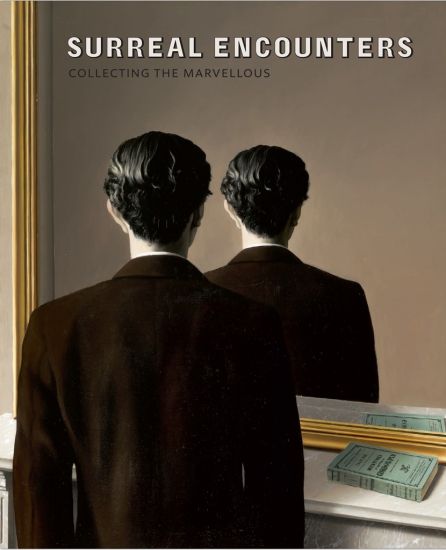
Surreal Encounters: Collecting the Marvellous

Surreal Encounters: Collecting the Marvellous

Dawn Ades; Richard Calvocoressi; Desiree de Chair; Elizabeth Cowling; Hubertus Gassner; Annabelle Gorgen-Lammers; Keith Hartley; Saskia Van-Kampen-Prein; Antony Penrose

National Galleries of Scotland
2016
nidottu
This book brings together over 160 of the finest surrealist artworks by legendary artists including Salvador Dali, Max Ernst, Rene Magritte, Joan Miro and Man Ray. The works hail from the four renowned and extraordinary private collections of Edward James, Roland Penrose, Gabrielle Keiller and Ulla and Heiner Pietzsch, and together offer a superb overview of surrealist art. Ten essays explore the different origins, historical contexts and creative urges behind these collections. Artworks, perhaps more than anything else that one can acquire, are objects of desire and surrealist artworks even more so. The sheer quality of the works acquired (and, in the case of the Pietzsches, still being acquired) is astonishing and, while passionate about their private visions, all the collectors have been mindful of contributing something to the public good. The collections complement each other to an extraordinary degree and allow us to follow some of the artists' careers from beginning to end. By uniting them, exciting new juxtapositions emerge along with a fuller and richer picture of the surrealist movement as a whole. AUTHOR: Dawn Ades has curated numerous international exhibitions on Surrealism and Dada. She is a Fellow of the British Academy, a former trustee of Tate and was awarded a CBE in 2013 for her services to art history. Elizabeth Cowling is Honorary Fellow in History of Art at the University of Edinburgh. She was the principal author of 'Surrealism and After: The Gabrielle Keiller Collection' (1997). Prof Dr Hubertus Gabner is Director of the Hamburger Kunsthalle. Annabelle Gorgen-Lammers is Exhibition Curator at the Hamburger Kunsthalle. Keith Hartley is Chief Curator and Deputy Director at the Scottish National Gallery of Modern Art in Edinburgh. Saskia van Kampen-Prein is Curator of Modern and Contemporary Art at the Museum Boijmans Van Beuningen in Rotterdam. SELLING POINTS: . This book brings together some of the world's finest surrealist artworks from four renowned and extraordinary private collections . Many of the works featured have rarely been seen in public . By bringing together works from these collections, the oeuvres of the artists are presented in a new light and some of their careers seen from beginning to end 200 colour images
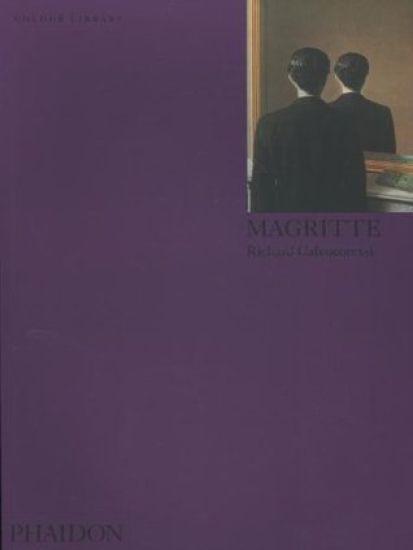
Magritte

Magritte

Richard Calvocoressi

Phaidon Press Ltd
1998
nidottu
The paintings of the Belgian Surrealist René Magritte (1898–1967) have exerted an extraordinary fascination, particularly since the enormous increase in awareness and popularity of his work during the 1960s. Magritte shows us a world of silence and isolation in which familiar objects are altered or juxtaposed in ‘impossible’ combinations in order to create a sense of disorientation and the absurd. Many of his most memorable paintings date from his three prolific years 1927–30, when he lived near Paris and was in close touch with the writer André Breton and other French Surrealists.In his pre-war painting, stylistic concerns were of secondary importance to Magritte, whose main interest was in ideas or propositions about the world; for example, many of his paintings explore the relation between objects and words or between the image of an object and the object itself. He deliberately cultivated a cold, unemotive, ‘style-less’ style. This quality renders the images of violence and macabre sexuality in some of his works all the more disturbing. His own ‘impressionist’ and vache (ugly, crude) pictures of the 1940s have been rediscovered in the last few years by a younger generation of painters and critics keenly responsive to the later work of other masters of parody and allusion such as Picabia and de Chirico.Richard Calvocoressi's highly successful introduction to Magritte was first published in 1979 and revised and enlarged by the addition of notes to the colour plates and many black-and-white illustrations.