Kirjojen hintavertailu. Mukana 12 390 323 kirjaa ja 12 kauppaa.
Kirjailija
Richard Carpenter
Kirjat ja teokset yhdessä paikassa: 14 kirjaa, julkaisuja vuosilta 1994-2025, suosituimpien joukossa Wolves of Winter: from Richard Carpenter's Robin of Sherwood. Vertaile teosten hintoja ja tarkista saatavuus suomalaisista kirjakaupoista.
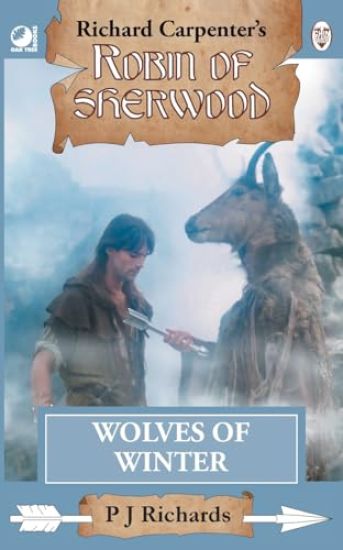
Winter is approaching, and the Sheriff of Nottingham is boasting of his hunts in Sherwood Forest, where Gisburne's pure-bred hounds chase deer for the court's lavish feasts. Into Nottingham Castle sweeps the Baron de Belleme, with a request to pursue a different prey.Meanwhile, Robin is more concerned for Marion, who has fallen into a dangerous fever, than he is about finding food. But soon, an older fear takes hold of the outlaws.The howls of hungry beasts are heard in the forest, and fiery-eyed spectres haunt the dark shadows. Herne's powers are fading and the Wolves of Winter are running...
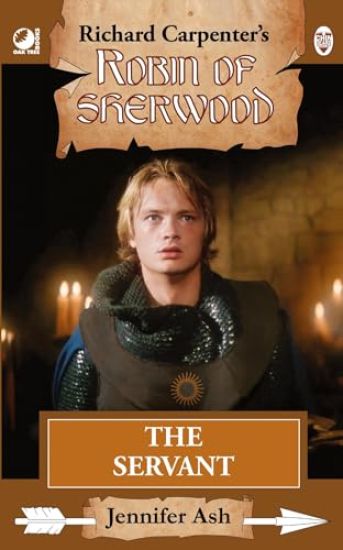
Rumours are circulating that a mysterious order called the Knights of the Apocalypse are gaining power and growing stronger.Jerrard, in the employ of the Earl of Huntingdon whilst working at Nottingham Castle, hears the Captain of the Guard blackmailing Sir Guy of Gisburne.Has Gisburne become a servant of these Knights?If so, Jerrard fears that the earl's greatest secret may well be revealed, and needs to tell the earl's estranged son...Television series Robin of Sherwood (c) HTV/Goldcrest Films & Television 1983. Created by Richard Carpenter, with grateful thanks to his Estate.
A landslide uncovers an unknown cave in Sherwood, the entrance of which Marion and Much squeeze through to explore. Inside, they feel a sense of unease but find a treasure trove of gold coins and a strange black jewel.Outside, a dense fog has appeared and a strange eclipse begins to block out the sun. The Merry Men end up being separated from each other but the call of Marion is strong and each of them seem to have an encounter with her. Yet Marion appears intent on making them confront their worst fears. Is she asking them to embrace a greater good, or a bigger evil?Television series Robin of Sherwood (c) HTV/Goldcrest Films & Television 1983. Created by Richard Carpenter, with grateful thanks to his Estate.
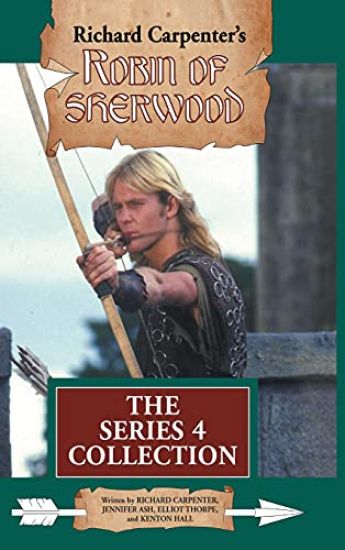
This collection contains six stories from the fourth series of Robin of Sherwood books based on the classic ITV show: WHAT WAS LOSTAfter losing Marion to Holy Orders, Robin spends his waking hours in an increasingly drunken state and the outlaw band are left without a leader. Robin Hood has become a ghost. Meanwhile, Abbot Hugo has cleaned out the family coffers and secured a release for his brother, the Sheriff, from King John's prisons. But the Sheriff isn't convinced that his deadliest enemy has entirely vanished from Sherwood... THE POWER OF THREEWhy had Herne called Marion to his cavern and not Robin? And why was she afraid to tell him what the Lord of the Trees had shown her? Forced to face his personal nightmares and his darkest secret, the Hooded Man needs his friends more than ever but the outlaws are afraid... and no one knows who to trust. To make matters worse, an old enemy is stalking Sherwood - but which one? TO HAVE AND TO HOLDAfter returning from fighting in Normandy, Sir Guy of Gisburne has reluctantly returned to the Sheriff's employ but his loyalty is about to be tested. The Sheriff's new plan to capture the outlaws requires Gisburne's agreement and Abbot Hugo's committed involvement. Meanwhile, the merry band of Sherwood outlaws are preparing for a long-awaited set of nuptials to take place in Sherwood Forest... QUEEN OF THE BLACK SUNA landslide uncovers an unknown cave in Sherwood, which Marion and Much squeeze through the entrance of to explore. Inside, they feel a sense of unease but find a treasure trove of gold coins and a strange black jewel. Outside, a dense fog has appeared, a strange eclipse begins to block out the sun and the Merries end up being separated from each other... THE SERVANT Rumours are circulating that a mysterious order called the Knights of the Apocalypse are gaining power and growing stronger. After Jerrard hears the Captain of the Guard blackmailing Sir Guy of Gisburne in relation to these Knights, he fears that the Earl's greatest secret might be revealed... THE KNIGHTS OF THE APOCALYPSEEngland in the reign of King John and a dark force is intent on conquest. Only the hooded man can stand against it... The church lies impotent at the mercy of the Pope and the interdict against the kingdom. With the people living in fear and a series of disappearances that threaten the very fabric of noble society, Robin 'i' the hood and his band of outlaws must race to rescue the past so that the future may be protected...
The identity of Robin Hood has been questioned many times since the Outlaw of Sherwood first sprang to fame in the twelfth century. No two authorities seem able to agree as to his origins, antecedents, or even whether or not he was a historical personage or a mythical figure. Historians, both amateur and professional, have for years been bringing out new books in which they claim to have found ‘the real Robin Hood’, but his identity remains clouded. More recent studies have sought to push the boundaries of the story further out into recorded time – seeking Robin Hood among the records of government and law enforcement, in the ballads of the twelfth to fourteenth centuries, and in the folk memory of the people of Britain. For them, Robin is a product of the ballad-maker’s muse, or a literary fabrication based on the lives and deeds of several outlaws or the garbled memory of an actual person whose real life bore little or no resemblance to the romanticised songs of the ballad-makers. This is the only contemporary book to fully explore the mythology of Robin Hood rather than concentrating on the human identity of the famous outlaw. It ties Robin to the ancient archetype of the Green Man, the lore and legends of the Faery race, to the possible Eastern influence of the English Mummers’ plays, and suggests the real identities of several of the Merry Men.
This revised and updated guide to the environmental economics of development projects demonstrates how the environmental impacts of projects can be translated into monetary values. The theoretical bases are examined, and the techniques themselves given detailed exposition, supported by extensive case studies illustrating a wide range of applications. The text should become a useful complement to all standard forms of project analysis.
The identity of Robin Hood has been questioned many times since the Outlaw of Sherwood first sprang to fame in the twelfth century. No two authorities seem able to agree as to his origins, antecedents, or even whether or not he was a historical personage or a mythical figure. Historians, both amateur and professional, have for years been bringing out new books in which they claim to have found ‘the real Robin Hood’, but his identity remains clouded. More recent studies have sought to push the boundaries of the story further out into recorded time – seeking Robin Hood among the records of government and law enforcement, in the ballads of the twelfth to fourteenth centuries, and in the folk memory of the people of Britain. For them, Robin is a product of the ballad-maker’s muse, or a literary fabrication based on the lives and deeds of several outlaws or the garbled memory of an actual person whose real life bore little or no resemblance to the romanticised songs of the ballad-makers. The continuing popularity of the Robin Hood mythos in modern dress through film, TV and novelisation shows how deeply the archetype is embedded. With no less than four new feature films in production at the moment, Robin Hood has never been more in the public eye. This is the only contemporary book to fully explore the mythology of Robin Hood rather than concentrating on the human identity of the famous outlaw. It ties Robin to the ancient archetype of the Green Man, the lore and legends of the Faery race, to the possible Eastern influence of the English Mummers’ plays, and suggests the real identities of several of the Merry Men.
This revised and updated guide to the environmental economics of development projects demonstrates how the environmental impacts of projects can be translated into monetary values. The theoretical bases are examined, and the techniques themselves given detailed exposition, supported by extensive case studies illustrating a wide range of applications. The text should become a useful complement to all standard forms of project analysis.




![A New Play Call'd the Pragmatical Jesuit Newleven'd. a Comedy. [With a Portrait.]](/covers/9781241144937.jpg)