Kirjojen hintavertailu. Mukana 12 595 353 kirjaa ja 12 kauppaa.
Kirjailija
Richard Chamberlain
Kirjat ja teokset yhdessä paikassa: 14 kirjaa, julkaisuja vuosilta 2004-2026, suosituimpien joukossa Sky Blue Fall. Vertaile teosten hintoja ja tarkista saatavuus suomalaisista kirjakaupoista.
Sky Blue Fall starts with a football club confident of a swift return to the Premier League and ends with one clinging on to its very existence by its fingertips. In the summer of 2001, Coventry City were preparing for life in the second tier after relegation. The drop had ended their unbroken 34 years in the top flight. Fans were hopeful it would be just a one-season stay, but in the seven years that followed, the club would rarely flirt with promotion. Instead, they would go through seven managers, endure delay after delay in their move to a brand new stadium and come within minutes of entering administration. Sky Blue Fall tells the tale of a football club that lurched from hope to despair but ultimately survived to fight another day. A club that enjoyed cup giant-killings and the arrival of big-name managers but still found themselves scrapping for survival. The story is told through interviews with key figures from the time, including managers Iain Dowie and Eric Black and dozens of players, such as Michael Doyle, Michael Mifsud, Richard Shaw and many more.
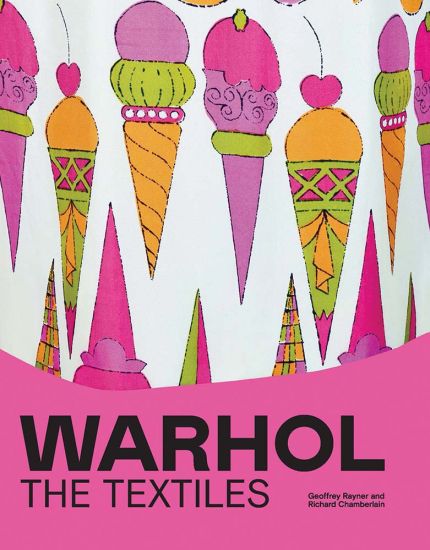
The first publication devoted to the textile designs of one of the twentieth century’s greatest artists, showcasing a rarely discussed aspect of the Pop Art superstar’s career Andy Warhol (1928–1987), a giant of twentieth century art, is known to most people for his iconic images of soup cans, Coke bottles, and Marilyn Monroe. Before his meteoric rise to fame in the early 1960s as a Pop Art superstar, Warhol was a highly successful commercial artist in New York. The late Matt Wrbican, former chief archivist of the Warhol Museum in Pittsburgh, once said “there are very few stories left to tell about Warhol, but textiles is one of them”. This is the first book devoted to the commercial textile designs of this leading figure in the history of art. With stunning new photography throughout, including unpublished images of newly discovered textiles, the book sheds new light on a previously undocumented but important aspect of Warhol’s oeuvre. Featuring over 30 different textiles, from ice cream sundaes to acrobatic clowns, Warhol: The Textiles offers a unique record of the beginnings of one of the twentieth century’s greatest artists. Published in association with the Fashion and Textile Museum Exhibition Schedule: Fashion and Textile Museum, London (March 31–September 10, 2023)
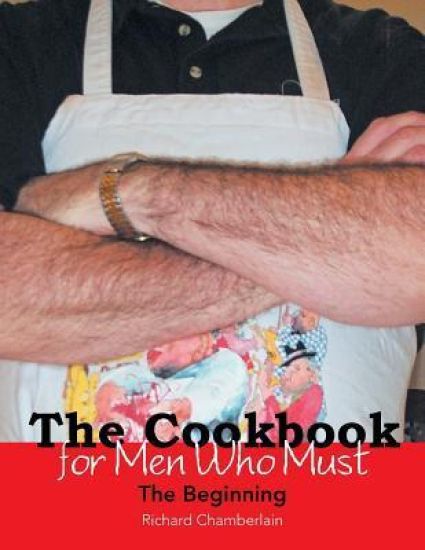
Men should be able to prepare some basic meals either for their family or for themselves. My father - God rest his soul - could not boil water burning it. He could make almost anything out of sheet metal but could not make any kind of food.Does this sound like a man you know?"Men, with the recipes in the cookbook, with relatively little effort you will be able to prepare some basic meals and snacks for yourself, for your family, for your buddies, or at least to impress a date. There's nothing really fancy in here - just good food that everybody likes."Ladies, if you use it, we won't tell anybody.
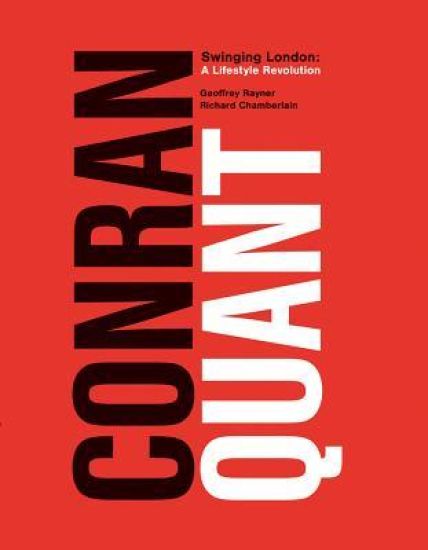
"There have been volumes written on and by Terence Conran and Mary Quant, but this is the first time they have been placed together in a book. And it works." - Colin McDowell, The Times "It is given to a fortunate few to be born at the right time, in the right place, with the right talents. In recent fashion there have been three: Chanel, Dior and Mary Quant." - Ernestine Carter. Transporting you back to London at the height of the Swinging Sixties, this book provides vital context for two of the biggest and boldest names in 'Pop' fashion: Mary Quant, alleged mother of the miniskirt, and Terence Conran, the entrepreneur behind the new wave of 'lifestyle' stores. Friends, associates and allies in design, Quant and Conran stood at the head of an informal but influential bohemian group who steered the rudder of style during the Pop era. 'The Chelsea Set' resist definition; there was no comprehensive members list. Conran/Quant: Swinging London - A Lifestyle Revolution explores the contributions of designers and artists from Laura and Bernard Ashley to Eduardo Paolozzi, Nigen Henderson and Alexander Plunket Greene, all of whom were essential generators of Sixties Style.
When hospitals began implementing their electronic medical records/electronic health records systems (EMR/HER) the pharmaceutical companies that were conducting clinical trials at those hospitals wanted to sue the date from those systems instead of having the hospitals enter the data in their EHR systems and also in the study data entry system. However, the FDA regulations would require that the hospital systems be "validated". The hospitals and the companies developing the systems argued that was "over-regulation." HIMSS published their Developer Code of Conduct where they said instead they would use Quality Management techniques.This book covers how to use Quality Management (ISO 9001) to develop computer systems, specifically EMR systems. It gives a basic introduction to how to implement computer systems. It also covers the topic of compliance because the hospitals are required to comply with regulations other than FDS regulations.The book also discusses the topics of risk management and conducting audits, both of which are part of ISO 9001 quality management of computer systems. The book is designed to give the reader an introduction to the things you have to do when implementing a computer system that has to satisfy some standards and where the accuracy of the information could impact the accuracy of a person’s medical treatment.
When hospitals began implementing their electronic medical records/electronic health records systems (EMR/HER) the pharmaceutical companies that were conducting clinical trials at those hospitals wanted to sue the date from those systems instead of having the hospitals enter the data in their EHR systems and also in the study data entry system. However, the FDA regulations would require that the hospital systems be "validated". The hospitals and the companies developing the systems argued that was "over-regulation." HIMSS published their Developer Code of Conduct where they said instead they would use Quality Management techniques.This book covers how to use Quality Management (ISO 9001) to develop computer systems, specifically EMR systems. It gives a basic introduction to how to implement computer systems. It also covers the topic of compliance because the hospitals are required to comply with regulations other than FDS regulations.The book also discusses the topics of risk management and conducting audits, both of which are part of ISO 9001 quality management of computer systems. The book is designed to give the reader an introduction to the things you have to do when implementing a computer system that has to satisfy some standards and where the accuracy of the information could impact the accuracy of a person’s medical treatment.
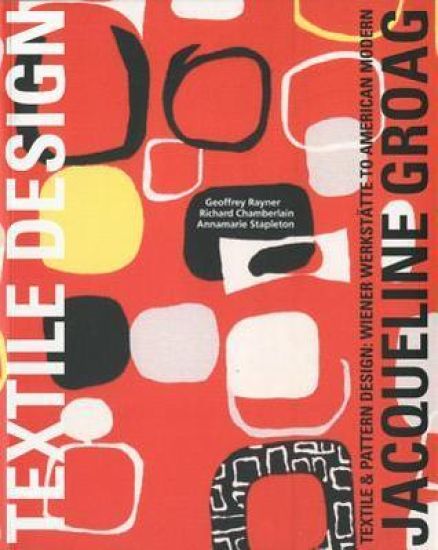
Jacqueline Groag was probably the most influential textile designer in Britain in the post Second World War era. Although originally Czech, she studied textile and pattern design in Austria in the 1920s. During the late twenties and early thirties she designed textiles for the Wiener Werkstatte in Vienna and subsequently designed and produced unique hand printed lengths of fabrics for many of the leading Parisian fashion houses, including Chanel, Lanvin, Worth, Schiaparelli and Paul Poiret. She was awarded a gold medal for textile design at the Milan Triennale in 1933 and another gold medal for printed textiles at the Paris World Fair in 1937. Jacqueline was not only a serious and highly respected contender in the field of textile and pattern design but, with her husband, the Modernist architect Jacques Groag, was also deeply immersed in the intellectual life of Vienna. In 1938 the sophisticated world of Jacques and Jacqueline was brutally shattered when the Anschluss, the political unification of Austria and Germany, occurred and the German army entered Vienna. Faced with the actuality of the Nazi terror the Groags, who were Jewish, fled to Czechoslovakia and their home city of Prague. After a brief respite they were once more forced to flee in 1939, this time to London. On their arrival in England they were welcomed and championed by leading members of the British design fraternity, amongst whom were Sir Gordon Russell, the doyen of British architects Sir Charles Reilly and Jack Pritchard, founder of the modernist design company, Isokon. Much of the Contemporary style of the textiles and wallpapers shown at the 1951 Festival of Britain were heavily indebted to Jacqueline's influential designs of the 1940s. Many examples of her work were featured prominently at the Festival and from then on she became a major influence on pattern design internationally. She developed a large client group in the United States during the fifties and sixties, amongst whom were Associated American Artists, Hallmark Cards and American Greetings Ohio. In the later 1950s and throughout the 1960s she became increasingly involved with Sir Misha Black and the Design Research Unit (D.R.U.), working on the interiors for boats and planes and trains, particularly the design of textiles and plastic laminates for BOAC and British Rail. One of her last commissions from Misha Black, in the mid-seventies was a distinctive moquette for London Transport, for seating on both buses and tube trains. Her work and influence did not just extend to the large corporations and exclusive couturiers but was familiar to the general public through stores and companies such as John Lewis, Liberty of London, David Whitehead, Edinburgh Weavers, Sandersons, Warerite and Formica. Her remarkable achievement finally received public recognition in 1984 when, at the age of 81, she was made an R.D.I. - a Royal Designer for Industry - the ultimate accolade for any designer in Britain.
POP! Design, Culture, Fashion 1955-1976 explores the impact of music, art and personality on the development of the design and fashion of the times. Published to accompany an exhibition at the Fashion and Textile Museum, London, July - October 2012. Pop! Design, Culture, Fashion 1956-1976 covers all aspects of Pop design in Britain and America, from early rock 'n' roll to punk. It looks at record covers and packaging designs by Pop artists such as Andy Warhol, Peter Blake and Richard Hamilton, and the work of fashion designers such as Mary Quant, Barbara Hulanicki from Biba, Vivienne Westwood and John Stephen of Carnaby Street fame, as well as their contemporaries in America such as Betsey Johnson of Paraphernalia. Pop graphics are also covered, from the psychedelic posters of Alan Aldridge, and the design collective 'Hapdash and the Coloured Coat' to rock posters from San Francisco and the west coast of America. There are also reproductions of rarely-seen underground magazines such as Oz, Gandalf's Garden, l' Actuel and the International Times. The ephemeral nature of much of Pop design is explored - from paper furniture and 'throwaway' paper dresses, to longer-lasting trends such as Union Jack clothing, metal badges, machine-embroidered denim, printed t-shirts and tin badges. The book also looks at the work of 'Them', an influential group of 'Baroque Pop' designers who coalesced around Zandra Rhodes in the early 70s, and ends with the anti-design of punk fashion by Vivienne Westwood, and the self-proclaimed 'horrible by design' punk graphics of Jamie Reid. Whilst there have been innumerable books on the Swinging Sixties, and on Pop Art, this is the first book to look at Pop design over a twenty year span, and to examine the interconnected nature of so many elements of the phenomenon such as books and magazines, music, film, fashion and graphic art. It is also unique in that the illustrations are not sourced from the usual magazine archive images, but are photographs of the artefacts themselves, from Elton John's waistcoat, embroidered with suns, stars and rainbows, to Twiggy coathangers, psychedelic book covers and every teenager's must-have item: 'Glo Glo boots for Go Go girls'. Geoff Rayner and Richard Chamberlain are experts in post-war design, specialising in the history of textiles. They have curated a number of exhibitions, and written (with Annamarie Stapleton) several books most recently Artists' Textiles 1945-76ISBN: 9781851496297 (published by Antique Collectors' Club, 2012).
This book provides a radical reading of Edmund Spenser and argues for a re-orientation in Renaissance criticism. It begins by critiquing the new historicist hegemony in Spenser studies, and, through a series of detailed readings, proposes alternative strategies for interpreting the texts of this pivotal Renaissance author which include a politicised 'new aestheticism', eco-criticism, and pastoral theory. Unlike most non-new historicist studies, Radical Spenser argues that Spenser's texts demand a reading at once political and sensitive to aesthetic surprise. Following a polemical Introduction which establishes Spenser's centrality to key problems in contemporary Renaissance studies, Richard Chamberlain shows that William Empson's ideas about pastoral are vital for an understanding of Spenser and early modern literature. The following chapters discuss Spenser's use, in The Shepheardes Calender, of a distinctively 'pastoral' logic to problematise the relationship between literature and criticism; the ways in which this method informs The Faerie Queene; the approach, in the central books of the epic, to textual and state authority; and the final books' exploration of political experience. Finally, by demonstrating the complexity of the critically neglected prose treatise A View of the State of Ireland, the book offers an eco-critical perspective on Spenser's place in the natural and cultural environments of sixteenth-century Ireland. Key Features * Theoretical intervention encouraging debate and analysis in Renaissance studies. * Close analysis of key passages offers a new understanding of how Spenser's writing works. * Broad coverage including readings of Spenser's major poems and his prose dialogue on Ireland.
This book provides a radical reading of Edmund Spenser and argues for a re-orientation in Renaissance criticism. It begins by critiquing the new historicist hegemony in Spenser studies, and, through a series of detailed readings, proposes alternative strategies for interpreting the texts of this pivotal Renaissance author which include a politicised 'new aestheticism', eco-criticism, and pastoral theory. Unlike most non-new historicist studies, Radical Spenser argues that Spenser's texts demand a reading at once political and sensitive to aesthetic surprise. Following a polemical Introduction which establishes Spenser's centrality to key problems in contemporary Renaissance studies, Richard Chamberlain shows that William Empson's ideas about pastoral are vital for an understanding of Spenser and early modern literature. The following chapters discuss Spenser's use, in The Shepheardes Calender, of a distinctively 'pastoral' logic to problematise the relationship between literature and criticism; the ways in which this method informs The Faerie Queene; the approach, in the central books of the epic, to textual and state authority; and the final books' exploration of political experience. Finally, by demonstrating the complexity of the critically neglected prose treatise A View of the State of Ireland, the book offers an eco-critical perspective on Spenser's place in the natural and cultural environments of sixteenth-century Ireland. Key Features * Theoretical intervention encouraging debate and analysis in Renaissance studies. * Close analysis of key passages offers a new understanding of how Spenser's writing works. * Broad coverage including readings of Spenser's major poems and his prose dialogue on Ireland.
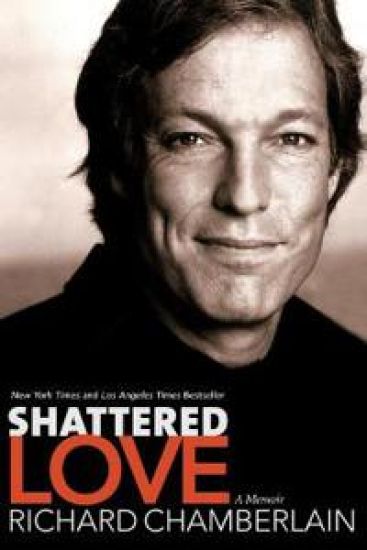
One of the most beloved actors of our time shares the New York Times bestselling story of how he learned to live with an open heart. Early in his career, shortly after rising to fame as television's Dr. James Kildare, Richard Chamberlain took on the role of Hamlet on the English stage. The play contained a lesson the actor has remembered throughout his life: "To thine own self be true." But for Chamberlain these were not always easy words to live by. Even as he won the adoration of millions of fans, this handsome, charming, debonair leading man seriously questioned his own self-worth, living a life haunted by personal insecurity despite decades of immense popular success in memorable roles in Dr. Kildare, The Thorn Birds, Shogun, and other television dramas. Finally, with the help of friends and guidance from spiritual teachers, including Krishnamurti, Chamberlain began the sometimes painful but deeply rewarding process of reconciling his deepest self with his public persona. Now, in Shattered Love, he poignantly recounts his lifelong struggle to find happiness. Tracing a fascinating path through his meteoric rise to success, he chronicles his struggle to come to terms with his own imperfections, his growing desire to be honest about his sexual orientation, and his yearning to live with an open heart. And along the way he imparts the lessons he has learned about overcoming our own self-imposed obstacles to happiness: the importance of listening to our own instincts instead of listening only to others, not demanding the impossible of ourselves, and allowing ourselves to explore negative feelings in order to move forward.