
Kirjailija
Richard Cimino
Kirjat ja teokset yhdessä paikassa: 6 kirjaa, julkaisuja vuosilta 2002-2026, suosituimpien joukossa Micro-City. Vertaile teosten hintoja ja tarkista saatavuus suomalaisista kirjakaupoista.
6 kirjaa
Kirjojen julkaisuhaarukka 2002-2026.
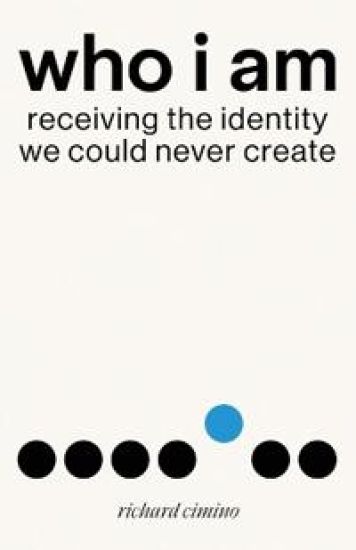
Who Am I?Consciously or unconsciously, every human being asks that question. And every day, every culture is busy selling and supplying identities. The prompts come fast, hard, and loud from virtually every direction. You are what you do. You are what you have. You are who you know. You are where you live. You are what you drive. You are what you wear. Those are the things that fill our existential portfolios. We have all deeply invested in things that by their very nature can never deliver our true identity. But here's the good news There is a true answer to the question.This book is a journey through the first three chapters of the book of Ephesians. It looks at who we were created to be and how we lost ourselves by declaring our independence from our Creator. The bulk of the book unpacks the way Jesus restored us to our true identity and how staggering that identity is.It is my deepest desire that this book will cause you to see the infinite worth of Jesus and allow you to love Him supremely and live for Him in the reality and security of who you are because of Him.
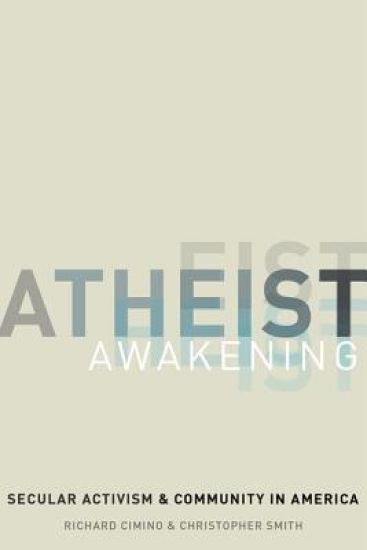
Atheist Awakening
Richard Cimino; Christopher Smith; Martin Marty
Oxford University Press Inc
2015
sidottu
Surveys over the last twenty years have seen an ever-growing number of Americans disclaim religious affiliations and instead check the "none" box. In the first sociological exploration of organized secularism in America, Richard Cimino and Christopher Smith show how one segment of these "nones" have created a new, cohesive atheist identity through activism and the creation of communities. According to Cimino and Smith, the new upsurge of atheism is a reaction to the revival of religious fervor in American politics since 1980. Feeling overlooked and underrepresented in the public sphere, atheists have employed a wide variety of strategiessome evangelical, some based on identity politicsto defend and assert themselves against their ideological opponents. These strategies include building and maintaining communities, despite the absence of the kinds of shared rituals, texts, and laws that help to sustain organized religions. Drawing on in-depth interviews with self-identified atheist, secularist, and humanist leaders and activists, as well as extensive observations and analysis of secular gatherings and media, Cimino and Smith illustrate how atheists organize and align themselves toward common goals, and how mediaparticularly web-based mediahave proven invaluable in connecting atheists to create a powerful virtual community. Cimino and Smith show that, in addition to the Internet, secularists draw on new forms of ritual to build their burgeoning community. This groundbreaking study will be essential reading for anyone seeking to understand the growing atheist movement in America.

Mystical Science and Practical Religion examines the religious discourse employed by Muslim, Hindu, and Sikh applied science professionals and students, mainly engineers and Information Technology (IT) workers. Although applied scientists, especially immigrants to the United States, have shown high rates of religiosity, there have been few studies of this subject. Based on interviews with forty-five professionals and students, Cimino finds that although they are from different faiths, these applied scientists share a common discourse that blends religion and science. They each view their religions as the “most scientific.” Their work and study reshapes how they practice and conceptualize their faiths, though not in the expected directions of secularization and fundamentalism. This book provides a unique look at how the much contested fields of science and religion interact in real life.
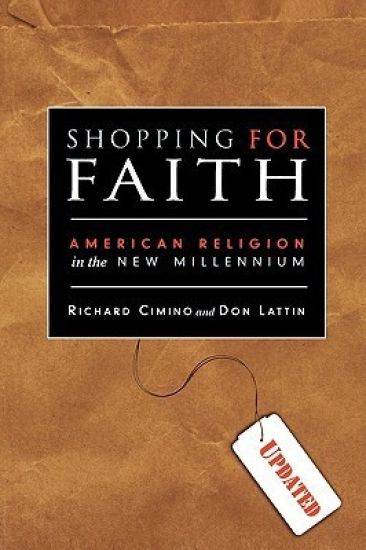
Shopping for Faith is as good as it gets in assessing the U.S. religion scene at millennium's end. Cimino and Lattin present a picture of multiple trends headed in often contradictory directions. -- Robert Ellwood, emeritus professor of religion, University of Southern California American religion flourishes in a consumer culture, and presents us with a bewildering array of choices as we navigate the shopping mall of faith. The authors identify dozens of trends which will shape American religion in the next century and bring together the latest research and intimate portraits of Americans describing their beliefs, their religious heritage, and their spiritual search. With warmth and style the authors document how consumerism shapes religious practice -- from conservative evangelical worship to the most esoteric New Age workshop.