Kirjailija
Richard Cook
Kirjat ja teokset yhdessä paikassa: 17 kirjaa, julkaisuja vuosilta 2007-2015, suosituimpien joukossa The Penguin Jazz Guide. Vertaile teosten hintoja ja tarkista saatavuus suomalaisista kirjakaupoista.
17 kirjaa
Kirjojen julkaisuhaarukka 2007-2015.
Richard Cook and Brian Morton's Penguin Jazz Guide: The History of the Music in 1001 Best Albums is an indispensible guide to the recordings that every fan should know. Richard Cook and Brian Morton's Penguin Guide to Jazz Recordings is firmly established as the world's leading guide to the music. In this book, Brian Morton has picked out 1001 essential recordings from their acclaimed guide, adding new information, revising and reassessing each entry, and showing how these key pieces tell the history of the music - and with it the history of the twentieth century. These are the essential albums that that all true jazz fans should own, or - at the very least - have listened to, from Kind of Blue to lesser-known classics and more surprising choices. Full of fascinating updated biographical information, new quotes and interviews and, of course, highly opinionated and wittily trenchant critical reviews, the result is an endlessly browsable companion that will prove required reading for aficionados and jazz novices alike. 'One of the great books of recorded jazz; the other guides don't come close' Irish Times 'It's the kind of book that you'll yank off the shelf to look up a quick fact and still be reading two hours later' Fortune 'The leader in its field ... If you own only one book on jazz, it really should be this one' International Record Review 'Indispensable and incomparable' NME Brian Morton is a freelance writer and broadcaster who for many years presented Radio 3's jazz magazine Impressions and In Tune. Richard Cook (1957-2007) was formerly editor of The Wire and edited Jazz Review. He contributed to many other publications, including the New Statesman and his books included Richard Cook's Jazz Encyclopaedia and It's About That Time: Miles Davis on Record.

Oxford Night Caps - Being a Collection of Receipts for Making Various Beverages Used in the University
Richard Cook
Read Books
2015
pokkari
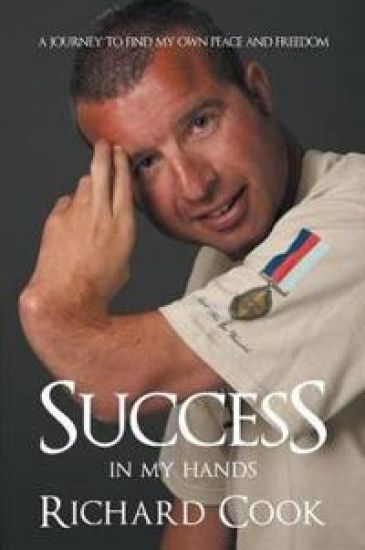
This book is part of a GBP1 million fundraising journey for Help for Heroes. The GBP1 Million target is my way of saying thank you to the Armed Forces for the opportunities and adventures that came from being connected with them. My father is ex-army (Royal Engineers) with postings to Malta, Germany (Berlin and Willich), the island of St Helena (South Atlantic Ocean), and Cyprus when I was a child. For twenty-five to thirty years, I had anxiety, depression and panic attacks related to how I viewed my arms. In 2006, I went to Harley Street, London, for help with changing my thinking patterns to live a more peaceful and happier life. Now with a sense of peace and freedom from my past, I am fundraising for Help for Heroes. If you wish to support me with this challenge my fundraising webpage is: www.bmycharity.com/successinmyhands.
The World Color Survey
Paul Kay; Brent Berlin; Luisa Maffi; William R. Merrifield; Richard Cook
Centre for the Study of Language Information
2011
nidottu
The 1969 publication of Brent Berlin and Paul Kay's "Basic Color Terms" proved explosive. Contrary to the then-popular doctrine of random language variation, Berlin and Kay's multilingual study of color nomenclature indicated a cross-cultural and almost universal pattern in the selection of colors that received abstract names in each language. After four decades in print, "Basic Color Terms" now has a sequel: in this book, the authors authoritatively extend the original survey, studying 110 additional unwritten languages in detail and in situ. The results are presented with charts showing the overall palette of color terms within each language, as well as the levels of agreement among speakers.
Oxford Night Caps: A Collection of Recipes for Making Various Cups, Beverages, and Cocktails Used in the University
Richard Cook
Kalevala Books
2011
nidottu
Behind Human Error
David Woods; Sidney Dekker; Richard Cook; Leila Johannesen; Nadine Sarter
Ashgate Publishing Limited
2010
nidottu
Human error is cited over and over as a cause of incidents and accidents. The result is a widespread perception of a 'human error problem', and solutions are thought to lie in changing the people or their role in the system. For example, we should reduce the human role with more automation, or regiment human behavior by stricter monitoring, rules or procedures. But in practice, things have proved not to be this simple. The label 'human error' is prejudicial and hides much more than it reveals about how a system functions or malfunctions. This book takes you behind the human error label. Divided into five parts, it begins by summarising the most significant research results. Part 2 explores how systems thinking has radically changed our understanding of how accidents occur. Part 3 explains the role of cognitive system factors - bringing knowledge to bear, changing mindset as situations and priorities change, and managing goal conflicts - in operating safely at the sharp end of systems. Part 4 studies how the clumsy use of computer technology can increase the potential for erroneous actions and assessments in many different fields of practice. And Part 5 tells how the hindsight bias always enters into attributions of error, so that what we label human error actually is the result of a social and psychological judgment process by stakeholders in the system in question to focus on only a facet of a set of interacting contributors. If you think you have a human error problem, recognize that the label itself is no explanation and no guide to countermeasures. The potential for constructive change, for progress on safety, lies behind the human error label.
Behind Human Error
David Woods; Sidney Dekker; Richard Cook; Leila Johannesen; Nadine Sarter
Ashgate Publishing Limited
2010
sidottu
Human error is cited over and over as a cause of incidents and accidents. The result is a widespread perception of a 'human error problem', and solutions are thought to lie in changing the people or their role in the system. For example, we should reduce the human role with more automation, or regiment human behavior by stricter monitoring, rules or procedures. But in practice, things have proved not to be this simple. The label 'human error' is prejudicial and hides much more than it reveals about how a system functions or malfunctions. This book takes you behind the human error label. Divided into five parts, it begins by summarising the most significant research results. Part 2 explores how systems thinking has radically changed our understanding of how accidents occur. Part 3 explains the role of cognitive system factors - bringing knowledge to bear, changing mindset as situations and priorities change, and managing goal conflicts - in operating safely at the sharp end of systems. Part 4 studies how the clumsy use of computer technology can increase the potential for erroneous actions and assessments in many different fields of practice. And Part 5 tells how the hindsight bias always enters into attributions of error, so that what we label human error actually is the result of a social and psychological judgment process by stakeholders in the system in question to focus on only a facet of a set of interacting contributors. If you think you have a human error problem, recognize that the label itself is no explanation and no guide to countermeasures. The potential for constructive change, for progress on safety, lies behind the human error label.
Narrative Therapy is an approach to counseling and community work that is having increasing influence in the helping field internationally. As well, the concept of narrative has become increasingly utilized in therapy, spirituality, organizational psychology and theology.This text is written for counseling practitioners, psychologists, pastors, social workers and chaplains who desire to integrate spirituality in their professional practice. The book presents a conversation between Christian spirituality and Narrative ideas demonstrating the effectiveness of Narrative Therapy in transformational work. The book is edited by two lecturer/practitioners who both lead counselor education faculties. Other contributors to the book are lecturers and therapists who are integrating these ideas in their practice in the counseling room and the classroom. Philosophical difficulties are discussed and practical applications are offered for using Narrative Therapy in a range of contexts.
Richard Cook’s Jazz Encyclopedia is not merely an A-Z guide to the artists and bands who have shaped jazz, but it also tracks the history of jazz and its changing styles. This is a wonderfully accessible work. Richard Cook's passion for jazz and his strongly held opinions make this the liveliest and most trenchantly witty encyclopedia you'll have read. Whether you're trying to find out why Louis Armstrong was called Satchmo (his nickname as a kid was Satchelmouth), what bebop is, or the difference between Gil Evans and Bill Evans – this book has all the answers.
It's about That Time: Miles Davis on and Off Record
Richard Cook
Oxford University Press
2007
sidottu
An engaging portrait of the life and work of jazz great Miles Davis traces his career through the window of fourteen important albums recorded by Davis, illuminating each in terms of their contribution to Davis's evolution as a musician, composer, and group leader, as well as relating them to wider currents in contemporary music and the events in Davis's life.