Kirjojen hintavertailu. Mukana 12 299 208 kirjaa ja 12 kauppaa.

Kirjailija

Richard Coyne

Kirjat ja teokset yhdessä paikassa: 12 kirjaa, julkaisuja vuosilta 2005-2025, suosituimpien joukossa Interpretation in Architecture. Vertaile teosten hintoja ja tarkista saatavuus suomalaisista kirjakaupoista.

12 kirjaa

Kirjojen julkaisuhaarukka 2005-2025.

AI and Language in the Urban Context

AI and Language in the Urban Context

Richard Coyne

TAYLOR FRANCIS LTD
2025
nidottu
In a world influenced increasingly by artificial intelligence (AI), the city emerges as a dynamic hub of digital conversations. AI and Language in the Urban Context offers a novel exploration of how AI, particularly large language models (LLMs), is transforming urban environments. Moving beyond the typical technological narratives, this book draws on the author’s unique expertise in design, semiotics and hermeneutics to present a critical cultural perspective on AI’s role in the city.Focusing on the intersection of urban theory and AI, the book reveals how conversational AI is reshaping social interactions, decision-making processes, and media in urban spaces. By merging practical knowledge of AI algorithms with an understanding of urban practices, the author highlights the opportunities and challenges AI presents for modern cities.This book is essential for anyone interested in the future of urban living. It provides a deep dive into the technical, social and cultural implications of AI in cities, offering practical examples and philosophical insights. Readers will gain a comprehensive understanding of how AI is influencing the design, governance and dynamics of urban life in the digital age.The Open Access version of this book, available at www.taylorfrancis.com, has been made available under a Creative Commons [Attribution-Non Commercial-No Derivatives (CC-BY-NC-ND) 4.0 license.
AI and Language in the Urban Context

AI and Language in the Urban Context

Richard Coyne

TAYLOR FRANCIS LTD
2025
sidottu
In a world influenced increasingly by artificial intelligence (AI), the city emerges as a dynamic hub of digital conversations. AI and Language in the Urban Context offers a novel exploration of how AI, particularly large language models (LLMs), is transforming urban environments. Moving beyond the typical technological narratives, this book draws on the author’s unique expertise in design, semiotics and hermeneutics to present a critical cultural perspective on AI’s role in the city.Focusing on the intersection of urban theory and AI, the book reveals how conversational AI is reshaping social interactions, decision-making processes, and media in urban spaces. By merging practical knowledge of AI algorithms with an understanding of urban practices, the author highlights the opportunities and challenges AI presents for modern cities.This book is essential for anyone interested in the future of urban living. It provides a deep dive into the technical, social and cultural implications of AI in cities, offering practical examples and philosophical insights. Readers will gain a comprehensive understanding of how AI is influencing the design, governance and dynamics of urban life in the digital age.The Open Access version of this book, available at www.taylorfrancis.com, has been made available under a Creative Commons [Attribution-Non Commercial-No Derivatives (CC-BY-NC-ND) 4.0 license.
Mood and Mobility

Mood and Mobility

Richard Coyne

MIT PRESS LTD
2024
pokkari
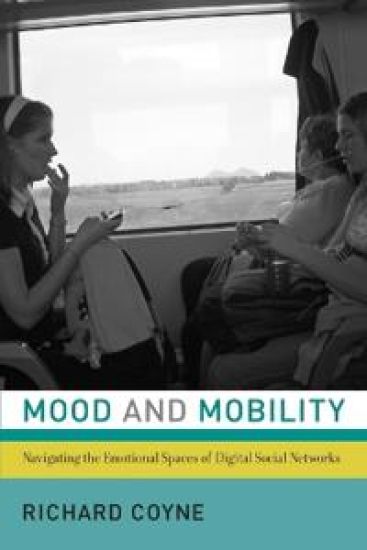
An argument that as we engage with social media on our digital devices we receive, modify, intensify, and transmit moods. We are active with our mobile devices; we play games, watch films, listen to music, check social media, and tap screens and keyboards while we are on the move. In Mood and Mobility, Richard Coyne argues that not only do we communicate, process information, and entertain ourselves through devices and social media; we also receive, modify, intensify, and transmit moods. Designers, practitioners, educators, researchers, and users should pay more attention to the moods created around our smartphones, tablets, and laptops. Drawing on research from a range of disciplines, including experimental psychology, phenomenology, cultural theory, and architecture, Coyne shows that users of social media are not simply passive receivers of moods; they are complicit in making moods. Devoting each chapter to a particular mood--from curiosity and pleasure to anxiety and melancholy--Coyne shows that devices and technologies do affect people's moods, although not always directly. He shows that mood effects are transitional; different moods suit different occasions, and derive character from emotional shifts. Furthermore, moods are active; we enlist all the resources of human sociability to create moods. And finally, the discourse about mood is deeply reflexive; in a kind of meta-moodiness, we talk about our moods and have feelings about them. Mood, in Coyne's distinctive telling, provides a new way to look at the ever-changing world of ubiquitous digital technologies.
Network Nature

Network Nature

Richard Coyne

Bloomsbury Visual Arts
2019
nidottu
How do people avoid the stresses of the digital age? Urban dwellers must now turn to nature to recover, restore and rebalance after the stresses brought on by relentless digital connectivity. It is easy to task nature as the cure, with technology as the ailment.In Network Nature, Richard Coyne challenges the definitions of both the natural and the artificial that support this time-worn narrative of nature's benefits. In the process, he attacks the counter-claim that nature must succumb to the sovereignty of digital data. Covering a spectrum of issues and concepts, from big data and biohacking to animality, numinous spaces and the post-digital, he draws on the rich field of semiotics as applied to natural systems and human communication, to enhance our understanding of place, landscape and architecture in a digital world.
Peirce for Architects

Peirce for Architects

Richard Coyne

Routledge
2019
nidottu
Ideas gain legitimacy as they are put to some practical use. A study of Charles Sanders Peirce (1839-1914) supports this pragmatism as a way of thinking about truth and meaning. Architecture has a strong pragmatic strand, not least as we think of building users, architecture as a practice, the practical demands of building, and utility. After all, Vitruvius placed firmness and delight in the company of utilitas amongst his demands on architecture. Peirce (pronounced 'purse') was a logician, and so many of his ideas are couched in terms of formal propositions and their limitations. His work appeals therefore to many architects grappling with the digital age, and references to his work cropped up in the Design Methods Movement that developed and grew from the 1950s. That movement sought to systematise the design process, contributing to the idea of the RIBA Plan of Work, computer-aided design, and various controversies about rendering the design process transparent and open to scrutiny. Peirce’s commitment to logic led him to investigate the basic elements of logical statements, notably the element of the sign. His best-known contribution to design revolves around his intricate theory of semiotics, the science of signs. The study of semiotics divided around the 1980s between advocates of Peirce’s semiotics, and the broader, more politically charged field of structuralism. The latter has held sway in architectural discourse since the 1980s. Why this happened and what we gain by reviving a Peircean semiotics is the task of this book.
Peirce for Architects

Peirce for Architects

Richard Coyne

Routledge
2019
sidottu
Ideas gain legitimacy as they are put to some practical use. A study of Charles Sanders Peirce (1839-1914) supports this pragmatism as a way of thinking about truth and meaning. Architecture has a strong pragmatic strand, not least as we think of building users, architecture as a practice, the practical demands of building, and utility. After all, Vitruvius placed firmness and delight in the company of utilitas amongst his demands on architecture. Peirce (pronounced 'purse') was a logician, and so many of his ideas are couched in terms of formal propositions and their limitations. His work appeals therefore to many architects grappling with the digital age, and references to his work cropped up in the Design Methods Movement that developed and grew from the 1950s. That movement sought to systematise the design process, contributing to the idea of the RIBA Plan of Work, computer-aided design, and various controversies about rendering the design process transparent and open to scrutiny. Peirce’s commitment to logic led him to investigate the basic elements of logical statements, notably the element of the sign. His best-known contribution to design revolves around his intricate theory of semiotics, the science of signs. The study of semiotics divided around the 1980s between advocates of Peirce’s semiotics, and the broader, more politically charged field of structuralism. The latter has held sway in architectural discourse since the 1980s. Why this happened and what we gain by reviving a Peircean semiotics is the task of this book.
Network Nature

Network Nature

Richard Coyne

Bloomsbury Visual Arts
2018
sidottu
How do people avoid the stresses of the digital age? Urban dwellers must now turn to nature to recover, restore and rebalance after the stresses brought on by relentless digital connectivity. It is easy to task nature as the cure, with technology as the ailment.In Network Nature, Richard Coyne challenges the definitions of both the natural and the artificial that support this time-worn narrative of nature's benefits. In the process, he attacks the counter-claim that nature must succumb to the sovereignty of digital data. Covering a spectrum of issues and concepts, from big data and biohacking to animality, numinous spaces and the post-digital, he draws on the rich field of semiotics as applied to natural systems and human communication, to enhance our understanding of place, landscape and architecture in a digital world.
Derrida for Architects

Derrida for Architects

Richard Coyne

Routledge
2011
sidottu
Looking afresh at the implications of Jacques Derrida’s thinking for architecture, this book simplifies his ideas in a clear, concise way. Derrida‘s treatment of key philosophical texts has been labelled as "deconstruction," a term that resonates with architecture. Although his main focus is language, his thinking has been applied by architectural theorists widely.As well as a review of Derrida’s interaction with architecture, this book is also a careful consideration of the implications of his thinking, particularly on the way architecture is practiced.
Derrida for Architects

Derrida for Architects

Richard Coyne

Routledge
2011
nidottu
Looking afresh at the implications of Jacques Derrida’s thinking for architecture, this book simplifies his ideas in a clear, concise way. Derrida‘s treatment of key philosophical texts has been labelled as "deconstruction," a term that resonates with architecture. Although his main focus is language, his thinking has been applied by architectural theorists widely.As well as a review of Derrida’s interaction with architecture, this book is also a careful consideration of the implications of his thinking, particularly on the way architecture is practiced.
Interpretation in Architecture

Interpretation in Architecture

Adrian Snodgrass; Richard Coyne

Routledge
2005
nidottu
Drawing on cultural theory, phenomenology and concepts from Asian art and philosophy, this book reflects on the role of interpretation in the act of architectural creation, bringing an intellectual and scholarly dimension to real-world architectural design practice. For practising architects as well as academic researchers, these essays consider interpretation from three theoretical standpoints or themes: play, edification and otherness. Focusing on these, the book draws together strands of thought informed by the diverse reflections of hermeneutical scholarship, the uses of digital media and studio teaching and practice.
Interpretation in Architecture

Interpretation in Architecture

Adrian Snodgrass; Richard Coyne

Routledge
2005
sidottu
Drawing on cultural theory, phenomenology and concepts from Asian art and philosophy, this book reflects on the role of interpretation in the act of architectural creation, bringing an intellectual and scholarly dimension to real-world architectural design practice. For practising architects as well as academic researchers, these essays consider interpretation from three theoretical standpoints or themes: play, edification and otherness. Focusing on these, the book draws together strands of thought informed by the diverse reflections of hermeneutical scholarship, the uses of digital media and studio teaching and practice.