Kirjailija
Richard D. Wolff
Kirjat ja teokset yhdessä paikassa: 14 kirjaa, julkaisuja vuosilta 1989-2025, suosituimpien joukossa Understanding Socialism. Vertaile teosten hintoja ja tarkista saatavuus suomalaisista kirjakaupoista.
Mukana myös kirjoitusasut: Richard D Wolff
14 kirjaa
Kirjojen julkaisuhaarukka 1989-2025.
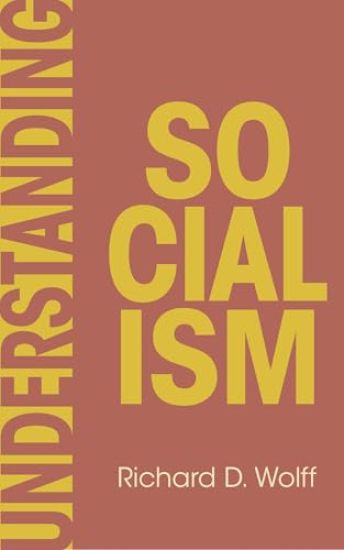
Socialism is a yearning for justice, community, and the greater realization of human potential. Cornel West calls it “the best accessible and reliable treatment we have of what socialism is, was, and should be.” Understanding Socialism is a plainspoken text that disarms false narratives, confronts past failures, and offers a path to a fresh and modern understanding of socialism, by outlining what democracy in the workplace could look like. Wolff not only explains what socialism is and has meant to its various proponents, he also looks at the transition from feudalism to capitalism as a model to help us visualize an evolution from our current socioeconomic state. Understanding Socialism explores how socialist theory was used and applied to help shape the histories of countries such as Russia and China, and beyond. Wolff also analyzes the successes and defeats of those countries, the world's reactions to them, and how they offer important lessons for the building of a democratic, worker-controlled 21st-century socialism.

Richard D. Wolff masterfully explains why Karl Marx’s analysis of class struggle is fundamental to a proper understanding of capitalism and explores how to build a more sustainable democratic society. Class struggle is everywhere, and it influences everything and everyone in our society. Marx is the person who first explained this struggle systematically. For Marx, capitalism signified not the end of history, but rather the latest phase of human development that leads ordinary people to rid themselves of “all the muck of ages and become fitted to found society anew." Marx’s theories are deeply prescient and relevant in our efforts to understand and cope with the crises of our time. Every day, we see more evidence that the capitalist system is both undermining itself and those whose labor it depends on, as Marx predicted. Understanding Marxism is an essential resource for looking at the power and usefulness of Marx’s criticism of the capitalist economic system—and how we can move beyond it to a truly sustainable and democratic society based on workers’ self-management.
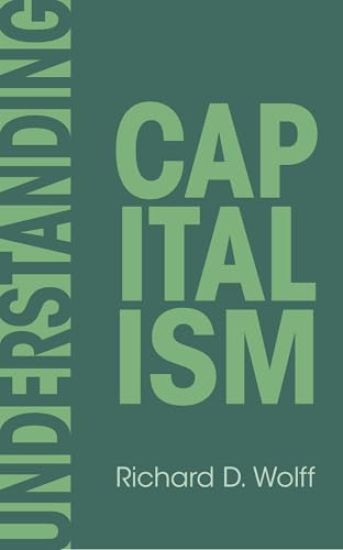
“Why does capitalism fail us?” Richard D. Wolff walks readers through this pressing question in a brilliant takedown of an economic system that benefits the few at the great expense of the many. Understanding Capitalism explores the different definitions of what capitalism is and is not, and dissolves the many myths that, Wolff argues, are designed to confuse and disorient us. Wolff doesn’t simply identify the crises and harms manufactured by capitalism, he details a path forward by outlining alternative economic models that combat the exploitation and oppression inherent in capitalism. Capitalism oftentimes feels as permanent as the sky above. Understanding Capitalism shows that our current economic system is only as strong as the ordinary people who enable its existence, and that capitalism’s demise requires an organized, collective effort by those who can identify its vulnerabilities and limitations, but also understand that another world is indeed possible.
Socialism is a yearning for justice, community, and the greater realization of human potential. Cornel West calls it “the best accessible and reliable treatment we have of what socialism is, was, and should be.” Understanding Socialism is a plainspoken text that disarms false narratives, confronts past failures, and offers a path to a fresh and modern understanding of socialism, by outlining what democracy in the workplace could look like. Wolff not only explains what socialism is and has meant to its various proponents, he also looks at the transition from feudalism to capitalism as a model to help us visualize an evolution from our current socioeconomic state. Understanding Socialism explores how socialist theory was used and applied to help shape the histories of countries such as Russia and China, and beyond. Wolff also analyzes the successes and defeats of those countries, the world's reactions to them, and how they offer important lessons for the building of a democratic, worker-controlled 21st-century socialism.
Richard D. Wolff masterfully explains why Karl Marx’s analysis of class struggle is fundamental to a proper understanding of capitalism and explores how to build a more sustainable democratic society. Class struggle is everywhere, and it influences everything and everyone in our society. Marx is the person who first explained this struggle systematically. For Marx, capitalism signified not the end of history, but rather the latest phase of human development that leads ordinary people to rid themselves of “all the muck of ages and become fitted to found society anew." Marx’s theories are deeply prescient and relevant in our efforts to understand and cope with the crises of our time. Every day, we see more evidence that the capitalist system is both undermining itself and those whose labor it depends on, as Marx predicted. Understanding Marxism is an essential resource for looking at the power and usefulness of Marx’s criticism of the capitalist economic system—and how we can move beyond it to a truly sustainable and democratic society based on workers’ self-management.
In the midst of this once-in-a-century public health crisis, the United States was almost toppled from within by one of the two national political parties that a white-supremacist authoritarian had commandeered. For decades, American workers had been losing their leverage, as the world's biggest corporations were able to successfully play one country's workforce off another. For centuries, we have failed to directly address the crimes against humanity that were the cornerstones of American capitalism and are part of the continuum that extends systemic racism to our current circumstances. Our global brand may be equality, but the lived experience of tens of millions of Americans is the stark opposite, and there can be no forward motion if we fail to perceive just how deep a rut we are in. Stuck Nation is the work of award-winning print and broadcast journalist Robert "Bob" Hennelly. Its depth reflects his many decades of on-the-ground reporting, from the streets to historical archives and the White House. In his reporting and in this book, Hennelly bears witness to the ongoing assault of systemic racism, the toll from the World Trade Center toxic exposures, the attacks on our civil service by our own government, the breathtaking concentration of corporate media, the power of our collective agency, and more. It features interviews with the key players and shapers of history - everyday people - as well as with union leaders and politicians, historians and academics, organizers and activists. Stuck Nation lifts up the stories of those whom our capitalist system would otherwise see 'disappeared'. It bears the human cost of our system and our silence. It holds accounts of individuals and a broader movement willing to put everything at risk to change our national narrative. Through it all, Hennelly shares his observations on the origins of our national stuck-ness, his reporting on how it endures, and his analysis of what might be required for us to change the course of our historical patterns, so that America can begin putting the wellbeing of its people ahead of its profits.
The coronavirus pandemic, the deepening economic crash, dangerously divisive political responses, and exploding social tensions have thrown an already declining American capitalist system into a tailspin. The consequences of these mounting and intertwined crises will shape our future. In this unique collection of over 50 essays, "The Sickness is the System: When Capitalism Fails to Save Us from Pandemics or Itself," Richard D. Wolff argues clearly that "returning to normal" no longer responds adequately to the accumulated problems of US capitalism. What is necessary, instead, is transition toward a new economic system that works for all of us. "A blueprint for how we got here, and a plan for how we will rescue ourselves" - Chris Hedges "A magnificent source of hope and insight." - Yanis Varoufakis "In this compelling set of essays, and with his signature clarity, intensity, accessibility and deference to historical and present perspective, Wolff has issued not just a stark warning, but concrete reasoning, as to why this time really should be different." - Nomi Prins "One of the most powerful and incisive voices in America. As an economist he transcends that "dismal science", he is a tribune of Main St, a voice of the people." - George Galloway "Wolff clearly explains the ways that capitalism exacerbates unemployment, inequality, racism, and patriarchy; and threatens the health and safety of workers and communities - i.e., most of us." - Jessica Gordon-Nembhard, Ph.D. "If you care about deeper measures of social health as Americans suffer the worst economic crisis since the Great Depression, you will find here a wealth of insight, statistics, and other ammunition that we all need in the fight for a more just society." - Adam Hochschild "The current failed system has a noose around all of our necks. Richard Wolff offers an economic vision that gets our society off the gallows." - Jimmy Dore
Why should we pay attention to the great social critics like Marx? Americans, especially now, confront serious questions and evidences that our capitalist system is in trouble. It clearly serves the 1% far, far better than what it is doing to the vast mass of the people.Marx was a social critic for whom capitalism was not the end of human history. It was just the latest phase and badly needed the transition to something better. We offer this essay now because of the power and usefulness today of Marx's criticism of the capitalist economic system.eBook: https://bit.ly/2K6iI8v
In this updated edition of Capitalism Hits the Fan, Professor Wolff explains why capitalism's global crisis persists, why bank bailouts and austerity policies fail, and why deepening economic inequality now generates historic social tensions and conflicts and worsens the ongoing crisis. This book chronicles one economist's growing alarm and insights as he watched, from 2005 onwards, the economic crisis build, burst, and then change the world. The argument here differs sharply from most other explanations offered by politicians, media commentators, and other academics. Step by step, Wolff shows that deep economic structures-the relationship of wages to profits, of workers to boards of directors, and of debts to income-account for the crisis. The book's essays engage the long-overdue public discussion about capitalism as a system and about the basic structural changes needed not only to fix today's broken economy but to prevent future crises..
A systematic comparison of the three major economic theories, showing how they differ and why these differences matter in shaping economic theory and practice.Contending Economic Theories offers a unique comparative treatment of the three main theories in economics as it is taught today: neoclassical, Keynesian, and Marxian. Each is developed and discussed in its own chapter, yet also differentiated from and compared to the other two theories. The authors identify each theory's starting point, its goals and foci, and its internal logic. They connect their comparative theory analysis to the larger policy issues that divide the rival camps of theorists around such central issues as the role government should play in the economy and the class structure of production, stressing the different analytical, policy, and social decisions that flow from each theory's conceptualization of economics.The authors, building on their earlier book Economics: Marxian versus Neoclassical, offer an expanded treatment of Keynesian economics and a comprehensive introduction to Marxian economics, including its class analysis of society. Beyond providing a systematic explanation of the logic and structure of standard neoclassical theory, they analyze recent extensions and developments of that theory around such topics as market imperfections, information economics, new theories of equilibrium, and behavioral economics, considering whether these advances represent new paradigms or merely adjustments to the standard theory. They also explain why economic reasoning has varied among these three approaches throughout the twentieth century, and why this variation continues today-as neoclassical views give way to new Keynesian approaches in the wake of the economic collapse of 2008.
Today's economic crisis is capitalism's worst since the Great Depression. Millions have lost their jobs, homes and healthcare while those who work watch their pensions, benefits, and job security decline. As more and more are impacted by the crisis, the system continues to make the very wealthy even richer. In eye-opening interviews with prominent economist Richard Wolff, David Barsamian probes the root causes of the current economic crisis, its unjust social consequences, and what can and should be done to turn things around. While others blame corrupt bankers and unregulated speculators, the government, or even the poor who borrowed, the authors show that the causes of the crisis run much deeper. They reach back to the 1970s when the capitalist system itself shifted, ending the century-old pattern of rising wages for U.S. workers and thereby enabling the top 1% to become ultra-rich at the expense of the 99%. Since then, economic injustice has become chronic and further corrupted politics. The Occupy movement, by articulating deep indignation with the whole system, mobilizes huge numbers who seek basic change. Occupying the Economy not only clarifies and analyzes the crisis in U.S. capitalism today, it also points toward solutions that can shape a far better future for all. Richard D. Wolff is professor emeritus of Economics at the University of Massachusetts, Amherst, and visiting professor at the New School University. Author of Capitalism Hits the Fan, he's been a guest on NPR, Glenn Beck Show, and Democracy Now! David Barsamian is founder and director of Alternative Radio and author of Targeting Iran. He is best known for his interview books with Noam Chomsky, including Targeting Iran. "With unerring coherence and unequaled breadth of knowledge, Rick Wolff offers a rich and much needed corrective to the views of mainstream economists and pundits." --Stanley Aronowitz
Class Theory and History takes an ambitious and ground-breaking look at the entire history of the Soviet Union and presents a new kind of analysis of the history of the USSR: examining its birth, evolution, and death in class terms. Utilizing the class analytics they have developed over the last three decades, resnick and Wolff formulate the most fully developed economic theory of communism now available, and use that theory to answer the question: did communism ever exist in the USSR and if so, where, why and for how long? Their initial, and controversial, conclusion: Soviet industry never established a communist class structure. This conclusion then leads to the hypothesis that the USSR and provate capitalism in the United States to discuss the future of private capitalism, state capitalism and communism.
Intense debates in recent decades have provoked major new directions in Marxist theory. Earlier reductionist notions of knowledge, dialectics, contradiction, class, and capitalism have been challenged and profoundly transformed.