Kirjojen hintavertailu. Mukana 12 390 323 kirjaa ja 12 kauppaa.

Kirjailija

Richard Dennis

Kirjat ja teokset yhdessä paikassa: 7 kirjaa, julkaisuja vuosilta 1977-2026, suosituimpien joukossa Royal Navy Ships’ Bottoms and Boot-Topping of the Second World War era. Vertaile teosten hintoja ja tarkista saatavuus suomalaisista kirjakaupoista.

7 kirjaa

Kirjojen julkaisuhaarukka 1977-2026.

Royal Navy Ships’ Bottoms and Boot-Topping of the Second World War era
Perhaps influenced by post-WW2 Royal Navy practice, it has long been the accepted wisdom that the bottoms of RN warships during the World War 2 era were red. This turns out not to have been the case. The result of over four years research, this book reveals the information concerning the treatment of the lower hull, including the boot-topping area, of every RN, RCN, RAN, RNZN, RIN, FNFL, KNM and RNLM ship of the WW2 era for which records were found in UK archives. Additional information from Canadian and Australian archives is also included. At the book’s heart is a ship-by-ship reference list with details of the painting of the lower hulls of over 850 surface vessels and submarines. The details in this list can be combined with the background information in the narrative chapters and other guidance in the appendices to enable the reader to make an informed decision as to the likely colour of the bottom of most of the ships listed at any given time even when the colour itself was not noted in the archived records. It is an invaluable reference for those striving for accuracy in depictions of these warships.
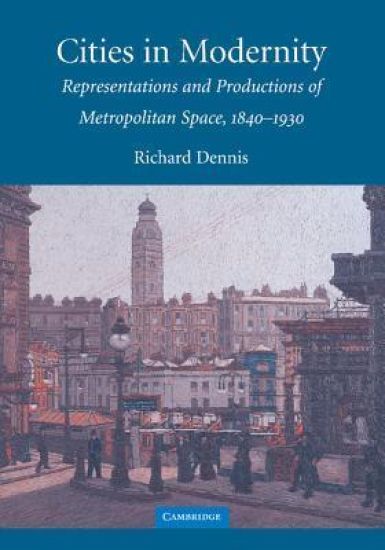
Cities in Modernity

Cities in Modernity

Richard Dennis

Cambridge University Press
2008
pokkari
What made cities 'modern' in the nineteenth and early twentieth centuries? Cities in Modernity explores connections between culture, economy and built environment in cities of this period, drawing its evidence principally from London, New York and Toronto. The book discusses both the cultural experience of modernity and the material modernization of cities, placing special emphasis on their historical geographies, on the production, representation and use of urban space. The opening chapters present new ways of seeing cities in political and religious discourse, social survey, mapping, art and literature. The book then concentrates on new kinds of public and private spaces, such as apartment buildings, office blocks and department stores, and the networks of communication between them. An important theme throughout is the gendered experience of the new types of environment. The book will appeal to scholars and students of historical geography, urban history and cultural studies.
Cities in Modernity

Cities in Modernity

Richard Dennis

Cambridge University Press
2008
sidottu
What made cities 'modern' in the nineteenth and early twentieth centuries? Cities in Modernity explores connections between culture, economy and built environment in cities of this period, drawing its evidence principally from London, New York and Toronto. The book discusses both the cultural experience of modernity and the material modernization of cities, placing special emphasis on their historical geographies, on the production, representation and use of urban space. The opening chapters present new ways of seeing cities in political and religious discourse, social survey, mapping, art and literature. The book then concentrates on new kinds of public and private spaces, such as apartment buildings, office blocks and department stores, and the networks of communication between them. An important theme throughout is the gendered experience of the new types of environment. The book will appeal to scholars and students of historical geography, urban history and cultural studies.
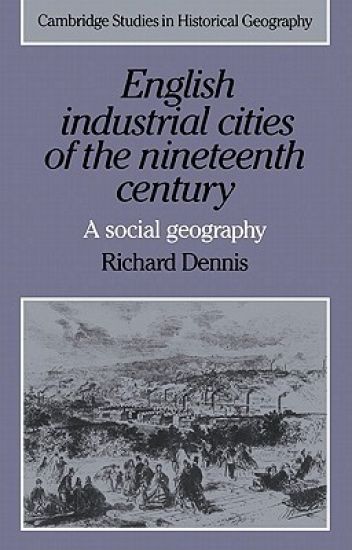
English Industrial Cities of the Nineteenth Century

English Industrial Cities of the Nineteenth Century

Richard Dennis

Cambridge University Press
1986
pokkari
To contemporaries the nineteenth century was ‘the age of great cities’. As early as 1851 over half the population of England and Wales could be classified as ‘urban’. In the first full-length treatment of nineteenth-century urbanism from a geographical perspective, Richard Dennia focuses on the industrial towns and cities of Lancashire, Yorkshire, the Midlands and South Wales, that epitomised the spirit of the new age. In recent years urban historians and geographers have produced a wide range of detailed studies, both of particular cities and of specific aspects of nineteenth-century urban society, including the housing system, local government, public transport, class structure, residential segregation and social and geographical mobility. Dr Dennis offers a critical review of this research, integrated with his own original study of mobility, social interaction and community in the West Yorkshire town of Huddersfield.