Kirjojen hintavertailu. Mukana 12 298 951 kirjaa ja 12 kauppaa.

Kirjailija

Richard Doyle

Kirjat ja teokset yhdessä paikassa: 55 kirjaa, julkaisuja vuosilta 1997-2027, suosituimpien joukossa Shut Up and Chant. Vertaile teosten hintoja ja tarkista saatavuus suomalaisista kirjakaupoista.

55 kirjaa

Kirjojen julkaisuhaarukka 1997-2027.

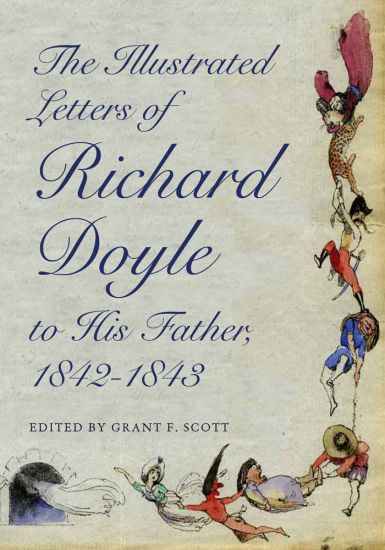
The Illustrated Letters of Richard Doyle to His Father, 1842–1843
Before he joined the staff of Punch and designed its iconic front cover, illustrator Richard "Dicky" Doyle was a young man whose father (political caricaturist John Doyle) charged him with sending a weekly letter, even though they lived under the same roof. This volume collects the fifty-three illustrated missives in their entirety for the first time and provides an uncommon peek into the intimate but expansive observations of a precocious social commentator and artist. In a series of vivid manuscript canvases, Doyle observes Victorian customs and society. He visits operas, plays, and parades. He watches the queen visiting the House of Commons and witnesses the state funeral of the Duke of Sussex. He is caught up in the Chartist riots of August 1842 and is robbed during one of the melees. And he provides countless illustrations of ordinary people strolling in the streets and swarming the parks and picture galleries of the metropolis. The sketches offer a fresh perspective on major social and cultural events of London during the early 1840s by a keen observer not yet twenty years old. Doyle's epistles anticipate the modern comic strip and the graphic novel, especially in their experimentation with sequential narrative and their ingenious use of space. The letters are accompanied by a full biographical and critical introduction with new material about Doyle's life.
Wetwares

Wetwares

Richard Doyle

University of Minnesota Press
2003
sidottu
The mind of the machine, the body suspended in time, organs exchanged, thought computed, genes manipulated, DNA samples abducted by aliens: the terrain between science and speculation, fraught with the possibility of technological and perhaps even evolutionary transformations, is the territory Richard Doyle explores in Wetwares. In a manner at once sober and playful, Doyle maps potentials for human transformation by new ecologies of information in the early twenty-first century. Wetwares ranges over recent research in artificial life, cloning, cryonics, computer science, organ transplantation, and alien abduction. Moving between actual technical practices, serious speculative technology, and science fiction, Doyle shows us emerging scientific paradigms where "life" becomes more a matter of information than of inner vitality--in short, becomes "wetwares" for DNA and computer networks. Viewing technologies of immortality--from cryonics to artificial life--as disciplines for welcoming a thoroughly other future, a future of neither capital, god, human, nor organism, the book offers tools for an evolutionary, transhuman mutation in the utterly unpredictable decades to come.
Wetwares

Wetwares

Richard Doyle

University of Minnesota Press
2003
nidottu
A dizzying tour of the ways technologies, both real and imagined, can transform humanityThe mind of the machine, the body suspended in time, organs exchanged, thought computed, genes manipulated, DNA samples abducted by aliens: the terrain between science and speculation, fraught with the possibility of technological and perhaps even evolutionary transformations, is the territory Richard Doyle explores in Wetwares. In a manner at once sober and playful, Doyle maps potentials for human transformation by new ecologies of information in the early twenty-first century.Wetwares ranges over recent research in artificial life, cloning, cryonics, computer science, organ transplantation, and alien abduction. Moving between actual technical practices, serious speculative technology, and science fiction, Doyle shows us emerging scientific paradigms where “life” becomes more a matter of information than of inner vitality-in short, becomes “wetwares” for DNA and computer networks. Viewing technologies of immortality-from cryonics to artificial life-as disciplines for welcoming a thoroughly other future, a future of neither capital, god, human, nor organism, the book offers tools for an evolutionary, transhuman mutation in the utterly unpredictable decades to come.
Richard Doyle's Fairyland Coloring Book

Richard Doyle's Fairyland Coloring Book

Richard Doyle

Dover Publications Inc.
2002
nidottu
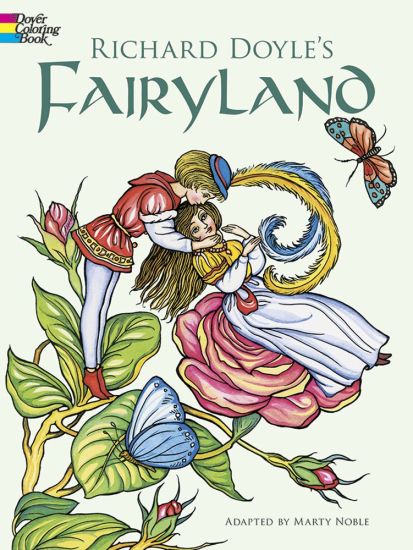
Famed for his charming illustrations of elves, fairies, and gnomes, the prominent Victorian artist Richard Doyle (1824-1883) produced a host of these delightful characters for The Princess Nobody: A Tale of Fairyland, a book he created with British author Andrew Lang in 1884.Illustrator Marty Noble has skillfully adapted 29 of the English artist's most delightful watercolors from that enchanting book. Brimming with a multitude of nature s tiniest creatures of the air, field, and stream, the collection also features pixies, imps, and a petite princess and an equally diminutive prince. These captivating figures can be brought to life by colorists and fairyland devotees as they apply their own hues to enchanting scenes of mischievous sprites at play. Captions accompany each illustration."
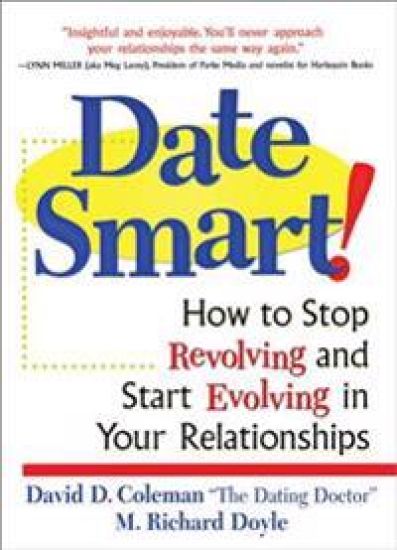
Date Smart!

Date Smart!

David D. Coleman; Richard Doyle

Crown Publications
2000
pokkari
Looking for Love in All the Wrong Places? Here's How to End the Search Are you stuck in a revolving door of bad dates? Or maybe you've given up on finding a meaningful relationship altogether. According to dating experts David Coleman and Richard Doyle, it doesn't have to be that way. You can have that happy, healthy relationship you've been looking for. With eye-opening exercises, quizzes, and other self-assessment tools, the authors show you how to pinpoint specific aspects of your personality that have caused you to pick poorly, remain in bad relationships, or sabotage good ones. Once you understand the reasons why you choose a certain type of person, you can focus on how to choose and attract the right person for you. Inside, you'll learn how to avoid: Bad Picks -The Girdle--strives to control you -The Dog Catcher--flees at the first sign of commitment -The Ferrari--requires high maintenance Bad Kissers -The Hoover--sucks out fillings, tongue--anything -Niagara Falls--produces enough liquid for a regatta -The Puppy--licks you all over your face Bad Break-ups -The Western Union--ends relationship by letter, note, or e-mail -The Freezer--turns from warm and caring to cold and callous -The Fade Away--lets the relationship fade by avoiding conflict "Insightful and enjoyable. You'll never approach your relationships the same way again."--Lynn Miller (aka Meg Lacey), President of Parke Media and novelist for Harlequin Books
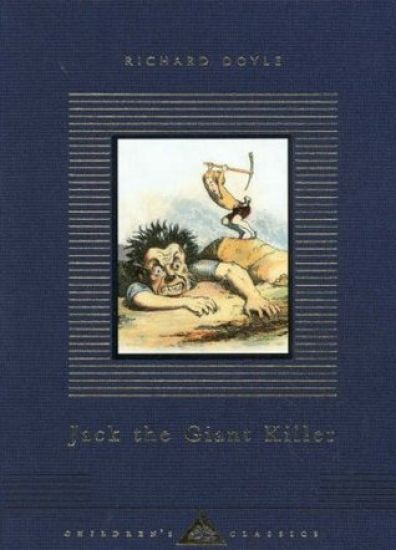
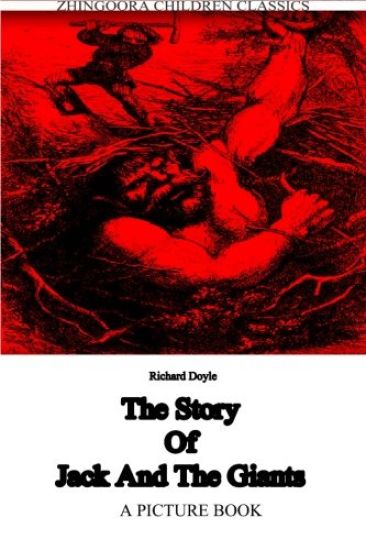
Jack The Giant Killer

Jack The Giant Killer

Richard Doyle

Everyman
1999
sidottu
The story of Jack, the intrepid little boy whose courage and ingenuity defeated a host of many-headed giants several times his size, is an English folk-tale that must have been told often in the Victorian nursery of the Doyle family.
On Beyond Living

On Beyond Living

Richard Doyle

Stanford University Press
1997
sidottu
What do biologists study when they study "life" today? Drawing on tools from rhetoric and poststructuralist theory, the author argues that the ascent of molecular biology, with its emphasis on molecules such as DNA rather than organisms, was enabled by crucial rhetorical "softwares." Metaphors such as the genetic "code" made possible a transformation of the very concept of life, a transformation that often casts organisms as information systems. With careful readings of key texts from the history of molecular biology—such as those of Erwin Schrödinger, George Gamow, Jacques Monod, and François Jacob—the author maps out the complex relations between the practices of rhetoric and the technoscientific triumphs they accompanied, triumphs that bolstered a "postvital" biology that increasingly elides and questions the boundary between organisms and machines. There have been many popular books, and a few academic ones, on the Human Genome Initiatives. On Beyond Living is a genealogy of these initiatives, a map of how we have come to equate human beings with "information." Melding contemporary theory with scientific discourse, it is certain to provoke discussion (and controversy) in the fields of cultural studies, theory, and science with its penetrating inquiries into the relations between rhetoric and technoscience.