Kirjojen hintavertailu. Mukana 12 559 213 kirjaa ja 12 kauppaa.

Kirjailija

Richard E Lenski

Kirjat ja teokset yhdessä paikassa: 2 kirjaa, julkaisuja vuodelta 2026, suosituimpien joukossa A Primer For Experimental Evolution. Vertaile teosten hintoja ja tarkista saatavuus suomalaisista kirjakaupoista.

2 kirjaa

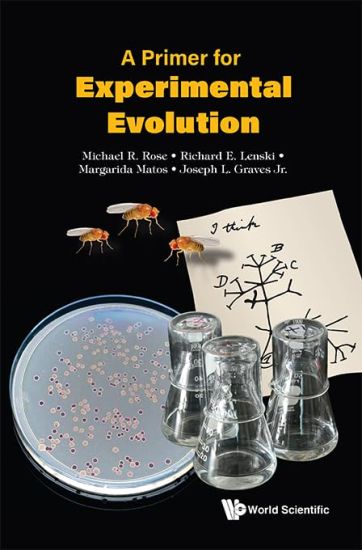
A Primer For Experimental Evolution

A Primer For Experimental Evolution

Michael Robertson Rose; Richard E Lenski; Margarida Matos; Joseph L Jr Graves

WORLD SCIENTIFIC PUBLISHING CO PTE LTD
2026
nidottu
The purpose of this Primer is to explain the principles of Experimental Evolution. It explains how evolution experiments should be properly designed to examine fundamental principles of evolution and answer big questions in biology. The need for this primer has expanded, despite the advances in genomics, because the functional significance of genetic variation is not easily understood without an evolutionary lens. We believe that experimental evolution can take a leading role in meeting this challenge. We explain how experimental evolution uses strong-inference methods to probe the evolutionary mechanisms and dynamics that shape organismal functions. Using exemplary studies, we demonstrate how evolution experiments enable researchers to probe deeply into the genomic basis of adaptation by natural selection, by which, in the words of Charles Darwin, 'endless forms most beautiful and most wonderful have been, and are being, evolved.'
A Primer For Experimental Evolution

A Primer For Experimental Evolution

Michael Robertson Rose; Richard E Lenski; Margarida Matos; Joseph L Jr Graves

WORLD SCIENTIFIC PUBLISHING CO PTE LTD
2026
sidottu
The purpose of this Primer is to explain the principles of Experimental Evolution. It explains how evolution experiments should be properly designed to examine fundamental principles of evolution and answer big questions in biology. The need for this primer has expanded, despite the advances in genomics, because the functional significance of genetic variation is not easily understood without an evolutionary lens. We believe that experimental evolution can take a leading role in meeting this challenge. We explain how experimental evolution uses strong-inference methods to probe the evolutionary mechanisms and dynamics that shape organismal functions. Using exemplary studies, we demonstrate how evolution experiments enable researchers to probe deeply into the genomic basis of adaptation by natural selection, by which, in the words of Charles Darwin, 'endless forms most beautiful and most wonderful have been, and are being, evolved.'