Kirjojen hintavertailu. Mukana 12 595 353 kirjaa ja 12 kauppaa.

Kirjailija

Richard E. Nisbett

Kirjat ja teokset yhdessä paikassa: 11 kirjaa, julkaisuja vuosilta 1996-2023, suosituimpien joukossa Mindware: Tools for Smart Thinking. Vertaile teosten hintoja ja tarkista saatavuus suomalaisista kirjakaupoista.

Mukana myös kirjoitusasut: Richard E Nisbett

11 kirjaa

Kirjojen julkaisuhaarukka 1996-2023.

Mindware: Tools for Smart Thinking

Mindware: Tools for Smart Thinking

Richard E. Nisbett

Farrar, Straus and Giroux
2016
nidottu
Scientific and philosophical concepts can change the way we solve problems by helping us to think more effectively about our behavior and our world. Surprisingly, despite their utility, many of these tools remain unknown to most of us. In Mindware, the world-renowned psychologist Richard E. Nisbett presents these ideas in clear and accessible detail, offering a tool kit for better thinking and wiser decisions. He has made a distinguished career of studying and teaching such powerful problem-solving concepts as the law of large numbers, statistical regression, cost-benefit analysis, sunk costs and opportunity costs, and causation and correlation, probing how best to teach others to use them effectively in their daily lives. In this groundbreaking book, he shows that a course in a given field--statistics or economics, for example--often doesn't work as well as a few minutes of more practical instruction in analyzing everyday situations. Mindware shows how to reframe common problems in such a way that these powerful scientific and statistical concepts can be applied to them. The result is an enlightening and practical guide to the most powerful tools of reasoning ever developed--tools that can easily be used to make better professional, business, and personal decisions.
Social Psychology

Social Psychology

Tom Gilovich; Dacher Keltner; Serena Chen; Richard E. Nisbett

WW NORTON CO
2023
muu
Social Psychology is now available as a Norton Illumine Ebook, using active learning to help develop students’ scientific thinking skills. Led by Tom Gilovich, the award-winning author team challenges students to think critically about the concepts, controversies, and applications of social psychology. The Sixth Edition is thoroughly updated with current research and fresh examples and includes a new chapter, “Living in a Prejudiced World,” that addresses the experience of living with stereotyping and discrimination. InQuizitive online assessment, now enhanced with new interactives, reinforces important concepts through retrieval practice, and Norton Teaching Tools, the Norton Testmaker test bank, and new Analyze the Claim writing assignments help instructors build an engaging course with minimal preparation time.
Thinking

Thinking

Richard E Nisbett

Aqora Books
2021
pokkari
Thinking: A memoir is both an intellectual autobiography and a personal history. It describes how people reason and make inferences about the world, how people should reason and make those inferences, why errors in reasoning occur, how much you can improve reasoning, what kinds of problems are best solved by the conscious mind and what kinds by the unconscious mind, and how we should think about intelligence in light of answers to such questions. The book starts with the author's early experiences, many of which directly influenced his subsequent research.
Culture Of Honor

Culture Of Honor

Richard E Nisbett; Dov Cohen

Routledge
2019
sidottu
In the United States, the homicide rate in the South is consistently higher than the rate in the North. In this brilliantly argued book, Richard Nisbett and Dov Cohen use this fact as a starting point for an exploration of the underlying reasons for violence.According to Nisbett and Cohen, the increased tendency of white southerners to commit certa
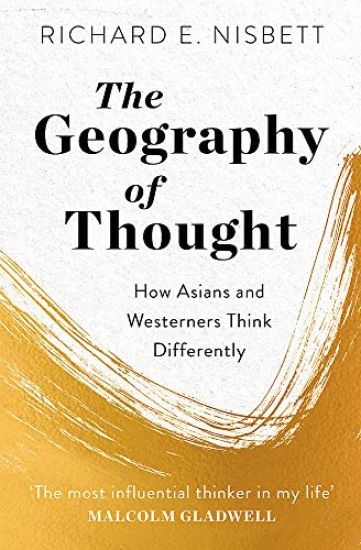
The Geography of Thought

The Geography of Thought

Richard E. Nisbett

Nicholas Brealey Publishing
2019
pokkari
'The most influential thinker, in my life, has been the psychologist Richard Nisbett. He basically gave me my view of the world.'-Malcolm Gladwell"One of the world's leading thinkers" Daily TelegraphWhen Richard Nisbett showed an animated underwater scene to his American students, they zeroed in on a big fish swimming among smaller fish. Japanese subjects, on the other hand, made observations about the background environment...and the different "seeings" are a clue to profound underlying cognitive differences between Westerners and East Asians. As Professor Nisbett shows in The Geography of Thought people actually think - and even see - the world differently, because of differing ecologies, social structures, philosophies, and educational systems that date back to ancient Greece and China, and that have survived into the modern world. As a result, East Asian thought is "holistic" - drawn to the perceptual field as a whole, and to relations among objects and events within that field. By comparison to Western modes of reasoning, East Asian thought relies far less on categories, or on formal logic; it is fundamentally dialectic, seeking a "middle way" between opposing thoughts. By contrast, Westerners focus on salient objects or people, use attributes to assign them to categories, and apply rules of formal logic to understand their behaviour.
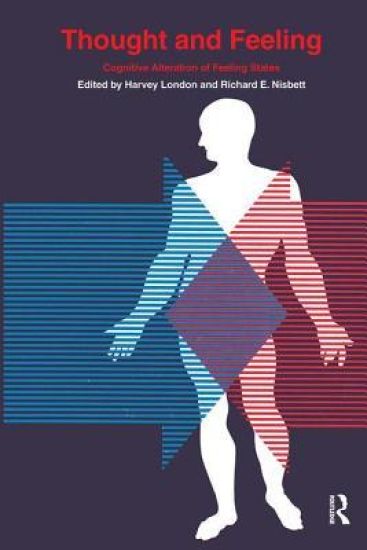
Thought and Feeling

Thought and Feeling

Richard E. Nisbett

Routledge
2017
sidottu
Recently there has been growing awareness and acceptance of the proposition that people do not exist in a world of physically defined forces and events, but in a world defined by their own perceptions, cognitions, conclusions, and imaginations. We respond and react not to some objectively defined set of stimuli, but to our own apperceptions of stimuli that we define subjectively. The original essays in this volume center on one aspect of this process of attribution: The extent to which the perception of events and causes results in the determination, modification, or alteration of emotions, feelings, and affective states.This book is divided into five sections, each of which elucidates and extends these theoretical conceptions. Part 1 provides a historical background and analytical framework for the rest of the book. Part 2 presents chapters dealing with the sorts of internal cues which may give rise to a feeling state. Part 3 presents a chapter discussing the evaluative needs aroused by the internal cues. Part 4 is concerned with the process of explanation triggered by the evaluative needs. Part 5 deals with various external cues and how they are used to label the internal feeling state. There is a concluding discussion of the cognitive alteration of feeling states.The authors deal with aggression, boredom, obesity, the control of pain, and delusional systems. This volume is of continuing importance to clinical and experimental psychologists as well as social psychologists. Each of the authors takes the theoretical concept of cognition and relates it to research in biofeedback, physiology, social psychology, altered states of consciousness, etc. Thus, the book bridges the gap between cognitive theory and the use of that theory in applied research.
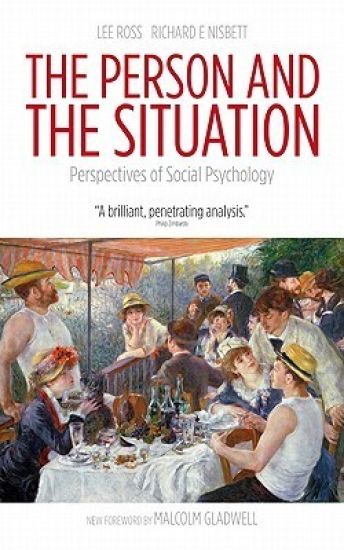
The Person and the Situation

The Person and the Situation

Lee Ross; Richard E. Nisbett; Malcolm Gladwell

Pinter Martin Ltd.
2011
nidottu
How does the situation we're in influence the way we behave and think? Professors Ross and Nisbett eloquently argue that the context we find ourselves in substantially affects our behavior in this timely reissue of one of social psychology's classic textbooks. With a new foreword by Malcolm Gladwell, author of The Tipping Point.
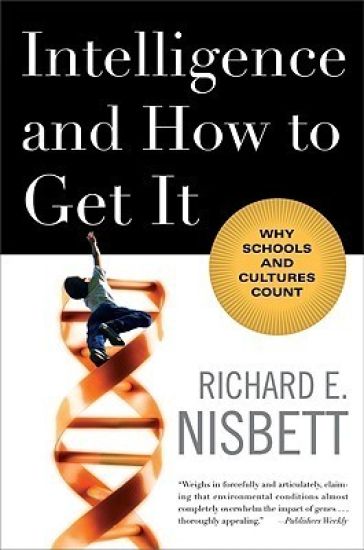
Intelligence and How to Get It

Intelligence and How to Get It

Richard E. Nisbett

WW Norton Co
2010
nidottu
Who are smarter, Asians or Westerners? Are there genetic explanations for group differences in test scores? From the damning research of The Bell Curve to the more recent controversy surrounding geneticist James Watson’s statements, one factor has been consistently left out of the equation: culture. In the tradition of Stephen Jay Gould’s The Mismeasure of Man, world-class social psychologist Richard E. Nisbett takes on the idea of intelligence as biologically determined and impervious to culture with vast implications for the role of education as it relates to social and economic development. Intelligence and How to Get It asserts that intellect is not primarily genetic but is principally determined by societal influences.
Thought and Feeling

Thought and Feeling

Richard E. Nisbett

AldineTransaction
2007
nidottu
Recently there has been growing awareness and acceptance of the proposition that people do not exist in a world of physically defined forces and events, but in a world defined by their own perceptions, cognitions, conclusions, and imaginations. We respond and react not to some objectively defined set of stimuli, but to our own apperceptions of stimuli that we define subjectively. The original essays in this volume center on one aspect of this process of attribution: The extent to which the perception of events and causes results in the determination, modification, or alteration of emotions, feelings, and affective states.This book is divided into five sections, each of which elucidates and extends these theoretical conceptions. Part 1 provides a historical background and analytical framework for the rest of the book. Part 2 presents chapters dealing with the sorts of internal cues which may give rise to a feeling state. Part 3 presents a chapter discussing the evaluative needs aroused by the internal cues. Part 4 is concerned with the process of explanation triggered by the evaluative needs. Part 5 deals with various external cues and how they are used to label the internal feeling state. There is a concluding discussion of the cognitive alteration of feeling states.The authors deal with aggression, boredom, obesity, the control of pain, and delusional systems. This volume is of continuing importance to clinical and experimental psychologists as well as social psychologists. Each of the authors takes the theoretical concept of cognition and relates it to research in biofeedback, physiology, social psychology, altered states of consciousness, etc. Thus, the book bridges the gap between cognitive theory and the use of that theory in applied research.
The Geography of Thought

The Geography of Thought

Richard E. Nisbett

Free Press
2004
pokkari
A "landmark book" (Robert J. Sternberg, president of the American Psychological Association) by one of the world's preeminent psychologists that proves human behavior is not "hard-wired" but a function of culture. Everyone knows that while different cultures think about the world differently, they use the same equipment for doing their thinking. But what if everyone is wrong? The Geography of Thought documents Richard Nisbett's groundbreaking international research in cultural psychology and shows that people actually think about--and even see--the world differently because of differing ecologies, social structures, philosophies, and educational systems that date back to ancient Greece and China. As a result, East Asian thought is "holistic"--drawn to the perceptual field as a whole and to relations among objects and events within that field. By contrast, Westerners focus on salient objects or people, use attributes to assign them to categories, and apply rules of formal logic to understand their behavior. From feng shui to metaphysics, from comparative linguistics to economic history, a gulf separates the children of Aristotle from the descendants of Confucius. At a moment in history when the need for cross-cultural understanding and collaboration have never been more important, The Geography of Thought offers both a map to that gulf and a blueprint for a bridge that will span it.
Culture Of Honor

Culture Of Honor

Richard E Nisbett; Dov Cohen

Westview Press Inc
1996
nidottu
This book focuses on a singular cause of male violence—the perpetrator's sense of threat to one of his most valued possessions, namely, his reputation for strength and toughness. The theme of this book is that the Southern United States had—and has—a type of culture of honor.