Kirjojen hintavertailu. Mukana 12 390 323 kirjaa ja 12 kauppaa.
Kirjailija
Richard Edwards
Kirjat ja teokset yhdessä paikassa: 282 kirjaa, julkaisuja vuosilta 1982-2026, suosituimpien joukossa Lifelong Learning - Signs, Discourses, Practices. Vertaile teosten hintoja ja tarkista saatavuus suomalaisista kirjakaupoista.
More than merely describing the evolution of human rights and civil liberties law, this classic textbook provides students with detailed and thought-provoking coverage of the most crucial developments in the field, clearly explaining the law in context and practice. Updated throughout for this new edition, Fenwick on Civil Liberties and Human Rights considers a number of recent major changes in the law – in particular proposals to replace the Human Rights Act with a British Bill of Rights, and the Counter-Terrorism and Security Act 2015 – whilst also contextualising the impact of reforms on hate speech and contempt due to advances in new media. Comprehensive and authoritative, this textbook offers an essential resource for students on human rights or civil liberties courses, as well as a useful reference for students and scholars of UK Public Law.
More than merely describing the evolution of human rights and civil liberties law, this classic textbook provides students with detailed and thought-provoking coverage of the most crucial developments in the field, clearly explaining the law in context and practice. Updated throughout for this new edition, Fenwick on Civil Liberties and Human Rights considers a number of recent major changes in the law – in particular proposals to replace the Human Rights Act with a British Bill of Rights, and the Counter-Terrorism and Security Act 2015 – whilst also contextualising the impact of reforms on hate speech and contempt due to advances in new media. Comprehensive and authoritative, this textbook offers an essential resource for students on human rights or civil liberties courses, as well as a useful reference for students and scholars of UK Public Law.
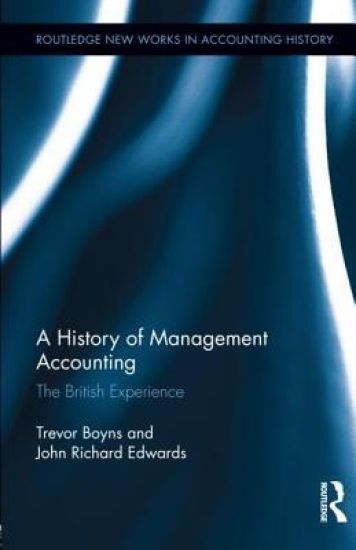
There is growing interest in the history of accounting amongst both accounting practitioners and accounting academics. This interest developed steadily from about 1970 and really ‘took off’ in the 1990s. However, there is a lack of texts dealing with major aspects of accounting history that can be used in classrooms, to inform new researchers, and to provide a source of reference for established researchers.The great deal of research into cost and management accounting in Britain published in academic journals over the last twenty years–including the authors' own contributions–makes The History of Cost and Management Accounting an essential contribution to the field.
“As a child, I thought of my town—as most children probably do—as just an ordinary place. . . . Yet I have come to think that there were exceptional things in the lives of its people and especially in the values and virtues that they believed in and aspired to.”—Richard Edwards.Before the oil industry transformed western North Dakota, the natives of Stanley went about their normal, everyday lives. Postmen, farmers, housewives, doctors, and other residents of the bustling town held certain qualities close as they cultivated the cultural fabric of the Great Plains. For generations, inhabitants of this wheat-growing region developed a combination of resoluteness, steadfastness, devotion to the community, and ever-present modesty.Contrasting these values with the trials of the modern oil-boom community, author Richard Edwards examines the old town’s virtues through the stories of those who built and sustained a community on the dry, open plains in the twentieth century. A deeply personal look at a small North Dakota town, Natives of a Dry Place focuses on a not-so-distant past and takes readers on a journey of reflection to a time before big oil. Edwards uses his experience as both a historian and an economist to delve into the overarching questions of what makes a community and how it survives during times of upheaval.
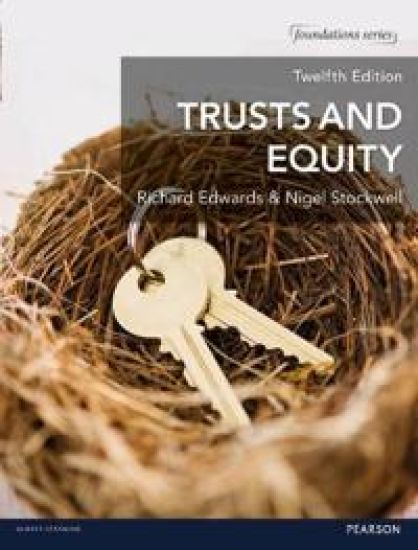
This package includes a physical copy of Trusts and Equity, 12/e by Edwards and Stockwell as well as access to the eText and MyLawChamber. Trusts and Equity, part of the Foundations Series, offers a comprehensive, clear and straightforward account of the law ideal for LLB and GDL students. This twelfth edition has been fully updated with all recent developments in trusts and equity, including: A new chapter on unlawful trusts Reference to recent statutes, such as the Trusts (Capital and Income) Act 2013, Inheritance and Trustees' Powers Act 2014 and Marriage (Same Sex Couples) Act 2013 Discussion of significant new cases, for example FHR European Ventures LLP v Cedar Capital Partners LLC [2014], Central Bank of Nigeria v Williams [2014], Coventry (t/a RDC Promotions) v Lawrence [2014] and Futter v HMRC, Pitt v HMRC [2013] MyLawChamber is a complete online teaching and learning platform designed to improve results by helping student’s quickly master concepts, and by providing educators with a robust set of tools for easily gauging and addressing the performance of students. For students Case Navigator (in conjunction with LexisNexis) offers support in helping to develop your case reading and analysis skills. A fully interactive Pearson eText is available within MyLawChamber, giving you ready access to your textbook when you need it and allowing you to search, bookmark, highlight and make notes. For educators The Gradebook allows assignments to be automatically graded and visible at a glance, helping you identify student challenges early – and find the best resources with which to help them. Test banks full of multiple-choice-questions can be set as formative assessments. Virtual Lawyer, an interactive scenario-based programme helps students apply their knowledge of the law to problem questions and can be used in seminars, lectures or even set as homework. “MyLawChamber is an excellent online resource; the interactive multi-choice is massively useful and much trickier than one might expect. The Case Navigator is superb, well done!” —Professor Stuart Toddington, University of Westminster
Trusts and Equity, part of the Foundations Series, offers a comprehensive, clear and straightforward account of the law ideal for LLB and GDL students.
There is growing interest in the history of accounting amongst both accounting practitioners and accounting academics. This interest developed steadily from about 1970 and really ‘took off’ in the 1990s. However, there is a lack of texts dealing with major aspects of accounting history that can be used in classrooms, to inform new researchers, and to provide a source of reference for established researchers.The great deal of research into cost and management accounting in Britain published in academic journals over the last twenty years–including the authors' own contributions–makes The History of Cost and Management Accounting an essential contribution to the field.
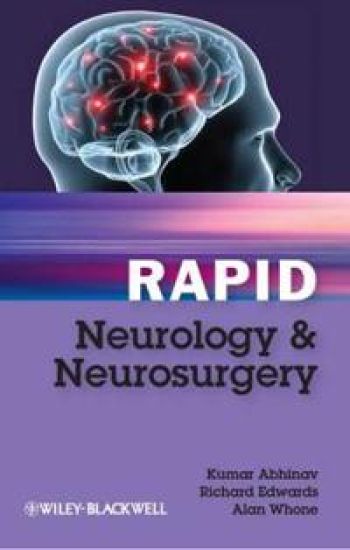
RAPID Neurology & Neurosurgery The Rapids are a series of two-colour reference and revision pocket books that cover key facts in a simple and memorable way. Each book covers the common conditions or drugs that students and junior doctors encounter on the wards, in clinics, and in their exams. The core relevant facts are provided to ensure these books are perfect concise ‘rapid refreshers’. To see all titles in the series, go to: www.wiley.com/go/rapids Rapid Neurology and Neurosurgery is a must for all medical students and junior doctors-it is a quick and easy on-the-ward or clinical reference and the perfect revision tool for those approaching finals, undergraduate neurology and neurosurgery examinations and the Membership of Royal College of Surgeons (MRCS) examinations. It provides a concise, structured approach to neurology and neurosurgery learning, covering key fact in a simple and memorable way: PART I (The Basics) features the basic principles and facts essential for a good understanding of neurology and neurosurgery and includes sections on relevant neuroanatomy, neurological history and examination, and investigation including neurophysiology and neuroradiology. MRI and CT scans are included throughout the text. PART II (Complaints: Face-to-Face with the patient) features OSCE-style and viva-voce examination preparation and has chapters on presenting complaints, with relevant and selected questions to ask for establishing the differential diagnoses (presented in a table) with basic investigations and management. PART III (Conditions: Applying the basics) presents important clinical conditions with sections on definition, epidemiology, aetiology, associations/risk factors, pathology, history, examination, investigations, management, complications, prognosis and a list of differential diagnoses with general clinical information and distinguishing information to exclude the alternative diagnoses. Each chapter includes key points to remember and highlights key facts. Rapid Neurology and Neurosurgery contains only the essential, core, and relevant facts in a concise, pocket-sized, ‘rapid’ refresher-providing a thorough foundation of neurology and neurosurgery knowledge that will allow you to excel in the examinations. All content reviewed by students for studentsWiley-Blackwell Medical Education books are designed exactly for their intended audience. All of books are developed in collaboration with students. This means that our books are always published with you, the student, in mind. If you would like to be one of our student reviewers, go to www.reviewmedicalbooks.com to find out more. To receive automatic updates on Wiley-Blackwell books and journals, join our email list. Sign up today at www.wiley.com/email
Why another book about Ore Deposits? There are a number of factors which motivated us to write this text and which may provide an answer to this question. Firstly our colleagues are predominantly mining engineers and minerals processing technologists, which provides us with a different perspective of ore deposits from many academic geologists. Secondly we have found that most existing texts are either highly theoretical or merely descriptive: we have attempted to examine the practical implications of the geological setting and genetic models of particular ore deposit types. We have written the text primarily for undergraduates who are taking options in Economic Geology towards the end of a Degree Course in Geology. However, we hope that the text will also prove valuable to geologists working in the mining industry. The text is to a large extent based on a review of the existing literature up to the end of 1984. However, we have visited most of the mining districts cited in the text and have also corresponded extensively with geologists to extend our knowledge beyond the published literature. Nonetheless writing a text-book on Ore Deposits is a demanding task and it is inevitable that sins of both omission and commission have been committed. We would therefore welcome comments from readers which can be incorporated in future editions. RICHARD EDW ARDS KEITH ATKINSON Cmnhome School (~n\1illcs April 1985 Glossary Adit A horizontal, or near horizontal, passage from the surface into a mme.
Natural and human-made disasters appear to be increasing in frequency and scope, commanding extensive media attention. Growing sensitivity to issues of preparedness and community response has created a greater interest among academics and practitioners. The Asian Tsunami, Hurricane Katrina, mudslides in Brazil, earthquakes in Haiti, Chile, Japan, Turkey, China, and other countries have garnered worldwide notice. Human-made disasters, such as terrorist attacks on New York's World Trade Center or in Oklahoma City, Spain, England, Sri Lanka, Iraq, Afghanistan, and various other countries, or attacks on schoolchildren in places such as Columbine and various communities in China, send shockwaves throughout societies. This book addresses the development of long-term interventions following disasters, emphasizing disadvantaged communities. Attention is given to the role of change agents, such as local and international non-governmental organizations (NGOs) and psychosocial professionals, to ensure that the window of opportunity is realized, generating immediate help and sustained community development.
The last fifteen years have seen much conceptual and methodological innovation in research on education and learning across the lifecourse, bringing both fresh insights and new dilemmas. This innovation was initially fuelled by the growing influence of conceptual framings often named as either post-structural or postmodern. The works of Foucault, Derrida and Lyotard have variously found their way into the canons of educational research, and in more recent years, the influence of the work of Deleuze and Guattari has also grown. This work has proved controversial both in the challenges it has raised for the purposes and practices of education and training but also over the assumptions underpinning such work.As part of and also in response to the influence of post-structuralism and postmodernism in the social sciences, there have emerged and developed a further range of conceptual and methodological framings which are more relational, system and practice-focussed. Several of these framings work with a non-linear understanding of causality and embrace unpredictability in the world and undecidability in our understanding of it. They also challenge any notion of a strong boundary between the social and natural sciences. This book explores the most significant four of these framings, how they are being taken up in research in education and learning across the lifecourse, as well as their possibilities and limitations: complexity science cultural historical activity theory (CHAT) actor-network theory (ANT) spatiality theories.Illustrated throughout with examples drawn from educational contexts across the life courses, including schooling, post-compulsory education and training, educational policy, workplace and community-based education in North America, the UK, and Australia this vital guide to understanding fresh ways of conducting and understanding educational research will prove essential reading for everyone undertaking educational research in the modern world.
The last fifteen years have seen much conceptual and methodological innovation in research on education and learning across the lifecourse, bringing both fresh insights and new dilemmas. This innovation was initially fuelled by the growing influence of conceptual framings often named as either post-structural or postmodern. The works of Foucault, Derrida and Lyotard have variously found their way into the canons of educational research, and in more recent years, the influence of the work of Deleuze and Guattari has also grown. This work has proved controversial both in the challenges it has raised for the purposes and practices of education and training but also over the assumptions underpinning such work.As part of and also in response to the influence of post-structuralism and postmodernism in the social sciences, there have emerged and developed a further range of conceptual and methodological framings which are more relational, system and practice-focussed. Several of these framings work with a non-linear understanding of causality and embrace unpredictability in the world and undecidability in our understanding of it. They also challenge any notion of a strong boundary between the social and natural sciences. This book explores the most significant four of these framings, how they are being taken up in research in education and learning across the lifecourse, as well as their possibilities and limitations: complexity science cultural historical activity theory (CHAT) actor-network theory (ANT) spatiality theories.Illustrated throughout with examples drawn from educational contexts across the life courses, including schooling, post-compulsory education and training, educational policy, workplace and community-based education in North America, the UK, and Australia this vital guide to understanding fresh ways of conducting and understanding educational research will prove essential reading for everyone undertaking educational research in the modern world.
Title: Edwards's Great West and her Commercial Metropolis, embracing a general view of the West, and a complete history of St. Louis ... With portraits and biographies of ... old settlers, etc.Publisher: British Library, Historical Print EditionsThe British Library is the national library of the United Kingdom. It is one of the world's largest research libraries holding over 150 million items in all known languages and formats: books, journals, newspapers, sound recordings, patents, maps, stamps, prints and much more. Its collections include around 14 million books, along with substantial additional collections of manuscripts and historical items dating back as far as 300 BC.The GENERAL HISTORICAL collection includes books from the British Library digitised by Microsoft. This varied collection includes material that gives readers a 19th century view of the world. Topics include health, education, economics, agriculture, environment, technology, culture, politics, labour and industry, mining, penal policy, and social order. ++++The below data was compiled from various identification fields in the bibliographic record of this title. This data is provided as an additional tool in helping to insure edition identification: ++++ British Library Edwards, Richard; 1860. 8 . 10412.g.5.
Actor-Network Theory (ANT) has enjoyed wide uptake in the social sciences in the past three decades, particularly in science and technology studies, and is increasingly attracting the attention of educational researchers. ANT studies bring to the fore the material – objects of all kinds – and de-centre the human and the social in educational issues. ANT sensibilities are interested in the ways human and non-human elements become interwoven. Since its first introduction, actor-network theory has undergone significant shifts and evolutions and as a result, it is not considered to be a single or coherent theoretical domain, but as developing diversely in response to various challenges.This book offers an introduction to Actor-Network Theory for educators to consider in three ways. One mode is the introduction of concepts, approaches and debates around Actor-Network Theory as a research approach in education. A second mode showcases educational studies that have employed ANT approaches in classrooms, workplaces and community settings, drawn from the UK, USA, Canada, Europe and Australia. These demonstrate how ANT can operate in highly diverse ways whether it focuses on policy critique, curriculum inquiry, engagements with digital media, change and innovation, issues of accountability, or exploring how knowledge unfolds and becomes materialized in various settings. A third mode looks at recent 'after-ANT' inquiries which open an array of important new approaches. Across these diverse environments and uptakes, the authors trace how learning and practice emerge, show what scales are at play, and demonstrate what this means for educational possibilities.
Actor-Network Theory (ANT) has enjoyed wide uptake in the social sciences in the past three decades, particularly in science and technology studies, and is increasingly attracting the attention of educational researchers. ANT studies bring to the fore the material – objects of all kinds – and de-centre the human and the social in educational issues. ANT sensibilities are interested in the ways human and non-human elements become interwoven. Since its first introduction, actor-network theory has undergone significant shifts and evolutions and as a result, it is not considered to be a single or coherent theoretical domain, but as developing diversely in response to various challenges.This book offers an introduction to Actor-Network Theory for educators to consider in three ways. One mode is the introduction of concepts, approaches and debates around Actor-Network Theory as a research approach in education. A second mode showcases educational studies that have employed ANT approaches in classrooms, workplaces and community settings, drawn from the UK, USA, Canada, Europe and Australia. These demonstrate how ANT can operate in highly diverse ways whether it focuses on policy critique, curriculum inquiry, engagements with digital media, change and innovation, issues of accountability, or exploring how knowledge unfolds and becomes materialized in various settings. A third mode looks at recent 'after-ANT' inquiries which open an array of important new approaches. Across these diverse environments and uptakes, the authors trace how learning and practice emerge, show what scales are at play, and demonstrate what this means for educational possibilities.