Kirjojen hintavertailu. Mukana 12 595 353 kirjaa ja 12 kauppaa.

Kirjailija

Richard Eldridge

Kirjat ja teokset yhdessä paikassa: 14 kirjaa, julkaisuja vuosilta 1935-2026, suosituimpien joukossa Werner Herzog. Vertaile teosten hintoja ja tarkista saatavuus suomalaisista kirjakaupoista.

14 kirjaa

Kirjojen julkaisuhaarukka 1935-2026.

Anticipations of Freedom

Anticipations of Freedom

Richard Eldridge

OXFORD UNIVERSITY PRESS INC
2026
sidottu
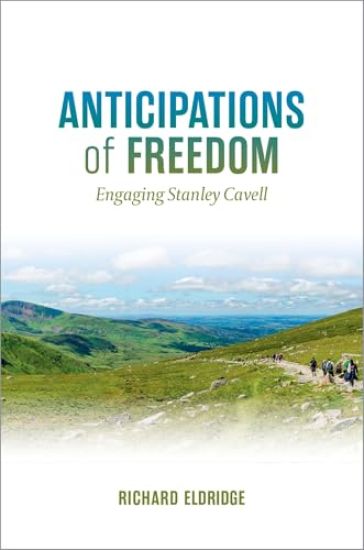
Stanley Cavell's critical-aesthetic way of doing philosophy charts a unique path between dogmatic doctrinalism and dull despair in response to the alienations that trouble modern divided life. His methods of attention to cultural phenomena are rooted in a philosophical anthropology that sees human subjects as forever fated to live between complete reconciliation and individualist-instrumentalist transactionalism. Some works of literature, music, and film, he finds, arrest and absorb their audiences in the fullness of their registerings of this continuing condition and in somehow making meaning and achieving dramatic, non-doctrinal closure. They model for these audiences how temporally situated and finite moments of meaning-making are possible. In doing so, they show us how we might live within our shared condition more productively through engagement with the affordances of art. Cavell's own writing in turn both describes and re-enacts this achievement, thus itself manifesting the powers of art in response to modern life and serving as a model of 'knowing how to go on' within its ambit. These essays describe and defend Cavell's philosophical anthropology and critical-aesthetic practice. Anticipations of Freedom situates that practice as both a response to and a furthering of an image of America as a site of futural freedom always to be achieved, and it extends Cavell's practice into new readings of works of poetry, film, and music.
Werner Herzog

Werner Herzog

Richard Eldridge

Bloomsbury Academic
2018
nidottu
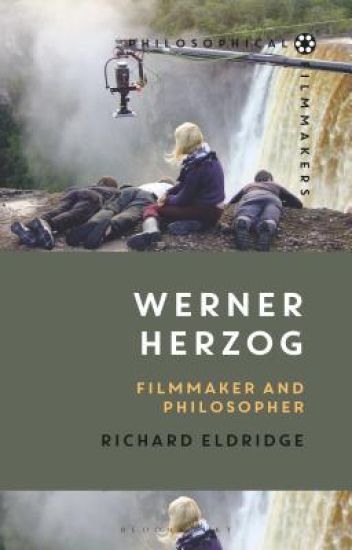
Werner Herzog has produced some of the most powerful, haunting, and memorable images ever captured on film. Both his fiction films and his documentaries address fundamental issues about nature, selfhood, and history in ways that engage with but also criticize and qualify the best philosophical thinking about these topics. In focusing on figures from Aguirre, Kasper Hauser, and Stroszek to Timothy Treadwell, Graham Dorrington, Dieter Dengler, and Walter Steiner, among many others, Herzog investigates the nature of human life in time and the possibilities of meaning that might be available within it. His films demonstrate the importance of the image in coming to terms with the plights of contemporary industrial and commercial culture. Eldridge unpacks and develops Herzog’s achievement by bringing his work into engagement with the thinking of Freud, Merleau-Ponty, Nietzsche, Hegel, Cavell, and Benjamin, but more importantly also by attending closely to the logic and development of the films themselves and to Herzog’s own extensive writings about filmmaking.
Werner Herzog

Werner Herzog

Richard Eldridge

Bloomsbury Academic
2018
sidottu
Werner Herzog has produced some of the most powerful, haunting, and memorable images ever captured on film. Both his fiction films and his documentaries address fundamental issues about nature, selfhood, and history in ways that engage with but also criticize and qualify the best philosophical thinking about these topics. In focusing on figures from Aguirre, Kasper Hauser, and Stroszek to Timothy Treadwell, Graham Dorrington, Dieter Dengler, and Walter Steiner, among many others, Herzog investigates the nature of human life in time and the possibilities of meaning that might be available within it. His films demonstrate the importance of the image in coming to terms with the plights of contemporary industrial and commercial culture. Eldridge unpacks and develops Herzog's achievement by bringing his work into engagement with the thinking of Freud, Merleau-Ponty, Nietzsche, Hegel, Cavell, and Benjamin, but more importantly also by attending closely to the logic and development of the films themselves and to Herzog's own extensive writings about filmmaking.
Images of History

Images of History

Richard Eldridge

Oxford University Press Inc
2018
nidottu
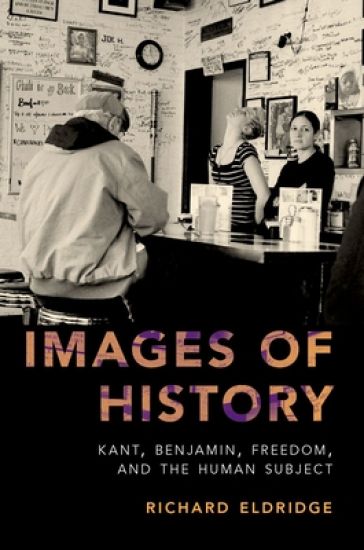
Developing work in the theories of action and explanation, Eldridge argues that moral and political philosophers require accounts of what is historically possible, while historians require rough philosophical understandings of ideals that merit reasonable endorsement. Both Immanuel Kant and Walter Benjamin recognize this fact. Each sees a special place for religious consciousness and critical practice in the articulation and revision of ideals that are to have cultural effect, but they differ sharply in the forms of religious-philosophical understanding, cultural criticism, and political practice that they favor. Kant defends a liberal, reformist, Protestant stance, emphasizing the importance of liberty, individual rights, and democratic institutions. His fullest picture of movement toward a moral culture appears in Religion within the Bounds of Mere Reason, where he describes conjecturally the emergence of an ethical commonwealth. Benjamin defends a politics of improvisatory alertness and consciousness-raising that is suspicious of progress and liberal reform. He practices a form of modernist, materialist criticism that is strongly rooted in his encounters with Kant, Hölderlin, and Goethe. His fullest, finished picture of this critical practice appears in One-Way Street, where he traces the continuing force of unsatisfied desires. By drawing on both Kant and Benjamin, Eldridge hopes to avoid both moralism (standing on sharply specified normative commitments at all costs) and waywardness (rejecting all settled commitments). And in doing so, he seeks to make better sense of the commitment-forming, commitment-revising, anxious, reflective and sometimes grownup acculturated human subjects we are.
Images of History

Images of History

Richard Eldridge

Oxford University Press Inc
2016
sidottu
Developing work in the theories of action and explanation, Eldridge argues that moral and political philosophers require accounts of what is historically possible, while historians require rough philosophical understandings of ideals that merit reasonable endorsement. Both Immanuel Kant and Walter Benjamin recognize this fact. Each sees a special place for religious consciousness and critical practice in the articulation and revision of ideals that are to have cultural effect, but they differ sharply in the forms of religious-philosophical understanding, cultural criticism, and political practice that they favor. Kant defends a liberal, reformist, Protestant stance, emphasizing the importance of liberty, individual rights, and democratic institutions. His fullest picture of movement toward a moral culture appears in Religion within the Bounds of Mere Reason, where he describes conjecturally the emergence of an ethical commonwealth. Benjamin defends a politics of improvisatory alertness and consciousness-raising that is suspicious of progress and liberal reform. He practices a form of modernist, materialist criticism that is strongly rooted in his encounters with Kant, Hölderlin, and Goethe. His fullest, finished picture of this critical practice appears in One-Way Street, where he traces the continuing force of unsatisfied desires. By drawing on both Kant and Benjamin, Eldridge hopes to avoid both moralism (standing on sharply specified normative commitments at all costs) and waywardness (rejecting all settled commitments). And in doing so, he seeks to make better sense of the commitment-forming, commitment-revising, anxious, reflective and sometimes grownup acculturated human subjects we are.
An Introduction to the Philosophy of Art

An Introduction to the Philosophy of Art

Richard Eldridge

Cambridge University Press
2014
pokkari
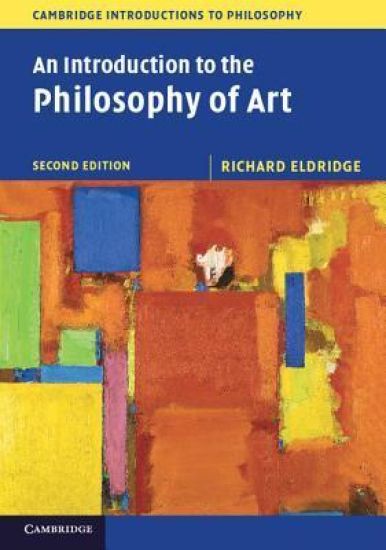
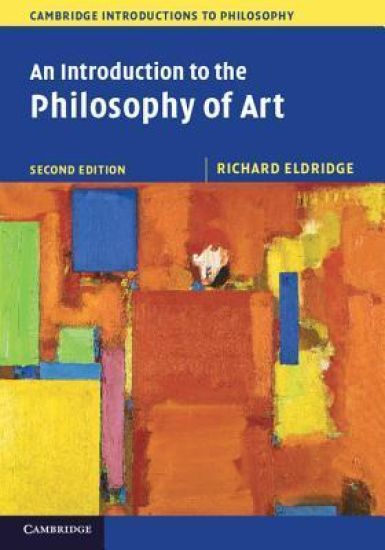
An Introduction to the Philosophy of Art is a clear and compact survey of philosophical theories of the nature and value of art, including in its scope literature, painting, sculpture, music, dance, architecture, movies, conceptual art and performance art. This second edition incorporates significant new research on topics including pictorial depiction, musical expression, conceptual art, Hegel, and art and society. Drawing on classical and contemporary philosophy, literary theory and art criticism, Richard Eldridge explores the representational, formal and expressive dimensions of art. He argues that the aesthetic and semantic density of the work, in inviting imaginative exploration, makes works of art cognitively, morally and socially important. This importance is further elaborated in discussions of artistic beauty, originality, imagination and criticism. His accessible study will be invaluable to students of philosophy of art and aesthetics.
An Introduction to the Philosophy of Art

An Introduction to the Philosophy of Art

Richard Eldridge

Cambridge University Press
2014
sidottu
An Introduction to the Philosophy of Art is a clear and compact survey of philosophical theories of the nature and value of art, including in its scope literature, painting, sculpture, music, dance, architecture, movies, conceptual art and performance art. This second edition incorporates significant new research on topics including pictorial depiction, musical expression, conceptual art, Hegel, and art and society. Drawing on classical and contemporary philosophy, literary theory and art criticism, Richard Eldridge explores the representational, formal and expressive dimensions of art. He argues that the aesthetic and semantic density of the work, in inviting imaginative exploration, makes works of art cognitively, morally and socially important. This importance is further elaborated in discussions of artistic beauty, originality, imagination and criticism. His accessible study will be invaluable to students of philosophy of art and aesthetics.
Literature, Life, and Modernity

Literature, Life, and Modernity

Richard Eldridge

Columbia University Press
2008
sidottu
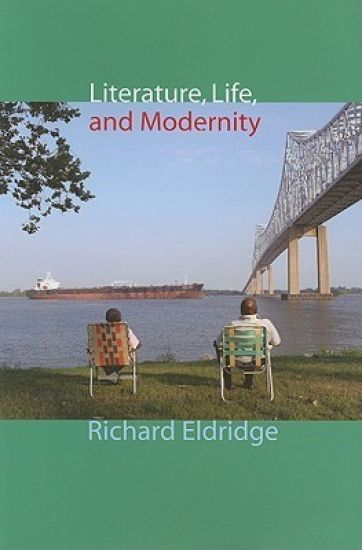
Richard Eldridge explores the ability of dense and formally interesting literature to respond to the complexities of modern life. Beyond simple entertainment, difficult modern works cultivate reflective depth and help their readers order and interpret their lives as subjects in relation to complex economies and technological systems. By imagining themselves in the role of the protagonist or the authorial persona, readers become immersed in structures of sustained attention, under which concrete possibilities of meaningful life, along with difficulties that block their realization, are tracked and clarified. Literary form, Eldridge argues, generates structures of care, reflection, and investment within readers, shaping--if not stabilizing--their interactions with everyday objects and events. Through the experience of literary forms of attention, readers may come to think and live more actively, more fully engaging with modern life, rather than passively suffering it. Eldridge considers the thought of Descartes, Kant, Adorno, Benjamin, Stanley Cavell, and Charles Taylor in his discussion of Goethe, Wordsworth, Rilke, Stoppard, and Sebald, advancing a philosophy of literature that addresses our desire to read and the meaning and satisfaction that literary attention brings to our fragmented modern lives.
The Persistence of Romanticism

The Persistence of Romanticism

Richard Eldridge

Cambridge University Press
2001
sidottu
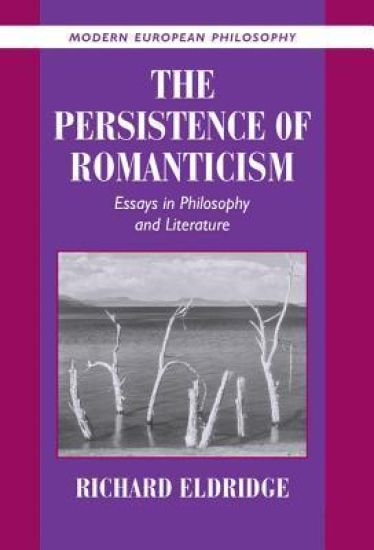
These challenging essays in this volume, first published in 2001, defend Romanticism against its critics. They argue that Romantic thought, interpreted as the pursuit of freedom in concrete contexts, remains a central and exemplary form of both artistic work and philosophical understanding. Marshalling a wide range of texts from literature, philosophy and criticism, Richard Eldridge traces the central themes and stylistic features of Romantic thinking in the work of Kant, Hölderlin, Wordsworth, Hardy, Wittgenstein, Cavell and Updike. Through his analysis he shows that Romanticism is neither emptily literary and escapist nor dogmatically optimistic and sentimental. This is the first serious philosophical defense of the ethical ideals of Romanticism and will appeal particularly to all professionals and students in philosophy, literature and aesthetics who are interested in what, philosophically, literature can show that philosophy cannot say.
The Persistence of Romanticism

The Persistence of Romanticism

Richard Eldridge

Cambridge University Press
2001
pokkari
These challenging essays defend Romanticism against its critics. They argue that Romantic thought, interpreted as the pursuit of freedom in concrete contexts, remains a central and exemplary form of both artistic work and philosophical understanding. Marshalling a wide range of texts from literature, philosophy and criticism, Richard Eldridge traces the central themes and stylistic features of Romantic thinking in the work of Kant, Hölderlin, Wordsworth, Hardy, Wittgenstein, Cavell and Updike. Through his analysis he shows that Romanticism is neither emptily literary and escapist nor dogmatically optimistic and sentimental. This is the first serious philosophical defense of the ethical ideals of Romanticism and will appeal particularly to all professionals and students in philosophy, literature and aesthetics who are interested in what, philosophically, literature can show that philosophy cannot say.
Leading a Human Life

Leading a Human Life

Richard Eldridge

University of Chicago Press
1997
sidottu
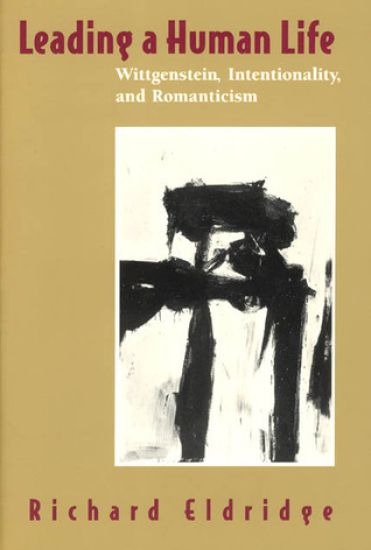
This study presents an account of Wittgenstein's "Philosophical Investigations", interpreting the text as displaying the human need to pursue an ideal of expressive freedom within the limits set by culture. The author sees Wittgenstein as a Romantic protagonist pondering on the nature of intentional consciousness, and ranging over ethics, aesthetics and philosophy of mind. Leading a human life becomes a creative act, of continuously seeking to overcome both complacency and scepticism. Eldridge aims to provide a careful reconstruction of the central motive of Wittgenstein's work.
Leading a Human Life

Leading a Human Life

Richard Eldridge

University of Chicago Press
1997
nidottu
This study presents an account of Wittgenstein's "Philosophical Investigations", interpreting the text as displaying the human need to pursue an ideal of expressive freedom within the limits set by culture. The author sees Wittgenstein as a Romantic protagonist pondering on the nature of intentional consciousness, and ranging over ethics, aesthetics and philosophy of mind. Leading a human life becomes a creative act, of continuously seeking to overcome both complacency and scepticism. Eldridge aims to provide a careful reconstruction of the central motive of Wittgenstein's work.