

Kirjailija
Richard Ellis
Kirjat ja teokset yhdessä paikassa: 29 kirjaa, julkaisuja vuosilta 1994-2025, suosituimpien joukossa History of Thornbury Castle. Vertaile teosten hintoja ja tarkista saatavuus suomalaisista kirjakaupoista.
29 kirjaa
Kirjojen julkaisuhaarukka 1994-2025.

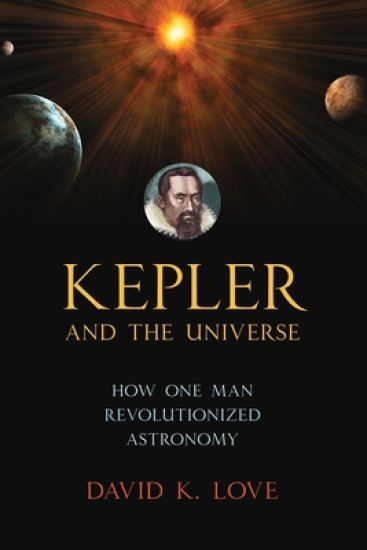
A contemporary of Galileo and a forerunner of Isaac Newton, Johannes Kepler (1571-1630) was a pioneering German scientist and a pivotal figure in the history of astronomy. This colorful, well-researched biography brings the man and his scientific discoveries to life, showing how his contributions were every bit as important as those of Copernicus, Galileo, and Newton.It was Kepler who first advocated the completely new concept of a physical force emanating from the sun that controls the motion of the planets--today we call this gravity and take it for granted. He also established that the orbits of the planets were elliptical in shape and not circular. And his three laws of planetary motion are still used by contemporary astronomers and space scientists.The author focuses not just on these and other momentous breakthroughs but also on Kepler's arduous life, punctuated by frequent tragedy and hardships. His first wife died young, and eight of the twelve children he fathered succumbed to disease in infancy or childhood. He was frequently caught up in the religious persecutions of the day. His mother narrowly escaped death when she was accused of being a witch.Intermingling historical and personal details of Kepler's life with lucid explanations of his scientific research, this book presents a sympathetic portrait of the man and underscores the critical importance of Kepler's discoveries in the history of astronomy.

Ever since 1789, Americans have engaged in the time-honored tradition of judging presidential candidates by their personalities. While it may sound unwise to pick the leader of the free world based on personality traits rather than platforms, policies, and ideology, that is exactly what will happen in the 2024 election. In this exploration of U.S. presidential elections, personality expert Merrick Rosenberg and co-author Richard Ellis reveal the pattern behind who takes the White House and why. You will discover the unique characteristics of Eagles (Donald Trump and Franklin D. Roosevelt), Parrots (Bill Clinton and Ronald Reagan), Doves (Dwight D. Eisenhower and Jimmy Carter), and Owls (George H.W. Bush and Richard Nixon). You will find that almost nothing stops certain personalities from winning elections.Personality Wins shows how America's national personality contest worked before 1932 and how it has changed in the era of radio, TV, and digital media. Through unforgettable and often unbelievable stories from the last twenty-three elections, Rosenberg and Ellis show how personality shapes the vote-and how it will determine the outcome of 2024. Merrick has put together an excellent guide to understanding politics and human nature as well, which I will be eagerly sharing with my media and politics students." - Jon-Christopher Bua, White House Correspondent, Talk Media News and Adjunct Professor, The Catholic University of America

Ever since 1789, Americans have engaged in the time-honored tradition of judging presidential candidates by their personalities. While it may sound unwise to pick the leader of the free world based on personality traits rather than platforms, policies, and ideology, that is exactly what will happen in the 2024 election. In this exploration of U.S. presidential elections, personality expert Merrick Rosenberg and co-author Richard Ellis reveal the pattern behind who takes the White House and why. You will discover the unique characteristics of Eagles (Donald Trump and Franklin D. Roosevelt), Parrots (Bill Clinton and Ronald Reagan), Doves (Dwight D. Eisenhower and Jimmy Carter), and Owls (George H.W. Bush and Richard Nixon). You will find that almost nothing stops certain personalities from winning elections.Personality Wins shows how America's national personality contest worked before 1932 and how it has changed in the era of radio, TV, and digital media. Through unforgettable and often unbelievable stories from the last twenty-three elections, Rosenberg and Ellis show how personality shapes the vote-and how it will determine the outcome of 2024. Merrick has put together an excellent guide to understanding politics and human nature as well, which I will be eagerly sharing with my media and politics students." - Jon-Christopher Bua, White House Correspondent, Talk Media News and Adjunct Professor, The Catholic University of America

Usually remembered for its slogan 'Tippecanoe and Tyler too,' the election of 1840 is also the first presidential election of which it might be truly said, 'It's the Economy, Stupid.' Tackling a contest best known for log cabins, cider barrels, and catchy songs, this timely volume reveals that the election of 1840 might be better understood as a case study of how profoundly the economy shapes the presidential vote.Richard J. Ellis, a veteran scholar of presidential politics, suggests that the election pitting the Democratic incumbent Martin Van Buren against Whig William Henry Harrison should also be remembered as the first presidential election in which a major political party selected - rather than merely anointed - its nominee at a national nominating convention. In this analysis, the convention's selection, as well as Henry Clay's post-convention words and deeds, emerge as crucial factors in the shaping of the nineteenth-century partisan nation. Exploring the puzzle of why the Whig Party's political titan Henry Clay lost out to a relative political also-ran, Ellis teases out the role the fluctuating economy and growing anti-slavery sentiment played in the party's fateful decision to nominate the Harrison-Tyler ticket. His work dismantles the caricature of the 1840 campaign (a.k.a. the 'carnival campaign') as all froth and no substance, instead giving due seriousness to the deeply held moral commitments, as well as anxieties about the political system, that informed the campaign.In Old Tip vs. the Sly Fox, the campaign of 1840 can finally be seen clearly for what it was: a contest of two profoundly different visions of policy and governance, including fundamental, still-pressing questions about the place of the presidency and Congress in the US political system.

Plato’s Symposium, composed in the early fourth century BC, demonstrates how powerful the skills of reasoning and evaluation can be. Known to philosophers for its seminal discussion of the relationship of love to knowledge, it is also a classic text for demonstrating the two critical thinking skills that define Plato’s whole body of work. Plato’s philosophical technique of dialogue is the perfect frame for producing arguments and presenting a persuasive case for a given point of view, and at the same time judging the strength of arguments, their relevance and their acceptability. Staging a fictional debate between characters (wealthy Athenians at a dinner party) who must respond in turn to each others’ arguments and points of view means that, at every stage, Plato evaluates the previous argument, assesses its strength and relevance, and then proceeds (through the next character) to reason out a new argument in response. Exerting unparalleled influence on the techniques of philosophical thought, Plato’s use of dialogue is a supreme example of these two crucial critical thinking skills.
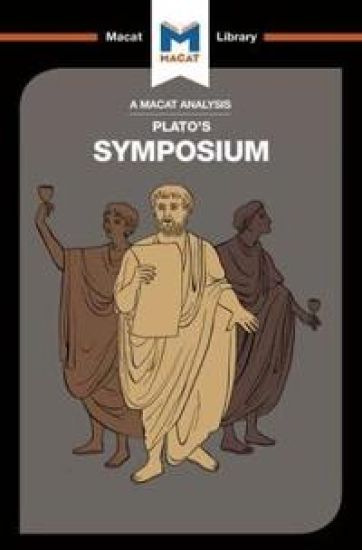
Plato’s Symposium, composed in the early fourth century BC, demonstrates how powerful the skills of reasoning and evaluation can be. Known to philosophers for its seminal discussion of the relationship of love to knowledge, it is also a classic text for demonstrating the two critical thinking skills that define Plato’s whole body of work. Plato’s philosophical technique of dialogue is the perfect frame for producing arguments and presenting a persuasive case for a given point of view, and at the same time judging the strength of arguments, their relevance and their acceptability. Staging a fictional debate between characters (wealthy Athenians at a dinner party) who must respond in turn to each others’ arguments and points of view means that, at every stage, Plato evaluates the previous argument, assesses its strength and relevance, and then proceeds (through the next character) to reason out a new argument in response. Exerting unparalleled influence on the techniques of philosophical thought, Plato’s use of dialogue is a supreme example of these two crucial critical thinking skills.
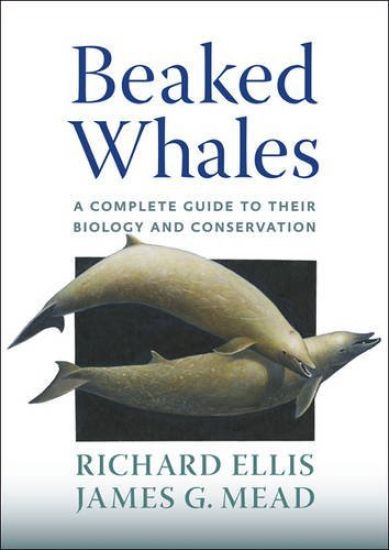
Beaked whales have been shrouded in mystery for most of the twentieth century. Denizens of deep, remote ocean waters and highly resistant to life in captivity, they have proven notoriously difficult for humans to observe. Over the past few decades, however, scientists have gained a better understanding of this distinct group of cetaceans, deciphering the natural history of the twenty-two beaked whale species. Here, famed artist and naturalist Richard Ellis and leading beaked whale researcher James G. Mead bring these elusive marine mammals into the limelight. Beaked whales' generous life spans can extend well past 70 years. They spend their decades diving to extreme depths in search of prey, which they capture by expanding their oral cavity suddenly to suck in the squid or fish they are hunting. It appears that these sleek predators may engage in fierce, clandestine aquatic battles, as the bodies of many males are covered in scars. Because many species are only somewhat larger than dolphins, they are often confused with porpoises; however, some larger beaked whale species may grow to 40 feet. These enigmatic and compelling creatures need our help; their numbers are declining, perhaps due to the damaging effects of naval sonar on their sophisticated auditory systems. In Ellis and Mead's book, the beaked whales finally get their due. The duo provides a combination of captivating stories about the species, original Richard Ellis art, and photos from leading natural history photographers. The result is an accessible, beautiful book-the first of its kind on this unusual group of cetaceans. Meet the beaked whales, and enjoy the fascinating and mysterious world in which they live.

Richard Ellis is a consultant in communications and the successful author of 'Communication for Engineers'. In each chapter he highlights key points and situations, and provides exercises to consolidate what has already been learnt. The book ends with a 'toolbox' of useful information on subjects such as writing letters, spelling, punctuation, using abbreviations, studying for exams, using libraries and training.Written in clear, informative English, with the emphasis on the practical, this book is essential reading for both students and professionals in the construction industry.
This entertaining account of one man's journey through an extraordinary existence is compulsive reading. Focusing on the most memorable events spanning 50 years, these anecdotes are fascinating, funny, sad, thoughtful, and thrilling, and written with an honesty which is immensely appealing. They depict a life that began conventionally enough with school and a Medical training, but that branched out into all sorts of unexpected byways. The intelligence that can be sensed in this account is that of a person who was never going to settle for a conventional existence and who grabbed life with both hands in a desire to experience as much as possible. Even in times of sadness or setback, this writer finds resilience and has a wonderful gratitude for life. The author has a story-telling gift that cannot be learned, which lifts this autobiography above others as it requires no personal knowledge of the man or of the places and people he has written about in order to be thoroughly enjoyed.




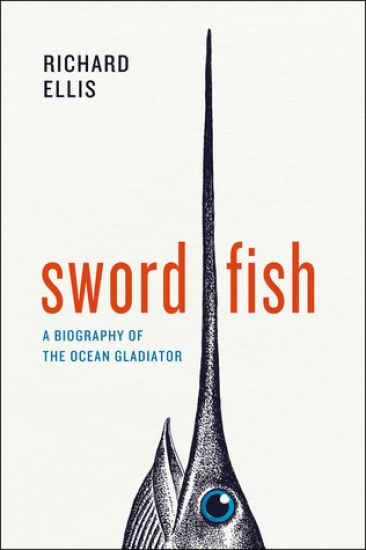
A perfect fish in the evolutionary sense, the broadbill swordfish derives its name from its distinctive bill - much longer and wider than the bill of any other billfish - which is flattened into the sword we all recognize. And though the majesty and allure of this warrior fish has commanded much attention - from adventurous sportfishers eager to land one to ravenous diners eager to taste one - no one has yet been bold enough to truly take on the swordfish as a biographer. Who better to do so than Richard Ellis, a master of marine natural history? "Swordfish" is his ode to this mighty fighter. The swordfish, whose scientific name means "gladiator," can take on anyone and anything, including ships, boats, sharks, submarines, divers, and whales, and in this book Ellis regales us with tales of its vitality and strength. He makes it easy to understand why the fish has inspired so many to take up the challenge of epic sportfishing battles as well as the longline fishing expeditions recounted by writers such as Linda Greenlaw and Sebastian Junger. Swordfish, he explains, hunt at the surface as well as thousands of feet down in the depths, and like tuna and some sharks, have an unusual circulatory system that gives them a significant advantage over their prey, no matter the depth in which they hunt. Their adaptability enables them to swim in waters the world over, and the largest ever caught on rod and reel was landed in Chile in 1953, weighing in at 1,182 pounds. Ellis' detailed and fascinating, fact-filled biography takes us behind the swordfish's huge, cornflower-blue eyes and provides a complete history of the fish from prehistoric fossils to its present-day endangerment, as our taste for swordfish has had a drastic effect on their population the world over. Throughout, Ellis' own drawings and paintings capture the allure of the fish and bring it to life for armchair fishermen and landlocked readers alike.
The Gospels of St. Matthew, St. Mark, St. Luke and St. John: Together with the Acts of the Apostles
Richard Ellis
Literary Licensing, LLC
2012
nidottu

The Gospels of St. Matthew, St. Mark, St. Luke and St. John: Together with the Acts of the Apostles
Richard Ellis
Literary Licensing, LLC
2012
sidottu
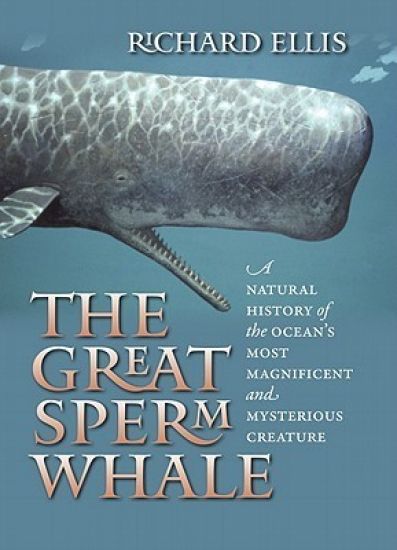
Over the past several decades, Richard Ellis has produced a remarkable body of work that has been called ""magnificent"" (Washington Post Book World), ""masterful"" (Scientific American), ""magical"" (Men's Journal), and a ""dazzling tour de force"" (Christian Science Monitor). Ellis's new book—a fascinating tour through the world of the sperm whale—will surely inspire more such praise for the author heralded by Publisher Weekly as ""America's foremost writer on marine research.""Written with Ellis's deep knowledge and trademark passion, verve, and wit—and illustrated with a wide array of images including his own signature artwork—his study covers the full spectrum of the sperm whale's existence from its prehistoric past to its current endangered existence. Ellis, as no one else can, illuminates the iconic impact of Physeter macrocephalus (""big-headed blower"") on our history, environment, and culture, with a substantial nod to Herman Melville and Moby-Dick, the great novel that put the sperm whale (and whaling) on the literary map.Ranging far and wide, Ellis covers the sperm whale's evolution, ecology, biology, anatomy, behavior, social organization, intelligence, communications, migrations, diet, and breeding. He also devotes considerable space to the whale's hunting prowess, including its clashes with the giant squid, and to the history of the whaling industry that decimated its numbers during the last two centuries. He even includes a story about a beached juvenile he helped rescue, an event that provided scientists with one of their first opportunities to observe a sperm whale in the water and up close.Offering a rich tapestry for anyone with an interest in the marvels of ocean life, Ellis's book provides an indispensable guide to the life and times of one of the planet's most intelligent, elusive, and endangered species.