Kirjailija
Richard Freadman
Kirjat ja teokset yhdessä paikassa: 6 kirjaa, julkaisuja vuosilta 1986-2023, suosituimpien joukossa Stepladder to Hindsight. Vertaile teosten hintoja ja tarkista saatavuus suomalaisista kirjakaupoista.
6 kirjaa
Kirjojen julkaisuhaarukka 1986-2023.

Re-thinking Theory offers a bold approach to literary studies, itself explicitly theoretical and yet making a searching critique of the modes, concepts and movements which comprise literary theory. Discussing key concepts such as ideology, signification and discourse, and analysing schools including that of F. R. Leavis, Althusserian Marxism, Derridean and Foucaultian poststructuralism, and New Historicism, the authors argue that there are major deficiencies in the conceptual foundations and the literary and political implications of much literary theory. These deficiencies are ascribed principally to three aspects of theoretical schools: the commitment to a non-referential view of language, the rejection of substantive accounts of the individual, and a repudiation of moral and aesthetic evaluation. The 'alternative account' offered by Professors Freadman and Miller incorporates the values renounced by this kind of literary theory and places a central emphasis on ethical discourse.
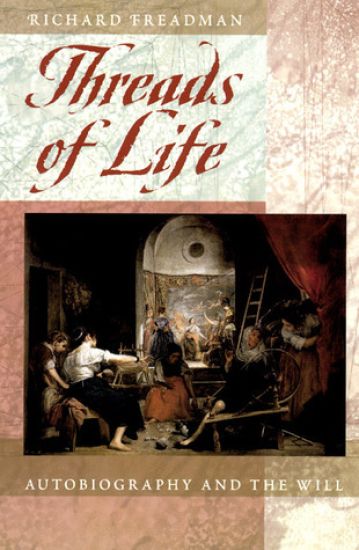
Many autobiographers share profound questions about human life with their readers - questions like: To what extent was my life imposed on me? To what extent did I bring it about through particular choices and actions, through the acivity of my own will? Indeed, the issue of will is central to autobiographical writing, and some of the greatest autobiographies give extended consideration to the will - its nature, its powers and its limitations. In this new study, Richard Freadman offers the first sustained account of how changing theological, philosophical and psychological accounts of the human will have been reflected in the writing of autobiography, and of how autobiography in its turn has helped shape various understandings of the will. Early chapters trace narrative representations of the will from antiquity to postmodernism, with particular emphasis on late modernity's culture of the will. Later chapters then present detailed and original readings of autobiographical texts by Louis Althusser, Roland Barthes, B.F. Skinner, Ernest Hemingway, Simone de Beauvoir, Arthur Koestler, Stephen Spender and Diana Trilling. "Threads of Life" includes a theoretical defense of the view that autobiographers are, in varying degrees, agents in their own texts. Freadman argues that late modernity has inherited deeply conflicted attitudes to the will. He suggests that these attitudes, now deeply embedded in contemporary cultural discourse, need reexamining. In this, he contends, "reflective autobiography" has an important part to play.
Many autobiographers share profound questions about human life with their readers - questions like: To what extent was my life imposed on me? To what extent did I bring it about through particular choices and actions, through the acivity of my own will? Indeed, the issue of will is central to autobiographical writing, and some of the greatest autobiographies give extended consideration to the will - its nature, its powers and its limitations. In this new study, Richard Freadman offers the first sustained account of how changing theological, philosophical and psychological accounts of the human will have been reflected in the writing of autobiography, and of how autobiography in its turn has helped shape various understandings of the will. Early chapters trace narrative representations of the will from antiquity to postmodernism, with particular emphasis on late modernity's culture of the will. Later chapters then present detailed and original readings of autobiographical texts by Louis Althusser, Roland Barthes, B.F. Skinner, Ernest Hemingway, Simone de Beauvoir, Arthur Koestler, Stephen Spender and Diana Trilling. "Threads of Life" includes a theoretical defense of the view that autobiographers are, in varying degrees, agents in their own texts. Freadman argues that late modernity has inherited deeply conflicted attitudes to the will. He suggests that these attitudes, now deeply embedded in contemporary cultural discourse, need reexamining. In this, he contends, "reflective autobiography" has an important part to play.