Kirjojen hintavertailu. Mukana 12 390 323 kirjaa ja 12 kauppaa.

Kirjailija

Richard G. Compton

Kirjat ja teokset yhdessä paikassa: 2 kirjaa, julkaisuja vuosilta 1996-2024, suosituimpien joukossa Electrode Potentials. Vertaile teosten hintoja ja tarkista saatavuus suomalaisista kirjakaupoista.

2 kirjaa

Kirjojen julkaisuhaarukka 1996-2024.

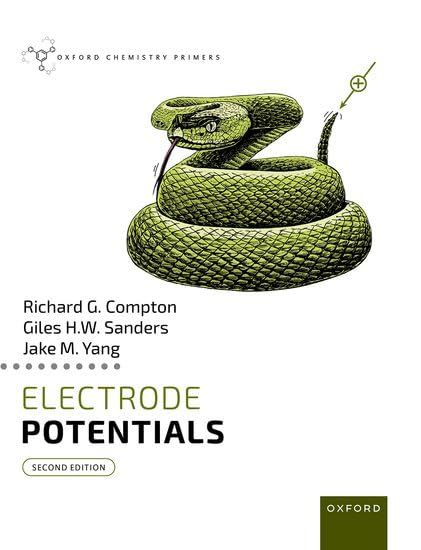
Electrode Potentials

Electrode Potentials

Richard G. Compton; Giles H. W. Sanders; Jake M. Yang

Oxford University Press
2024
nidottu
This richly illustrated addition to the renowned Oxford Chemistry Primer series provides a comprehensive introduction to equilibrium electrochemistry. Dealing with electrode potentials and their applications, this primer focuses on understanding the foundations of electrochemistry and how it can be applied to practical problems. Key features: - Includes important information on a variety of subjects in electrochemistry including equilibrium constants, Gibbs Energy, enthalpy and entropy changes of chemical reactions, and activity coefficients - Extensive problems and worked examples New to this edition: - An introduction to batteries and fuel cells - Additional bibliographic notes on historical founders and modern influencers of electrochemistry - Frost and Latimer diagrams - Enhanced discussion of diffusion and transport - Industrial electro-synthetic processes Digital formats and resources: The second edition is available for students and institutions to purchase in a variety of formats: the e-book and Science Trove offer a mobile experience and convenient access along with functionality tools, navigation features and links that offer extra learning support. For more information about e-books, please visit www.oxfordtextbooks.co.uk/ebooks
Electrode Potentials

Electrode Potentials

Richard G. Compton; Giles H. W. Sanders

Oxford University Press
1996
nidottu
This primer seeks to provide an introduction to the science of equilibrium electrochemistry; specifically it addresses the topics of electrode potentials and their applications. It builds on a knowledge of elementary thermodynamics giving the reader an appreciation of the origin of electrode potentials and shows how these are used to deduce a wealth of chemically important information and data such as equilibrium constants, the free energy, enthalpy and entrophy changes of chemical reactions, activity coefficients, the selective sensing of ions. The emphasis throughout is on understanding the foundations of the subject and how it may be used to study problems of chemical interest. The Primer is directed towards students in the early years of their university courses in chemistry and allied subjects; accordingly, the mathematical aspects of the subject have been minimized as far as is consistent with clarity.