Kirjojen hintavertailu. Mukana 12 390 323 kirjaa ja 12 kauppaa.

Kirjailija

Richard G. Klein

Kirjat ja teokset yhdessä paikassa: 7 kirjaa, julkaisuja vuosilta 1899-2009, suosituimpien joukossa Ice-Age Hunters of the Ukraine. Vertaile teosten hintoja ja tarkista saatavuus suomalaisista kirjakaupoista.

7 kirjaa

Kirjojen julkaisuhaarukka 1899-2009.

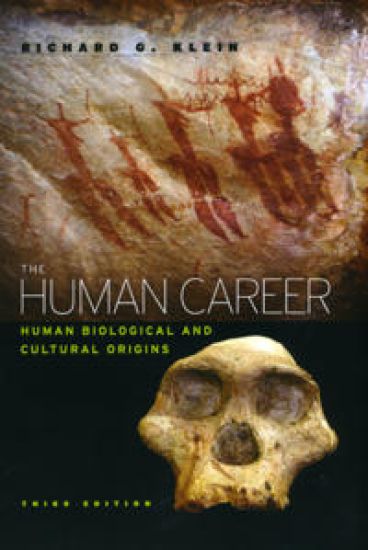
The Human Career

The Human Career

Richard G. Klein

University of Chicago Press
2009
sidottu
Since its publication in 1989, "The Human Career" has proved to be an indispensable tool in teaching human origins. This substantially revised third edition retains Richard G. Klein's innovative approach while showing how cumulative discoveries and analyses over the past ten years have significantly refined our knowledge of human evolution. Klein chronicles the evolution of people from the earliest primates through the emergence of fully modern humans within the past 200,000 years. His comprehensive treatment stresses recent advances in knowledge, including, for example, ever more abundant evidence that fully modern humans originated in Africa and spread from there, replacing the Neanderthals in Europe and equally archaic people in Asia. With its coverage of both the fossil record and the archaeological record over the 2.5 million years for which both are available, "The Human Career" demonstrates that human morphology and behavior evolved together. Throughout the book, Klein presents evidence for alternative points of view but does not hesitate to make his own position clear. In addition to outlining the broad pattern of human evolution, "The Human Career" details the kinds of data that support it. For the third edition, Klein has added numerous tables and a fresh citation system designed to enhance readability, especially for students. He has also included more than fifty new illustrations to help lay readers grasp the fossils, artifacts, and other discoveries on which specialists rely. With abundant references and hundreds of images, charts, and diagrams, this new edition is unparalleled in its usefulness for teaching human evolution.
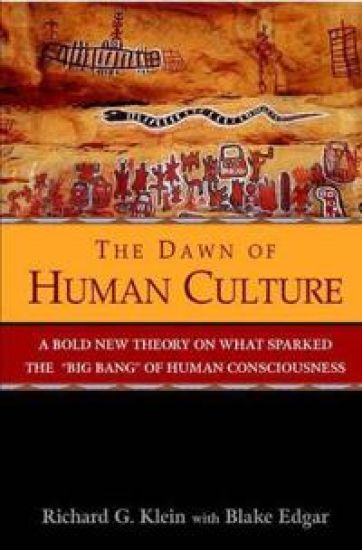
The Dawn of Human Culture

The Dawn of Human Culture

Richard G. Klein; Edgar Blake; Blake Edgar

John Wiley Sons Inc
2002
sidottu
A bold new theory on what sparked the ""big bang"" of human cultureThe abrupt emergence of human culture over a stunningly short period continues to be one of the great enigmas of human evolution. This compelling book introduces a bold new theory on this unsolved mystery. Author Richard Klein reexamines the archaeological evidence and brings in new discoveries in the study of the human brain. These studies detail the changes that enabled humans to think and behave in far more sophisticated ways than before, resulting in the incredibly rapid evolution of new skills. Richard Klein has been described as ""the premier anthropologist in the country today"" by Evolutionary Anthropology. Here, he and coauthor Blake Edgar shed new light on the full story of a truly fascinating period of evolution.Richard G. Klein, PhD (Palo Alto, CA), is a Professor of Anthropology at Stanford University. He is the author of the definitive academic book on the subject of the origins of human culture, The Human Career. Blake Edgar (San Francisco, CA) is the coauthor of the very successful From Lucy to Language, with Dr. Donald Johanson. He has written extensively for Discover, GEO, and numerous other magazines.
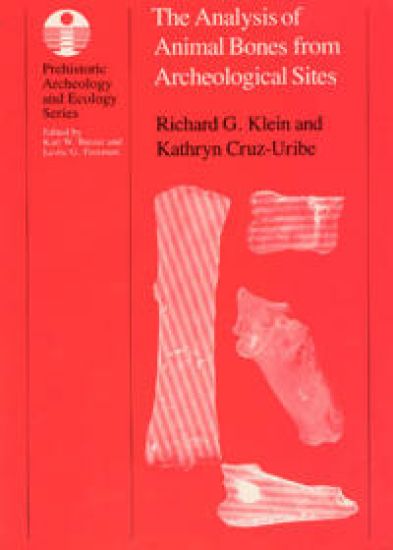
The Analysis of Animal Bones from Archeological Sites

The Analysis of Animal Bones from Archeological Sites

Richard G. Klein; Kathryn Cruz-Uribe

University of Chicago Press
1984
nidottu
In growing numbers, archeologists are specializing in the analysis of excavated animal bones as clues to the environment and behavior of ancient peoples. This pathbreaking work provides a detailed discussion of the outstanding issues and methods of bone studies that will interest zooarcheologists as well as paleontologists who focus on reconstructing ecologies from bones. Because large samples of bones from archeological sites require tedious and time-consuming analysis, the authors also offer a set of computer programs that will greatly simplify the bone specialist's job. After setting forth the interpretive framework that governs their use of numbers in faunal analysis, Richard G. Klein and Kathryn Cruz-Uribe survey various measures of taxonomic abundance, review methods for estimating the sex and age composition of a fossil species sample, and then give examples to show how these measures and sex/age profiles can provide useful information about the past. In the second part of their book, the authors present the computer programs used to calculate and analyze each numerical measure or count discussed in the earlier chapters. These elegant and original programs, written in BASIC, can easily be used by anyone with a microcomputer or with access to large mainframe computers.