Kirjojen hintavertailu. Mukana 12 390 323 kirjaa ja 12 kauppaa.

Kirjailija

Richard Gaskin

Kirjat ja teokset yhdessä paikassa: 13 kirjaa, julkaisuja vuosilta 1995-2025, suosituimpien joukossa Language, Truth, and Literature. Vertaile teosten hintoja ja tarkista saatavuus suomalaisista kirjakaupoista.

13 kirjaa

Kirjojen julkaisuhaarukka 1995-2025.

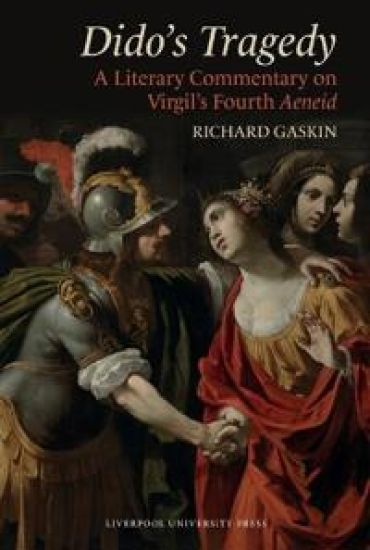
Dido’s Tragedy

Dido’s Tragedy

Richard Gaskin

LIVERPOOL UNIVERSITY PRESS
2025
sidottu
Dido’s Tragedy is a literary commentary, highly original in both form and content, on the Latin text of Virgil’s Aeneid, Book 4, which concerns the love affair between Dido and Aeneas and its tragic denouement. A substantial introduction discusses the book’s historical and literary context and provides a detailed analysis of its connections with the genre of tragedy, the role of the supernatural, the characterization of Dido and Aeneas, and the nature and development of their relationship. For the commentary the Latin text is divided into manageable excerpts, each being accompanied by a translation and a bespoke literary essay; there is also an extensive bibliography. The literary essays examine points of interest in each excerpt and relate these to the themes highlighted in the introduction; frequent reference is made to other classical works, to relevant texts in the European literary tradition, to other Virgilian commentaries from Servius onwards, and to recent secondary literature on Dido, Virgil, and tragedy. Readers are provided with plenty of signposts to help them investigate questions that interest them. The text of Aeneid 4 contains some notorious interpretative cruces: the commentary discusses these problematic passages in detail, fitting them into an overall interpretation of the book and of the Aeneid as a whole.
Othello and the Problem of Knowledge

Othello and the Problem of Knowledge

Richard Gaskin

TAYLOR FRANCIS LTD
2024
nidottu
This book analyses the epistemological problems that Shakespeare explores in Othello. In particular, it uses the methods of analytic philosophy, especially the work of the later Wittgenstein, to characterize these problems and the play.Shakespeare’s Othello is often thought to connect with traditional sceptical problems, and in particular with the problem of other minds. In this book, Richard Gaskin argues that the play does indeed connect in interesting—but also in surprising and so far relatively unexplored—ways with traditional epistemological concerns. Shakespeare presupposes a generally Wittgensteinian model of mind as revealed in behaviour, and communication as necessarily successful in general. Gaskin examines different epistemological models of the tragedy, and argues that it is useful to apply materials from Wittgenstein’s On Certainty to the analysis of Othello’s loss of confidence in Desdemona’s fidelity: Othello treats Desdemona’s fidelity as a ‘hinge certainty’, something that is so fundamental to the language-game that abandoning it results—so Wittgenstein predicts—in chaos and madness. The tragedy arises, Gaskin suggests, from treating the wrong kind of thing as a hinge certainty. Othello and the Problem of Knowledge will appeal to scholars and advanced students interested in aesthetics, epistemology, philosophy of literature, Shakespeare, and Wittgenstein.
Othello and the Problem of Knowledge

Othello and the Problem of Knowledge

Richard Gaskin

TAYLOR FRANCIS LTD
2023
sidottu
This book analyses the epistemological problems that Shakespeare explores in Othello. In particular, it uses the methods of analytic philosophy, especially the work of the later Wittgenstein, to characterize these problems and the play.Shakespeare’s Othello is often thought to connect with traditional sceptical problems, and in particular with the problem of other minds. In this book, Richard Gaskin argues that the play does indeed connect in interesting—but also in surprising and so far relatively unexplored—ways with traditional epistemological concerns. Shakespeare presupposes a generally Wittgensteinian model of mind as revealed in behaviour, and communication as necessarily successful in general. Gaskin examines different epistemological models of the tragedy, and argues that it is useful to apply materials from Wittgenstein’s On Certainty to the analysis of Othello’s loss of confidence in Desdemona’s fidelity: Othello treats Desdemona’s fidelity as a ‘hinge certainty’, something that is so fundamental to the language-game that abandoning it results—so Wittgenstein predicts—in chaos and madness. The tragedy arises, Gaskin suggests, from treating the wrong kind of thing as a hinge certainty. Othello and the Problem of Knowledge will appeal to scholars and advanced students interested in aesthetics, epistemology, philosophy of literature, Shakespeare, and Wittgenstein.
Language and World

Language and World

Richard Gaskin

TAYLOR FRANCIS LTD
2022
nidottu
This book defends a version of linguistic idealism, the thesis that the world is a product of language. In the course of defending this radical thesis, Gaskin addresses a wide range of topics in contemporary metaphysics, philosophy of language, philosophical logic, and syntax theory.Starting from the context and compositionality principles, and the idea of a systematic theory of meaning in the Tarski–Davidson tradition, Gaskin argues that the sentence is the primary unit of linguistic meaning, and that the main aspects of meaning, sense and reference, are themselves theoretical posits. Ontology, which is correlative with reference, emerges as language-driven. This linguistic idealism is combined with a realism that accepts the objectivity of science, and it is accordingly distinguished from empirical pragmatism. Gaskin contends that there is a basic metaphysical level at which everything is expressible in language; but the vindication of linguistic idealism is nuanced inasmuch as there is also a derived level, asymmetrically dependant on the basic level, at which reality can break free of language and reach into the realms of the unnameable and indescribable.Language and World will be of interest to scholars and advanced students working in metaphysics, philosophy of language, and linguistics.
Tragedy and Redress in Western Literature
This book offers a unique interpretation of tragic literature in the Western tradition, deploying the method and style of Analytic philosophy. Richard Gaskin argues that tragic literature seeks to offer moral and linguistic redress (compensation) for suffering. Moral redress involves the balancing of a protagonist’s suffering with guilt (and vice versa): Gaskin contends that, to a much greater extent than has been recognized by recent critics, traditional tragedy represents suffering as incurred by avoidable and culpable mistakes of a cognitive nature. Moral redress operates in the first instance at the level of the individual agent. Linguistic redress, by contrast, operates at a higher level of generality, namely at the level of the community: its fundamental motor is the sheer expressibility of suffering in words. Against many writers on tragedy, Gaskin argues that language is competent to express pain and suffering, and that tragic literature has that expression as one its principal purposes.The definition of tragic literature in this book is expanded to include more than stage drama: the treatment stretches from the Classical and Medieval periods through to the early twentieth century. There is a special focus on Sophocles, but Gaskin takes account of most other major tragic authors in the European tradition, including Homer, Aeschylus, Euripides, Virgil, Seneca, Chaucer, Marlowe, Shakespeare, Corneille, Racine, Lessing, Goethe, Schiller, Kleist, Büchner, Ibsen, Hardy, Kafka, and Mann; lesser-known areas, such as Renaissance neo-Latin tragedy, are also covered. Among theorists of tragedy, Gaskin concentrates on Aristotle and Bradley; but the contributions of numerous contemporary commentators are also assessed. Tragedy and Redress in Western Literature: A Philosophical Perspective offers a new and genuinely interdisciplinary perspective on tragedy that will be of considerable interest both to philosophers of literature and to literary critics.
Language and World

Language and World

Richard Gaskin

Routledge
2020
sidottu
This book defends a version of linguistic idealism, the thesis that the world is a product of language. In the course of defending this radical thesis, Gaskin addresses a wide range of topics in contemporary metaphysics, philosophy of language, philosophical logic, and syntax theory.Starting from the context and compositionality principles, and the idea of a systematic theory of meaning in the Tarski–Davidson tradition, Gaskin argues that the sentence is the primary unit of linguistic meaning, and that the main aspects of meaning, sense and reference, are themselves theoretical posits. Ontology, which is correlative with reference, emerges as language-driven. This linguistic idealism is combined with a realism that accepts the objectivity of science, and it is accordingly distinguished from empirical pragmatism. Gaskin contends that there is a basic metaphysical level at which everything is expressible in language; but the vindication of linguistic idealism is nuanced inasmuch as there is also a derived level, asymmetrically dependant on the basic level, at which reality can break free of language and reach into the realms of the unnameable and indescribable.Language and World will be of interest to scholars and advanced students working in metaphysics, philosophy of language, and linguistics.
Tragedy and Redress in Western Literature
This book offers a unique interpretation of tragic literature in the Western tradition, deploying the method and style of Analytic philosophy. Richard Gaskin argues that tragic literature seeks to offer moral and linguistic redress (compensation) for suffering. Moral redress involves the balancing of a protagonist’s suffering with guilt (and vice versa): Gaskin contends that, to a much greater extent than has been recognized by recent critics, traditional tragedy represents suffering as incurred by avoidable and culpable mistakes of a cognitive nature. Moral redress operates in the first instance at the level of the individual agent. Linguistic redress, by contrast, operates at a higher level of generality, namely at the level of the community: its fundamental motor is the sheer expressibility of suffering in words. Against many writers on tragedy, Gaskin argues that language is competent to express pain and suffering, and that tragic literature has that expression as one its principal purposes.The definition of tragic literature in this book is expanded to include more than stage drama: the treatment stretches from the Classical and Medieval periods through to the early twentieth century. There is a special focus on Sophocles, but Gaskin takes account of most other major tragic authors in the European tradition, including Homer, Aeschylus, Euripides, Virgil, Seneca, Chaucer, Marlowe, Shakespeare, Corneille, Racine, Lessing, Goethe, Schiller, Kleist, Büchner, Ibsen, Hardy, Kafka, and Mann; lesser-known areas, such as Renaissance neo-Latin tragedy, are also covered. Among theorists of tragedy, Gaskin concentrates on Aristotle and Bradley; but the contributions of numerous contemporary commentators are also assessed. Tragedy and Redress in Western Literature: A Philosophical Perspective offers a new and genuinely interdisciplinary perspective on tragedy that will be of considerable interest both to philosophers of literature and to literary critics.
Language, Truth, and Literature

Language, Truth, and Literature

Richard Gaskin

Oxford University Press
2016
nidottu
According to the literary humanist, works of imaginative literature have an objective meaning which is fixed at the time of their production and which is the same for all readers, then and thereafter, not subject to the vagaries of individual readers' responses. Such works refer to the real world and make statements about that world which are of cognitive as well as aesthetic value; the two kinds of value are indeed intimately connected. Richard Gaskin offers a defence of literary humanism, so understood, against assault from two directions. On the one hand, some analytic aestheticians have argued that works of literature do not bear referentially on the world and do not make true statements about it; others hold that such works do not make a contribution to knowledge; others again allow that works of literature may have cognitive value, but deny that this depends on their having truth or reference. On the other hand, reception-theorists and deconstructionists have rejected the humanist's objectivist conception of literary meaning, and typically take a pragmatist and anti-realist approach to truth and meaning. This latter, poststructuralist treatment of literature has often been accompanied by a radical politicization of its study. In defending literary humanism against these various forms of attack, Gaskin shows that the reading and appreciation of literature is a cognitive activity fully on a par with scientific investigation, and that we can and should engage in it disinterestedly for the sake of what can be learnt about the world and our place in it.
Simplicius: On Aristotle Categories 9-15

Simplicius: On Aristotle Categories 9-15

Richard Gaskin

Bloomsbury Academic
2014
nidottu
Aristotle classified the things in the world into ten categories: substance, quantity, quality, relative, and six others. Plotinus, the founder of Neoplatonism, attacked the classification, accepting only these first four categories, rejecting the other six, and adding one of this own: change. He preferred Plato’s classification into five kinds which included change. In this part of his commentary, Simplicius records the controversy on the six categories which Plotinus rejected: acting, being acted upon, being in a position, when, where, and having on. Plotinus’ pupil and editor, Porphyry, defended all six categories as applicable to the physical world, even if not to the world of Platonic Forms to which Platonist studies must eventually progress. Porphyry’s pupil, lamblichus, went further: taken in a suitable sense, Aristotle’s categories apply also to the world of Forms, although they require Pythagorean reinterpretation. Simplicius may be closer to Porphyry that to lamblichus, and indeed Porphyry’s defence established Aristotle’s categories once and for all in Western thought. But the probing controversy of this period none the less revealed more effectively than any discussion of modern times the profound difficulties in Aristotle’s categorical scheme.
Language, Truth, and Literature

Language, Truth, and Literature

Richard Gaskin

Oxford University Press
2013
sidottu
According to the literary humanist, works of imaginative literature have an objective meaning which is fixed at the time of their production and which is the same for all readers, then and thereafter, not subject to the vagaries of individual readers' responses. Such works refer to the real world and make statements about that world which are of cognitive as well as aesthetic value; the two kinds of value are indeed intimately connected. Richard Gaskin offers a defence of literary humanism, so understood, against assault from two directions. On the one hand, some analytic aestheticians have argued that works of literature do not bear referentially on the world and do not make true statements about it; others hold that such works do not make a contribution to knowledge; others again allow that works of literature may have cognitive value, but deny that this depends on their having truth or reference. On the other hand, reception-theorists and deconstructionists have rejected the humanist's objectivist conception of literary meaning, and typically take a pragmatist and anti-realist approach to truth and meaning. This latter, poststructuralist treatment of literature has often been accompanied by a radical politicization of its study. In defending literary humanism against these various forms of attack, Gaskin shows that the reading and appreciation of literature is a cognitive activity fully on a par with scientific investigation, and that we can and should engage in it disinterestedly for the sake of what can be learnt about the world and our place in it.
The Unity of the Proposition

The Unity of the Proposition

Richard Gaskin

Oxford University Press
2008
sidottu
Richard Gaskin presents a work in the philosophy of language. He analyses what is distinctive about sentences and the propositions they express--what marks them off from mere lists of words and mere aggregates of word-meanings respectively. Since he identifies the world with all the true and false propositions, his account of the unity of the proposition has significant implications for our understanding of the nature of reality. He argues that the unity of the proposition is constituted by a certain infinitistic structure known in the tradition as 'Bradley's regress'. Usually, Bradley's regress has been regarded as vicious, but Gaskin argues that it is the metaphysical ground of the propositional unity, and gives us an important insight into the fundamental make-up of the world.
Experience and the World's Own Language

Experience and the World's Own Language

Richard Gaskin

Clarendon Press
2006
sidottu
John McDowell's 'minimal empiricism' is one of the most influential and widely discussed doctrines in contemporary philosophy. Richard Gaskin subjects it to careful examination and criticism. The doctrine is undermined, he argues, by inadequacies in the way McDowell conceives what he styles the 'order of justification' connecting world, experience, and judgement. McDowell's conception of the roles played by causation and nature in this order is threatened with vacuity; and the requirements of self-consciousness and verbal articulacy which he places on subjects participating in the justificatory relation between experience and judgement are unwarranted, and have the implausible consequence that infants and non-human animals are excluded from the 'order of justification' and so are deprived of experience of the world. Above all, McDowell's position is vitiated by a substantial error he commits in the philosophy of language: following ancient tradition rather than Frege's radical departure from that tradition, he locates concepts at the level of sense rather than at the level of reference in the semantical hierarchy. This error generates an unwanted Kantian transcendental idealism which in effect delivers a reductio ad absurdum of McDowell's metaphysical economy. Gaskin goes on to show how to correct the mistake, and thereby presents his own version of empiricism. First we must follow Frege in his location of concepts at the level of reference, but then we must go beyond Frege and locate not only concepts but also propositions at that level; and this in turn requires us to take seriously an idea which McDowell mentions only to reject, that of objects as speaking to us 'in the world's own language'. If empiricism is to have any chance of success it must be still more minimal in its pretensions than McDowell allows: in particular, it must abandon the individualistic and intellectualistic construction which McDowell places on the 'order of justification'.